Developed by Team Nexora
ResQra — AI-Powered Emergency Intelligence & Response Platform
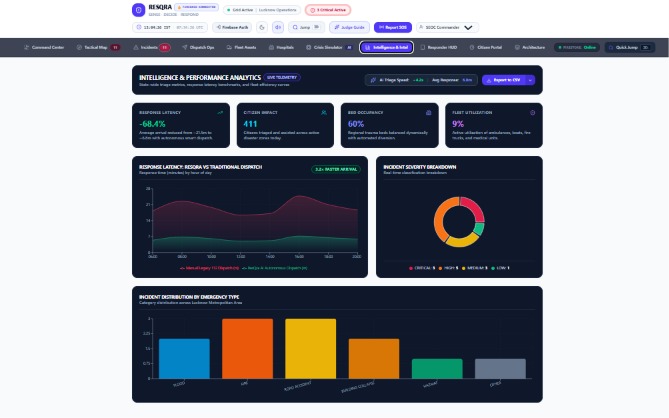
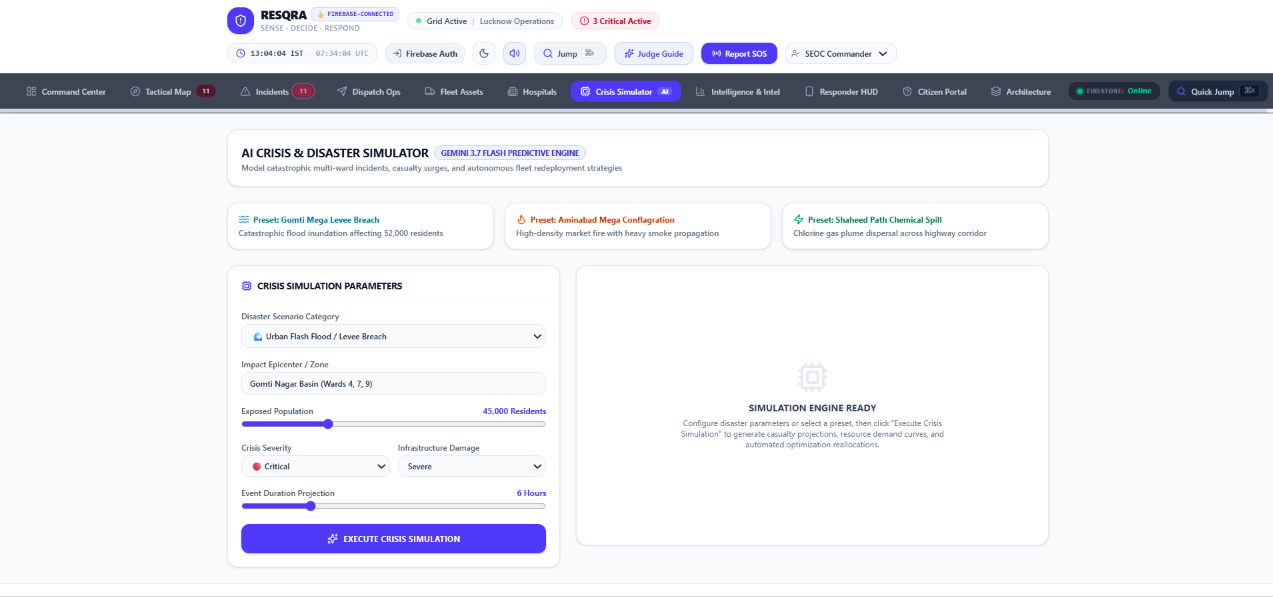
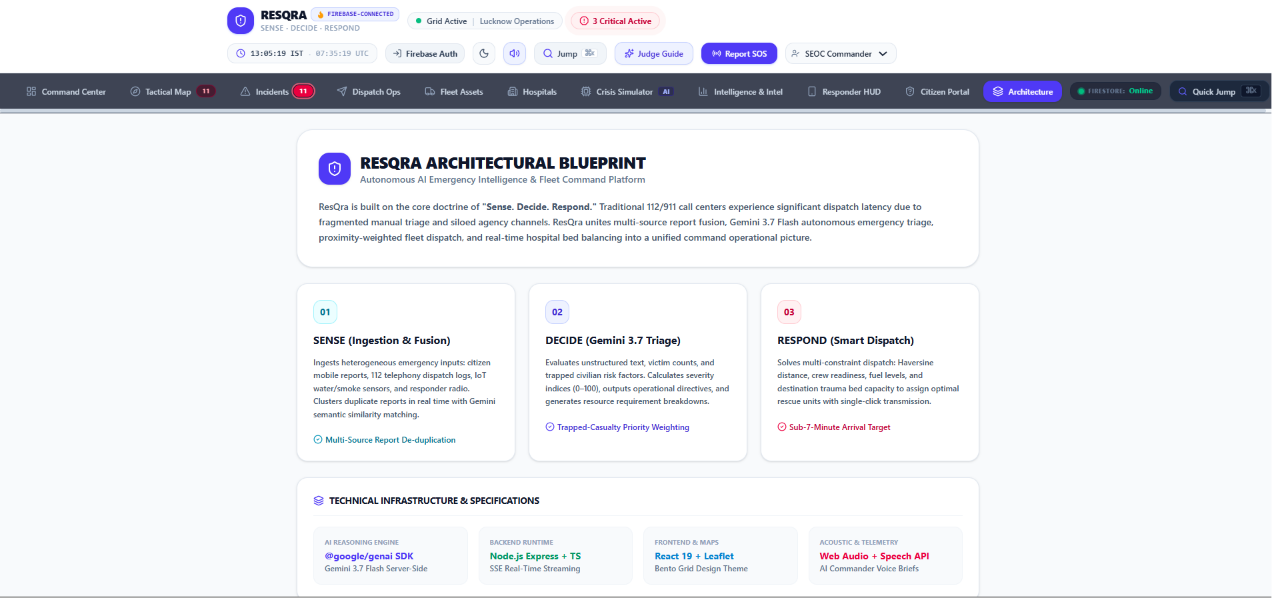
ResQra is an AI-powered emergency intelligence and response platform designed to help emergency teams sense, understand, prioritize, and respond to critical situations faster and more effectively.
During disasters and large-scale incidents, information is often fragmented across citizens, responders, emergency vehicles, hospitals, and control rooms. ResQra brings these elements together into a unified real-time emergency command system.
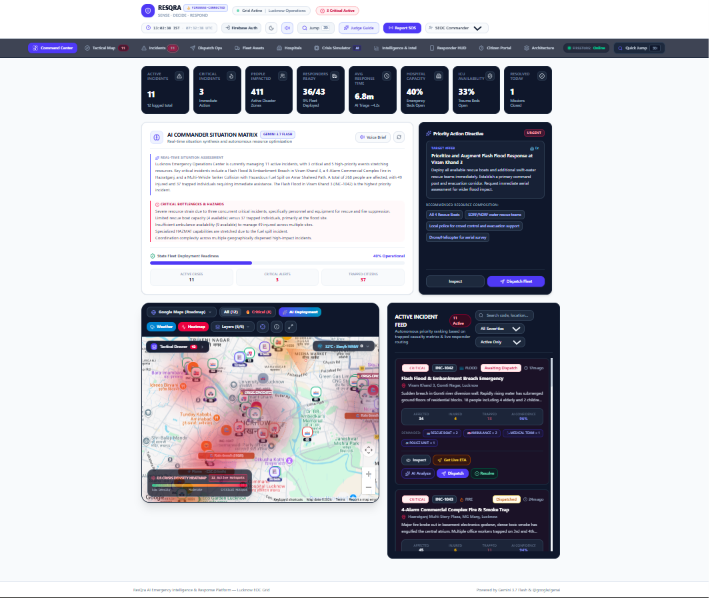
🚨 AI-Powered Emergency Command Center
The core of ResQra is an AI-driven command center that provides emergency operators with a centralized view of active incidents, response resources, hospital capacity, and field operations.
The AI Commander helps operators identify:
- Critical incidents requiring immediate attention
- Operational bottlenecks
- Resource shortages
- High-priority response actions
- Potential hazards
- Recommended emergency interventions
Instead of simply displaying information, ResQra transforms emergency data into actionable intelligence.
🧠 Intelligent Incident Analysis
When an emergency report is received, ResQra analyzes important attributes such as:
- Incident type
- Severity
- Number of people affected
- Injured or trapped individuals
- Required emergency resources
- Location and operational context
This allows incidents to be categorized and prioritized according to urgency.
For example, a report describing people trapped during a flood can be classified as a critical water-rescue incident, triggering recommendations for rescue boats, ambulances, and medical teams.
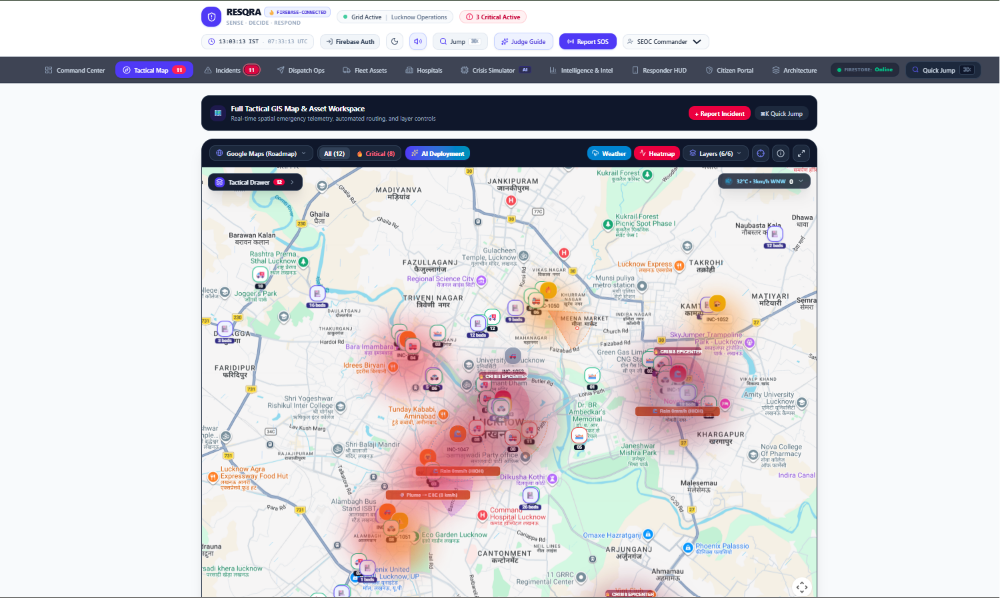
📍 Real-Time Incident Monitoring
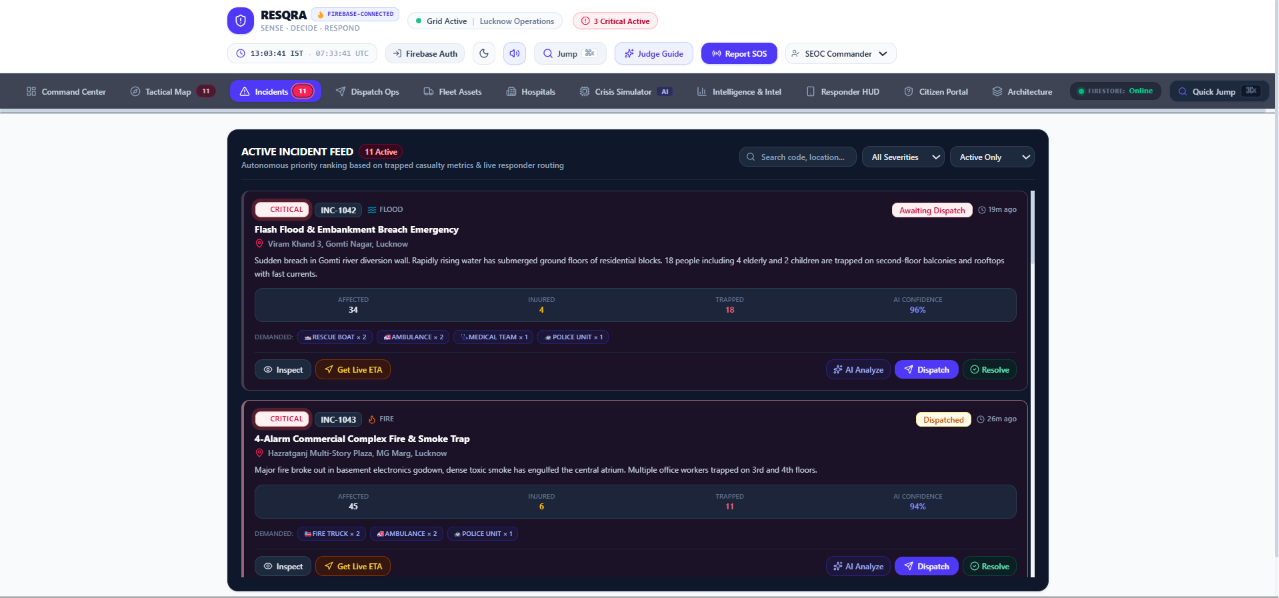
ResQra provides an incident management interface where operators can monitor emergency situations in real time.
Each incident can contain:
- Incident ID
- Emergency category
- Severity level
- Location
- People affected
- Injured or trapped individuals
- AI confidence
- Required resources
- Current response status
This gives emergency operators a clearer picture of ongoing situations and helps identify incidents requiring immediate intervention.
🚑 Intelligent Resource Dispatch
ResQra helps coordinate emergency resources by recommending suitable assets based on:
- Distance from the incident
- Estimated arrival time
- Resource availability
- Resource capability
- Current deployment status
- Incident severity
Operators can review the recommendation and initiate the dispatch process.
Emergency Report → AI Analysis → Priority → Resource Recommendation → Operator Approval → Dispatch → Response → Resolution
🛰️ Live Responder Tracking
ResQra provides operational visibility into responders in the field.
Emergency teams can be monitored through:
- Current location
- Distance to incident
- Speed
- ETA
- Operational status
- Mission information
- Crew details
This creates a connection between the central command center and field responders, allowing operators to understand how the response is progressing.
🚒 Emergency Fleet Management
The platform provides a centralized view of emergency fleet resources, including:
- 🚑 Ambulances
- 🚒 Fire-response vehicles
- 🚤 Rescue resources
- 🚓 Police units
- 👨⚕️ Medical teams
Resources can be tracked based on availability, deployment status, location, and capabilities.
🏥 Hospital Intelligence
Emergency response does not stop after rescuing someone from the incident location.
ResQra incorporates hospital and medical-capacity intelligence to help teams make better decisions about where patients should be transported.
Operators can consider:
- Hospital availability
- Emergency-bed capacity
- Trauma resources
- ICU availability
- Hospital status
- Location
This supports a complete emergency-response chain:
Incident Detection → Rescue → Hospital Selection → Medical Treatment
👨🚒 Responder Interface
ResQra provides a dedicated interface for emergency responders.
Responders can access:
- Emergency briefing
- Incident location
- Navigation
- GPS telemetry
- Mission status
- Crew information
- Deployment details
This ensures that information generated by the command center can reach teams operating directly at the emergency site.
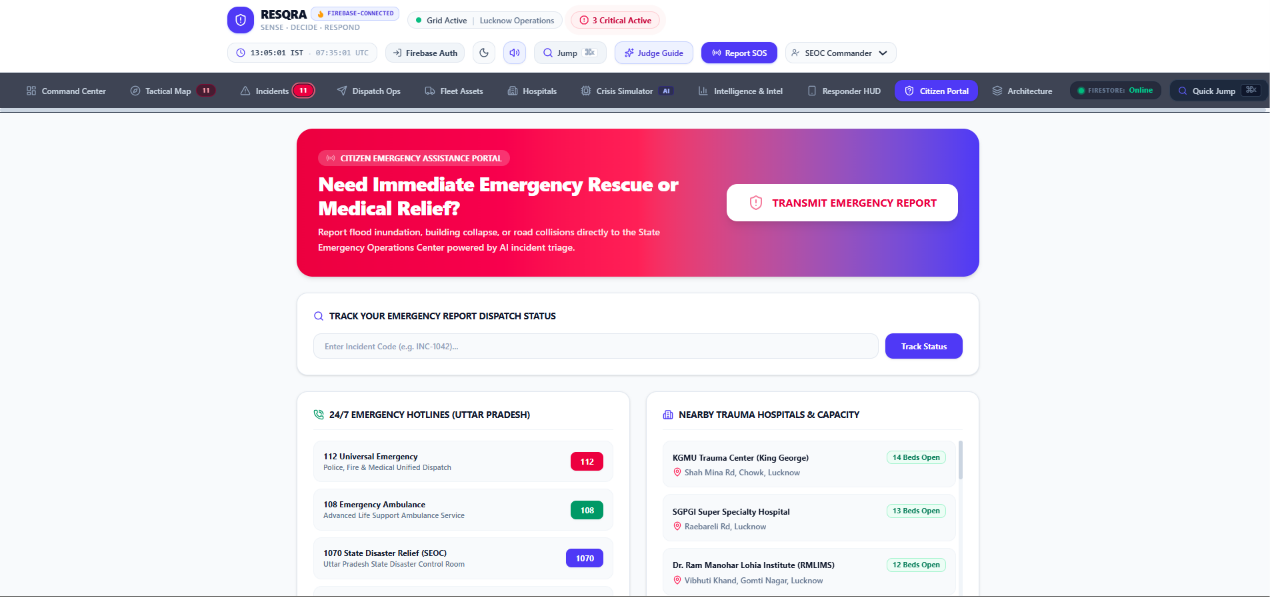
👤 Citizen Portal
Citizens are integrated into the ResQra ecosystem through the Citizen Portal.
Users can:
- Submit emergency reports
- Provide incident information
- Track report status
- Access emergency hotlines
- Find nearby trauma hospitals
- Stay informed about their emergency request
This creates a two-way connection between citizens and emergency response teams.
🔄 End-to-End Emergency Workflow
The major strength of ResQra is that these features work together rather than functioning as isolated tools.
Citizen / Responder Report → AI Incident Analysis → Severity & Priority → AI Resource Recommendation → Hospital Intelligence → Operator Approval → Resource Dispatch → Live Responder Tracking → Medical Coordination → Incident Resolution
🌍 Real-World Impact
ResQra addresses a major challenge in emergency management: the gap between receiving information and taking coordinated action.
By combining AI, real-time monitoring, geospatial intelligence, resource management, hospital information, and citizen reporting, ResQra aims to:
- Reduce response delays
- Prioritize critical incidents
- Improve resource utilization
- Coordinate multiple emergency teams
- Improve situational awareness
- Support faster decision-making
- Provide better visibility to responders and citizens
💡 Core Innovation
The key idea behind ResQra is that AI should not simply answer questions during an emergency. It should help transform raw emergency information into coordinated operational decisions.
Rather than being another emergency reporting application, ResQra acts as an AI-powered decision-support and coordination layer connecting incidents, resources, hospitals, responders, and citizens.
🚀 ResQra
Sense. Decide. Respond.
ResQra demonstrates how AI, real-time systems, geospatial intelligence, and modern full-stack technologies can work together to build a smarter and more coordinated approach to emergency response.
Built With
- ai
- disaster
- docker
- emergency
- fastapi
- gemini
- generative
- geospatial
- learning
- machine
- management
- next.js
- postgresql
- python
- react
- real-time
- redis
- response
- sse
- typescript

Log in or sign up for Devpost to join the conversation.