Inspiration
During disasters like floods, cyclones, earthquakes, and fires, emergency teams receive numerous reports containing duplicate messages, rumours, and incomplete location details. We were inspired to build ResQPulse, an AI-powered platform that transforms scattered emergency information into actionable insights and supports faster disaster response.
What it does
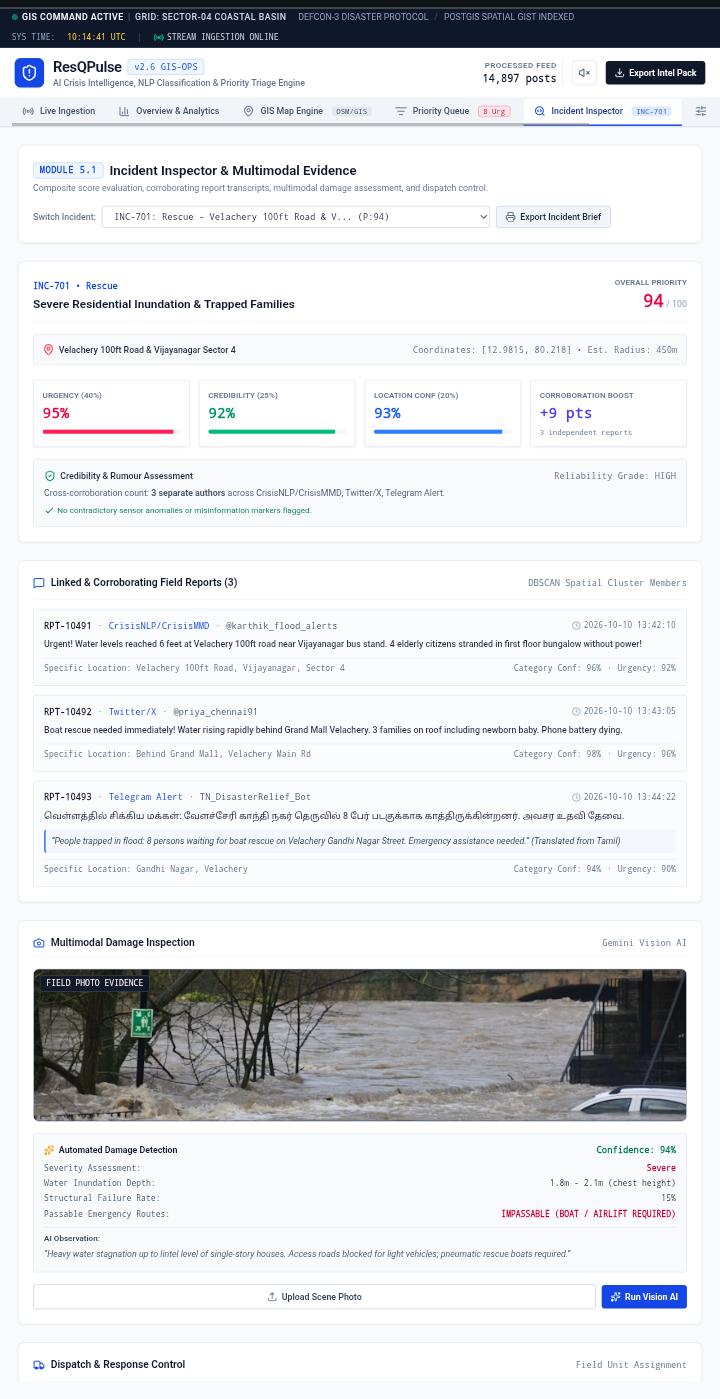
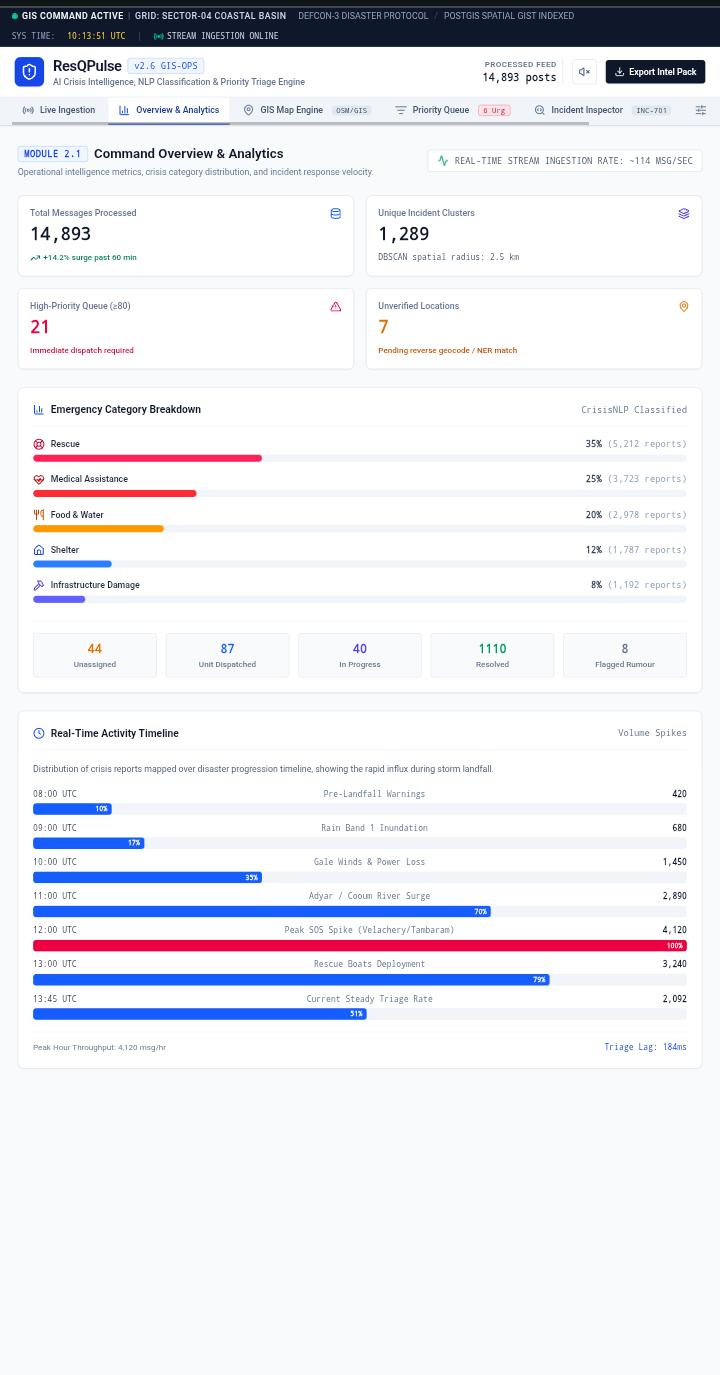
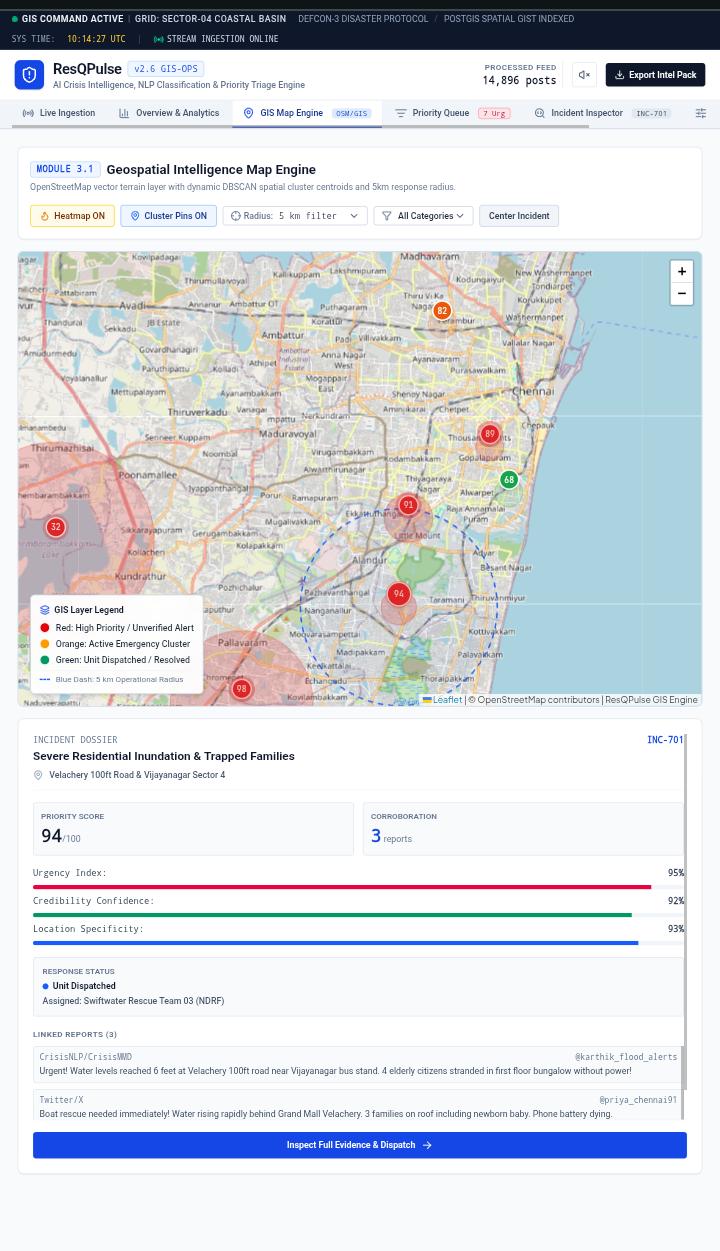
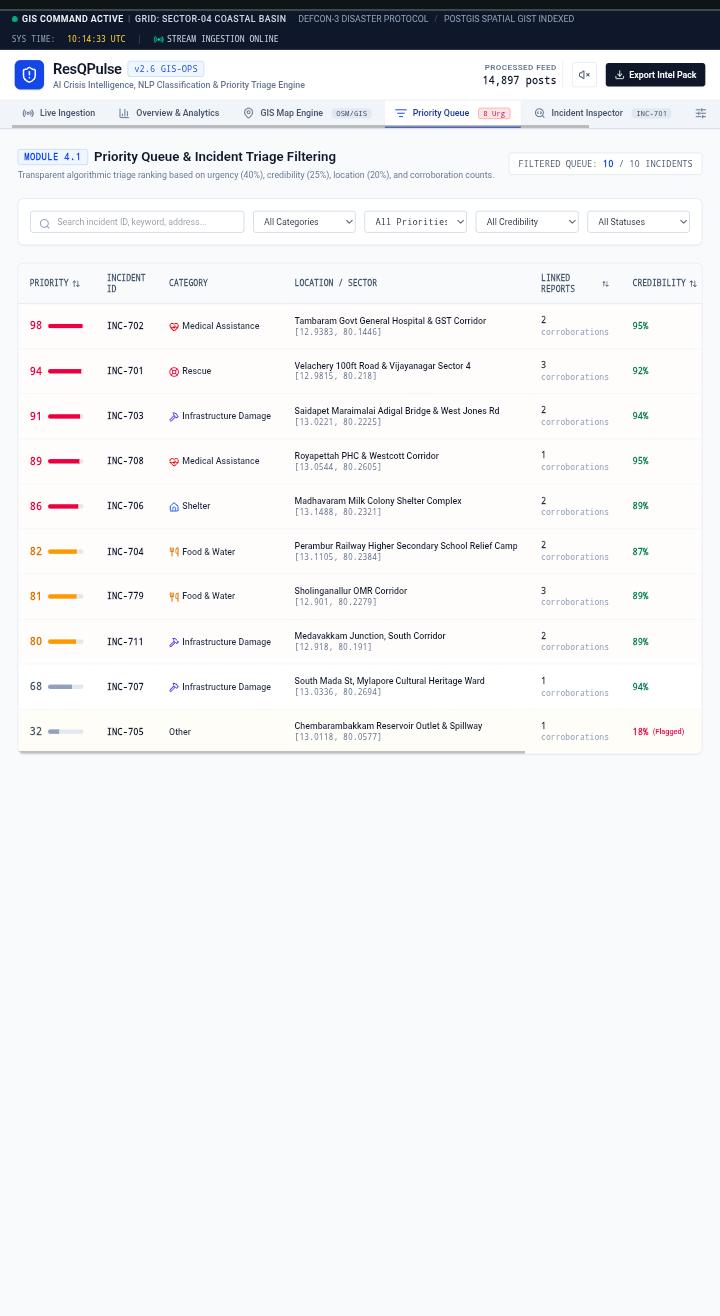
ResQPulse collects and analyzes emergency reports, classifies incidents using AI and NLP, identifies duplicate reports, assesses credibility, and maps incident locations. Its dashboard displays emergency statistics, priority scores, incident categories, and geographical information to help responders identify urgent situations and coordinate resources efficiently.
How we built it
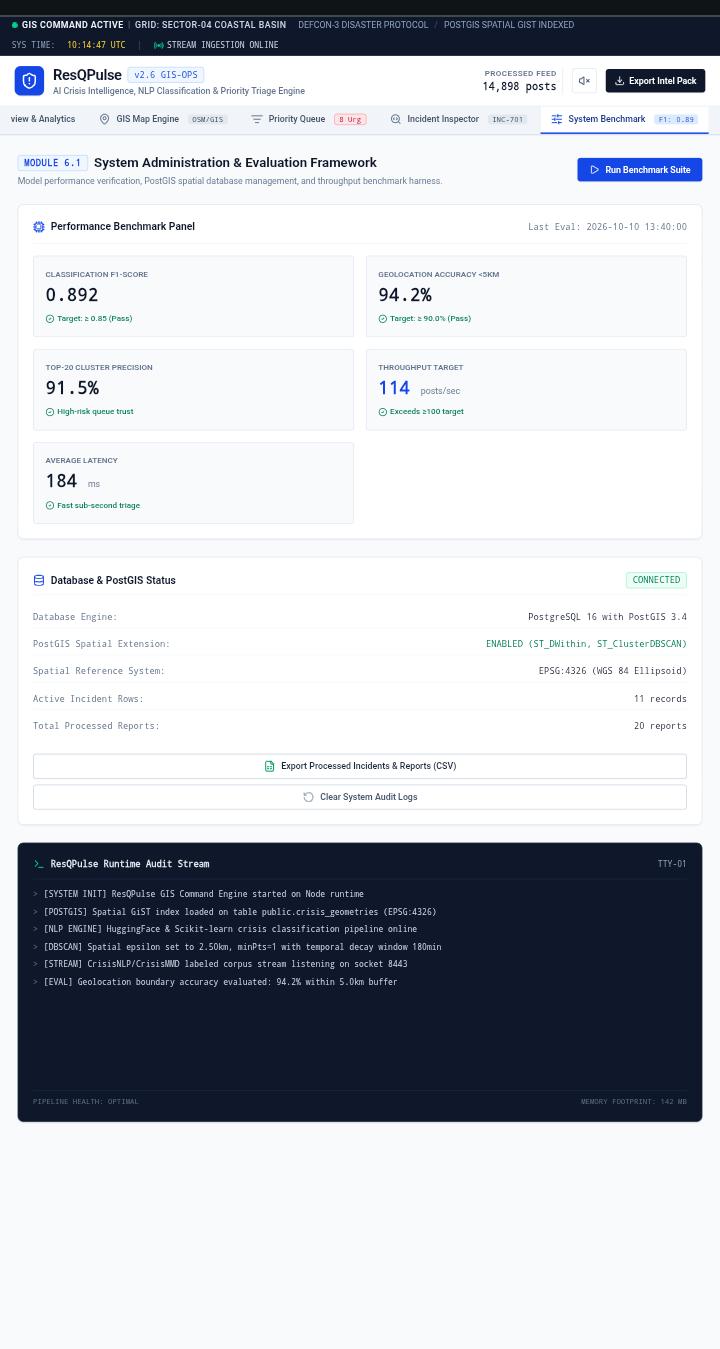
We designed a unified web dashboard with modules for live data ingestion, command overview and analytics, geospatial mapping, priority filtering, incident inspection, and system evaluation. Our technical approach includes frontend development, Python-based data processing, NLP, scikit-learn, DBSCAN clustering, OpenStreetMap, and database technologies, depending on the components implemented and integrated in our prototype.
Challenges we ran into
Working within a 24-hour hackathon was challenging. We had to organize scattered emergency data, address duplicate reports and incomplete locations, design a useful prioritization system, and integrate multiple modules within a limited time. Coordinating tasks and testing the prototype also required effective teamwork and time management.
Accomplishments that we’re proud of
We are proud of developing a unified disaster intelligence interface that brings emergency reports, analytics, geographical visualization, and incident prioritization together. Our prototype demonstrates how AI and geospatial technologies can support better emergency awareness and decision-making.
What we learned
We gained practical experience in rapid prototyping, AI-based data processing, NLP, geospatial analysis, web development, and teamwork. We also learned that emergency information must be carefully assessed for credibility and accuracy before it is used to support critical decisions.
What’s next for ResQPulse
We plan to improve real-time data integration, multilingual report processing, location accuracy, and incident credibility assessment. Future enhancements may include reliable weather and emergency-service integrations, improved resource coordination, and testing with disaster-response organizations to make ResQPulse more useful in real-world emergencies.
Built With
- ai
- artificialintelligence
- disastermanagement
- machine-learning
- resqpulse

Log in or sign up for Devpost to join the conversation.