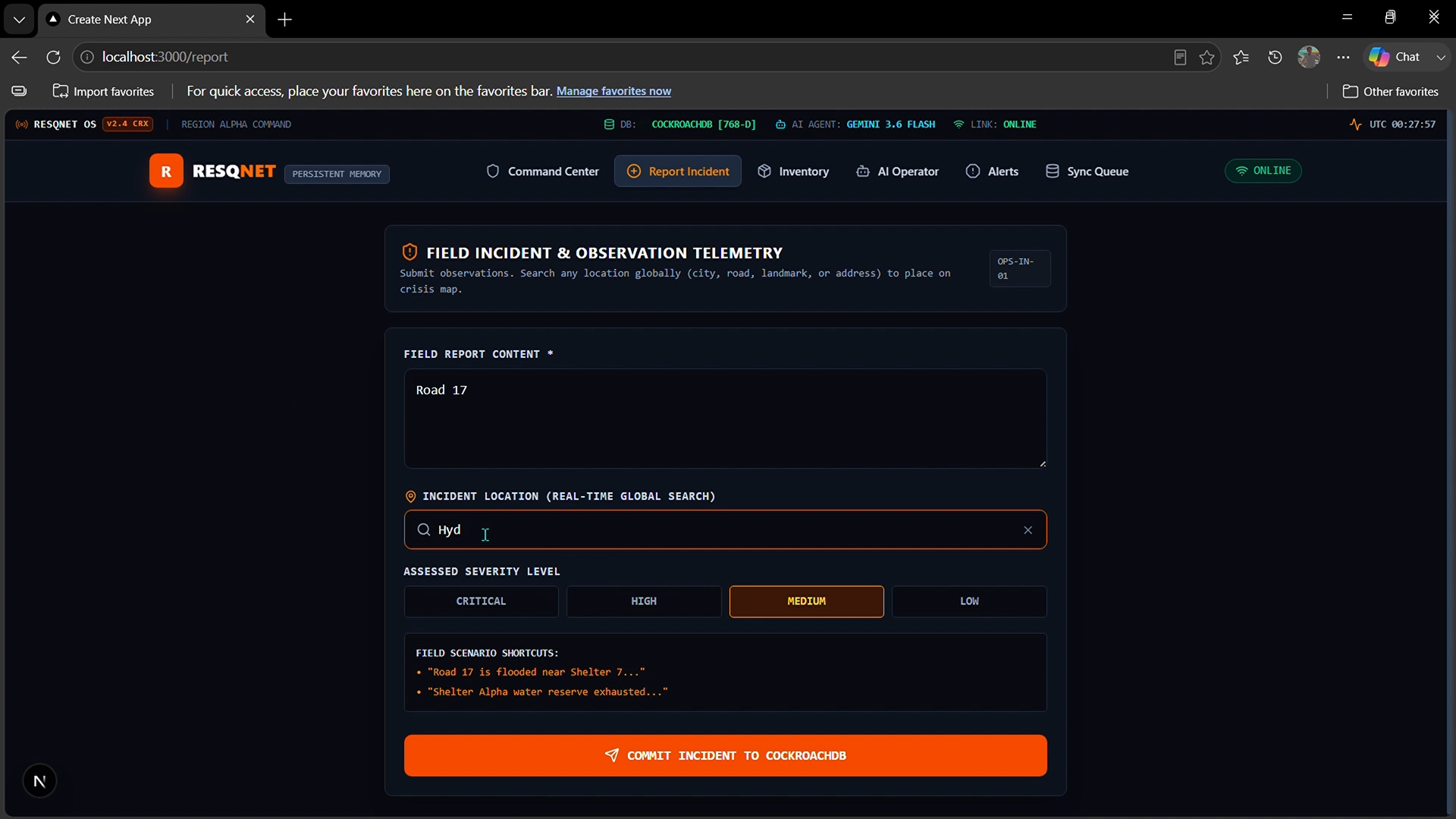
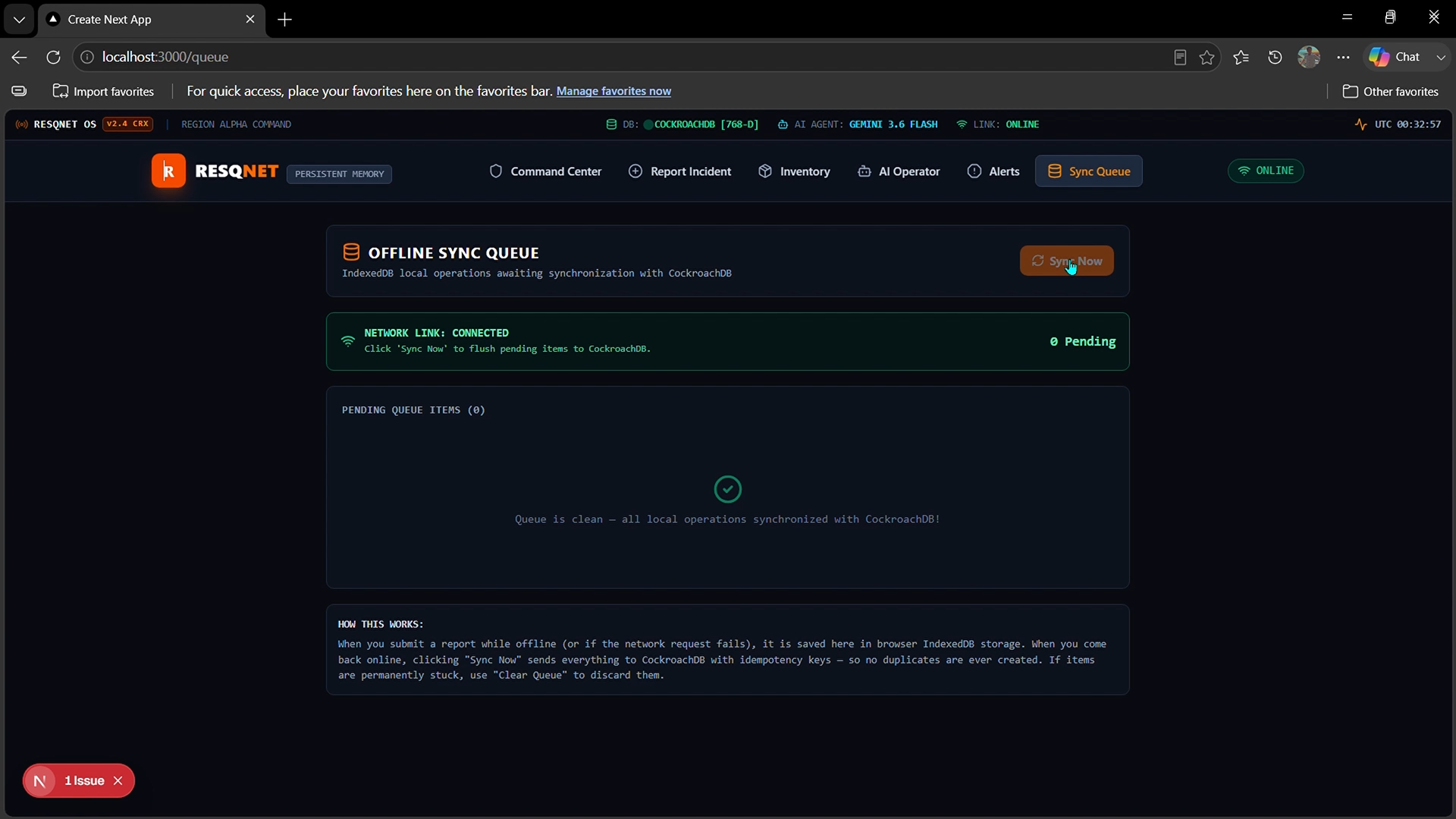
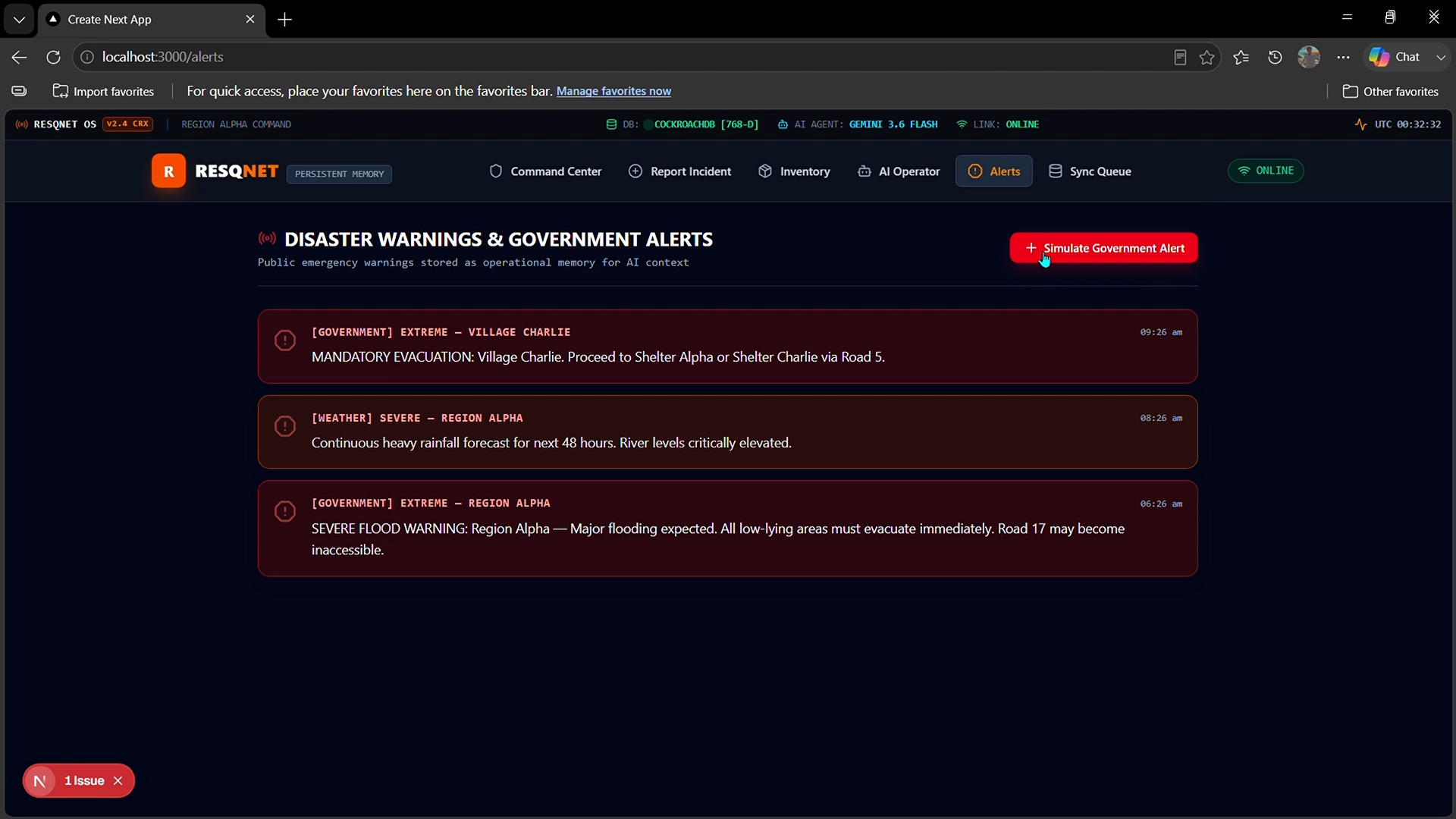
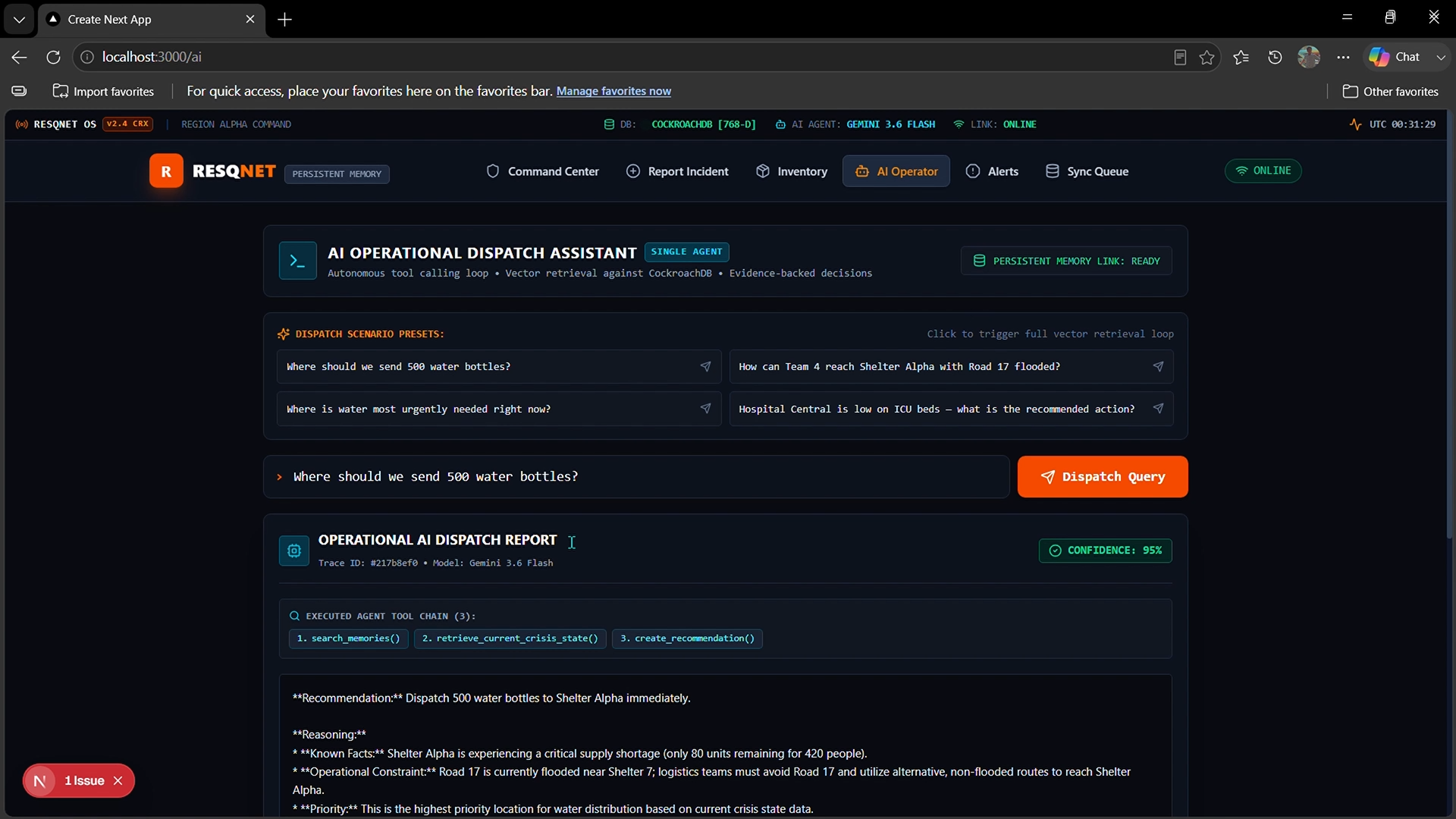
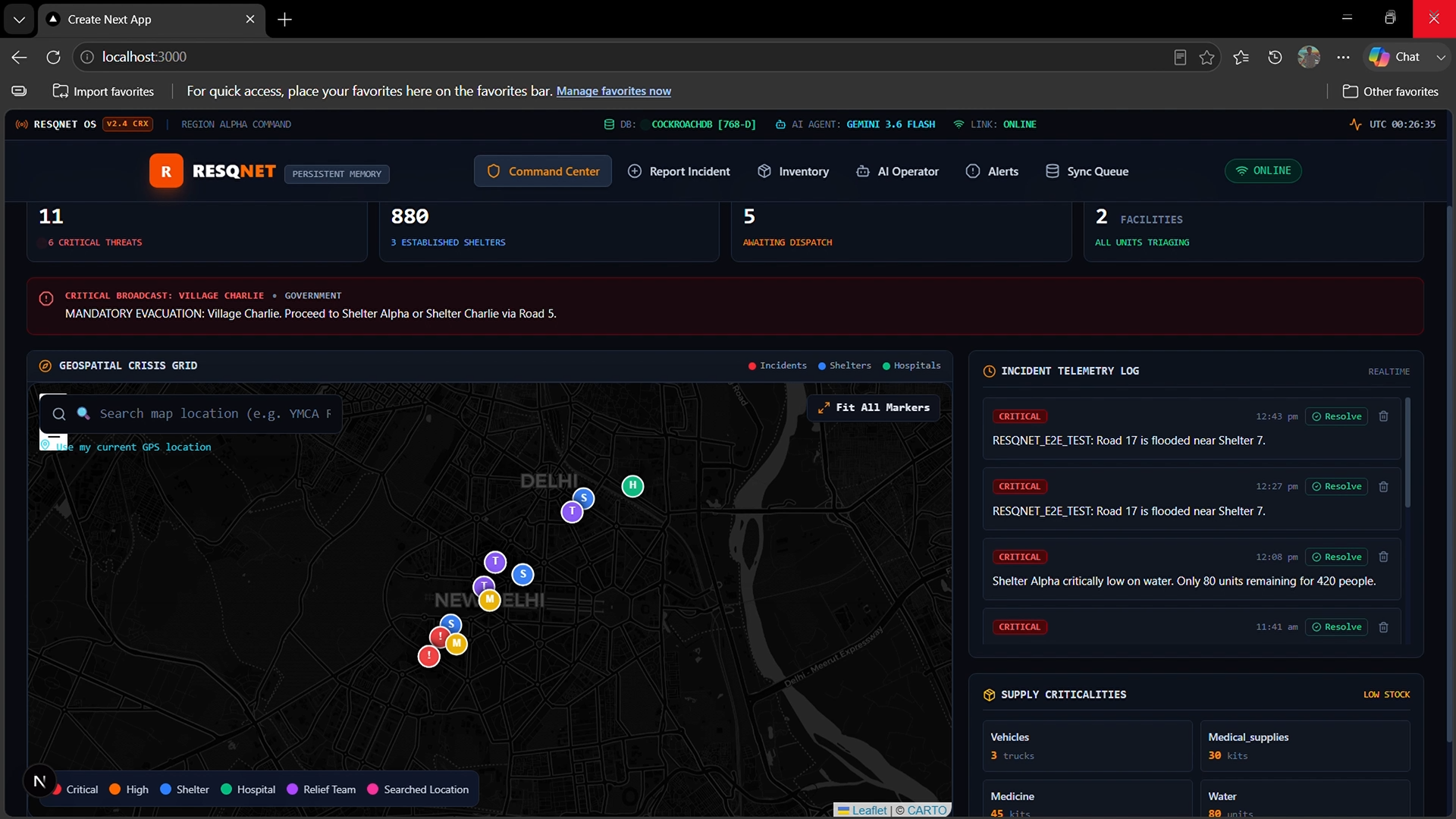
Inspiration- During severe disasters, internet connectivity frequently drops, leaving NGOs, hospitals, and victims completely disconnected. We realized standard disaster platforms fail when cellular networks go down. We were inspired to build a resilient, offline first platform that uses lightweight AI to coordinate relief efforts even in zero connectivity zones. What it does- ResQnet is a Progressive Web App (PWA) that helps coordinate disaster relief and predict potential crises using weather data. It features an interactive map displaying disaster zones, relief camps, and deployed rescue teams. If the internet drops, users can continue logging reports and actions offline, which automatically sync to the global system the moment connectivity returns. How we built it- We built ResQnet as an offlinefirst PWA, utilizing local browser storage to queue user actions and reports when offline. We integrated cost effective, opensource AI models to process and categorize incoming disaster reports. Our frontend communicates with a Python based backend that handles the complex merging of offline data once field workers reconnect. Challenges we ran into- Implementing true offline functionality was incredibly difficult, specifically ensuring that local user data queued up correctly without internet access. We also had to figure out how to handle data conflicts and backend bottlenecks when multiple offline clients suddenly reconnected and synced their data simultaneously. Accomplishments that we're proud of- We successfully built a seamless offline toonline sync mechanism that prevents vital field data from being lost during outages. We are also proud of our live interactive map, which gives responders an immediate visual understanding of disaster hotspots, relief camps, and safe zones. What we learned- We learned that offline first architectures require a fundamentally different approach to state management than standard web apps. We also gained valuable experience integrating opensource AI agents and optimizing backend connection pools to handle sudden surges in data syncing. What's next for ResQnet Because standard internet notifications fail during severe crises, we plan to implement a feature that parses simple SMS based government alerts. We also want to expand our AI's predictive capabilities to automatically alert vulnerable users with safety tips and safe zone locations before a disaster even strikes.
ResQnet
Resolving disaster chaos with AI agents that think, act, and remember when connectivity goes down.

Updates

Leave feedback in the comments!
Log in or sign up for Devpost to join the conversation.