Inspiration
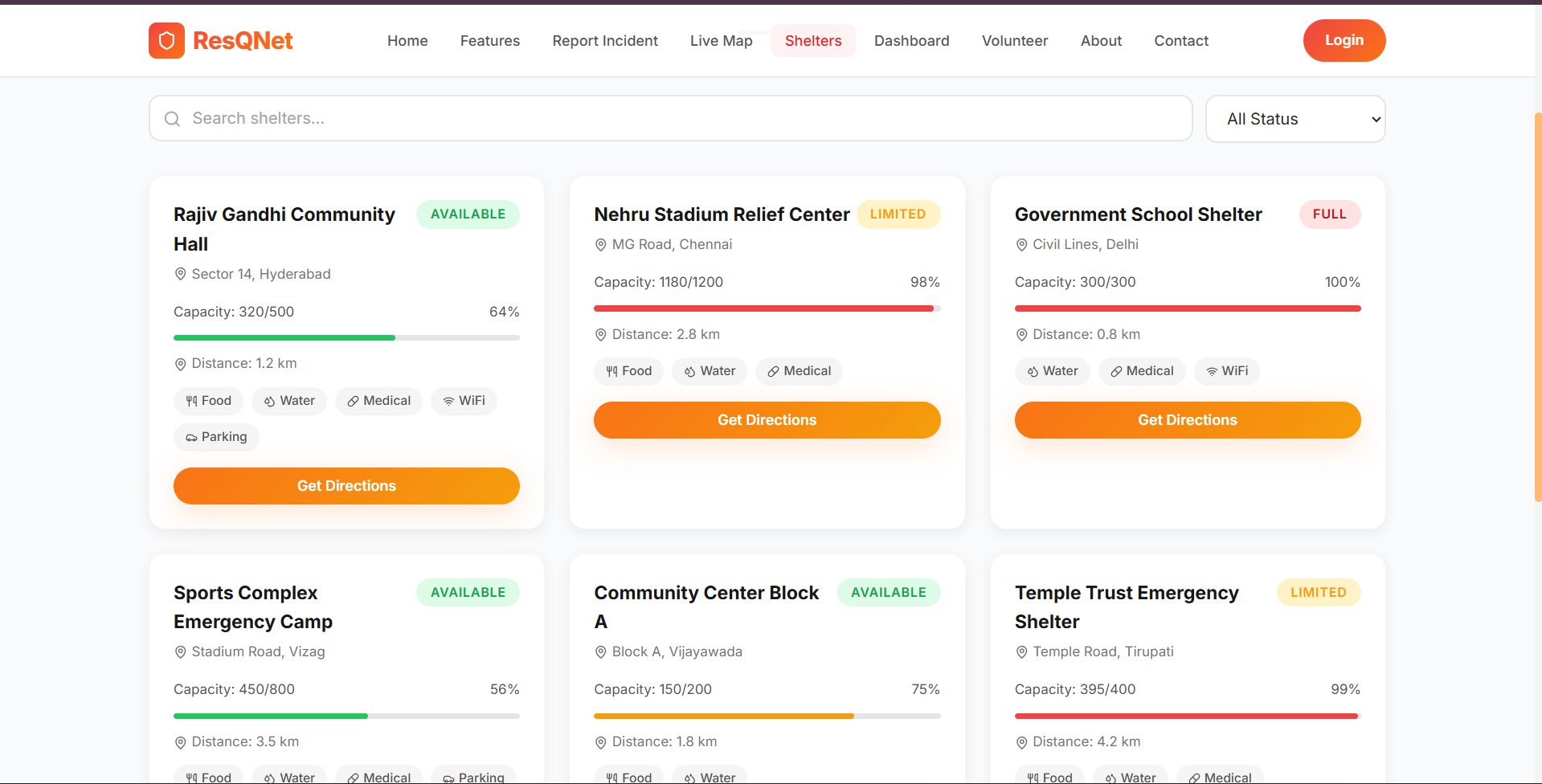
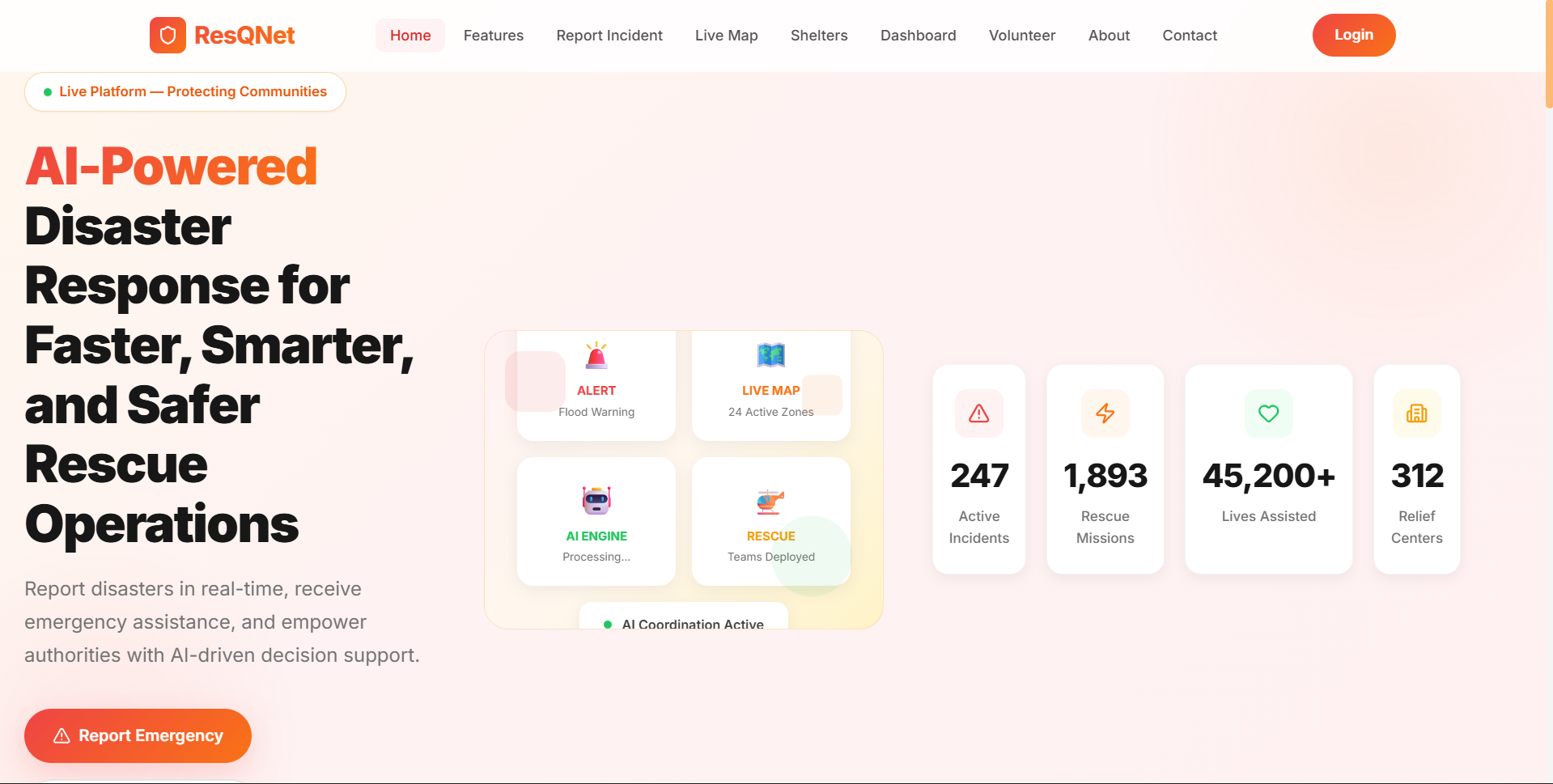
During natural disasters and emergencies, the biggest challenge is chaotic communication and disorganized resource allocation. Rescue teams often arrive too late because they lack real-time data, and citizens struggle to find immediate help or safe shelters. We were inspired to build ResQNet to solve this by acting as a centralized, intelligent bridge between victims and authorities.
What it does
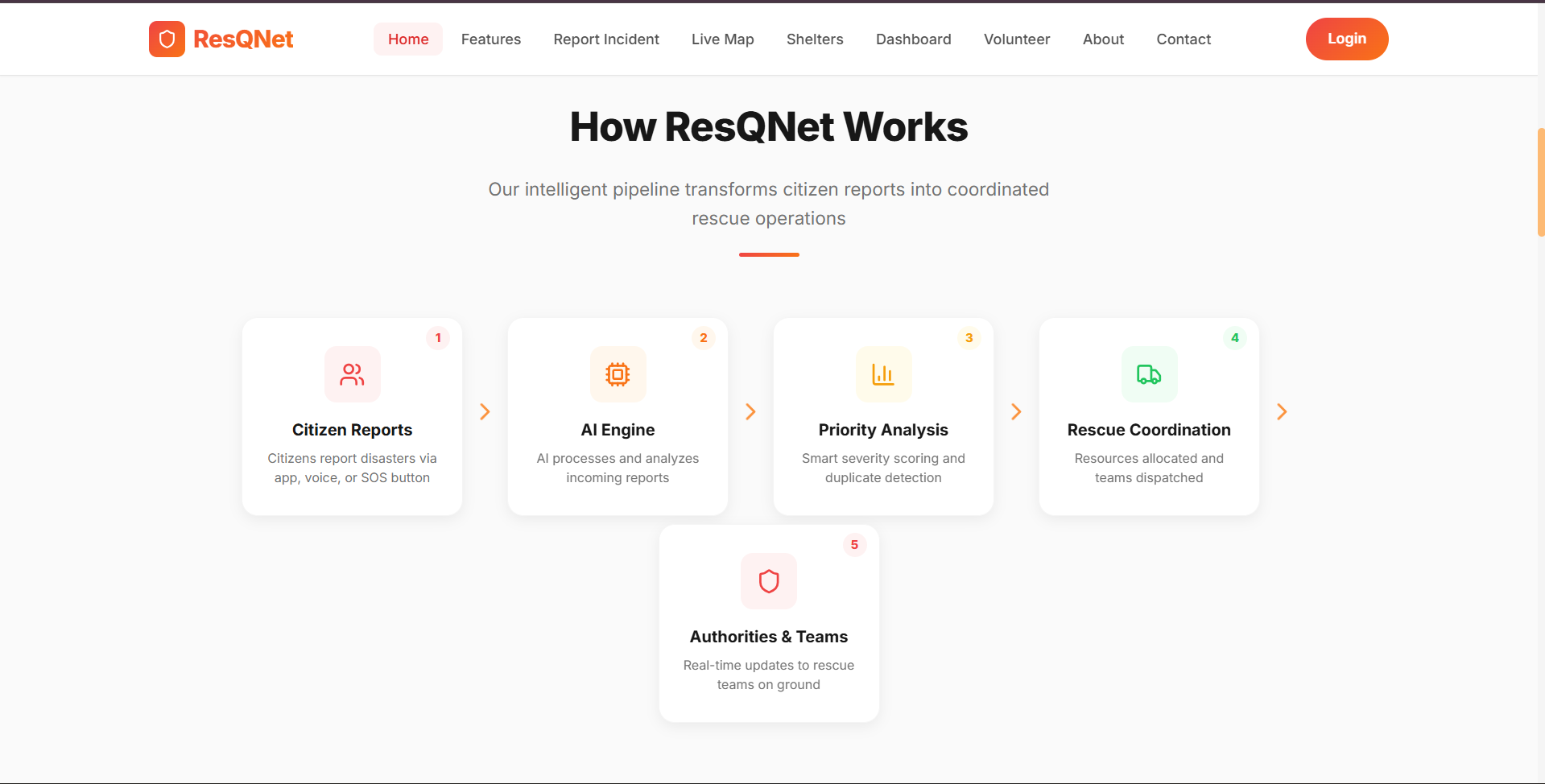
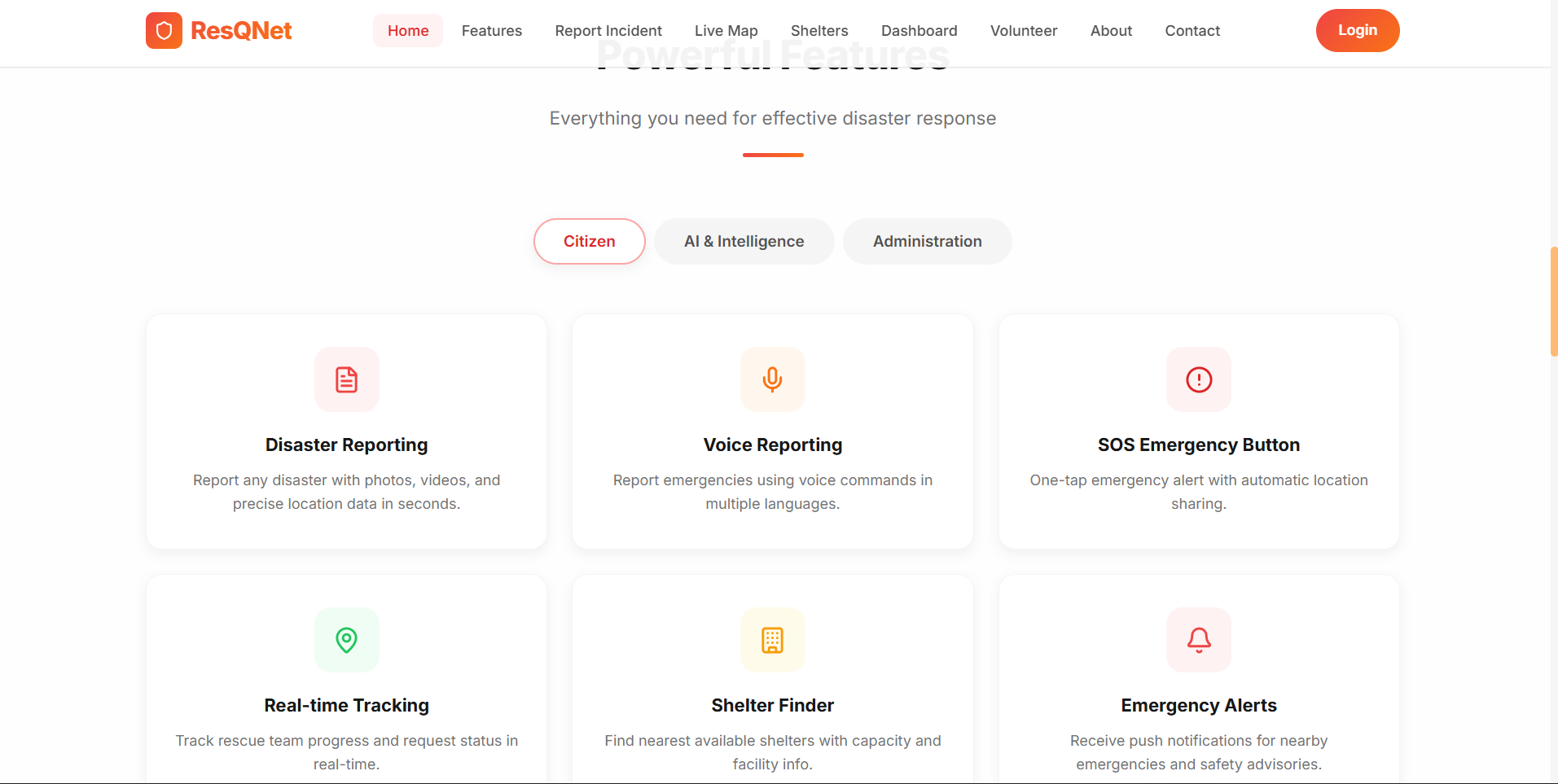
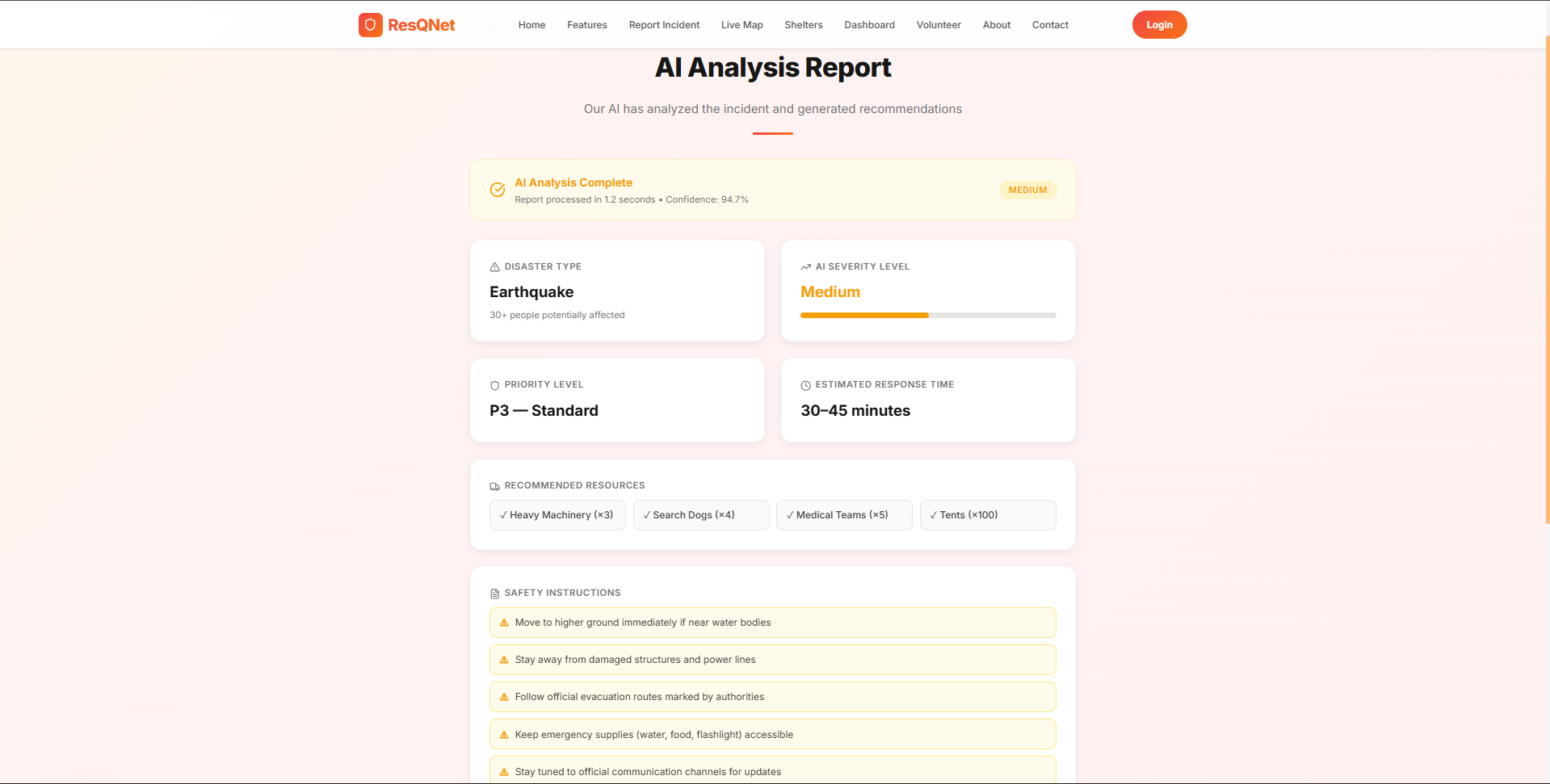
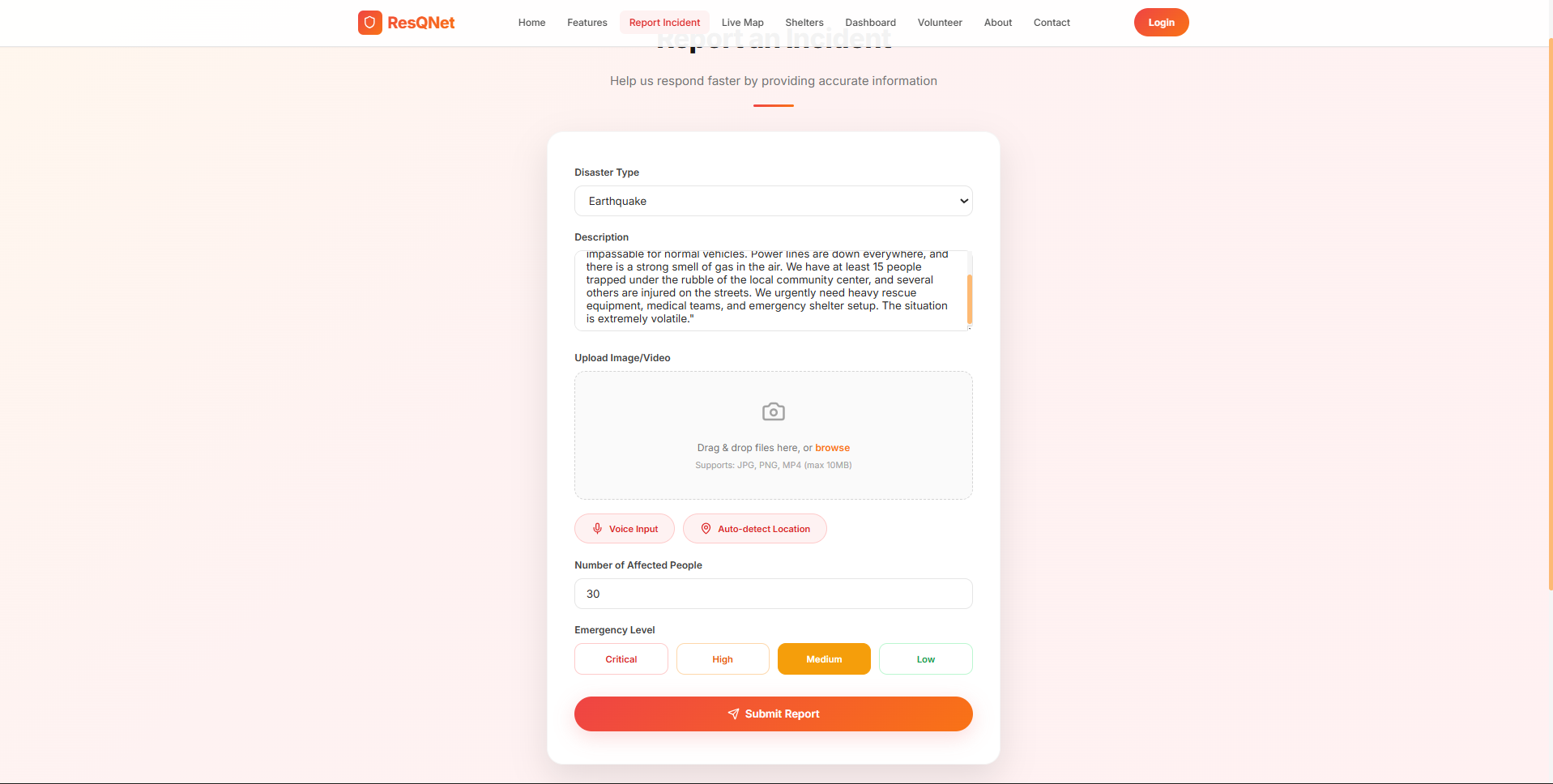
ResQNet is an AI-powered disaster response platform. It allows citizens to report disasters instantly through an intuitive interface. Our platform uses AI to automatically analyze these reports, assign a severity score (Critical, High, Medium, Low), and prioritize them.
How we built it
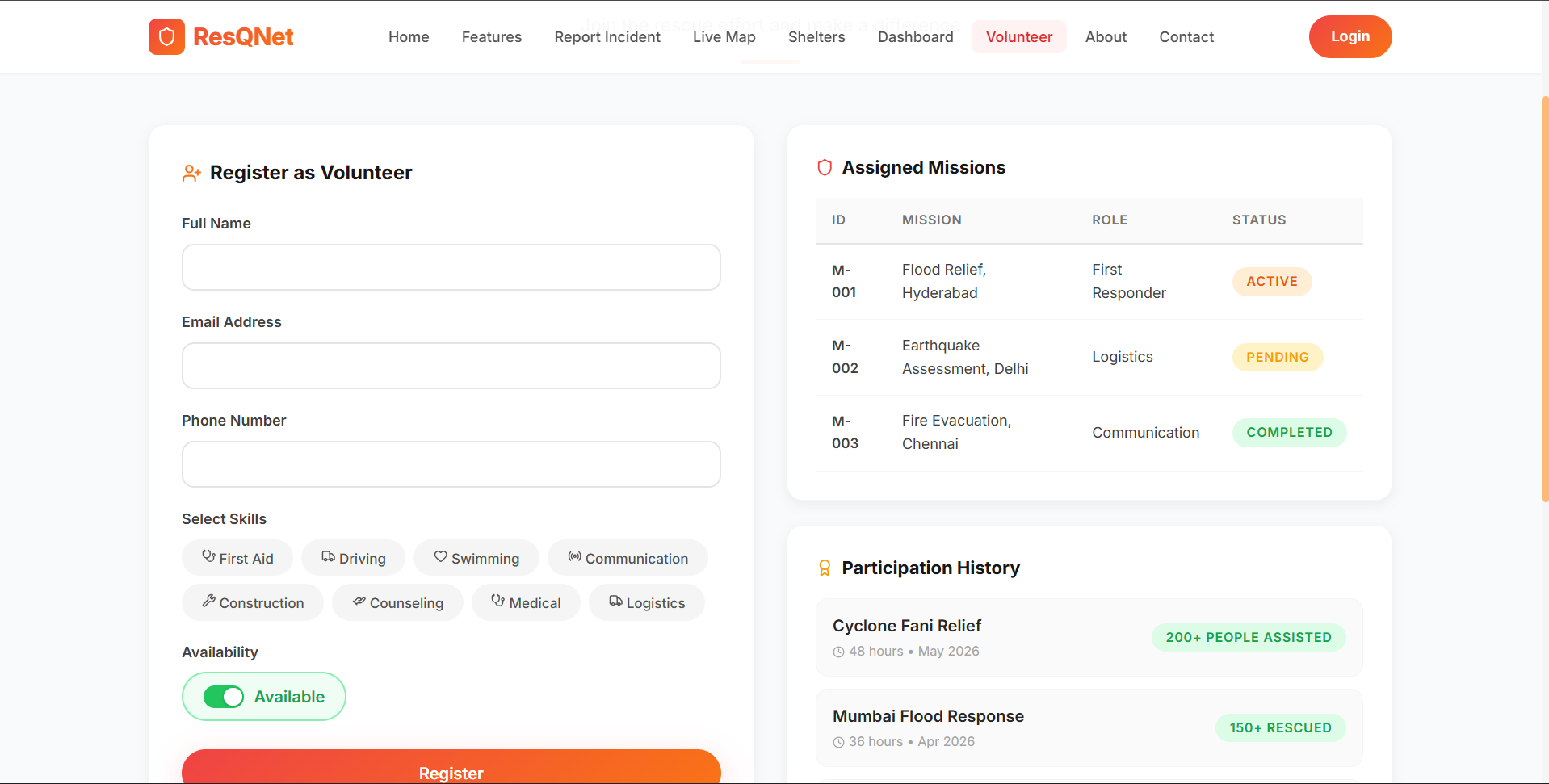
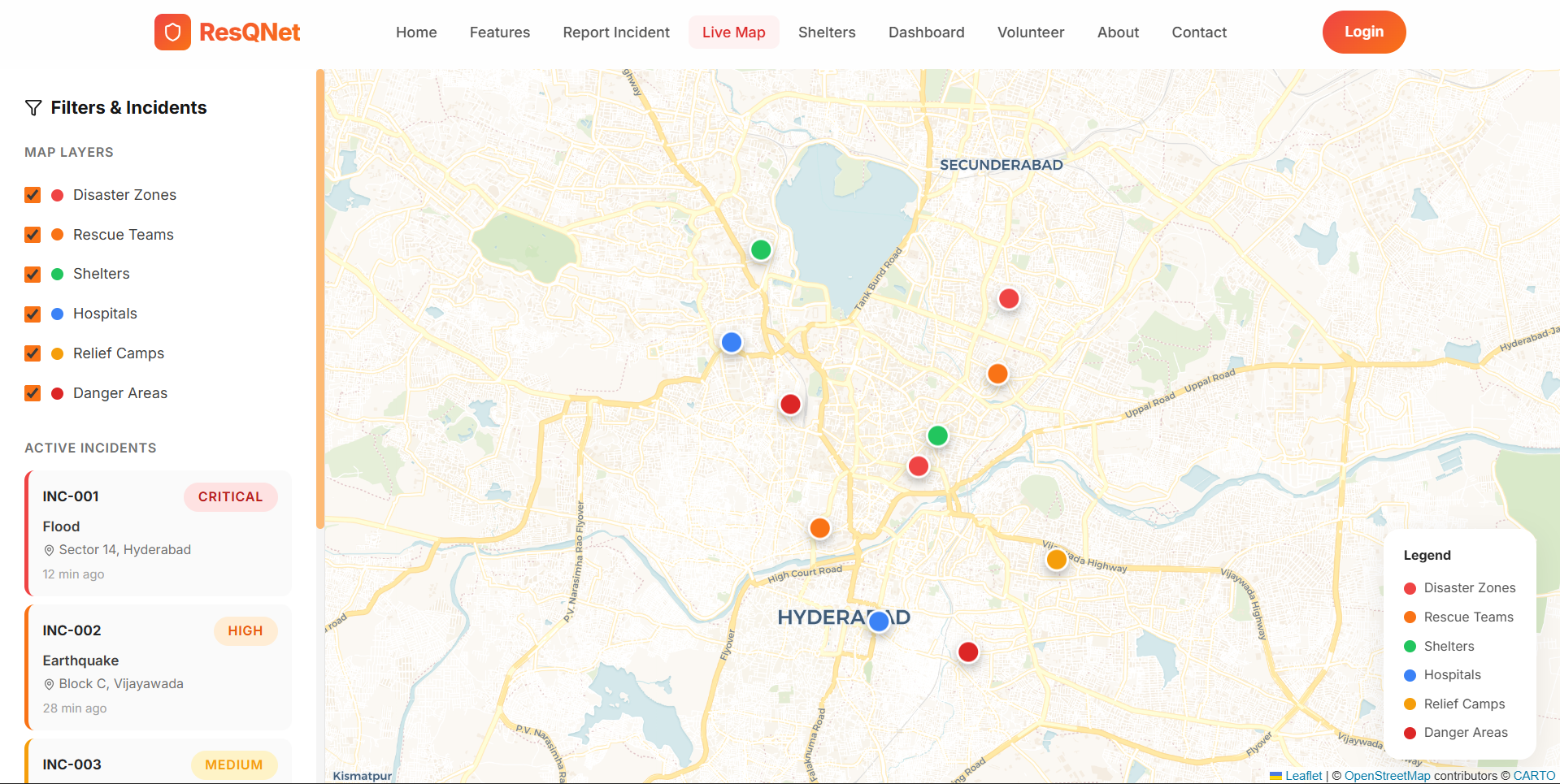
We built the frontend using React.js and Vite for blazing fast performance. The user interface was custom-styled using modern Vanilla CSS with a mobile-first approach. For interactive mapping, we integrated Leaflet and React-Leaflet using OpenStreetMap data.
Challenges we ran into
One of the main challenges was designing an interface that feels both urgent (for emergencies) but also calm and trustworthy so users don't panic. We also had to figure out how to seamlessly integrate interactive map layers without sacrificing the application's speed or mobile responsiveness.
Accomplishments that we're proud of
We are incredibly proud of the Live Disaster Map integration and the intuitive "Track Request" timeline. We managed to create a hackathon-winning quality UI that looks highly professional, accessible, and completely responsive across all devices in a very short amount of time.
What we learned
We learned a lot about spatial data integration (using Leaflet in a React environment) and how to design UI components that prioritize accessibility and clarity over everything else, which is crucial for emergency situations.
What's next for ResQNet
In the future, we plan to integrate IoT sensor data for early disaster warnings, use satellite imagery analysis for large-scale damage assessment, and implement offline mesh-network communication so citizens can still use the app when cell towers go down.

Log in or sign up for Devpost to join the conversation.