-
-
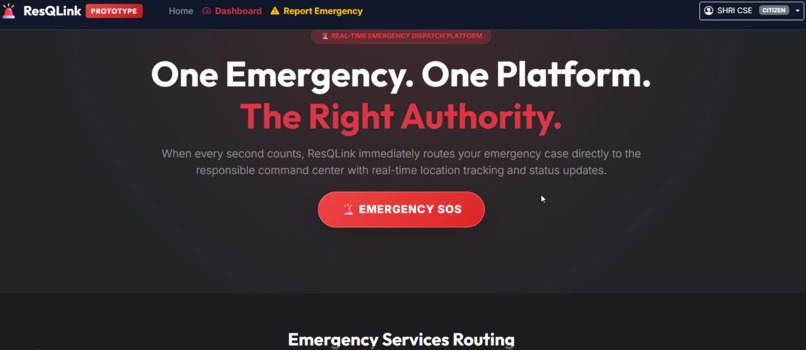
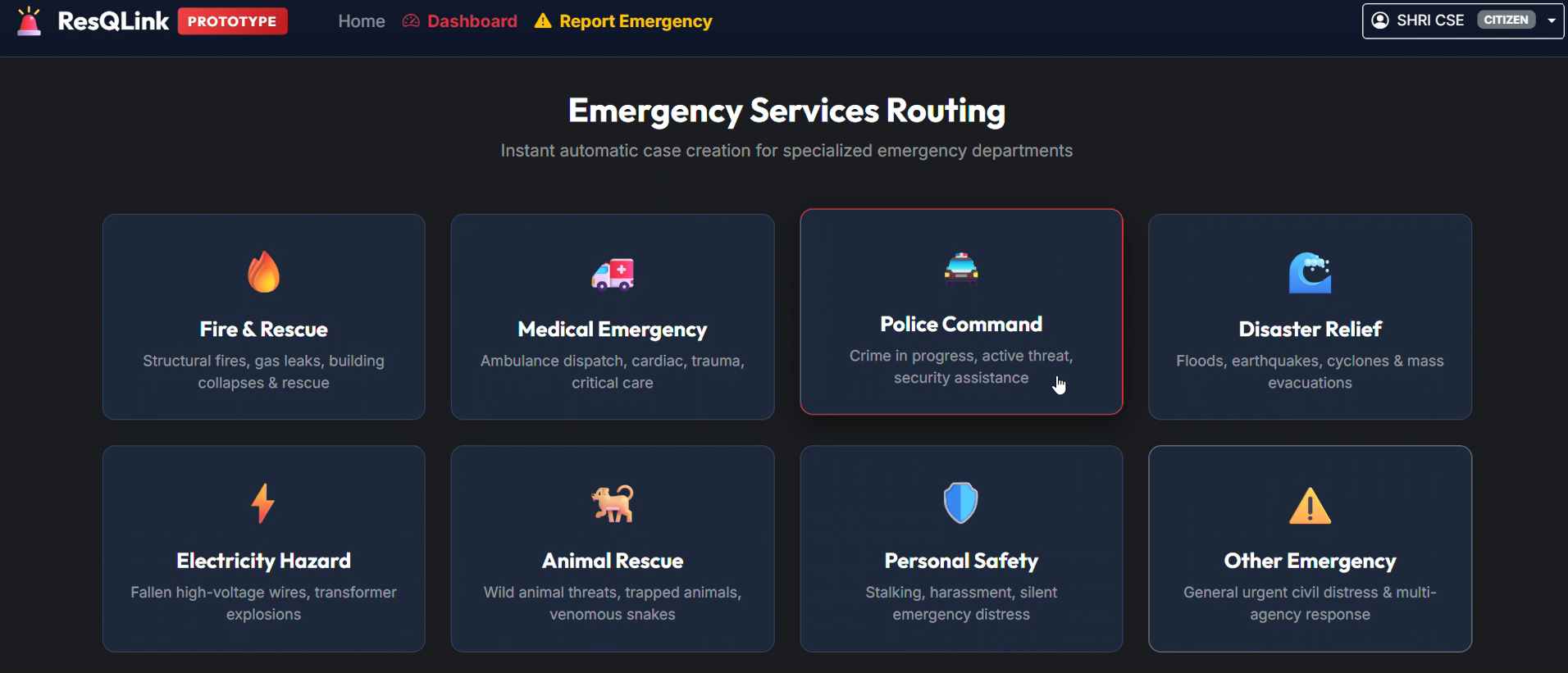
sample page 1
-
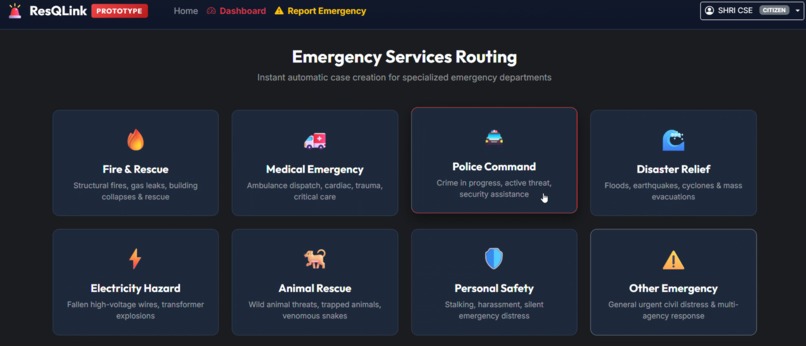
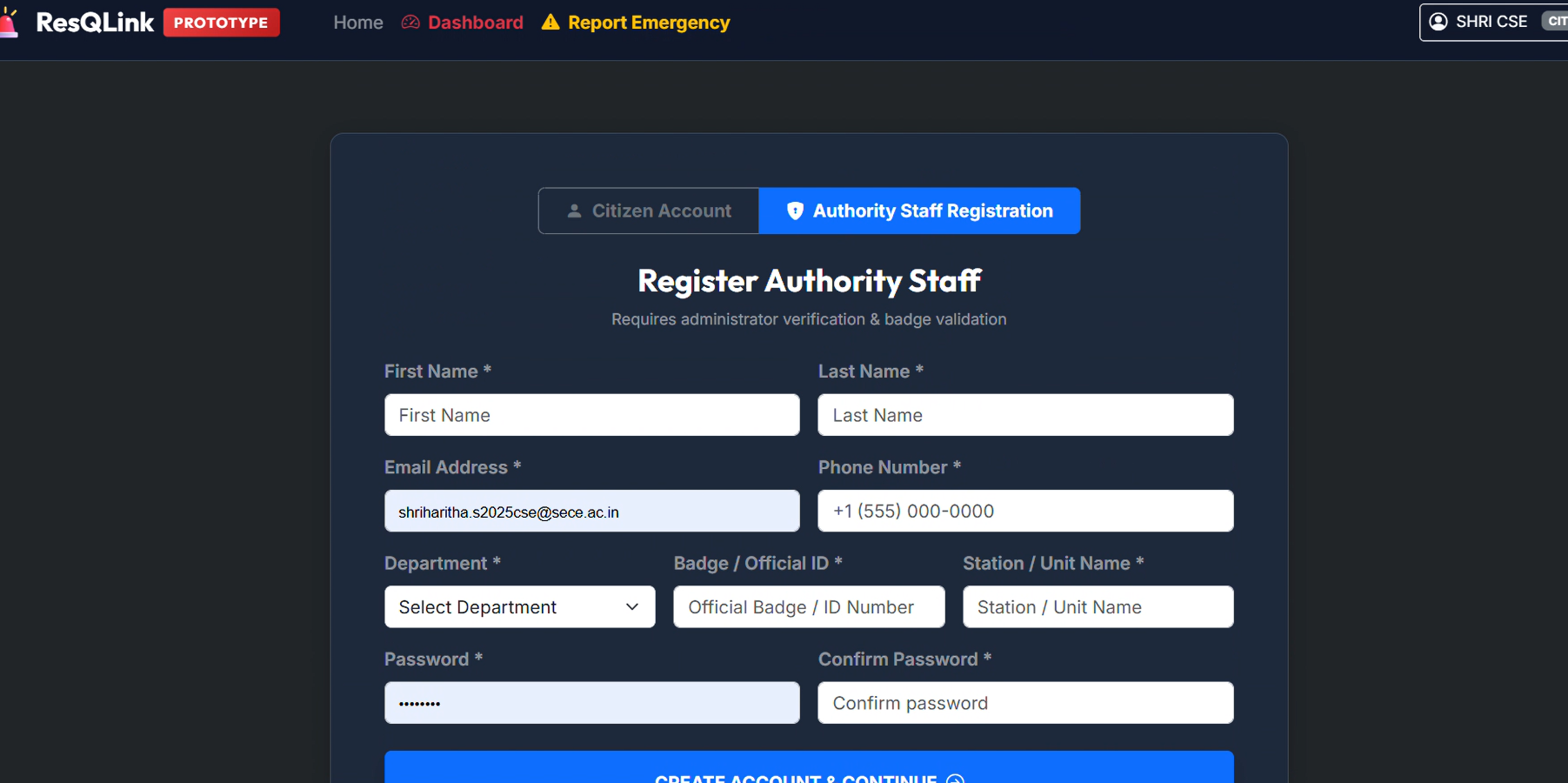
sample page 2
-
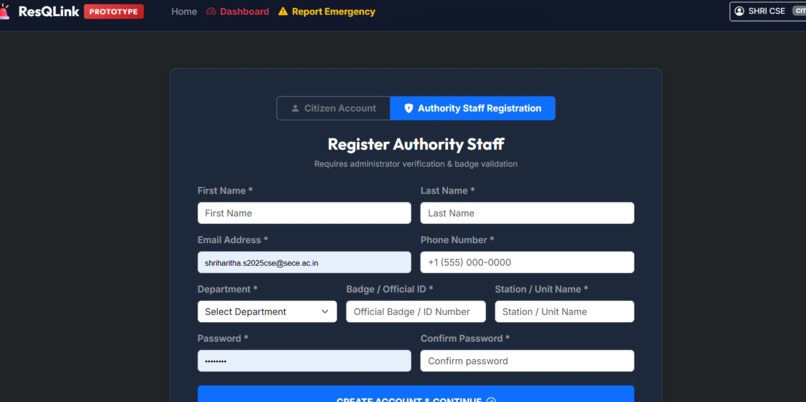
sample login page
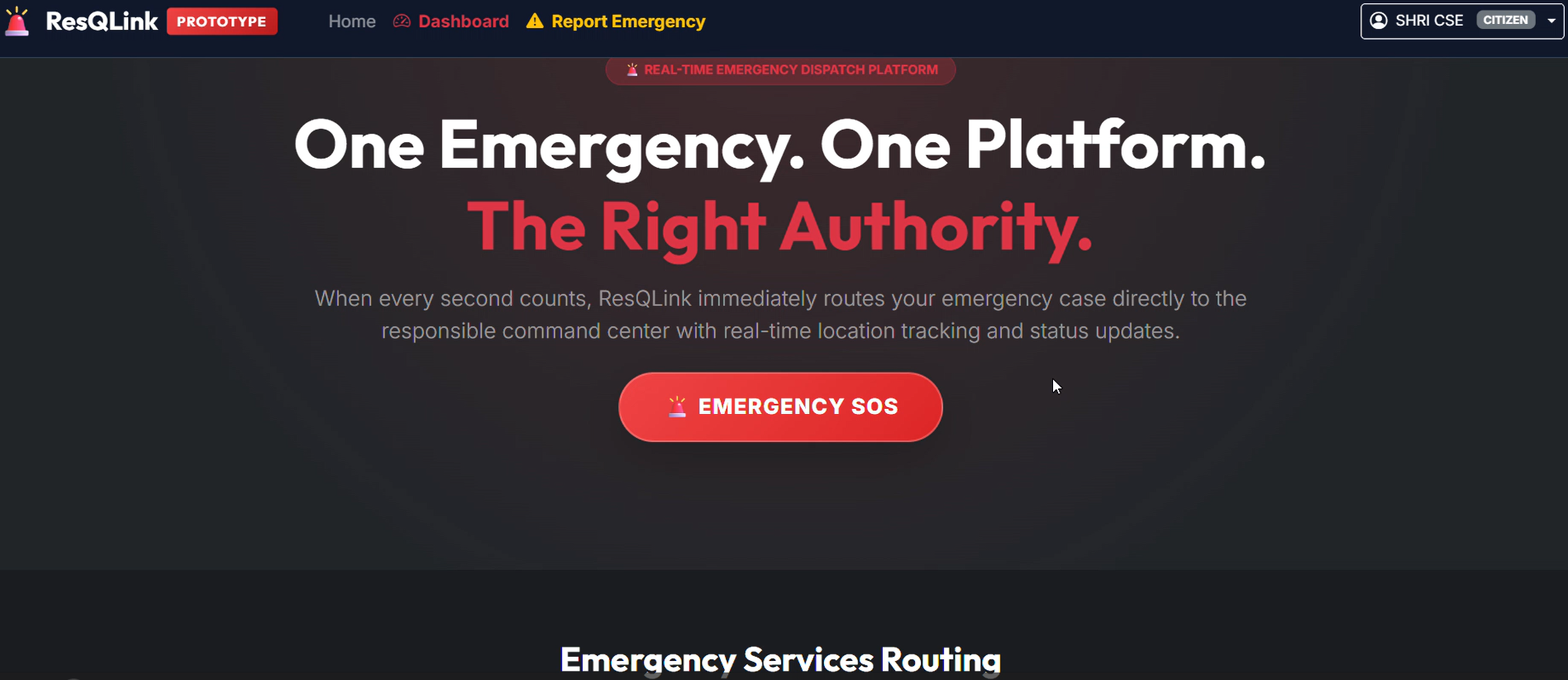
Inspiration
During critical emergencies, every second counts. Traditional dispatch systems often face severe bottlenecks: overwhelmed emergency hotlines, communication gaps between victims and field units, and delayed multi-agency coordination during large-scale disasters. We were inspired to build ResQLink to eliminate these friction points by leveraging agentic AI workflows to instantly triage incoming calls, structure incoming crisis data, and seamlessly bridge victims, dispatchers, and first responders in real time.
What it does
ResQLink is an end-to-end emergency response and authority coordination platform powered by real-time AI agents.
- Victim Intake & Triage: Automatically ingests distress signals, multi-lingual voice calls, and text alerts, extracting critical context like GPS coordinates, medical severity, and environmental risk.
- Unified Authority Dashboard: Consolidates incoming emergency alerts into an interactive command map for local authorities, fire, medical, and police departments.
- Automated Dispatch & Routing: Uses intelligent agent workflows to match open incidents with the nearest appropriate response teams, optimizing travel routes and resource distribution.
- Real-Time Situation Updates: Maintains live bidirectional communication between first responders and affected individuals until help arrives.
How we built it
- AI Agentic Workflows: Built using advanced agent frameworks to parse unstructured voice and text inputs, structure crisis data, and trigger dynamic dispatch decisions.
- Backend Infrastructure: Powered by a high-concurrency Node.js/Python server managing WebSocket connections for instant real-time data streaming between victims and dispatchers.
- Mapping & Geo-Routing: Integrated interactive mapping APIs to plot real-time positions of first responders, incidents, and dynamic hazard boundaries.
- Frontend Command Center: Developed a reactive web dashboard built for high-stress environments, displaying prioritized incident queues and active response status.
Challenges we ran into
- Latency Optimization: Minimizing processing time during emergency intake was paramount. We had to fine-tune our AI pipelines to extract location and severity metrics in under two seconds.
- Data Reliability under Network Strain: Simulating disaster scenarios required building fallback mechanisms for poor connectivity, ensuring messages queue reliably offline and sync when network drops clear up.
- Multi-Agency State Synchronization: Ensuring multiple response teams (police, EMS, fire) could update incident states simultaneously without conflicting tasks required robust real-time concurrency control.
Accomplishments that we're proud of
- Successfully engineered end-to-end incident triage that reduces simulated emergency intake time from minutes to seconds.
- Built a seamless authority dashboard capable of handling multi-agent workflows across multiple response agencies in real time.
- Designed an intuitive UI/UX tailored for zero-friction operation by both panicked victims and fast-acting dispatchers.
What we learned
- High-stakes AI deployments demand tight safety guardrails and deterministic fallbacks to prevent misclassification during critical moments.
- Designing for crisis management requires aggressive prioritization of minimal interfaces, zero clutter, and instantaneous feedback loops.
What's next for ResQLink -RealTime Emergency Response &AuthorityCoordination
- IoT & Drone Integration: Connect directly with smart city sensors, automated emergency beacons, and aerial reconnaissance drones for immediate visual verification.
- Predictive Resource Allocation: Train predictive models to pre-position emergency assets in areas with elevated risk profiles during weather events or public gatherings.
- Native Mobile & Satellite SMS Support: Expand victim communication tools to include low-bandwidth satellite messaging (e.g., Apple Emergency SOS format) for off-grid operations.

Log in or sign up for Devpost to join the conversation.