-
-
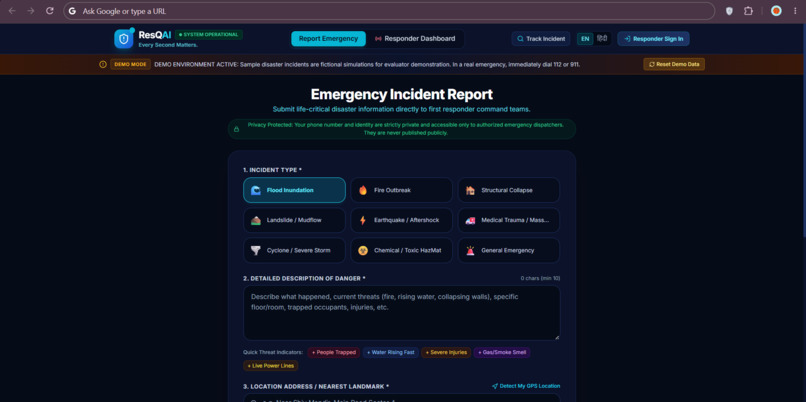
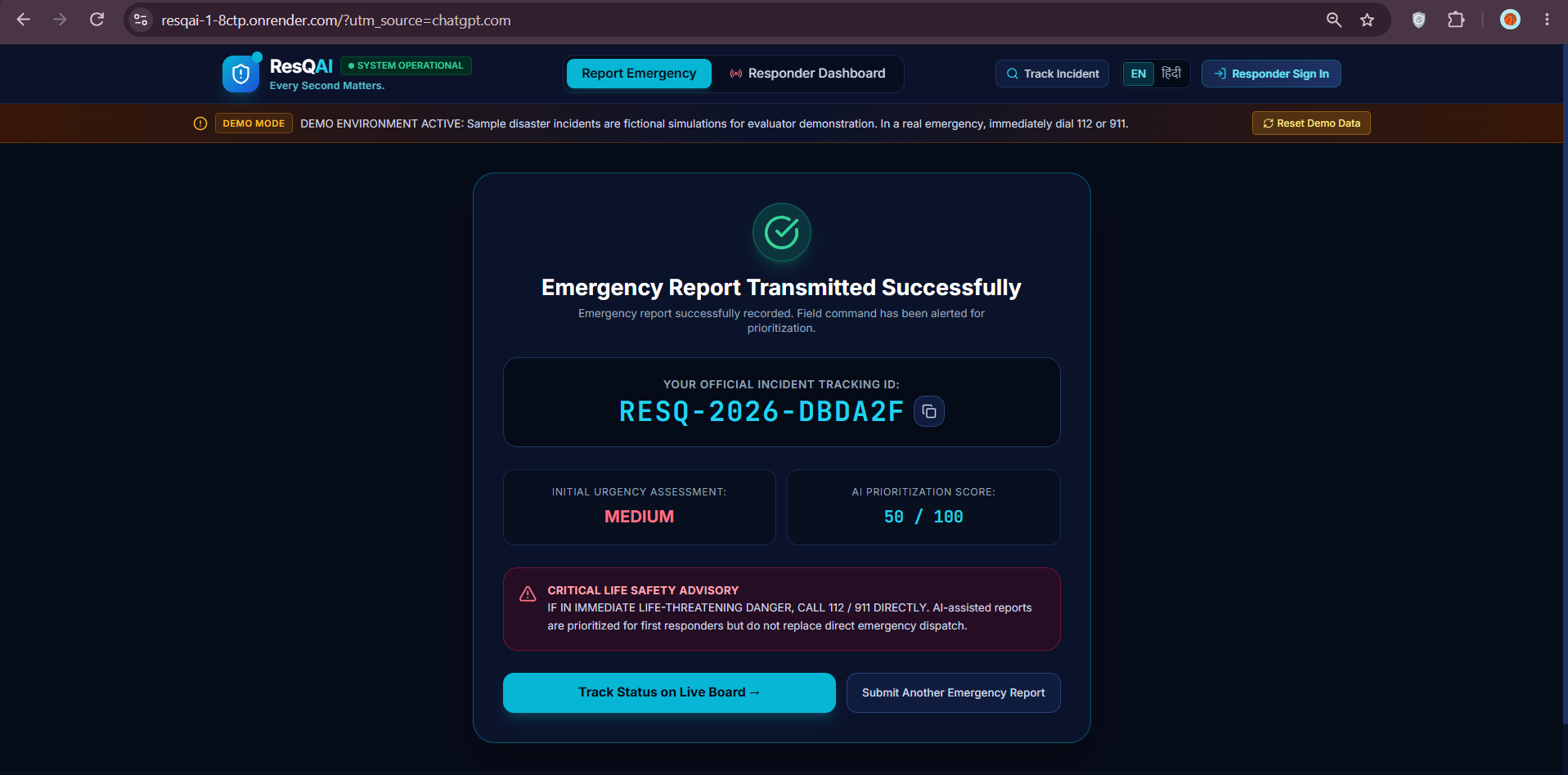
ResQAI Emergency Incident Reporting Dashboard
-
-
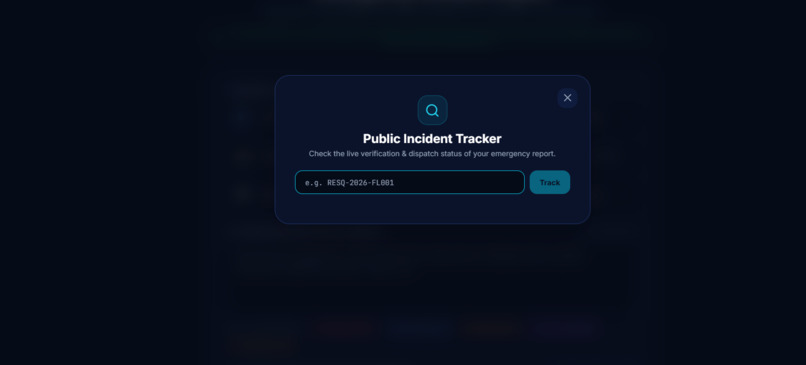
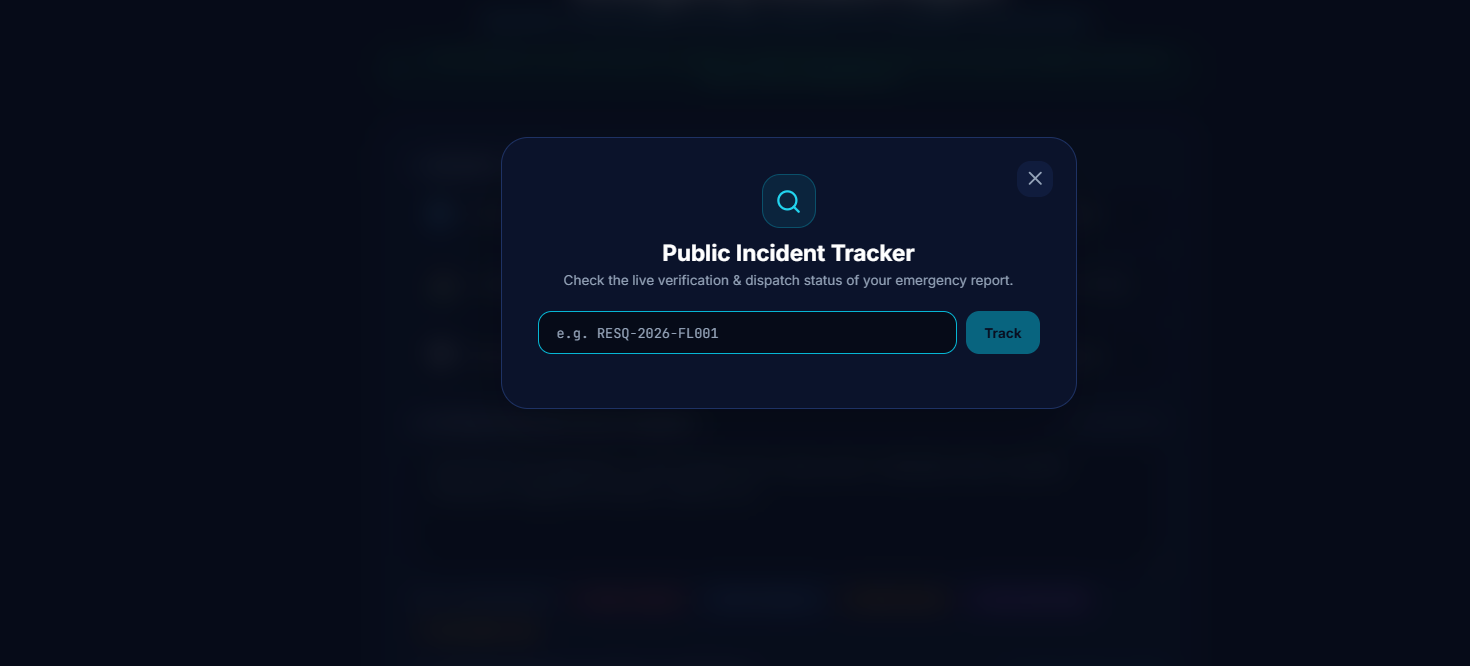
Public Incident Tracker – Incident Status Lookup
Inspiration
During disasters, every second matters. Emergency reports can get lost, delayed, or lack the critical information needed by first responders. We wanted to build a system that helps people report emergencies quickly and helps responders prioritize incidents.
What it does
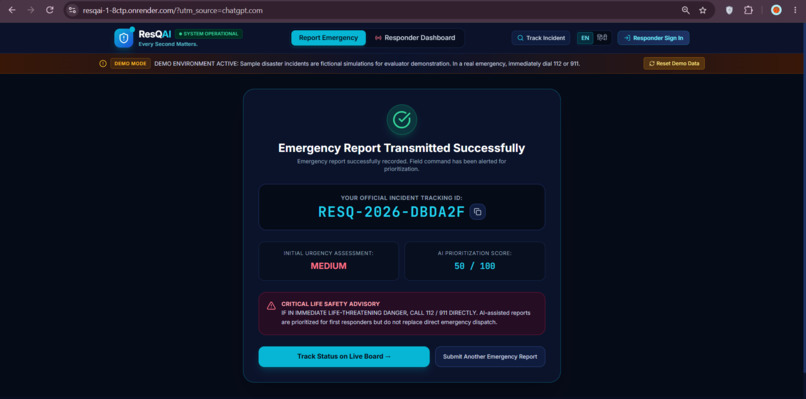
ResQAI is an AI-assisted emergency incident reporting and responder coordination platform. People can report incidents such as floods, fires, earthquakes, structural collapses, and medical emergencies. The platform collects location, danger descriptions, and people-at-risk information. Responders can view incidents, prioritize them, and track their status. A public incident tracker helps users check report progress.
How we built it
We built the frontend using React and Vite and the backend using FastAPI. The backend provides APIs for incident reporting, dashboard statistics, and incident management. We deployed the backend on Render and connected the frontend to it.
Challenges we faced
One of our main challenges was connecting the deployed frontend and backend. We worked through API configuration and CORS issues to make cross-origin requests work.
What's next
We plan to improve AI-based severity assessment, real-time responder updates, map-based incident visualization, multilingual accessibility, and secure responder authentication.
Note
ResQAI is a hackathon demonstration using simulated incidents. It is not a replacement for official emergency services.
Built With
- ai
- fastapi
- python
- react
- render
- restapi
- typescript
- vite
