Inspiration
Bengaluru has a massive stray animal population, but rescue coordination is highly fragmented across WhatsApp groups, NGOs, shelters, and volunteers. During emergencies, finding the right rescuer or nearby vet quickly becomes difficult. We wanted to build a centralized AI-powered rescue intelligence system that can save crucial time and improve rescue response efficiency.
What it does
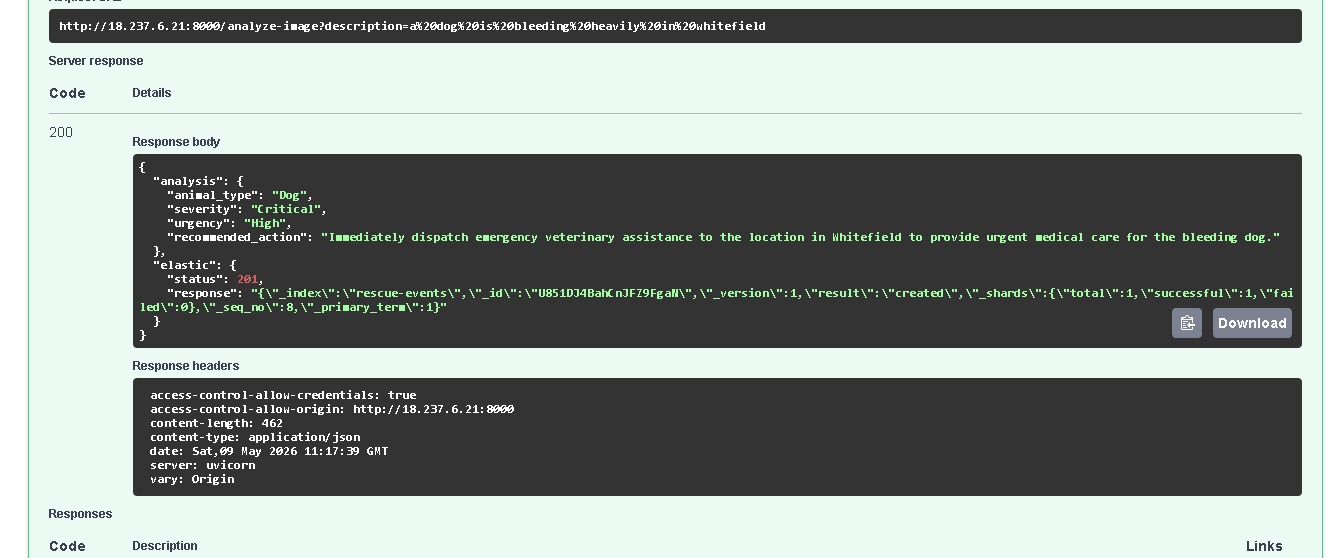
ResQAI is an AI-powered pet and stray animal rescue coordination platform. Users can report emergencies using text and location, and the system intelligently identifies urgency, nearby rescue resources, shelters, vets, and support teams. It combines Bengaluru stray population data, rescue intelligence, and real-time coordination into one platform.
How we built it
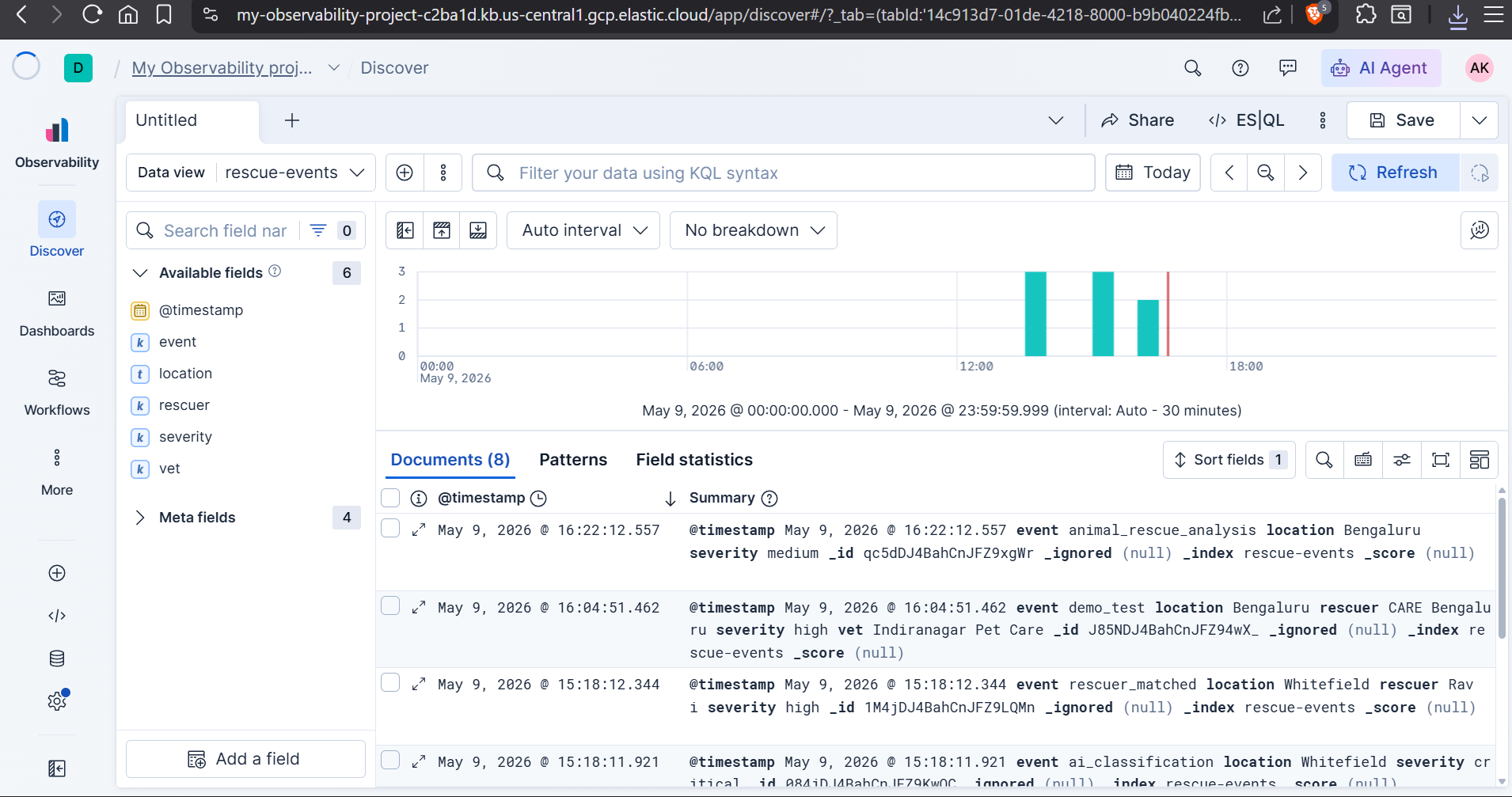
We built the system using FastAPI for the backend and Elastic tools for the frontend and search infrastructure. We combined BBMP stray dog survey datasets with a custom Bengaluru rescue resources dataset containing vets, shelters, NGOs, and rescue contacts. Using Google Colab and Pandas, we cleaned, standardized, and merged the datasets into a unified rescue intelligence layer. We also integrated AI-based emergency classification and semantic search concepts for intelligent matching.
Challenges we ran into
One of the biggest challenges was dealing with inconsistent public datasets. Different datasets had different formats, missing values, and mismatched geographic naming conventions. Another challenge was designing a system that could remain simple enough for a hackathon MVP while still feeling impactful and scalable.
Accomplishments that we're proud of
We successfully created a unified Bengaluru rescue intelligence dataset by combining public municipal data with custom rescue infrastructure data. We also designed an AI-assisted coordination flow capable of matching emergencies with nearby rescue resources in real time. Most importantly, we transformed fragmented rescue information into a centralized operational system.
What we learned
We learned how critical data engineering and standardization are in real-world AI systems. We also gained experience in building AI-assisted coordination workflows, integrating geographic intelligence, and designing scalable emergency response systems using modern cloud and search technologies.
What's next for ResQAI
We plan to add live rescuer availability tracking, WhatsApp integration, multilingual voice support, real-time route optimization, shelter occupancy monitoring, and predictive hotspot analysis using historical rescue and stray population data. Our long-term vision is to build a city-wide intelligent rescue ecosystem that can scale across India.
Built With
- fastapi
- python

Log in or sign up for Devpost to join the conversation.