Inspiration
Floods and disasters often create chaos not because of lack of data, but because authorities lack clear decision guidance. We were inspired by the idea of building a system that does more than show maps and numbers — a system that can reason and suggest what actions should be taken during emergencies.
What it does
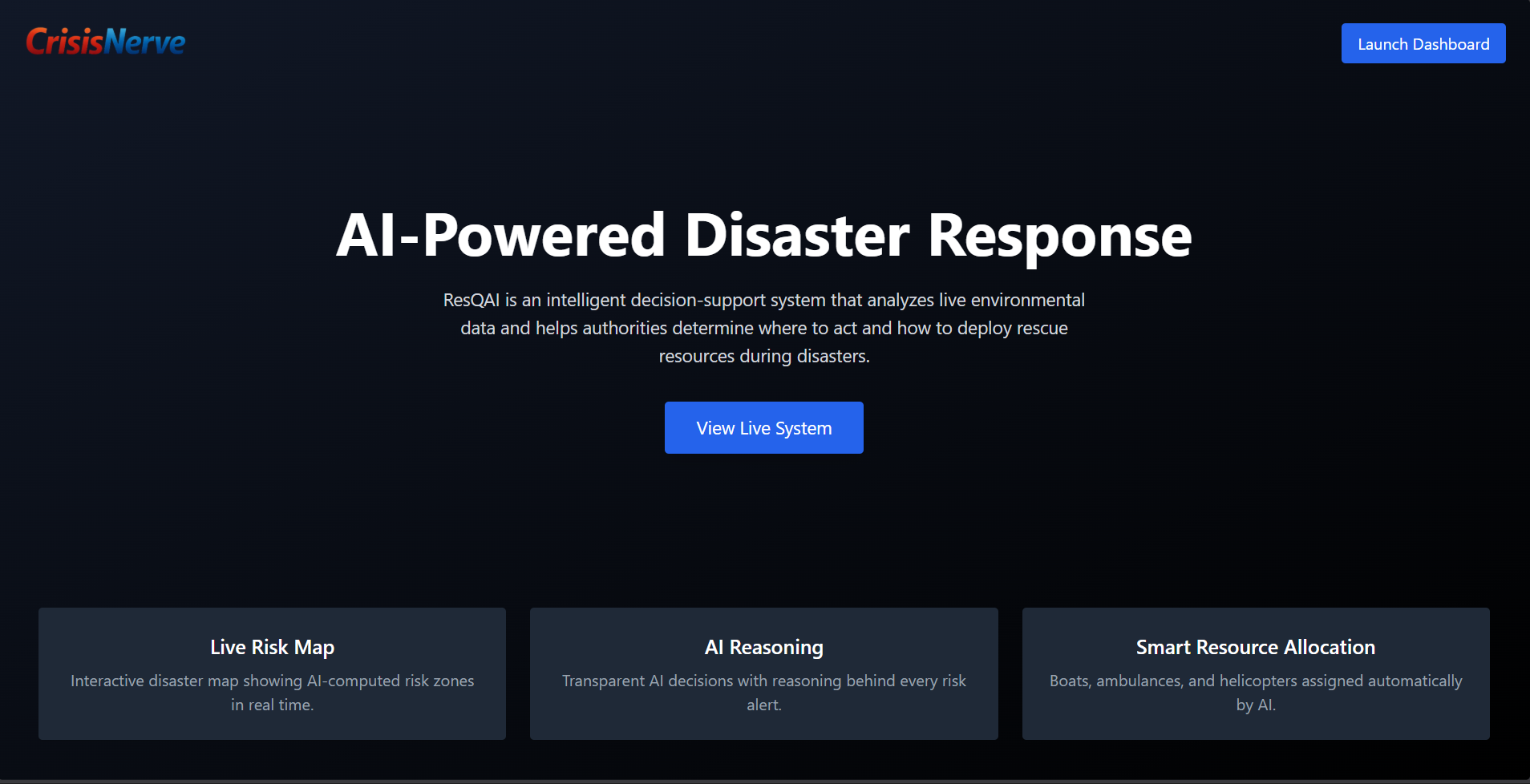
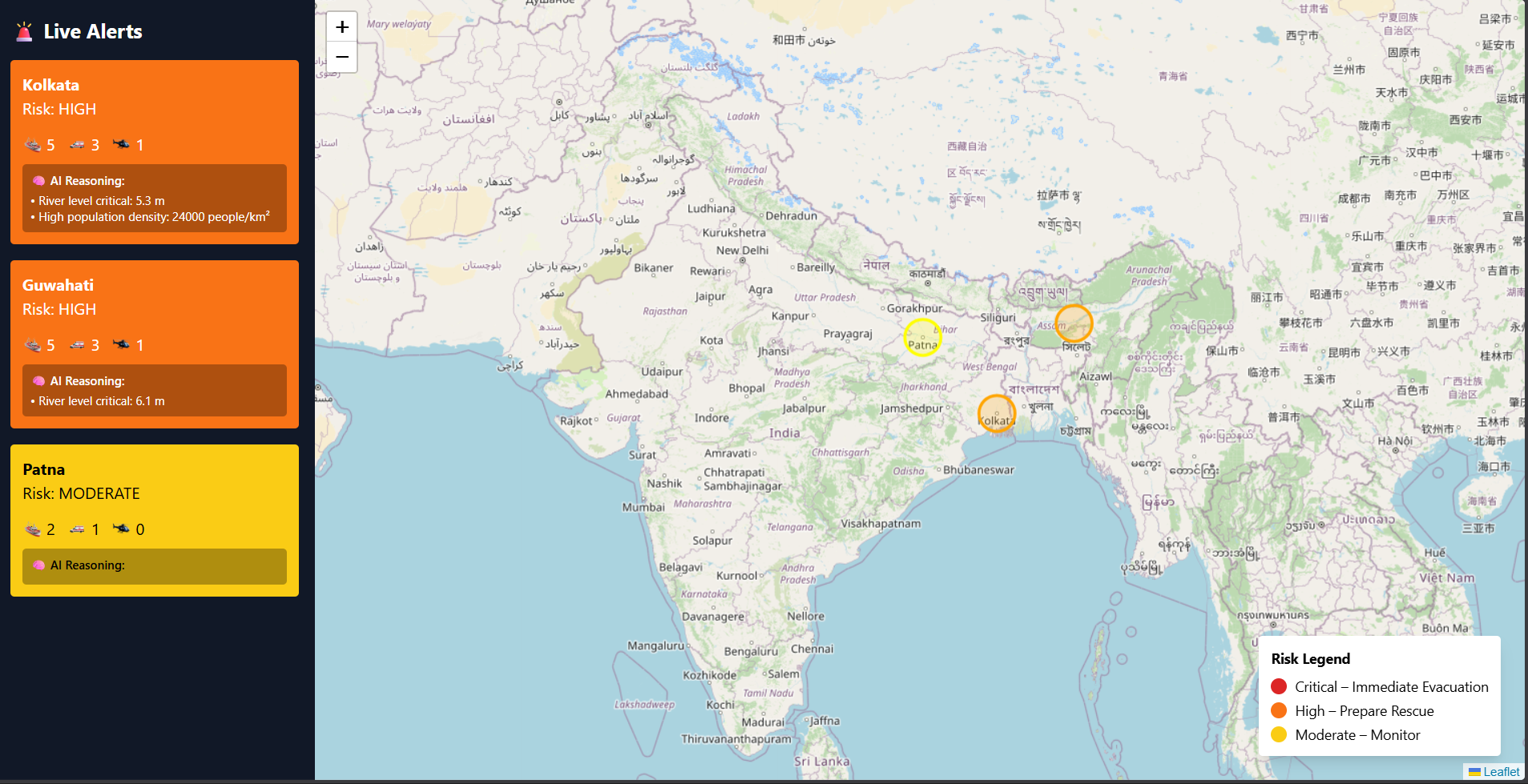
CrisisNerve continuously monitors live environmental data and analyzes multiple regions to identify disaster risk in real time. It visualizes high-risk zones on an interactive map, provides recommended actions such as evacuation or monitoring, and intelligently suggests how rescue resources like boats, ambulances, and helicopters should be deployed. For every alert, the system also displays an AI reasoning log explaining why a zone is marked critical, making the decision process transparent and trustworthy.
How we built it
The system follows a multi-agent architecture: -A Collector Agent fetches live rainfall data from a weather API. -A Risk Analyzer Agent computes risk scores using environmental and geographic factors. -A Decision Agent determines the appropriate action (evacuate or monitor). -A Resource Planner Agent allocates rescue resources. -An Orchestrator connects all agents and serves results via FastAPI. The frontend is built using React, Tailwind CSS, and React-Leaflet to create a responsive disaster dashboard.
Challenges we ran into
-Handling real-time API data and ensuring the system remains stable -Making the AI reasoning visible and understandable -Designing a responsive UI for a complex dashboard -Deploying and connecting frontend and backend reliably
Accomplishments that we're proud of
-Built a complete multi-agent AI architecture instead of a single rule-based script -Integrated live rainfall data from a weather API to make the system dynamic -Created an explainable AI reasoning panel for every risk decision -Designed a responsive disaster dashboard with real-time map visualization -Successfully deployed the full stack (FastAPI backend + React frontend) to the cloud -Turned raw environmental data into clear, actionable decisions for disaster response
What we learned
-How to design a system using an agent-based architecture instead of a single monolithic script -How to integrate live APIs and handle real-time environmental data reliably -The importance of making AI decisions explainable through reasoning logs -How to visualize geospatial risk data effectively using interactive maps -How to build and deploy a full-stack application (FastAPI + React) for real-world use cases -The value of converting raw data into clear, actionable insights for decision-makers
What's next for CrisisNerve
-Integrating additional real-time data sources such as satellite feeds and river sensors -Expanding the system to support other disaster types like earthquakes and wildfires -Adding predictive models to forecast risk before it becomes critical -Providing alert notifications to authorities via SMS or email -Building an admin panel for disaster management teams to customize regions and thresholds

Log in or sign up for Devpost to join the conversation.