ResQAI: Report. Respond. Rescue.
Inspiration
- Every second matters in an emergency. ResQAI was inspired by the need to reduce response time and improve trust and coordination between citizens and first responders—especially for high‑risk situations like women’s safety—by combining real‑time reporting, mapping, and AI assistance.
What it does
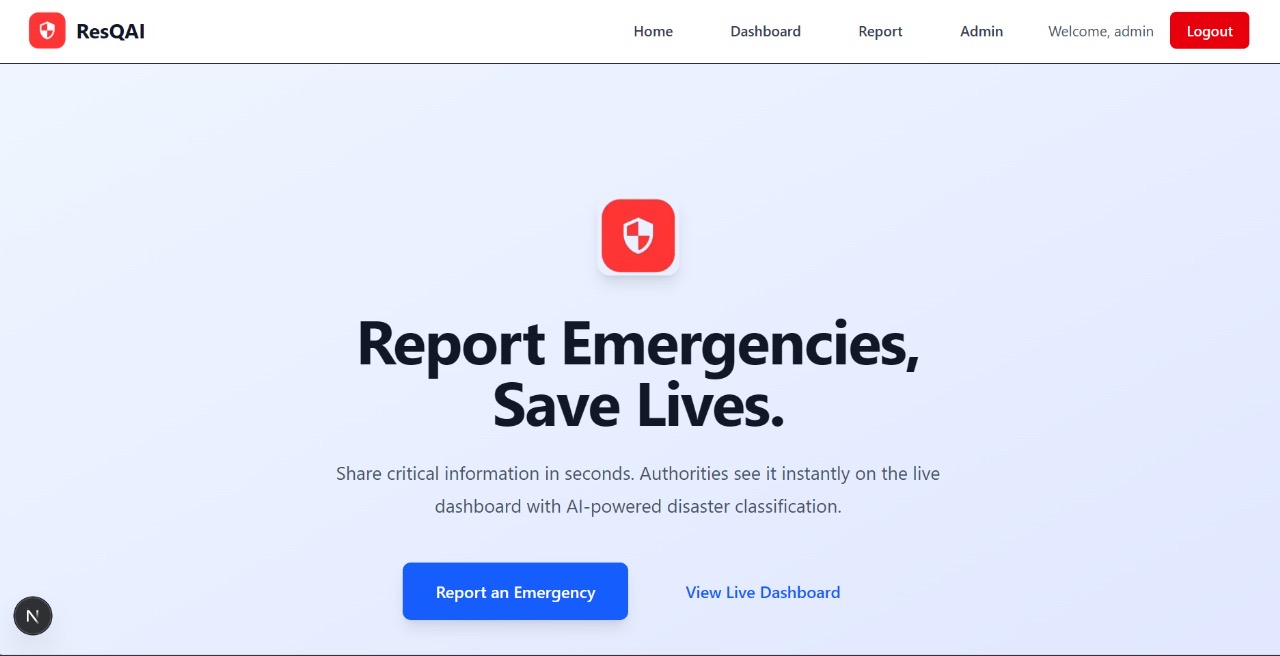
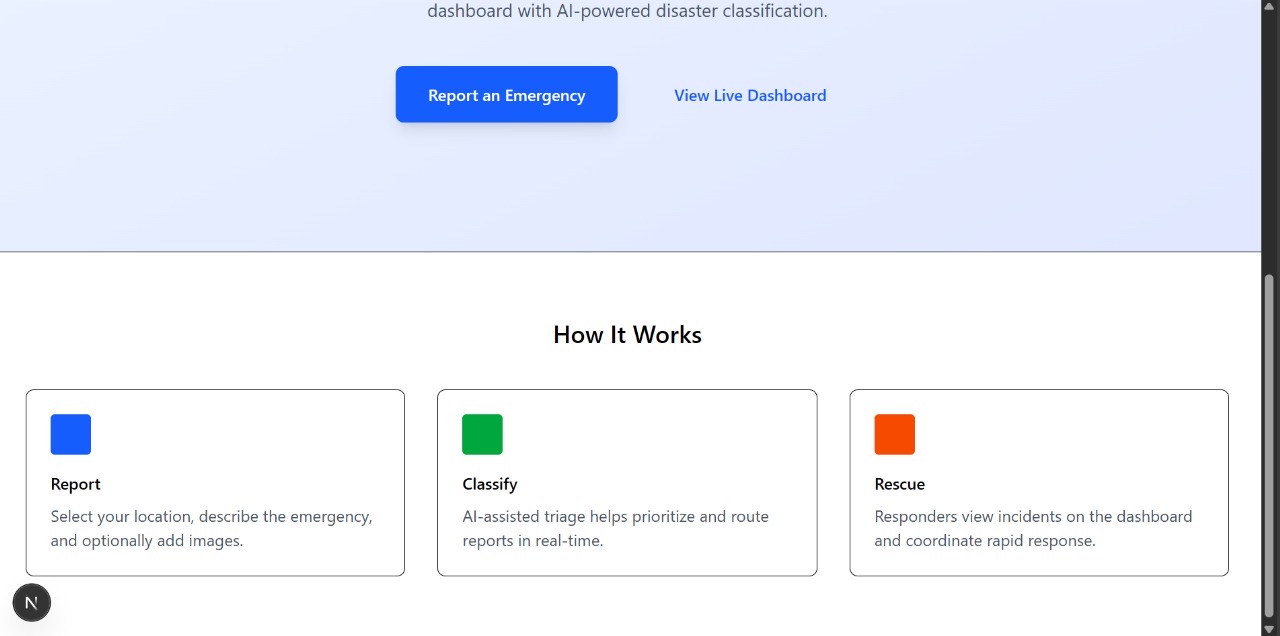
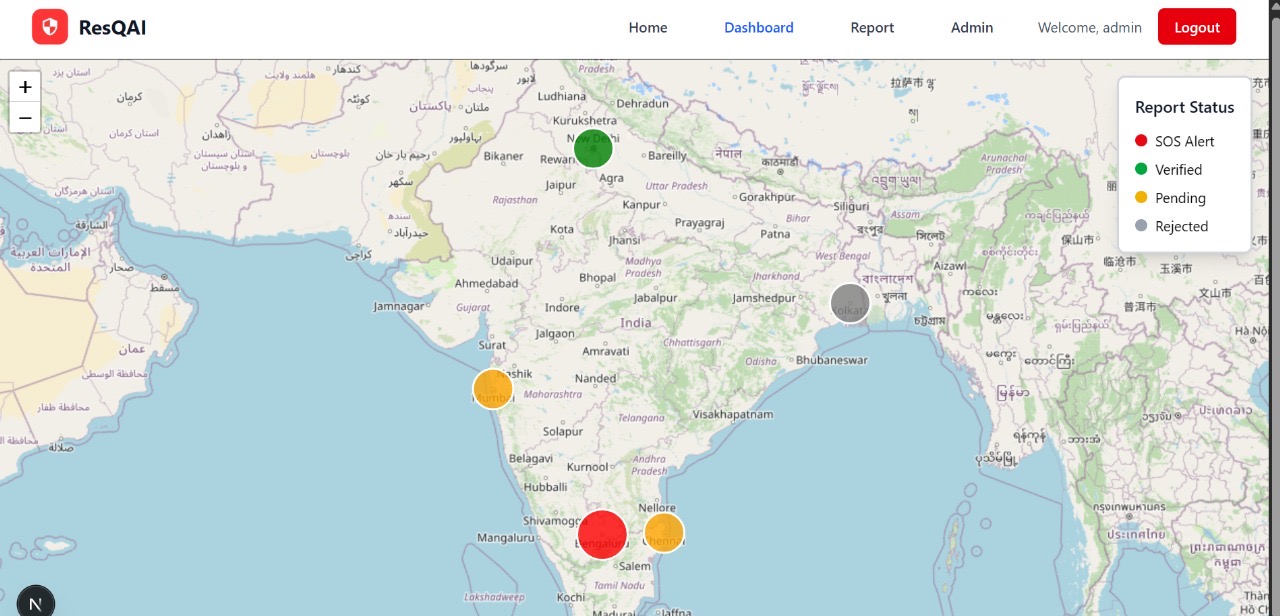
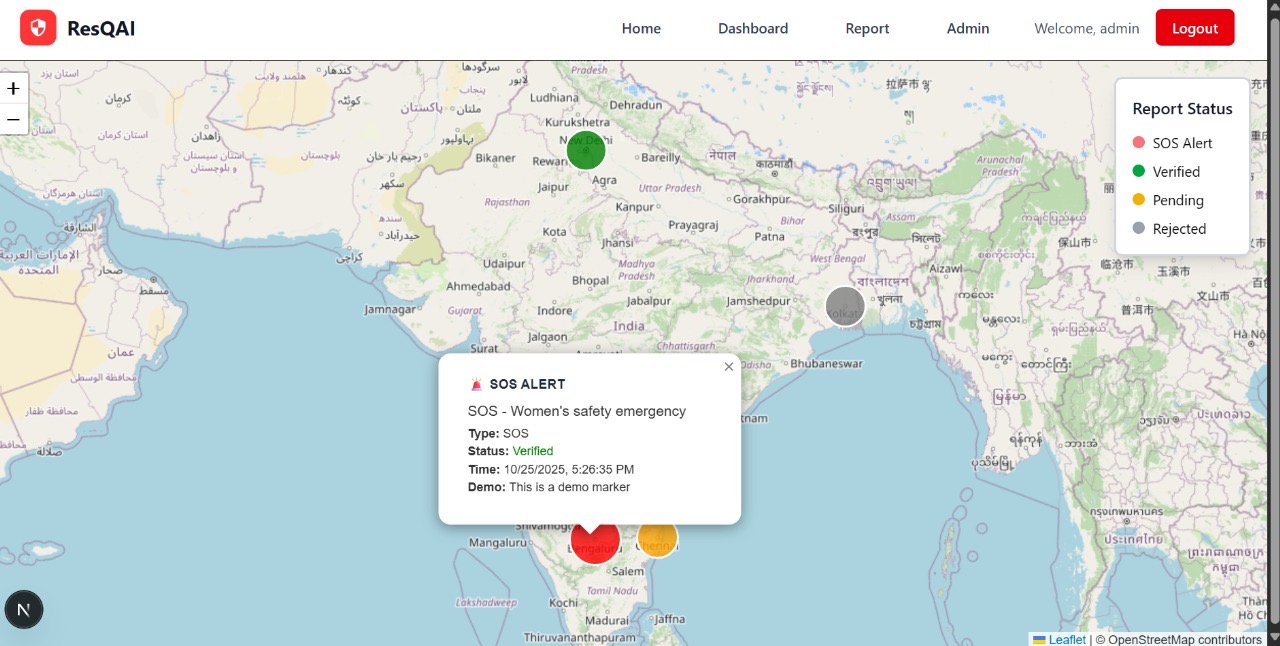
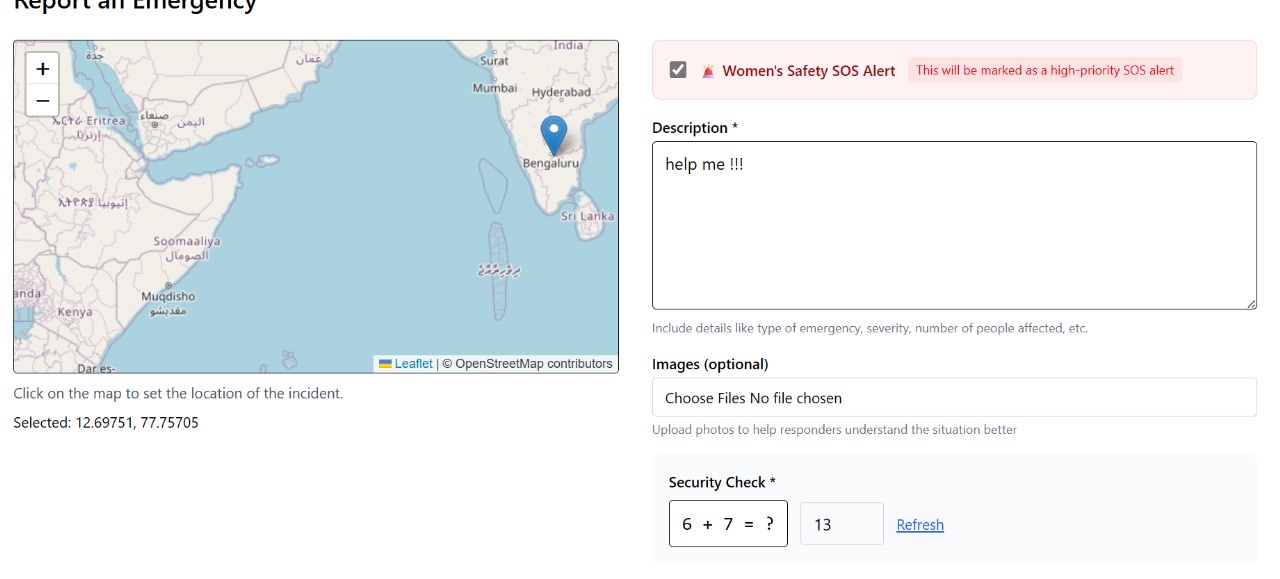
- Lets citizens submit incident reports (text + location) and instantly maps them.
- Runs AI classification (Flood / Fire / Earthquake / Other) with confidence scoring so responders can triage faster.
- Provides a dedicated women’s SOS mode that gets prioritized handling.
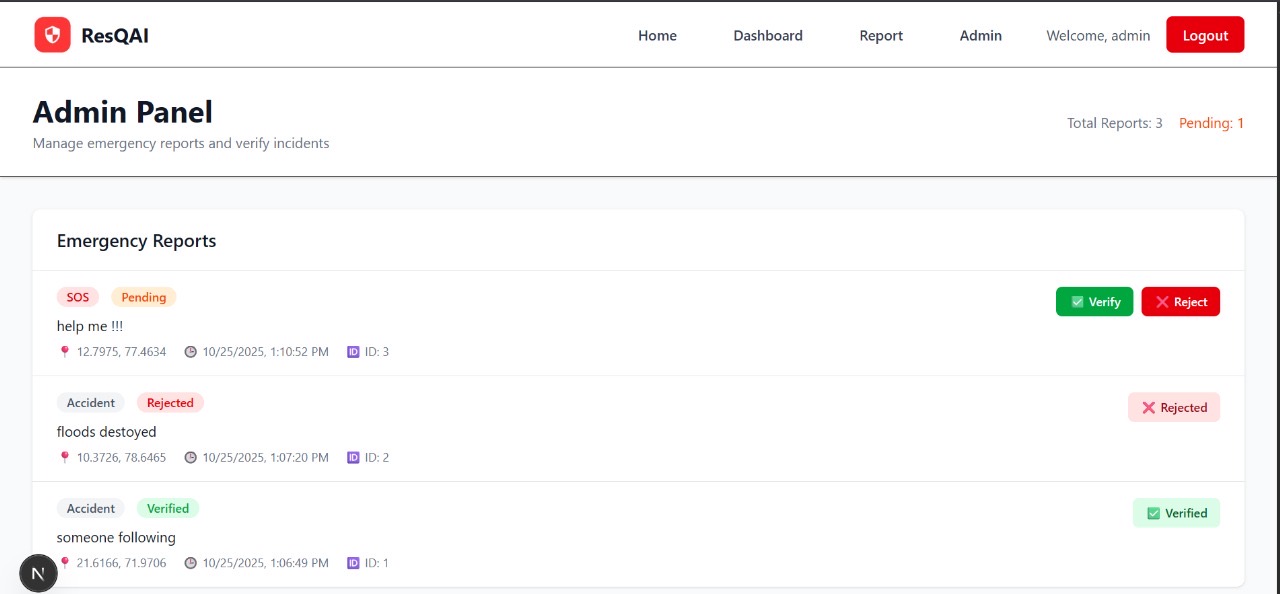
- Shows only admin‑verified reports to reduce noise and false alarms.
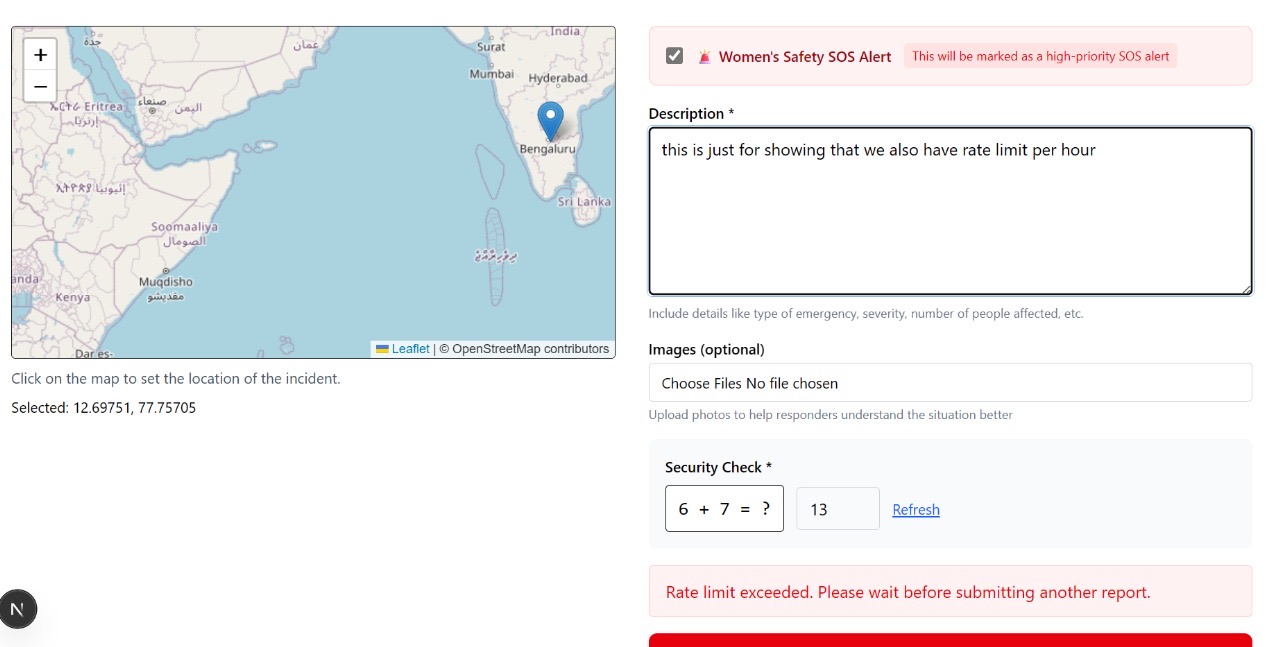
- Protects endpoints with CAPTCHA and API rate limiting to prevent spam/abuse.
- Exposes data and dashboards through a web frontend and API backend for responders and admins.
How we built it
- Full‑stack prototype using Next.js/React/Tailwind frontend and FastAPI Python backend.
- ML components (ml_model.py) with packaged artifacts in models/ provide incident classification and urgency scoring.
- PostgreSQL schemas and access are implemented in database.py / schemas.py (sample disaster.db included).
- Real‑time maps via Mapbox/Google Maps. Admin verification, CAPTCHA, and rate limiting are implemented in middleware/config for security. Dependencies and dev tooling are in package.json and requirements.txt for local development and basic CI workflows setup.
Challenges we ran into
- Balancing automation and human judgment: preventing false positives while surfacing urgent incidents required conservative model thresholds and a verification pipeline.
- Data quality and labeling: realistic emergency datasets are scarce and sensitive, so we relied on synthetic augmentation, careful curation, and validation to train and evaluate models.
- Geolocation: achieving precise coordinates and resolving ambiguous addresses to avoid duplicate reports was difficult.
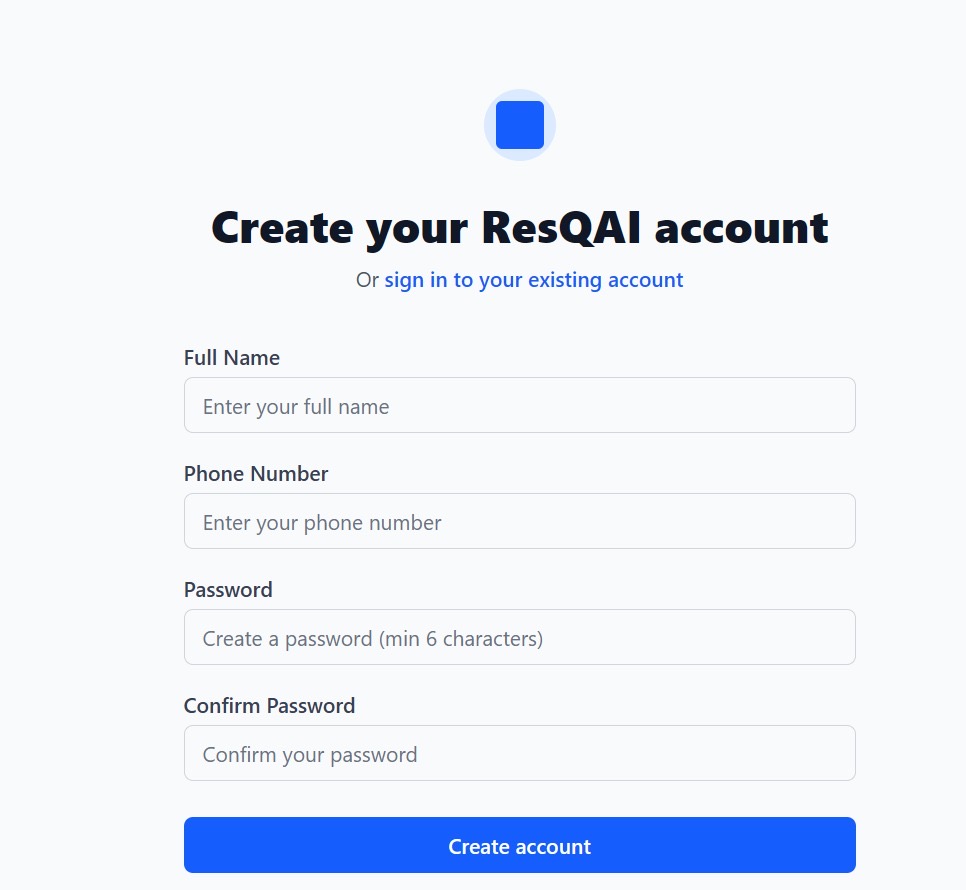
- Security and abuse prevention: CAPTCHA, rate limiting, and admin authentication were essential to block spam and malicious reports.
- Cross‑stack integration: coordinating the Next.js frontend, FastAPI services, and Python ML required disciplined API contracts, testing, and deployment.
Accomplishments that we're proud of
- Implemented a women's SOS flow that prioritizes urgent safety reports and simplifies reporting for at‑risk users.
- Built an interactive map UI with clickable pins and filtering for admin‑verified reports so responders focus on trusted incidents.
- Added anti‑abuse measures (CAPTCHA, rate limits) and an admin verification pipeline to improve signal quality and reduce noise.
What we learned
Human verification remains essential: AI can prioritize but should not replace humans.
Small UX choices (clear SOS flow, required location fields) drastically affect response speed and clarity.
Security, privacy, and data quality are as important as model accuracy for real deployments.
What's next for ResQAI
- Improve ML: expand training data, add more incident types, and enhance explainability.
- Enhance geospatial capabilities: resource mapping, responder routing, and better incident clustering.
- Build mobile apps for on‑field responders and citizens; pilot integrations with emergency services.
- Scale and harden production: monitoring, stronger authentication, and multilingual support.
Built With
- googlemapapi
- javascript
- mongodb
- next.js
- python
- react
- tailwindcss


Log in or sign up for Devpost to join the conversation.