-
-
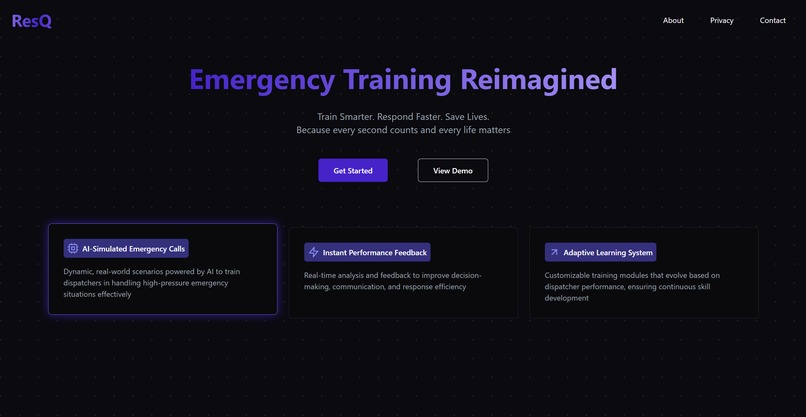
Landing Page for our application
-
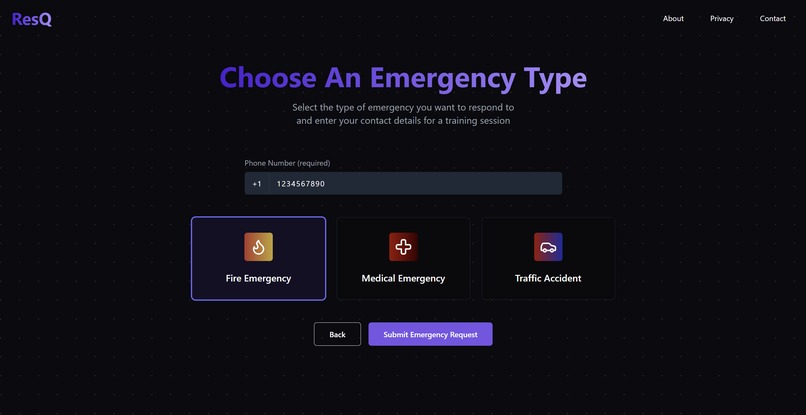
Main Page for our application- where emergency type to be trained is selected
-
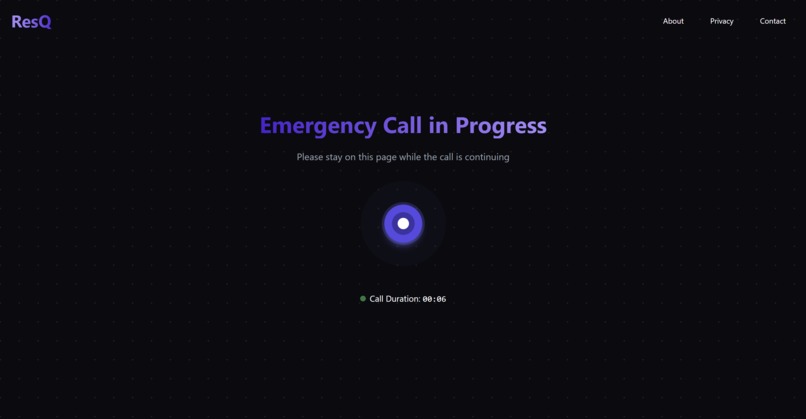
Loading page - while call is in progress
-
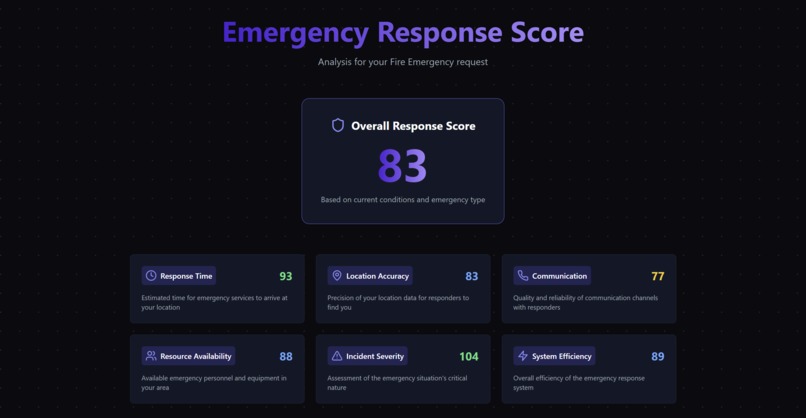


ResQ: Revolutionizing Emergency Dispatch Training
Inspiration
ResQ came into existence after a concerning incident involving an electric scooter that overheated and caught fire in the lobby of a nearby dorm. The aftermath of the event showed that the escalation of the situation was primarily due to communication failures between the emergency dispatchers and the individual reporting the incident. This not only caused property damage but also highlighted the urgent need for better communication practices in emergency situations. This incident sparked the creation of ResQ—an innovative tool aimed at improving emergency dispatch training through simulated scenarios and real-time feedback.
What it does
ResQ is designed to enhance the skills of current and aspiring emergency dispatchers. The platform provides realistic, simulated emergency scenarios to train dispatchers, helping them practice how to handle various emergency situations. It goes beyond basic training by offering actionable feedback based on the user's performance in these simulations. This feedback helps dispatchers understand how they can improve their communication and decision-making skills in high-pressure situations.
How we built it
The foundation of ResQ lies in a combination of modern technologies. For the voice component, we used the Twilio API to simulate phone calls, which allowed us to replicate the communication aspect of real-life emergency dispatch. To analyze and respond intelligently to the conversations, we integrated Retell API. This enabled the platform to act as the "user" in these simulated emergencies, analyzing the dispatcher’s responses and offering feedback. For the front end, we utilized React with TypeScript to create an intuitive and responsive interface, while the back-end was built using Flask to handle the core logic and API interactions.
Challenges we ran into
One of the biggest hurdles we faced was attempting to use a real-time API to reduce latency during the phone calls. Unfortunately, this approach didn’t work out as expected, and we encountered several performance issues. Another challenge was implementing multiple agents to simulate different emergency scenarios. Gathering summaries and transcripts from each agent was also much harder than anticipated, requiring intricate parsing and processing to ensure accurate feedback. Despite these hurdles, we managed to find workarounds that allowed us to move forward with the project.
Accomplishments that we're proud of
We are incredibly proud of how everything came together. What started as a daunting task—particularly with no prior experience in front-end development—has now turned into a fully functional platform. Seeing everything come together, from the voice simulations to the agent feedback, was a huge accomplishment for our team.
What we learned
Throughout the development process, we learned a great deal about combining different technologies to create a cohesive product. Working with APIs like Twilio and models like GPT-4 allowed us to understand how to integrate third-party services and leverage their capabilities effectively. We also gained practical experience in front-end development, particularly in using React and TypeScript to create a dynamic and user-friendly interface. Additionally, managing real-time interactions and handling complex data for feedback provided valuable insights into performance optimization and system architecture.
What's next for ResQ
The next step for ResQ is to officially launch as a company. We aim to scale the platform and make it widely available to emergency dispatchers and training centers. In the future, we plan to expand the scenarios available for training, offer more detailed analytics, and continuously improve the AI's ability to provide actionable feedback. Ultimately, we hope that ResQ can play a significant role in improving the quality of emergency response across the globe.



Log in or sign up for Devpost to join the conversation.