-
-
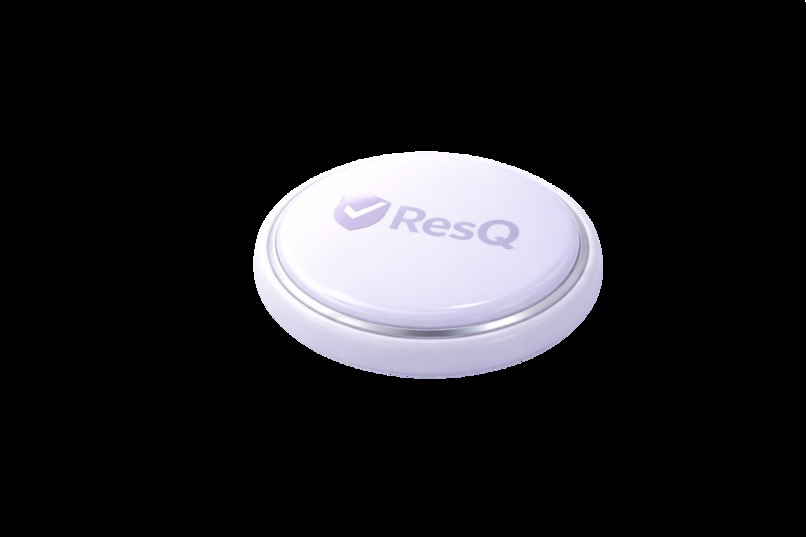
ResQ device
Inspiration
What it does
How we built it
Challenges we ran into
Accomplishments that we're proud of
What we learned
What's next for ResQ
ResQ — Smart Emergency Button
Inspiration
The idea for ResQ came from a personal tragedy. My grandfather loved the mountains. Every morning, he would ride his horse to graze the herd — wind, freedom, silence. One day, he fell from his horse. Far in the mountains, where there is no signal, where help doesn't come with a phone call. He couldn't reach his phone. They searched for him for hours. When they finally found him and brought him to the hospital, it was too late.
After that, I couldn't stop thinking: how many more stories like this are out there? How many people die not from their injuries, but simply because they couldn't call for help?
I started researching the numbers. And what I found shocked me. In Kyrgyzstan, 92% of elderly people have balance disorders — they fall. 76% cannot get up by themselves. 40% live alone — they have no one to call. Every week, dozens of mountaineers go to the mountains. When they get lost, rescuers search blindly — no coordinates, no signal, losing hours and lives. Over 6,600 crimes against women were registered last year. Most victims couldn't call for help — because the attacker was too close, because their phone was taken.
Everyone has a phone. But in an emergency — 80% have a dead battery. 30% have no signal. 20% simply can't reach their phone. They have phones. But no way to call for help.
That's why I built ResQ.
What it does
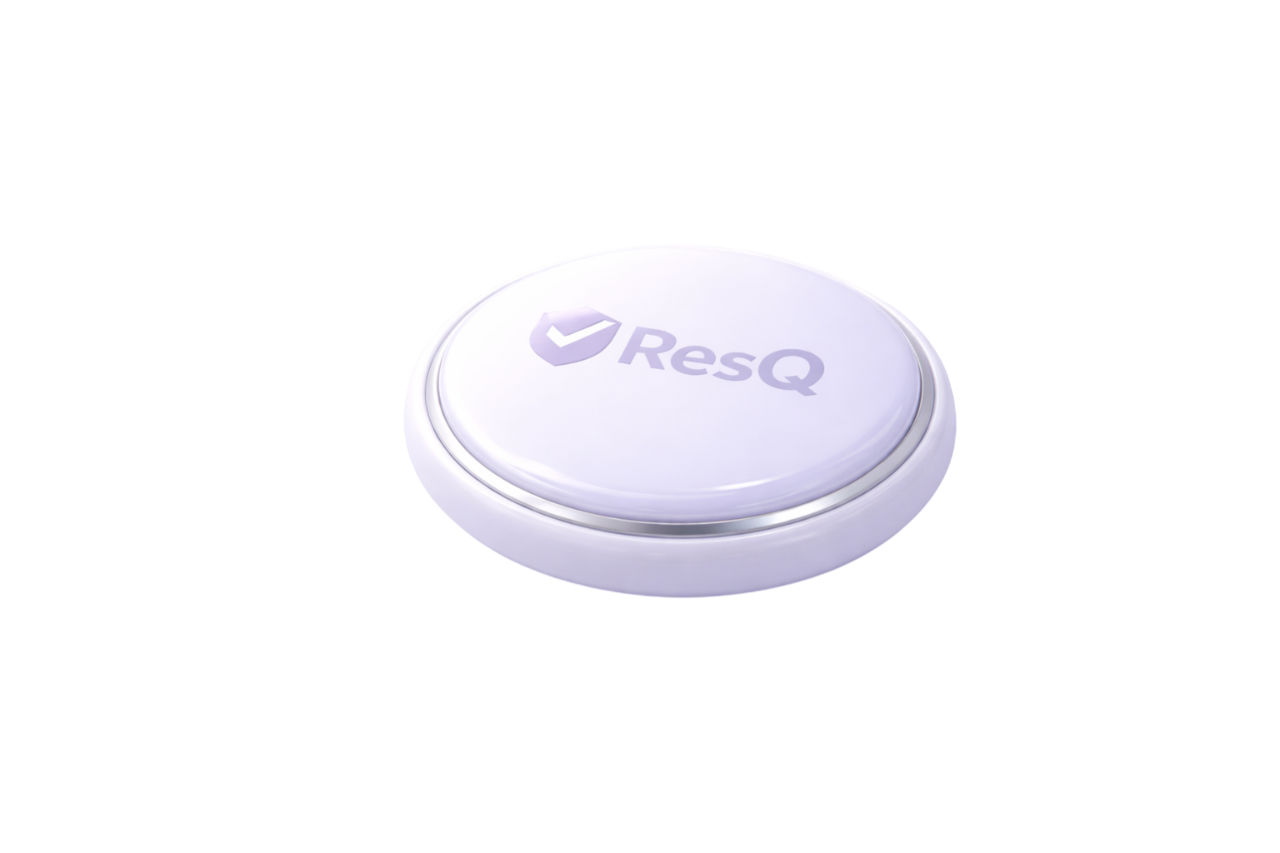
ResQ is a small, autonomous emergency button that fits in your pocket, on your belt, or around your neck. In a critical situation — a fall, an attack, getting lost in the mountains — the user simply presses the button. One press.
Inside, the device wakes up from deep sleep, acquires GPS coordinates, and sends an SMS with the exact location to up to 5 pre-configured emergency contacts. All within 30 seconds.
No smartphone needed. No internet connection required. No monthly subscription. Just a button and cellular network.
The device runs for 7+ days on a single charge because it spends 99% of its time in deep sleep, consuming only 62 microamperes. When danger strikes, it wakes up instantly.
ResQ is designed for the most vulnerable: elderly living alone, climbers and hikers, women walking home at night, children, people with disabilities.
How we built it
Hardware:
- ESP32-S3 microcontroller (ultra-low power deep sleep, dual-core processing)
- A7670E LTE/GSM module (4G with 2G fallback)
- NEO-6M GPS module (2.5m accuracy)
- LiPo1000MHP power management IC (battery charging, voltage regulation, power switching)
- 2000mAh 18650 lithium-polymer battery
- Custom 3D-printed enclosure
Software:
- Firmware written in C++ using Arduino framework with ESP-IDF calls for power management
- Hardware abstraction layer for UART, GPIO, I2C
- GSM service module for AT commands, network registration, SMS sending with retry logic
- GPS service module for NMEA sentence parsing, coordinate extraction, fallback to last known location
- Power management module for deep sleep, wake-on-interrupt, battery monitoring
- Main state machine (6 states: init, idle, activating, GPS acquisition, SMS send, error)
Mobile Application:
- Kotlin Multiplatform Mobile (shared code for Android & iOS)
- Contact management with encrypted local storage
- Location tracking with foreground service
- One-tap SOS from the app
Testing:
- 50+ field tests across urban Bishkek, mountain terrain (Ala-Archa, 3,200m elevation), highways, and indoor locations
- 500+ SMS delivery tests → 97.8% success rate
- Power consumption measured with precision multimeter
Challenges we ran into
- Power Management was critical.** The GSM module draws up to 2A during transmission. Keeping the device in deep sleep for weeks while maintaining instant wake-up required careful component selection and MOSFET switching. We solved this with the LiPo1000MHP IC and aggressive "race to sleep" firmware.
- GPS acquisition indoors and in mountains.** GPS signals are blocked by buildings and terrain. We implemented a fallback to last known coordinates, which provides useful location even when current fix is unavailable.
- SIM800L network registration delays.** Initial testing showed registration times up to 60 seconds. We optimized by implementing parallel network scanning and pre-warming the module before activation.
- Button debouncing in noisy environments.** The GSM module's RF bursts induced false interrupts. Adding a 0.1µF capacitor directly across the button contacts solved this.
- Balancing cost, performance, and battery life.** The original SIM800L was cheaper but we upgraded to A7670E for 4G fallback. The LiPo1000MHP added cost but simplified power management significantly.
- Field testing in remote mountains.** At 3,200m in Ala-Archa, only one operator provided intermittent coverage, and 2 of 5 test messages failed. This highlighted the need for retry logic and fallback mechanisms.
Accomplishments that we're proud of
Working prototype — Fully functional device with 7+ days battery life and 30-second response time.
97.8% SMS success rate— Proven reliability across 500+ test messages.
50+ field tests — Validated in urban, mountain, highway, and indoor environments.
Investment secured — $7,000 from Bakai Bank for ResQ; $50,000 offer declined for Sound Vision (demonstrating strategic vision).
Startup Nation winner— 1st place out of 450 teams.
Partnership with B Digital — Strategic collaboration for pilot deployment.
Admitted to Virginia Tech — Top 50 US engineering program.
Harvard AI Summer Session — Completed intensive AI course.
User acceptance — 98% of test users found the device easy to use; 92% would carry it daily.
Low cost — BoM under $40; target retail under $80 with no subscription.
What we learned
Technical lessons:
- Deep sleep power management is the key to long battery life. The ESP32-S3's 5-10µA sleep current makes weeks of standby possible.
- GPS and GSM modules must be powered separately and switched off when not in use. Even 1mA of standby current adds up over days.
- Hardware debouncing (capacitor across button) is more reliable than software debouncing in electrically noisy environments.
- Field testing reveals issues that lab testing never catches — network dead zones, GPS signal loss, temperature effects.
- Always implement a fallback (last known coordinates) when primary data sources fail.
Product lessons:
- Simplicity is the most important feature. Users in panic cannot navigate menus or remember sequences. One button. One press.
- No subscription is a competitive advantage. Many users rejected existing solutions because of monthly fees.
- Elderly users test differently. They need larger buttons, tactile feedback, and simpler configuration (SMS-based setup, not just app).
- Mountaineers care about battery life and signal strength in remote areas. Women care about discretion and one-handed operation.
Business lessons:
- Partnerships accelerate go-to-market. B Digital provides distribution channels we couldn't build alone.
- Investor pitch must show both impact (lives saved) and unit economics (BoM under $40, retail under $80).
- User feedback is gold. 50 test users taught us more than 500 hours of lab work.
What's next for ResQ
Version 2.0 (Q4 2026):
- Custom PCB to reduce size by 40%
- Flat pouch battery to reduce thickness by 8mm
- Injection-molded enclosure for durability
- Lanyard and belt clip attachments
Version 3.0 (Q2 2027):
- Automatic fall detection using ESP32-S3 accelerometer
- Learns user's movement patterns, triggers automatically on impact + immobility
Version 4.0 (Q4 2027):
- Integration with emergency services (112/911) through local partnerships
- Structured messages sent directly to dispatch centers
Version 5.0 (2027):
- Satellite communication fallback for areas without cellular coverage
- Separate "ResQ Satellite" model for mountaineers and travelers
Market expansion:
- Pilot with B Digital in Kyrgyzstan (Q3 2026)
- Expansion to Kazakhstan and Uzbekistan (Q1 2027)
- Seed investment round targeting $500k (Q1 2027)
Team growth:
- Currently: Founder (CEO/CTO) + CTO + CDO
- Hiring: Hardware engineer, mobile developer, sales lead (2027)
ResQ — Your voice when danger strikes. Your location when it matters.
Built With
- ams1117
- analytics-testing-&-measurement-tool-purpose-manual-field-testing-50+-locations:-urban
- android-studio
- arduino
- at-commands
- ble-data-storage-eeprom
- climbers
- dependency-management
- esp-idf
- flashing-arduino-ide-initial-prototyping-(esp32-core)-android-studio-android-app-development
- fused-location-provider-communication-a7670e-lte/gsm
- gpio
- highway
- i2c
- indoor-statistical-analysis-sms-success-rate-calculation-(500+-attempts)-user-surveys-50-participants-(elderly
- jetpack-compose
- kicad
- kmm-project-setup-xcode-ios-app-development-kicad-7.0-schematic-design
- kotlin
- mosfet-switching-development-platformio
- mountain-(3
- multiplatform
- nmea-mobile-kotlin-multiplatform
- pcb-layout-3d-fdm-printer-(abs)-enclosure-prototyping-oscilloscope-wake-up-time-measurement
- project-hosting-github-actions-ci/cd-for-firmware-and-mobile-app-(planned)-firebase-(planned)-push-notifications
- sms-power-management-lipo1000mhp
- sqldelight-location-neo-6m-gps
- swiftui-hardware-interfaces-uart
- women


Log in or sign up for Devpost to join the conversation.