-
-
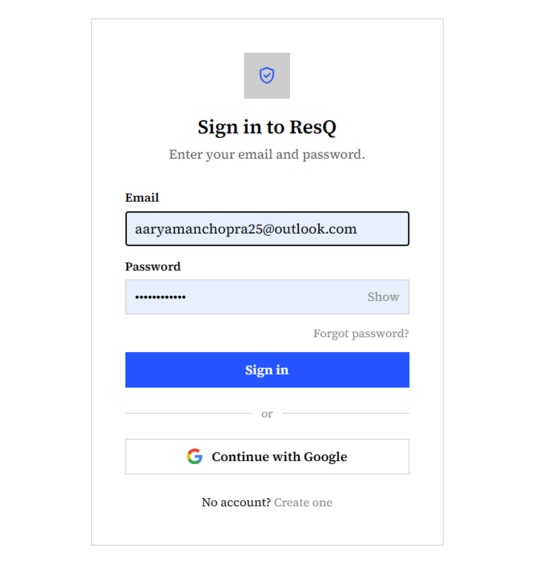
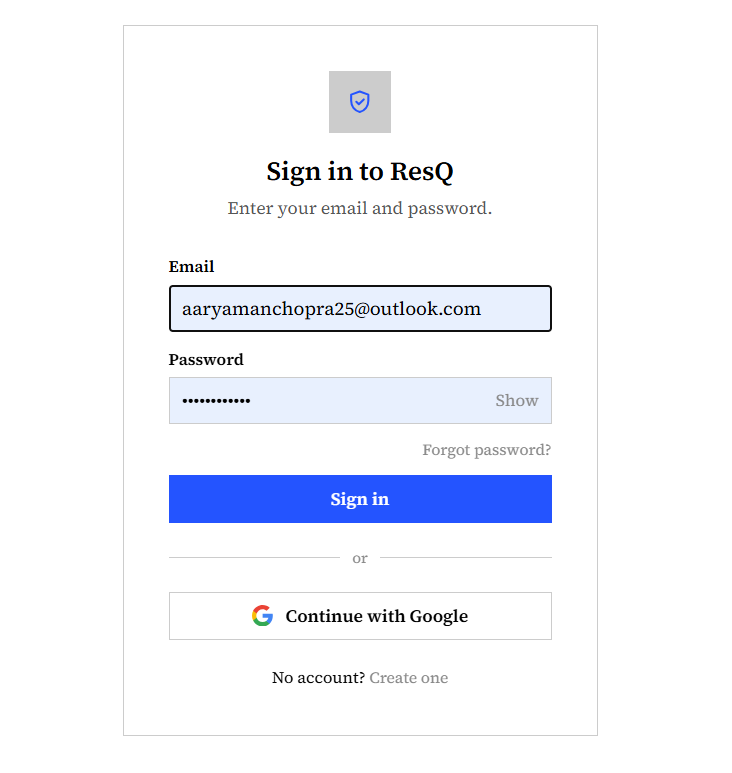
Sign in page
-
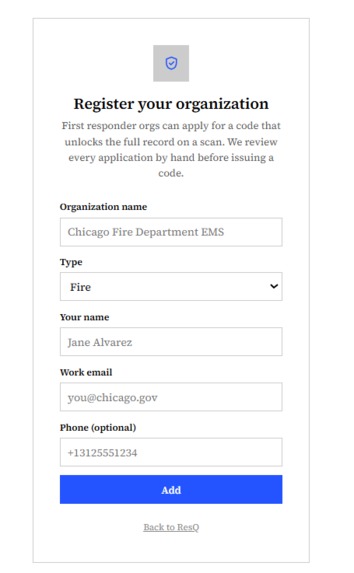
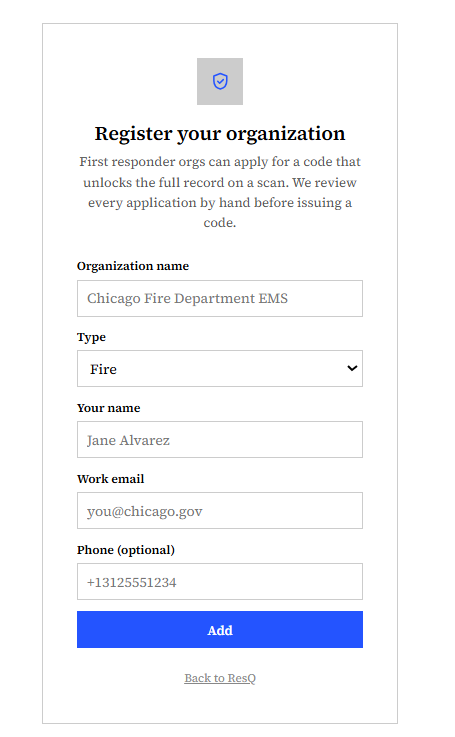
Organization sign up form
-
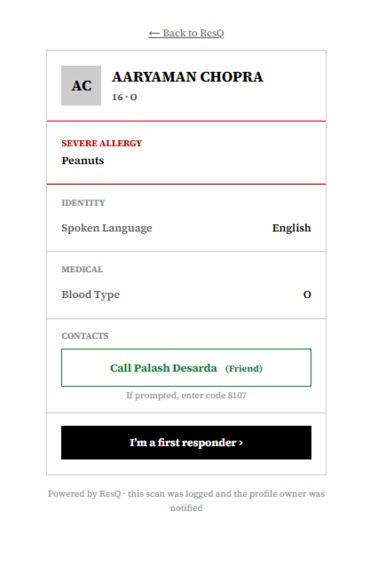
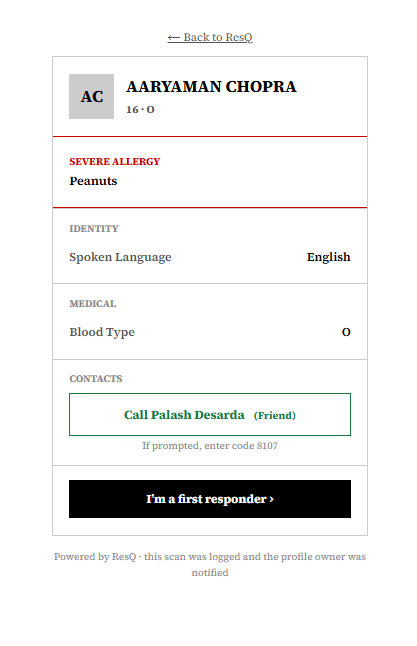
Individual profile screen
-
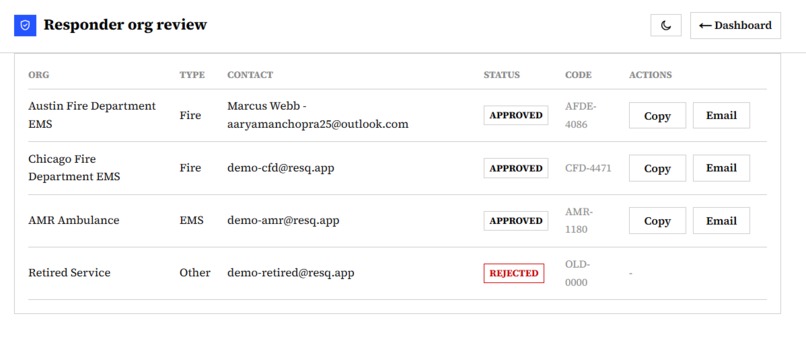
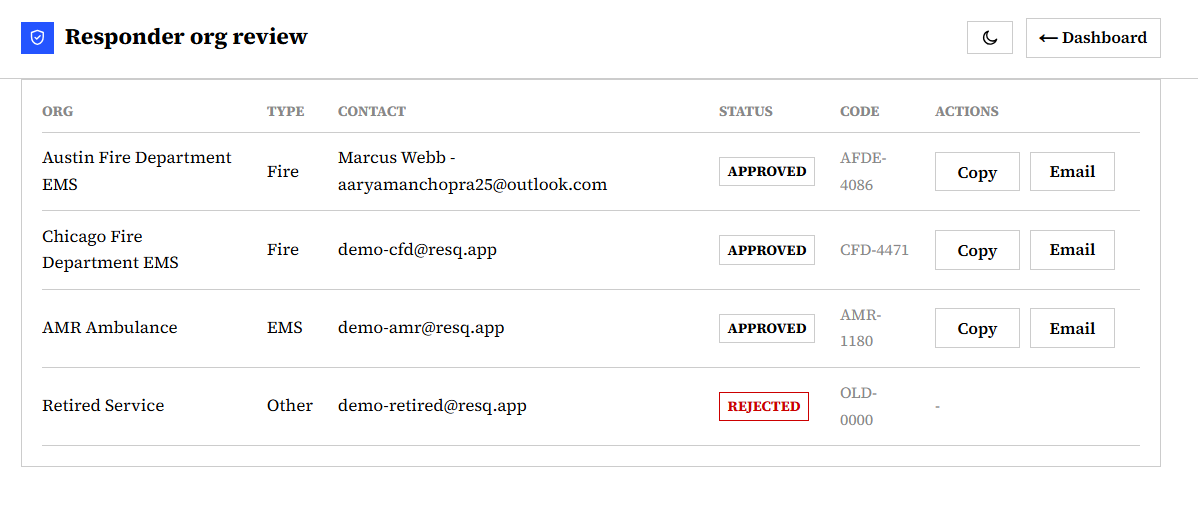
Organization review page
-
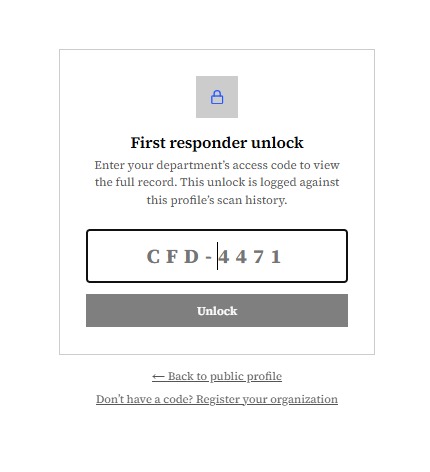
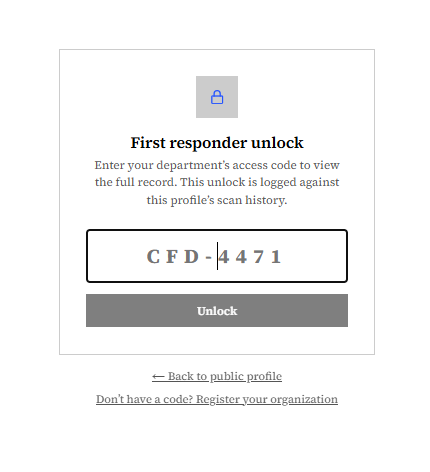
First responder unlock screen
-
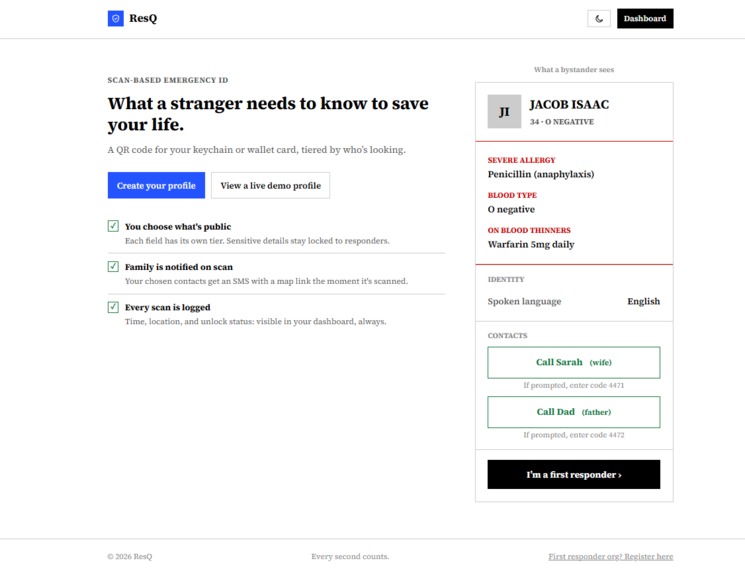
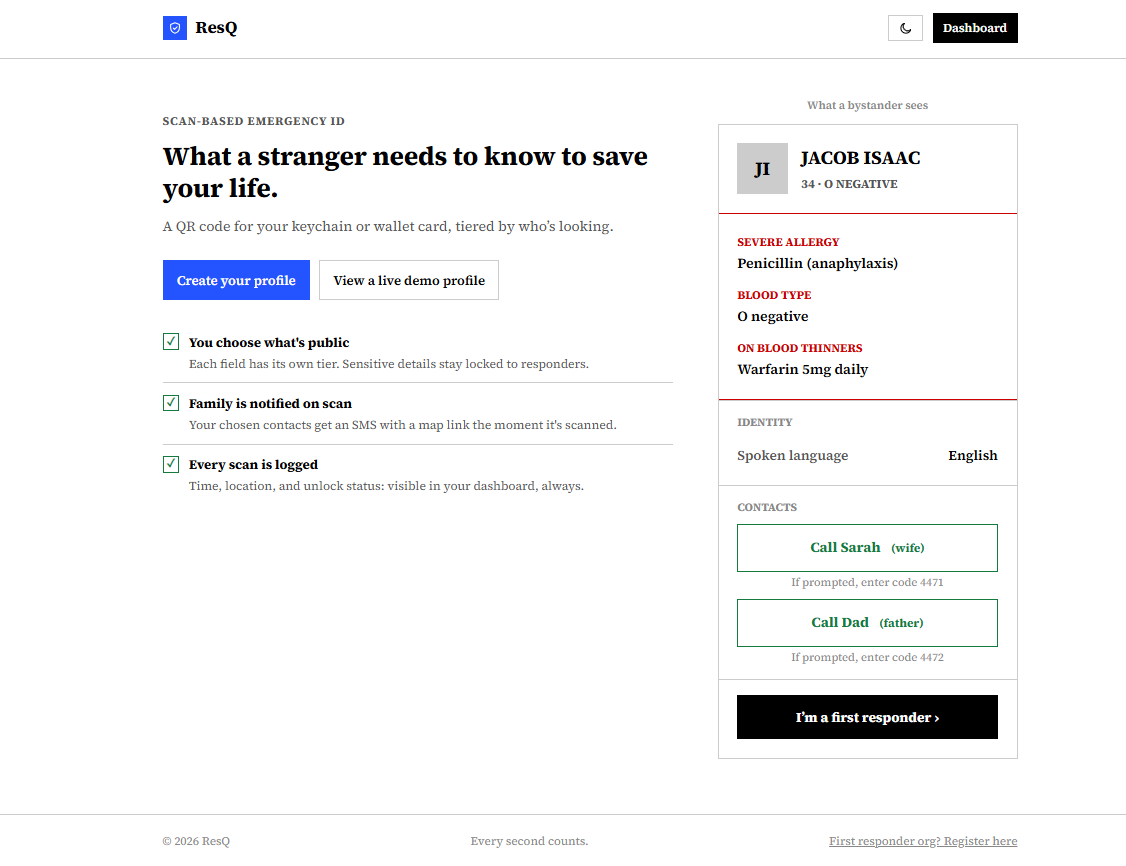
Light mode home page
-
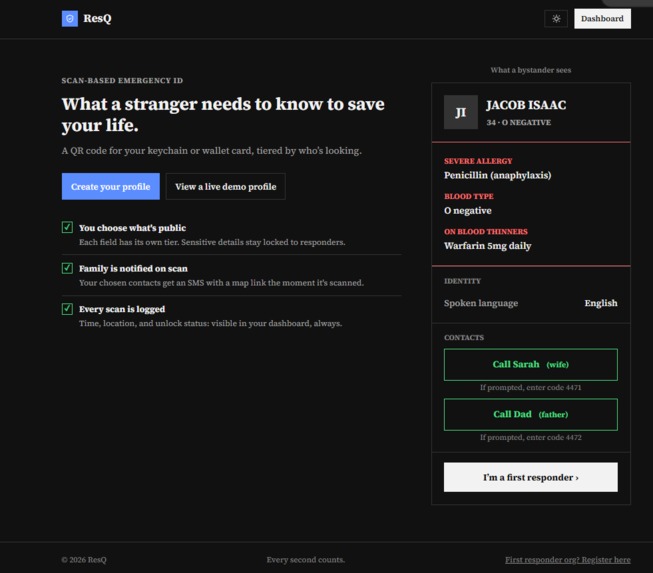
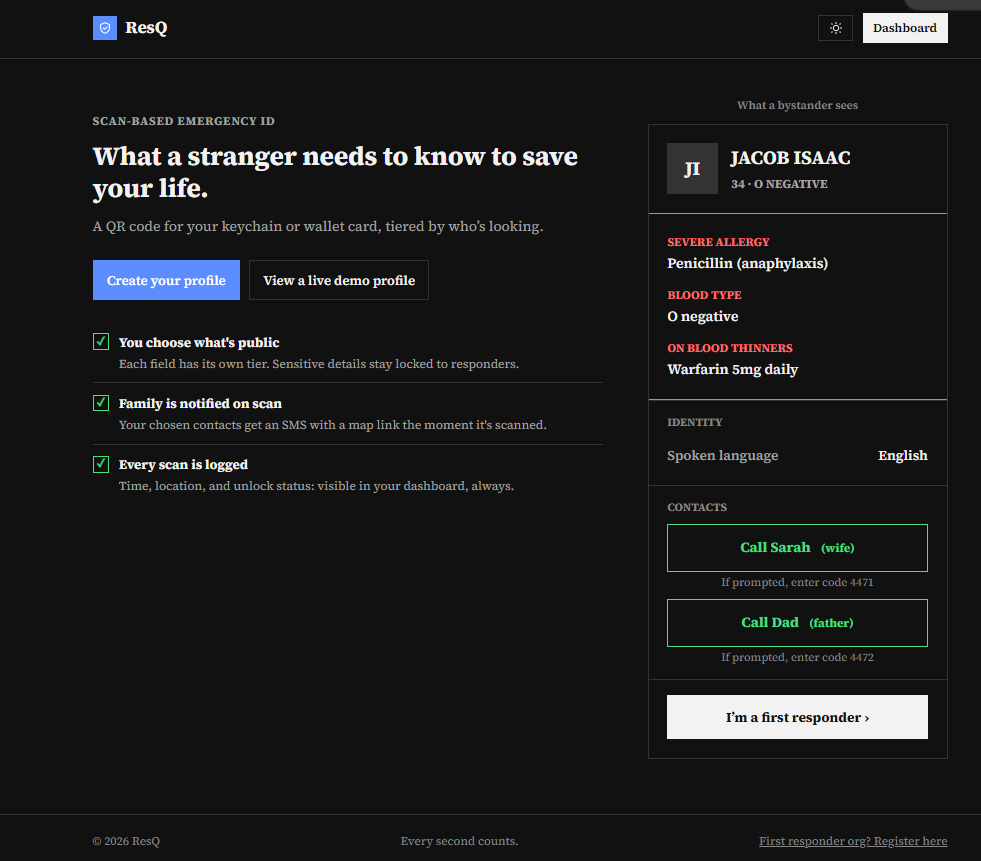
Dark mode home page
-
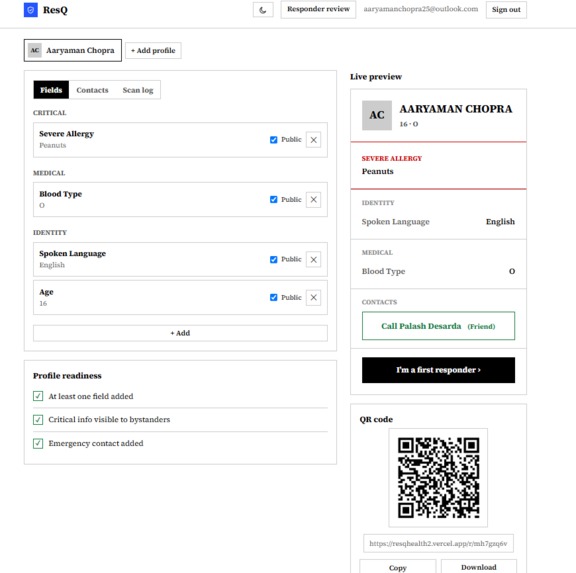
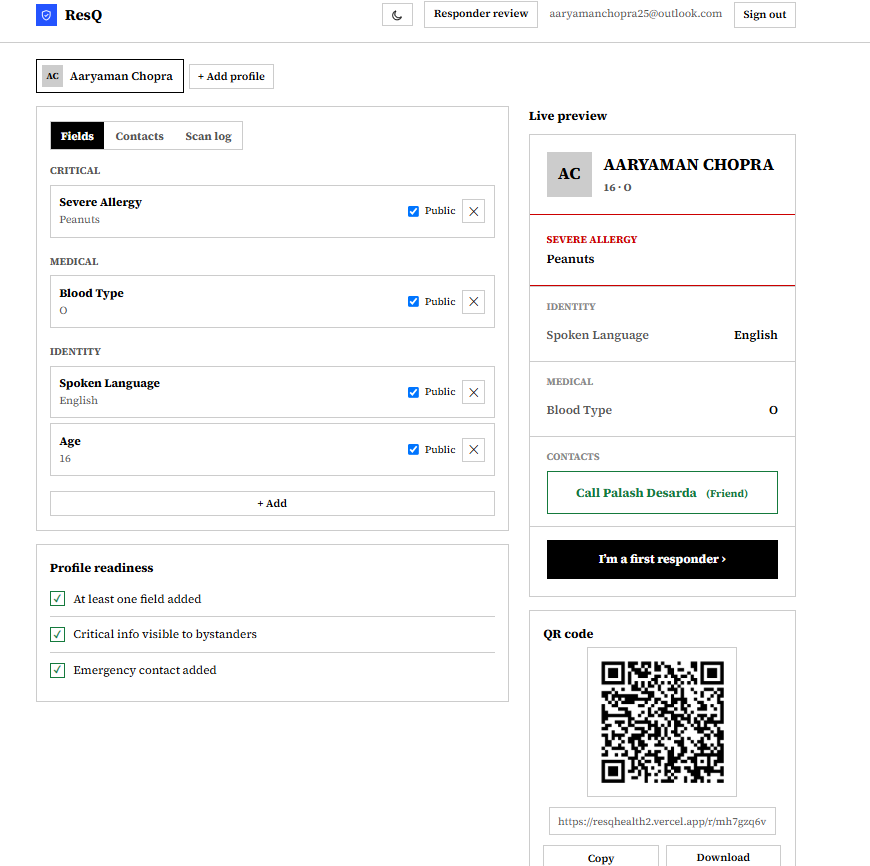
Profile dashboard screen
-
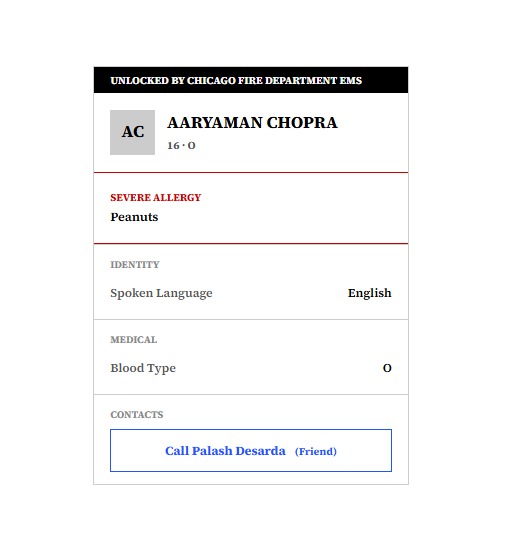
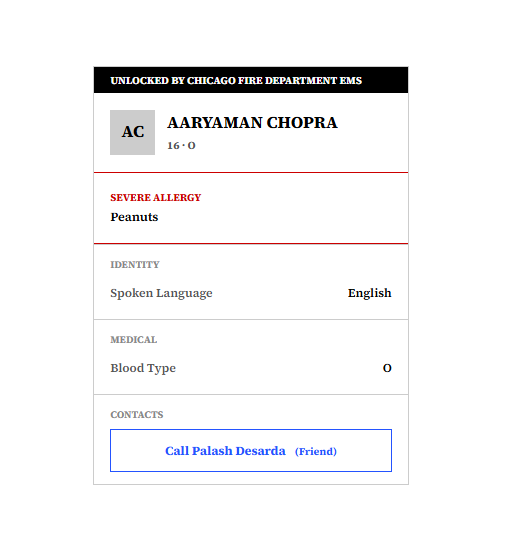
Unlocked individual profile screen
Inspiration
ResQ was inspired by something that happened at school. Our friend Alex Streit experienced a medical emergency at school. In the middle of the situation, teachers wanted to help, but they did't have the information they needed. They didn't immediately know what was happening medically, what they should have been aware of, or who to contact except 911. His parents weren't alerted as quickly as they should have been. That experience made us realize that in an emergency, having help nearby isn't always enough. People also need the right information at the right time. We started thinking about how often important medical information is locked behind phones, buried deep in apps, or simply unavailable to the people trying to help. We wanted to build a prototype for something that could solve this issue. ResQ helps solve just that.
What it does
ResQ is an emergency-response platform which is centered around a simple idea. The idea is to take critical medical information accessible when it is most needed. A user creates an emergency profile containing important information such as medical conditions, allergies, medications, and emergency contacts. That profile is connected to an unique QR code that can be placed on an ID card, phone case, or as an widget on any phone. In an emergency, a person nearby can simply scan the QR code with their phone and immediately access the infomration they need without downloading the app.
How we built it
We built the app using Next.js, React, and TypeScript, and hosted it on Vercel. We used Supabase to store user information and handle login with email, password, and Google. We made sure that private information is filtered on the server, so people who scan a profile only get the information they are allowed to see. We used Twilio to send text alerts to emergency contacts and to let people call contacts without showing their real phone numbers. Each profile has its own QR code, which users can download, print, and use as a wallet card. First responder groups can apply through a form, and admins can review their applications and give approved groups an access code. We also built the whole website with our own CSS instead of using a UI library, and added light and dark mode. Finally, we used Vitest to test important parts of the app, such as private information filtering, text alerts, and responder access codes.
Challenges we ran into
One of the biggest challenges we faced with ResQ was figuring out how to make emergency information easy to access while still keeping it private and safe. We had to think about what information should be shown first and how to make the page simple enough for someone to use during a stressful situation. We also had challenges connecting the QR code, medical profile, emergency contacts, and alerts so they could all work together smoothly. Since ResQ is based on a real problem, we wanted the product to be more than just an idea, so we spent a lot of time testing different parts and fixing problems as we built. Through this process, we learned that building a healthcare product requires a lot of testing and attention to small details because even a small issue could matter during an emergency.
Accomplishments that we're proud of
One accomplishment we are really proud of with ResQ is turning a real problem we saw with our friend Alex into a working solution. We built a system that lets someone quickly access important medical information through a QR code without needing an app or login. We are also proud of creating features that can help connect the person in an emergency with their family and the information they need. Most importantly, we took an idea that started from a real experience and turned it into a working project that we believe could actually help people during emergencies.
What we learned
One of our biggest lessons was that building a product like this isn't about how many features we can add. Rather, each piece of information has to have a purpose. In an emergency, showing someone 20 different pieces of information can be less useful that immediately showing them the 3 things they actually need. We also learned how important it is to design the product for someone who has never seen your product before. ResQ can't depend on someone knowing how the system works, but should rather make sense immediately.
What's next for ResQ
Our next step for ResQ is to finish testing our MVP and make sure it works reliably in a real emergency. We want to test the QR code, medical profile, emergency alerts, and privacy with students, families, and first responders. After that, we plan to start a small pilot with local healthcare and emergency service partners and give ResQ IDs to our first users. We will use their feedback to improve the product and measure things like scan time, alert delivery, and how quickly people can find the information they need. In the future, we want to grow ResQ to thousands of users, partner with more organizations, and expand beyond our local community. Our long-term goal is to make ResQ a system that can be used across the country and connect with healthcare systems so important medical information can reach the right people when it matters most.
Built With
- next.js
- react
- supabase
- twilio
- typescript
- vercel

Log in or sign up for Devpost to join the conversation.