-
-
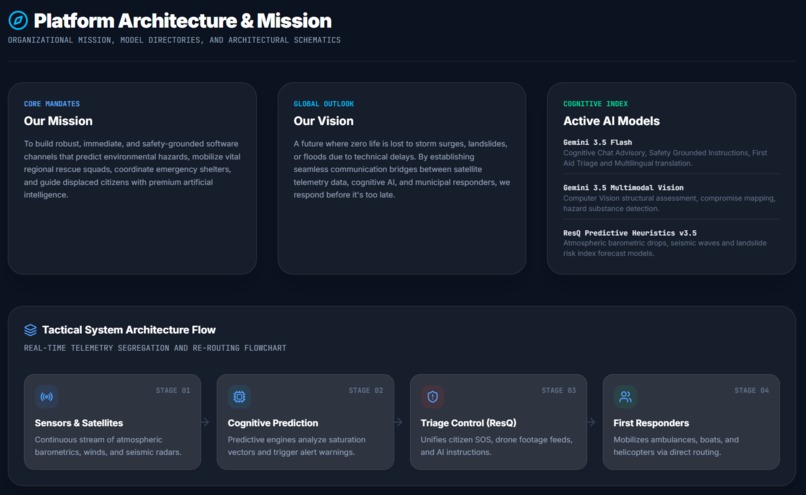
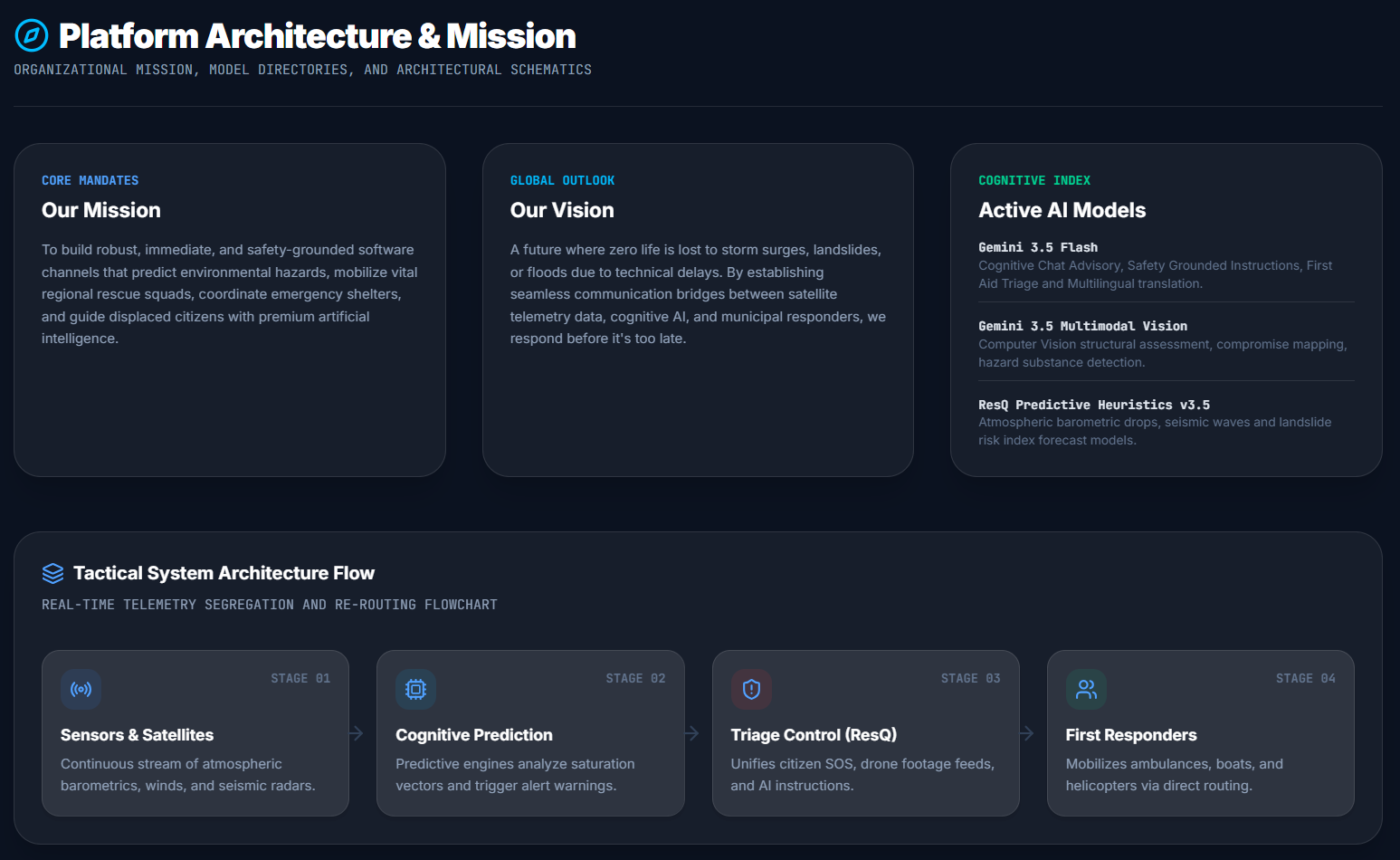
About Page
-
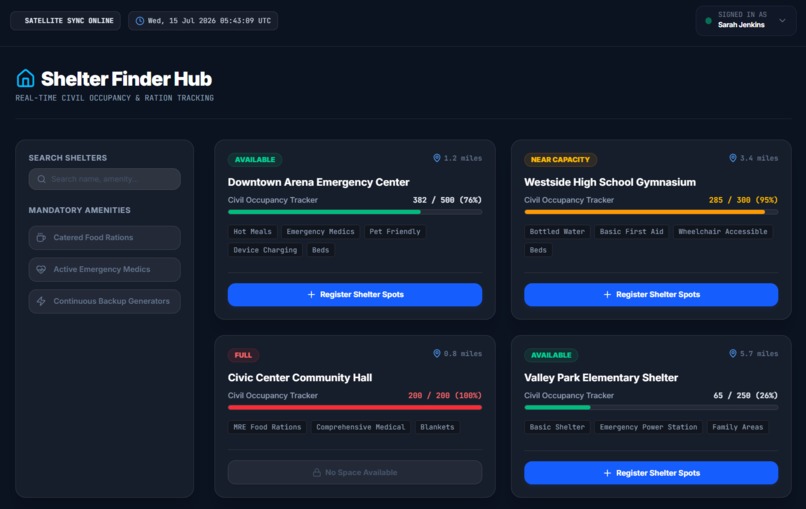
Shelter Finder Page
-
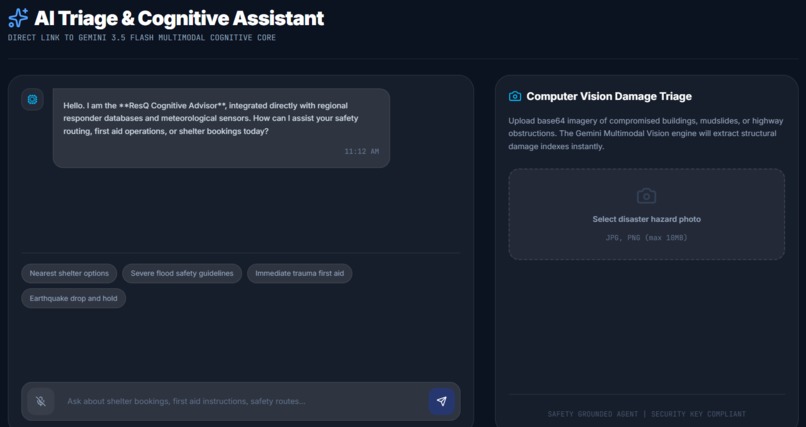
ChatBot Interaction
-
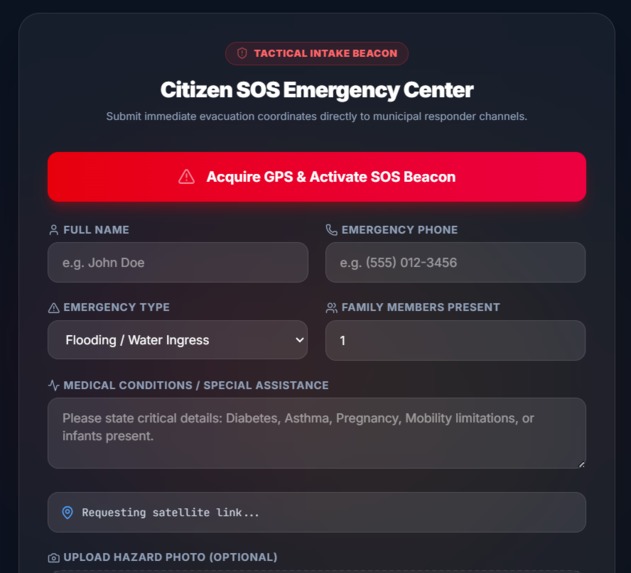
SOS page
-
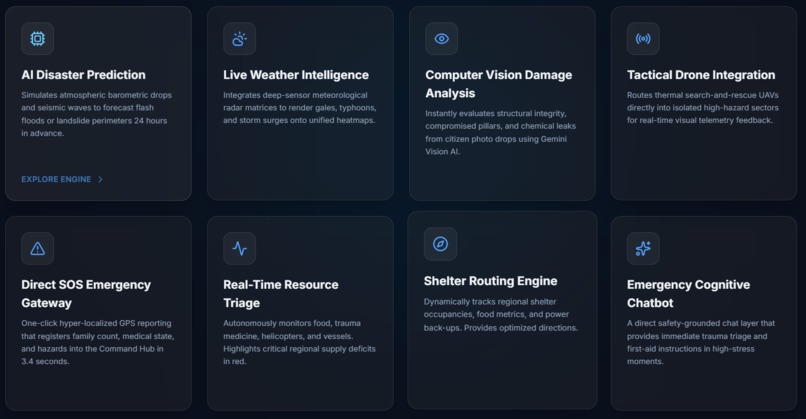
Advanced Safety Intelligence Suite
-
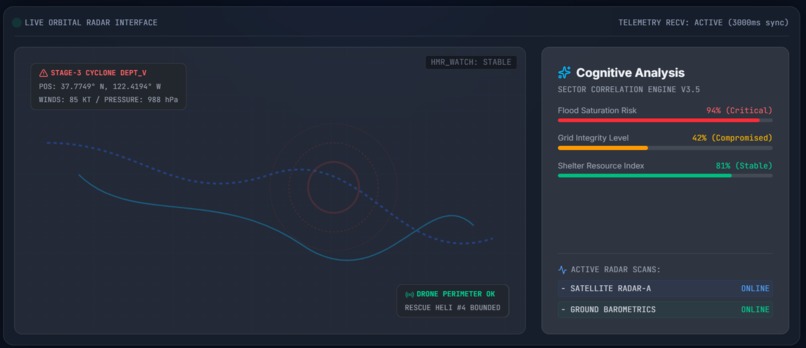
Real time Maps
-
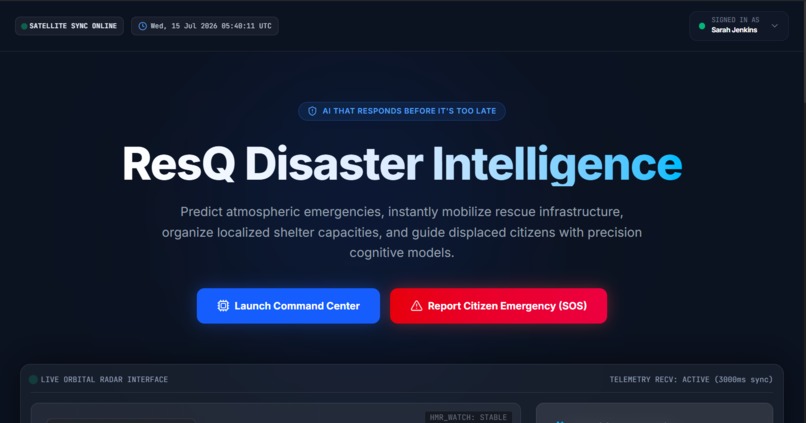
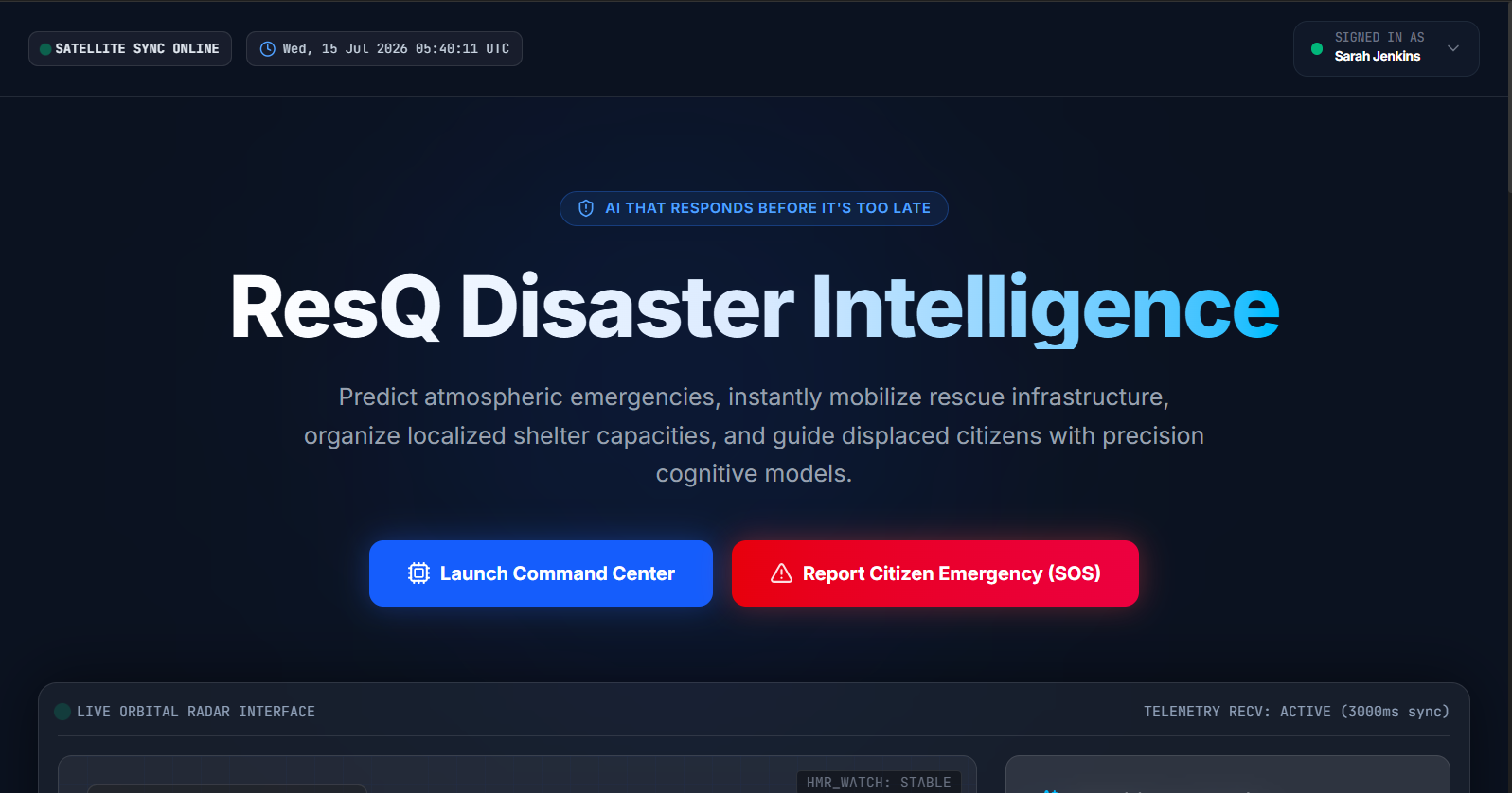
landing page
Inspiration
Every year, millions of people are affected by floods, earthquakes, cyclones, wildfires, and landslides. While emergency responders work tirelessly, delayed communication, fragmented information, and inefficient resource allocation often cost valuable time—and lives.
I wanted to explore how Artificial Intelligence could become a real-time decision support system for both citizens and emergency responders. Instead of simply sending alerts, I envisioned a platform that predicts disasters, guides people to safety, prioritizes rescue operations, and intelligently manages resources from a single dashboard.
My goal was to build an AI-powered platform that transforms disaster management from reactive to proactive.
What it does
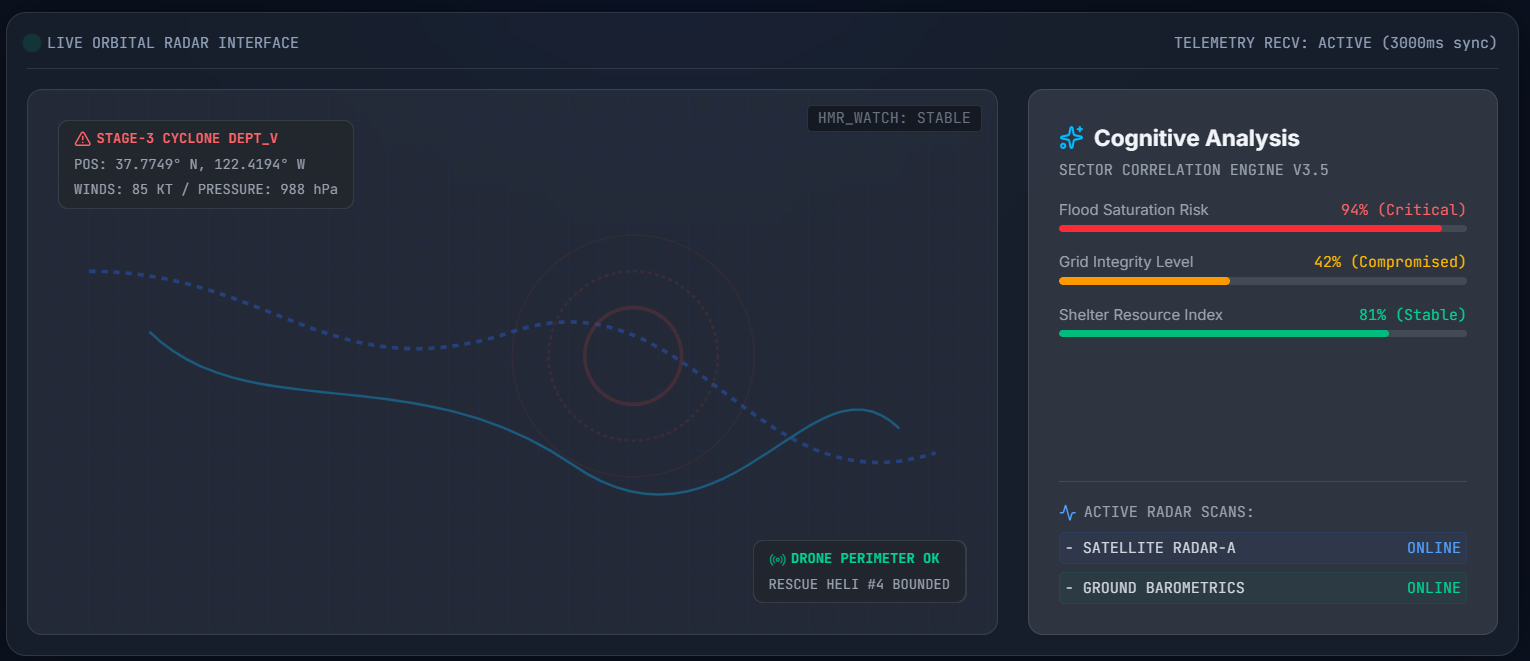
ResQ is an AI-powered Disaster Response Intelligence Platform designed to assist citizens, government agencies, NGOs, hospitals, and emergency responders before, during, and after natural disasters.
The platform combines weather forecasts, satellite imagery, IoT sensor data, GIS maps, drone feeds, and crowdsourced reports to provide a unified operational view.
Key capabilities include:
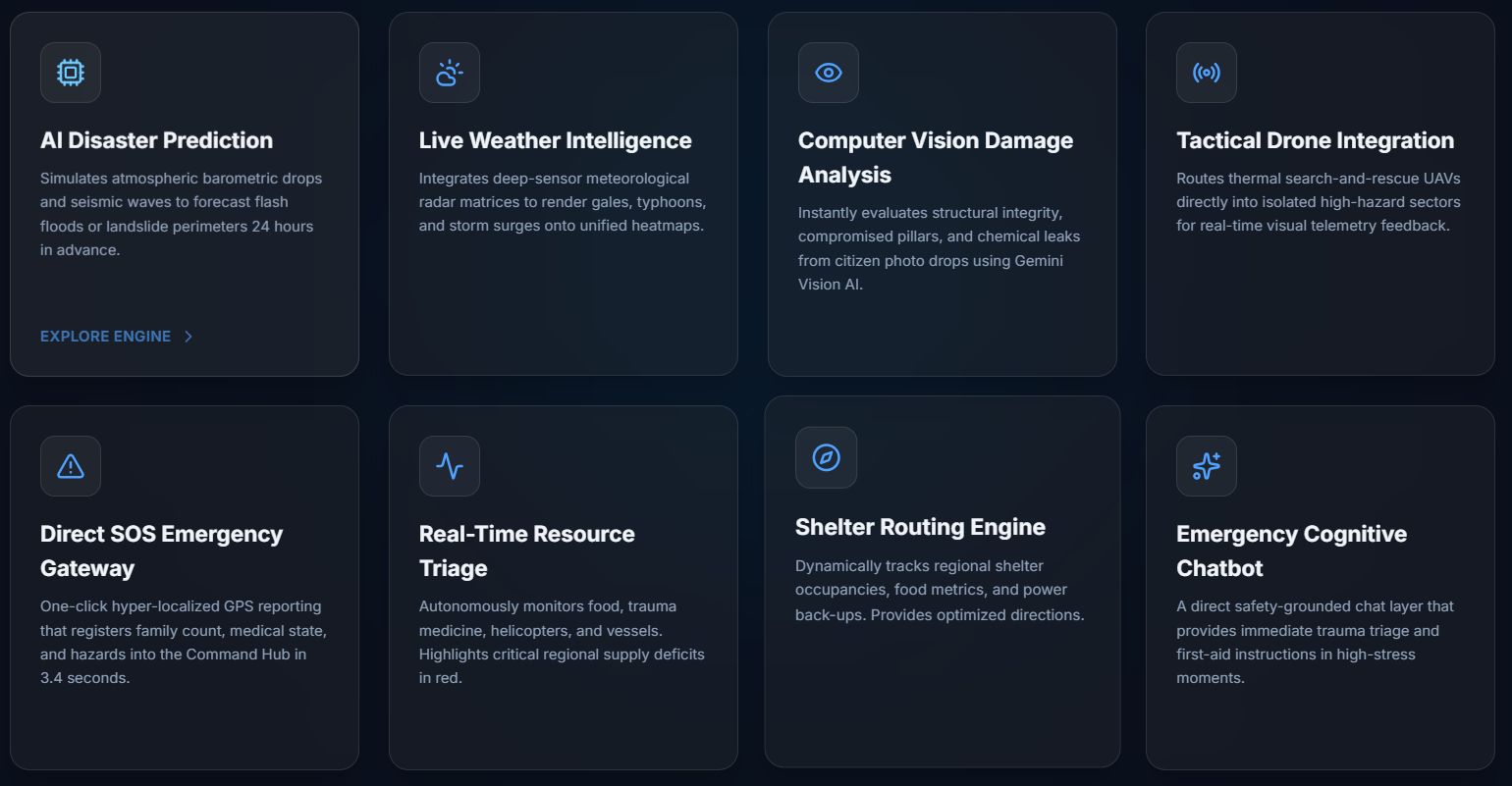
- AI-based disaster risk prediction using weather and historical data.
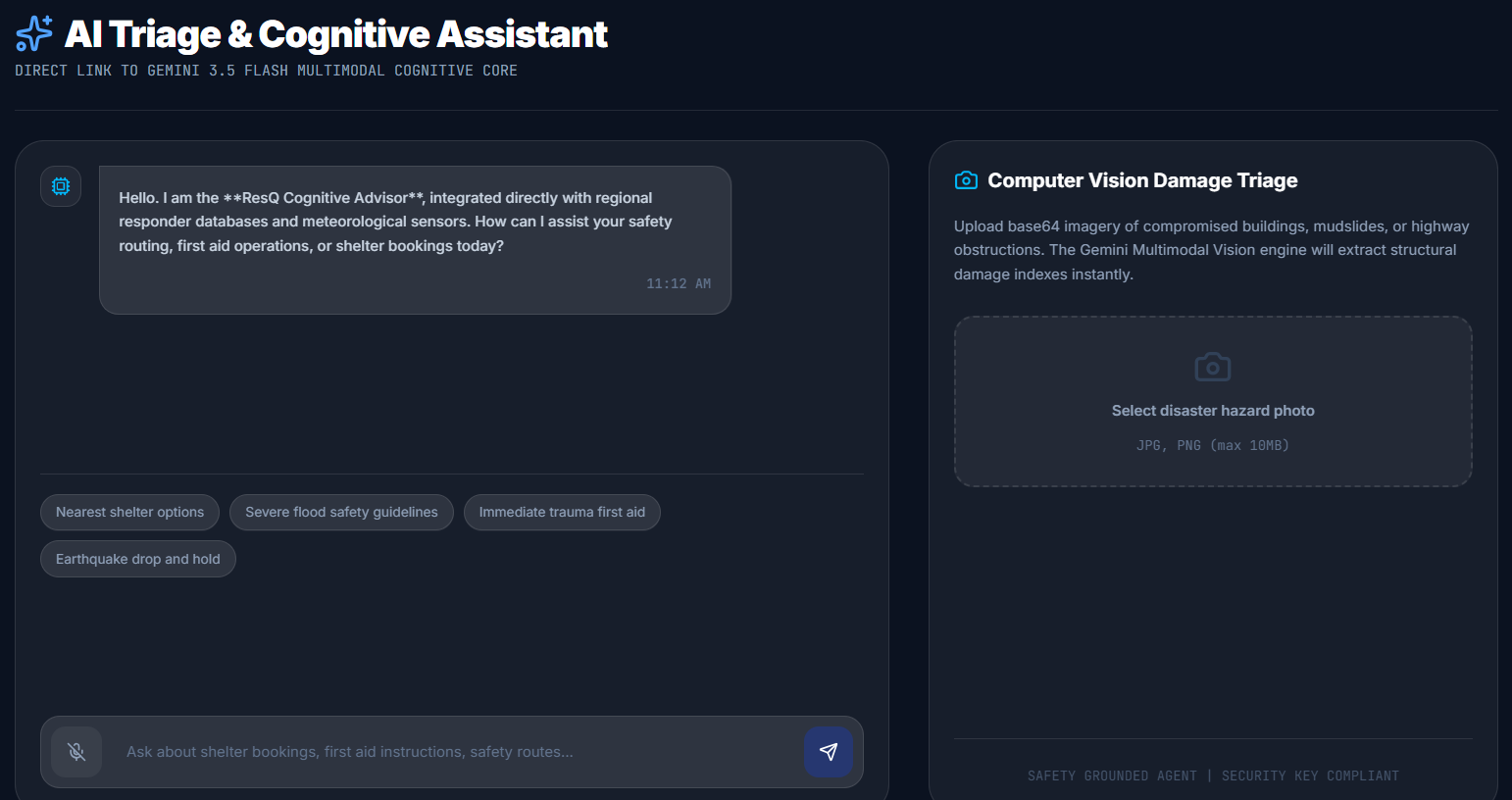
- Real-time multilingual emergency assistant for citizens.
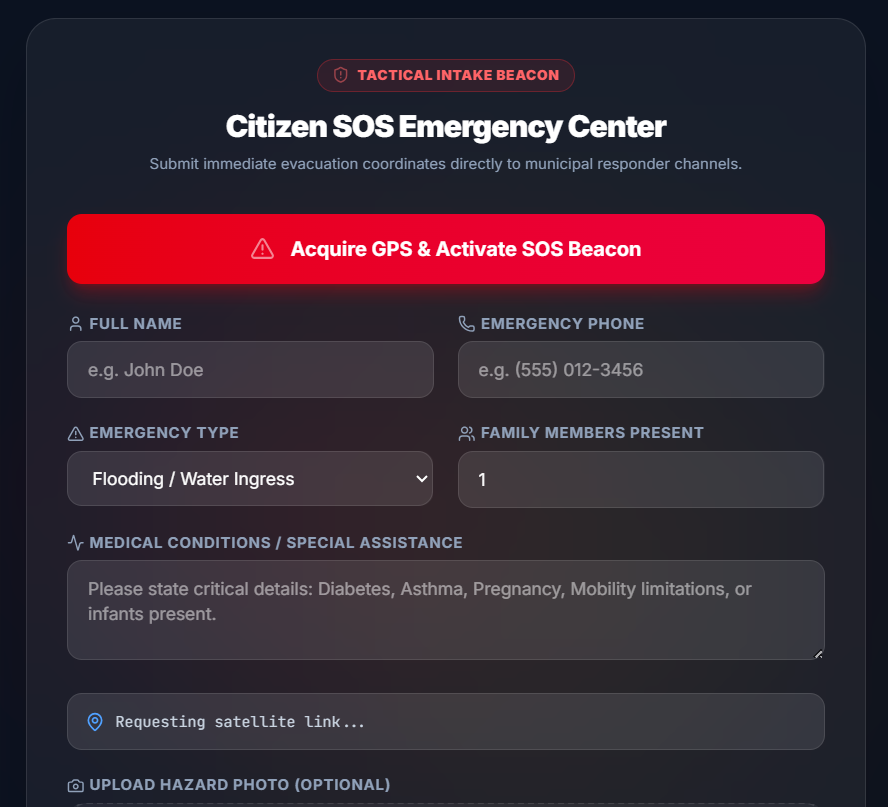
- One-tap SOS with live GPS location sharing.
- AI-powered rescue prioritization based on severity and vulnerability.
- Computer vision for detecting stranded people, damaged buildings, fires, and blocked roads from drone imagery.
- Smart resource allocation for ambulances, rescue boats, food, medicine, and shelters.
- Dynamic evacuation route optimization using live road and traffic conditions.
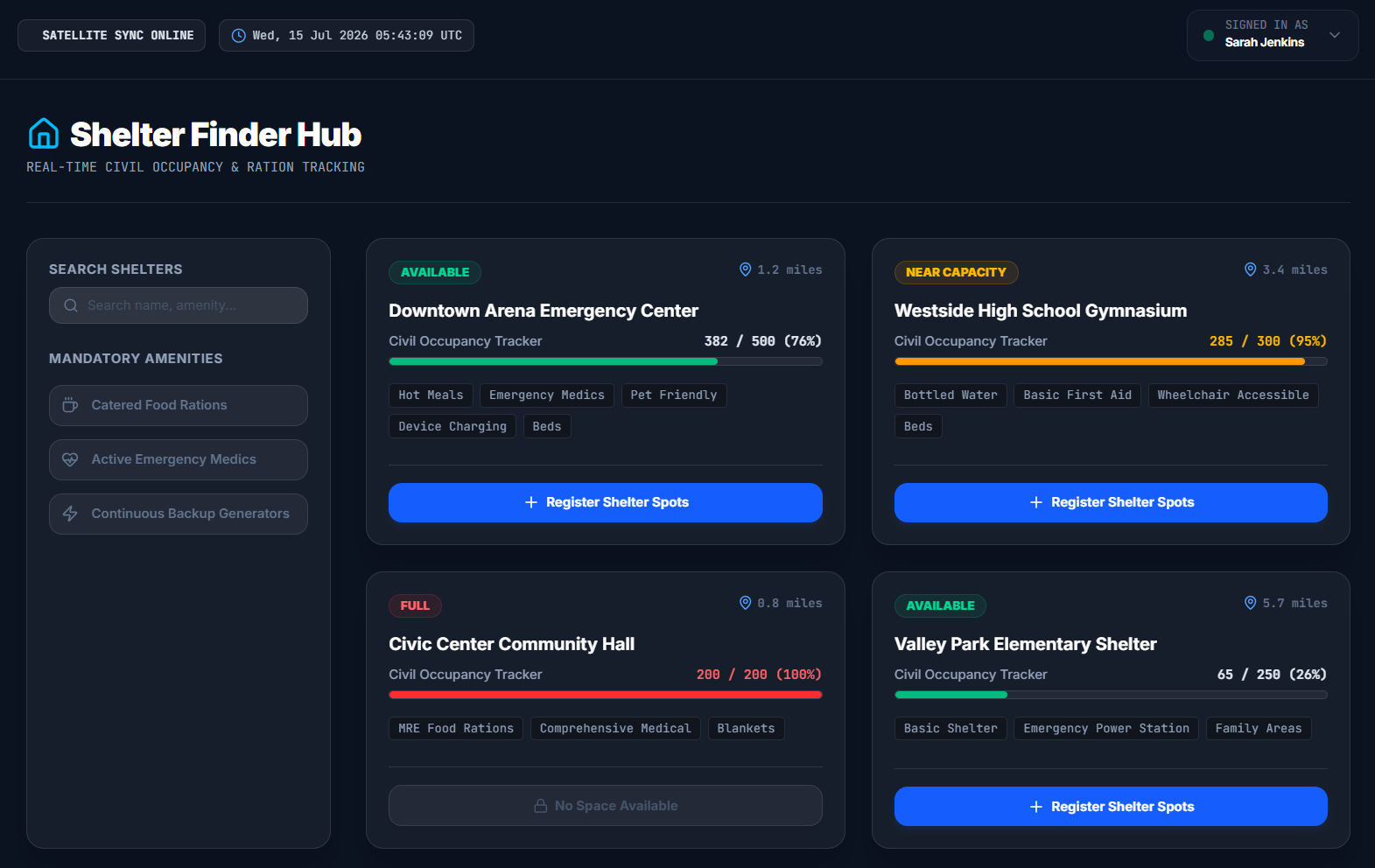
- Shelter recommendation based on proximity, capacity, and available facilities.
- Damage assessment using before-and-after satellite imagery.
- Misinformation detection to reduce panic caused by fake disaster reports.
- A centralized command dashboard providing authorities with real-time situational awareness.
How I built it
I designed the platform as a modular AI system where each component performs a specialized task while sharing information through a centralized backend.
Frontend
- React.js Web Dashboard
- Interactive GIS Maps
Backend
- FastAPI
- Node.js
- REST APIs
AI & Machine Learning
- Python
- TensorFlow
- PyTorch
- OpenCV
- YOLO for victim and damage detection
- LSTM and XGBoost for disaster prediction
- Large Language Models (Gemini/GPT/Llama) for emergency assistance
- Reinforcement Learning for resource optimization
Data Sources
- Weather APIs
- Satellite imagery
- IoT flood and seismic sensors
- GPS location
- Drone video feeds
- Citizen SOS reports
Infrastructure
- Docker
- Kubernetes
- AWS/Azure Cloud
- PostgreSQL
- MongoDB
- Redis
I integrated these components into a centralized command center capable of processing real-time information and generating actionable insights within seconds.
Challenges I ran into
One of the biggest challenges was integrating multiple heterogeneous data sources such as weather reports, satellite imagery, IoT sensors, and crowdsourced information into a unified pipeline.
Another challenge was balancing AI accuracy with response speed. Emergency situations require near real-time decisions, so the models needed to be lightweight while still producing reliable predictions.
I also considered unreliable internet connectivity during disasters. To address this, I designed the citizen application to support offline emergency guidance, cached maps, and SMS-based SOS communication.
Ensuring trustworthy AI recommendations was another important consideration. I incorporated explainable AI principles and confidence scores so emergency responders can understand why specific rescue priorities or resource allocations are suggested.
Accomplishments that I'm proud of
I successfully designed an end-to-end disaster response ecosystem instead of focusing on a single AI feature.
Some accomplishments include:
- Integrating predictive analytics, computer vision, GIS, and generative AI into one platform.
- Designing an AI-driven rescue prioritization engine that helps responders focus on the most critical emergencies first.
- Creating an intelligent resource allocation module capable of reducing shortages during relief operations.
- Building a scalable architecture suitable for governments, disaster management agencies, and NGOs.
- Developing a multilingual AI assistant capable of providing life-saving instructions during emergencies.
Most importantly, I demonstrated how AI can support human responders rather than replace them.
What I learned
Through this project, I learned that disaster response is much more than prediction—it requires coordination, communication, and rapid decision-making.
I gained practical experience in:
- Computer Vision
- Geospatial Intelligence (GIS)
- Machine Learning
- Large Language Models
- Emergency Response Workflows
- Cloud-based AI deployment
- Multi-agent system architecture
- Real-time data processing
I also realized the importance of designing AI systems that are transparent, reliable, and easy for emergency responders to trust during critical situations.
What's next for ResQ – Disaster Response Intelligence Platform
My vision is to evolve ResQ into a production-ready platform that can support disaster management agencies worldwide.
Future enhancements include:
- Real-time drone swarm coordination for autonomous search and rescue.
- Satellite communication support for areas without cellular networks.
- Wearable health monitoring for rescue personnel.
- AI-powered emergency call transcription and multilingual translation.
- Blockchain-based disaster relief fund transparency.
- Digital twin simulations for disaster preparedness and training.
- Edge AI deployment for faster on-device victim detection.
- Integration with national emergency services and smart city infrastructure.
Ultimately, I aim to make ResQ an intelligent emergency management ecosystem that helps save lives, reduces response time, and improves disaster resilience for communities around the world.


Log in or sign up for Devpost to join the conversation.