

🚨 Project Story: ResQ – Emergency Response Solution
🌟 Inspiration
The idea for ResQ was born out of the realization that every second counts in emergencies—but sometimes, critical details are lost in the chaos of a distress call. We was inspired by the gap in effective communication between emergency callers and responders. Traditional systems often miss key context, leaving first responders to piece together incomplete information. With ResQ, we envisioned an AI-powered solution that listens, understands, and acts, ensuring that every urgent call is fully heard and prioritized.
📚 What We Learned
Building ResQ was a deep dive into the intersection of voice technology and emergency management. Along the way, we discovered:
- The power of generative AI: Integrating tools like Whisper AI and Gemini LLM transformed raw voice data into actionable insights.
- Real-time data structuring: Prompt engineering and live updates taught us the importance of precision in high-stakes environments.
- Cross-disciplinary innovation: Merging AI, mapping, and real-time APIs helped us understand new possibilities for tech in public safety.
🛠️ How We Built It
The journey of building ResQ was as challenging as it was rewarding:
- Conceptualization: We started with the idea that every voice could be converted into immediate, structured data for emergency response.
- Voice Processing: Using Whisper AI, we captured and transcribed voice inputs from users.
- Data Structuring: Gemini LLM processed the text to extract crucial details—such as the type of emergency and location—through carefully crafted prompts.
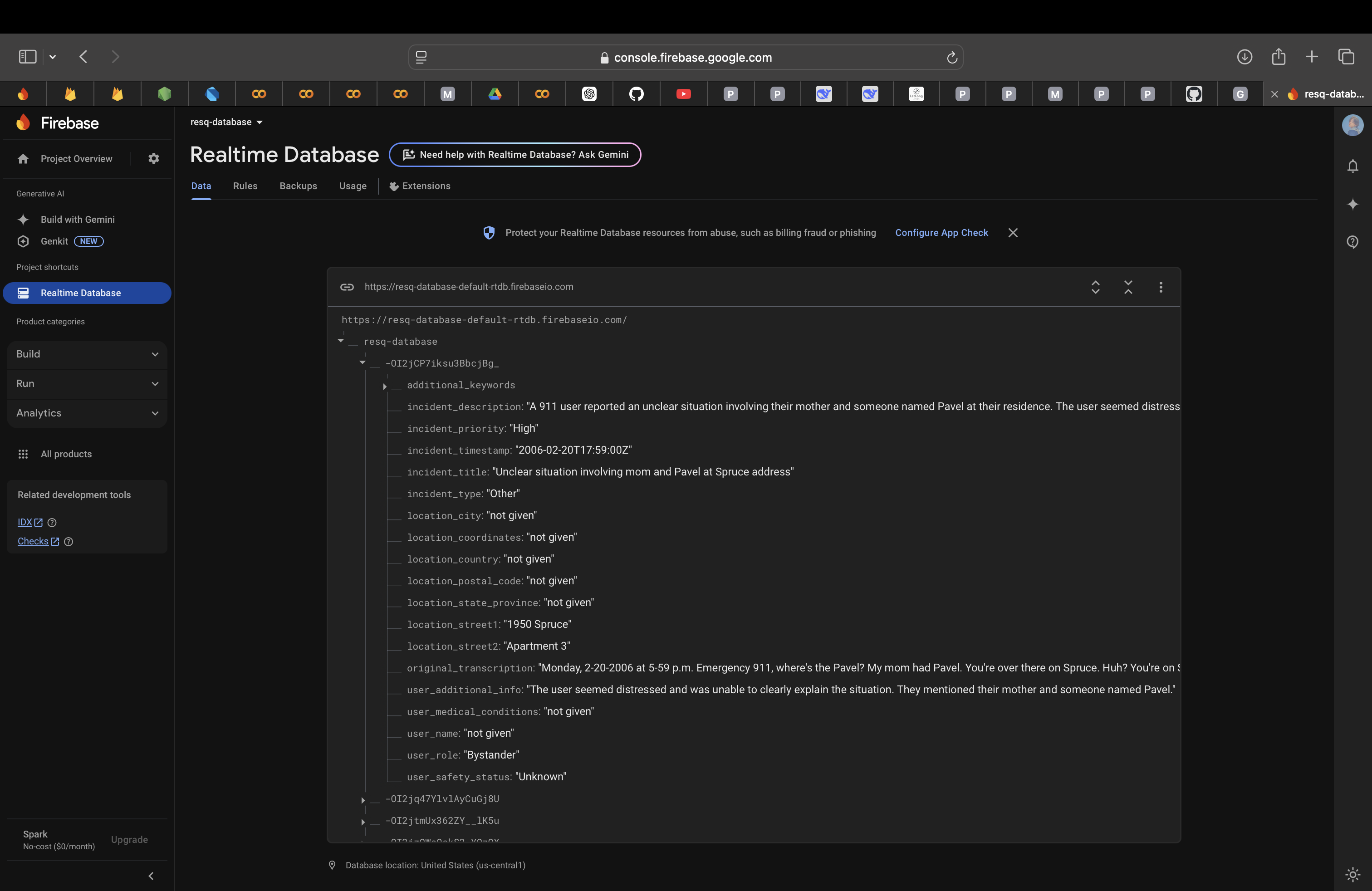
- Real-Time Updates: We pushed this structured data to Firebase, enabling live notifications and map updates.
- API Integration: A Flask application automated the workflow, ensuring that every piece of information was seamlessly passed along to response teams.
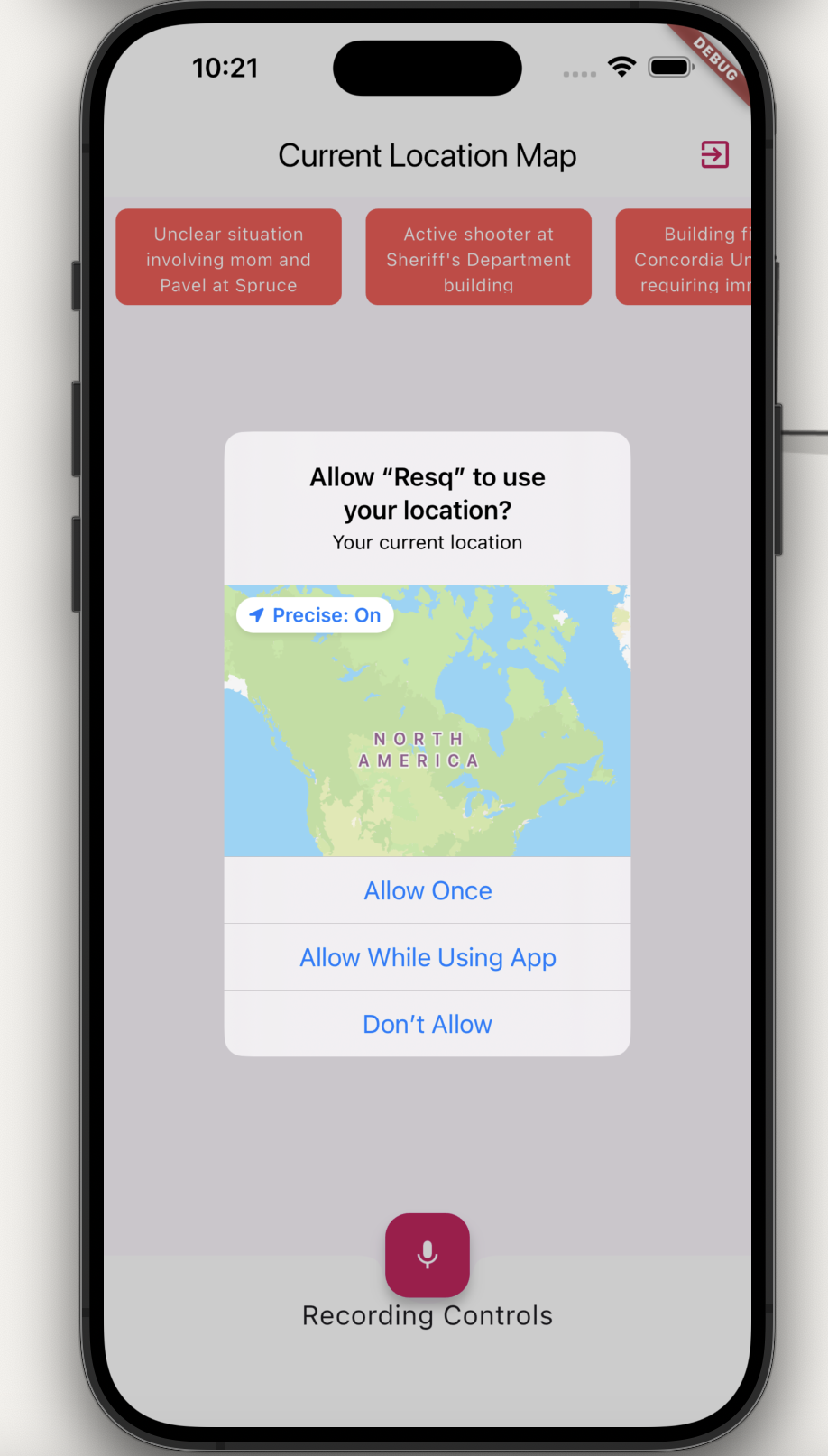
- Mapping: Extracted location details were dynamically displayed on maps, helping bystanders and responders quickly locate emergencies.
⚠️ Challenges Faced
Every innovation comes with its hurdles:
- Accuracy Under Pressure: Ensuring that the AI accurately captured and prioritized varied emergency details from voice recordings was a significant challenge.
- Real-Time Processing: Achieving seamless, real-time data flow and integration between multiple systems required extensive testing and optimization.
- Tool Integration: Combining different AI models, APIs, and databases to work in unison was complex and demanded a lot of fine-tuning.
- Incomplete Data: During testing, we encountered scenarios where location information was incomplete or missing. To overcome this, we integrated geolocation services alongside our AI to fill in the gaps, ensuring that even partial data could be augmented to pinpoint the emergency location.
- Contextual Understanding: Designing the system to not just transcribe, but also to understand the context of emergencies, pushed the boundaries of current AI capabilities.
🚀 Conclusion
Building ResQ has been an enlightening journey into how technology can save lives. It reinforced our belief that by harnessing the power of AI, we can transform everyday challenges into opportunities for rapid, life-saving action. I’m excited about the potential of ResQ to empower communities and first responders, ensuring that every call for help is heard and acted upon without delay.


Log in or sign up for Devpost to join the conversation.