-
-
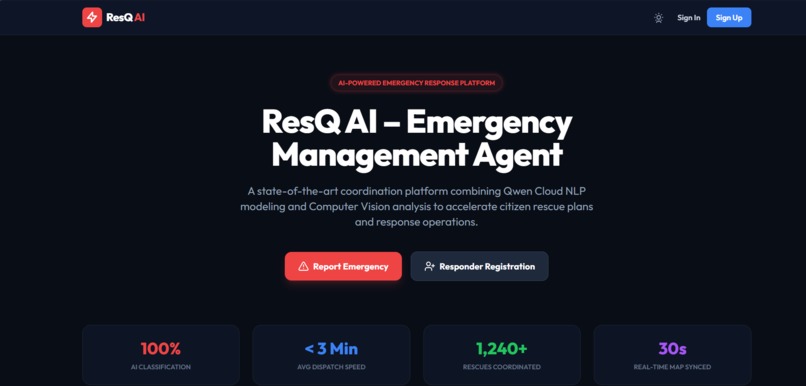
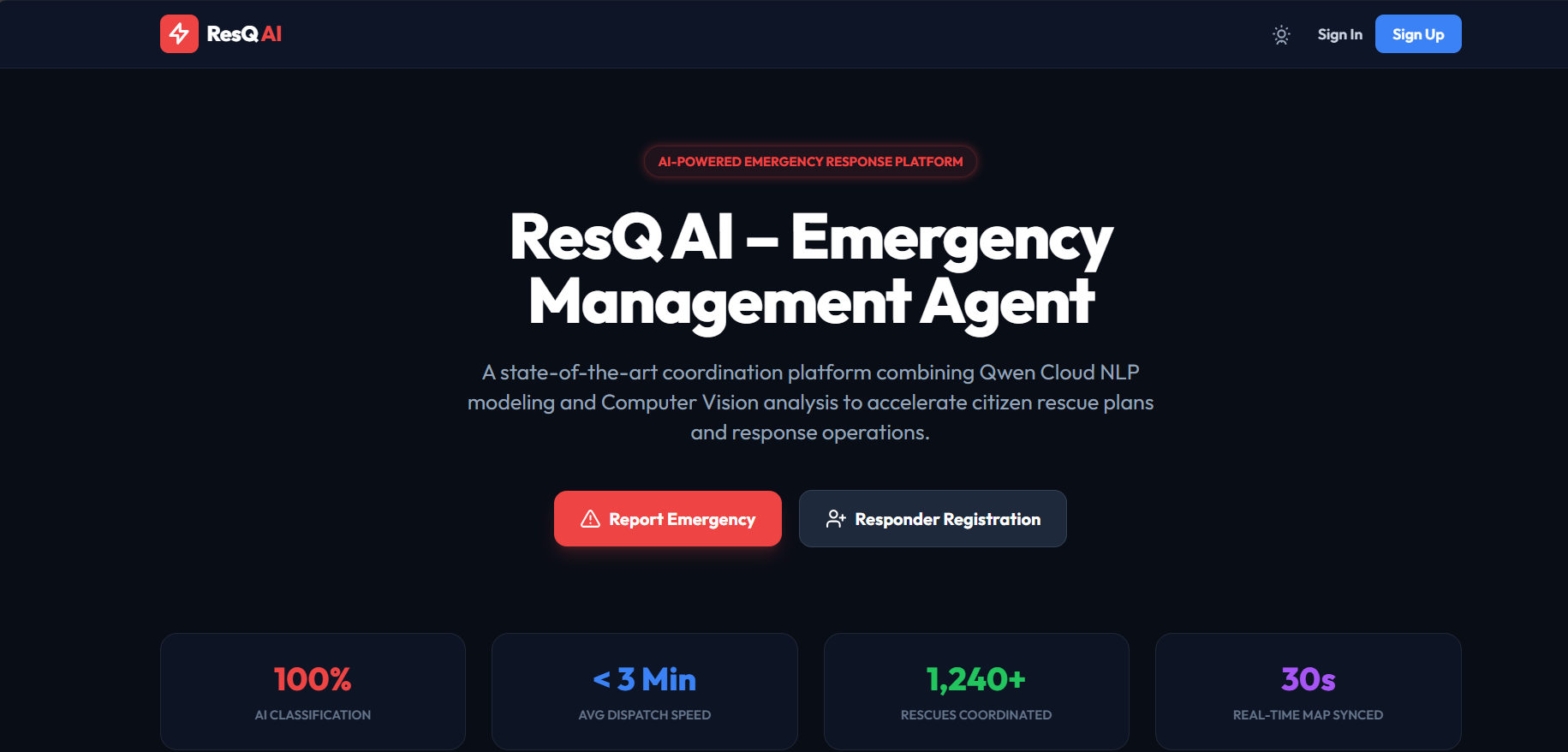
Home page
-
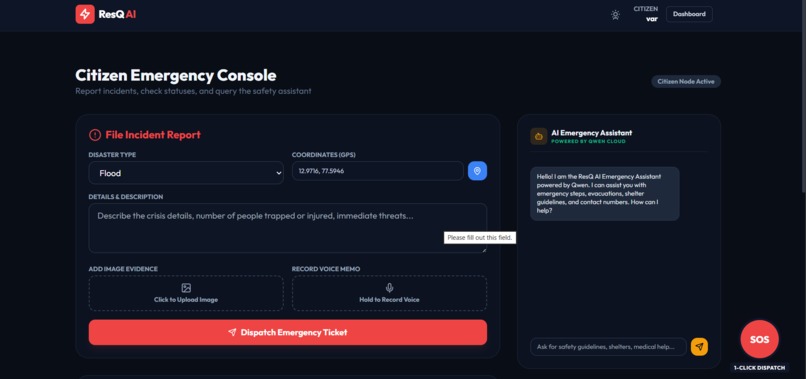
Chat bot and issue
-
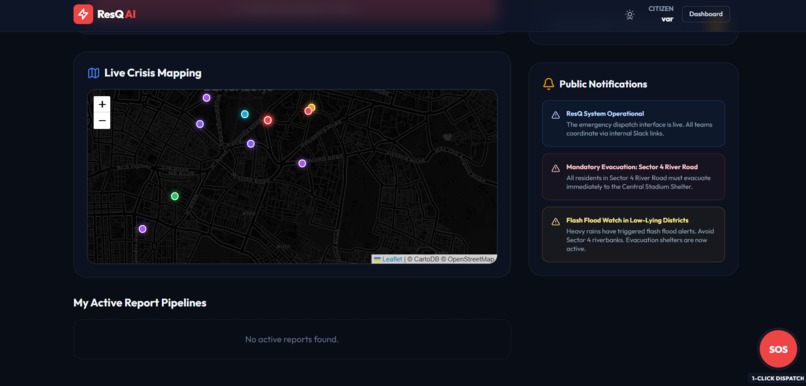
live location
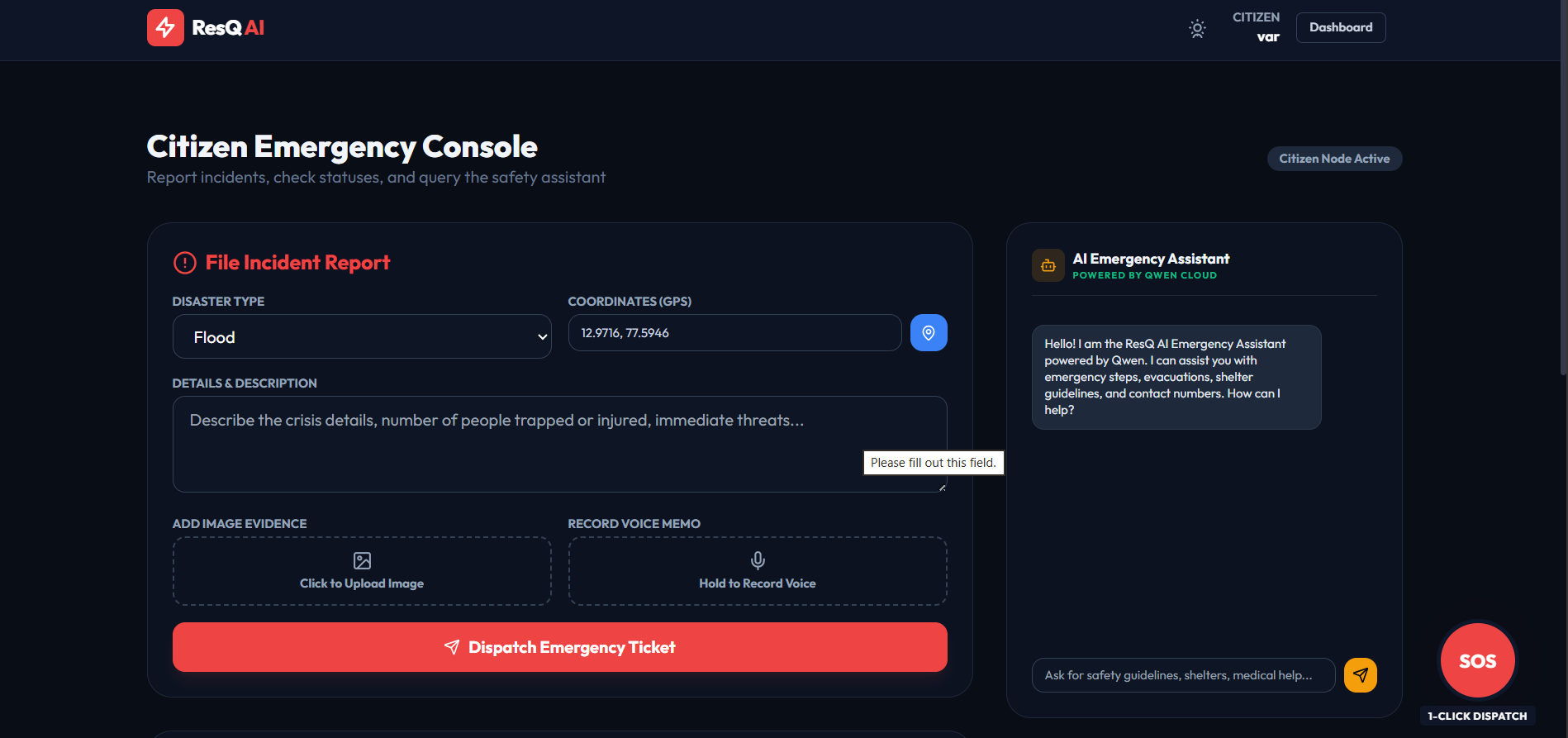
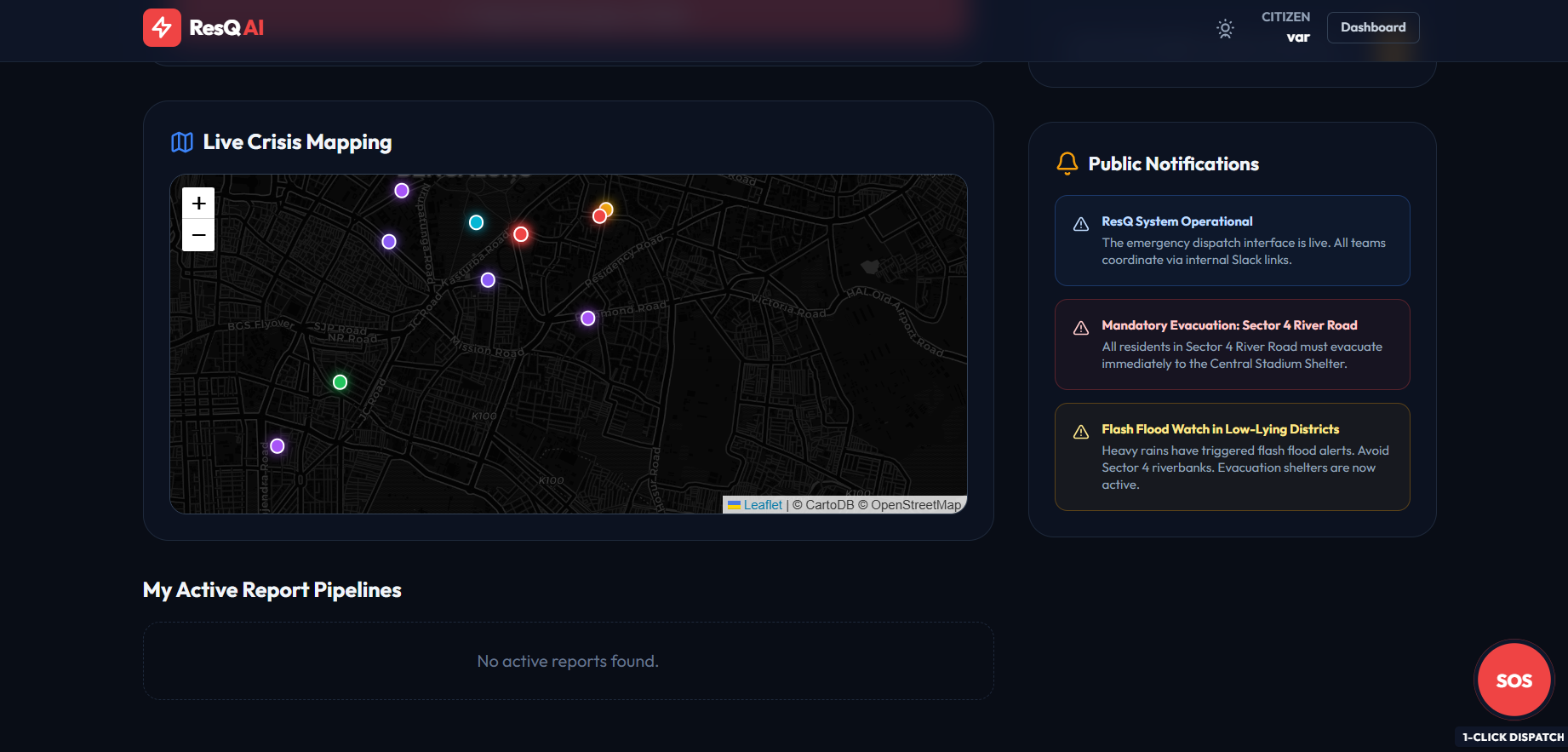
Inspiration
In critical emergency situations, every second counts. Traditional disaster response systems often suffer from delayed reporting and fragmented communications, costing valuable life-saving time. We built ResQ AI to bridge this crucial gap—creating an intelligent system that instantly detects anomalies and dispatches real-time alerts so first responders can act immediately.
What it does
ResQ AI continuously monitors live data feeds, such as environmental sensor telemetry, incident reports, and public feeds. By utilizing cloud-hosted AI models, it analyzes incoming unstructured data for immediate threats, automatically flags potential disasters, and instantly routes critical alert notifications to emergency services and affected communities.
How we built it
We engineered a high-availability, low-latency pipeline focused on split-second processing:
- Intelligence Layer: Leveraged Qwen Cloud AI models to rapidly categorize threat levels and parse complex data streams.
- Backend: Built an event-driven architecture using Python to ingest live data and trigger instant alerts.
- Frontend: Developed a clean, responsive dashboard using React for emergency dispatchers to visualize live incident alerts.
Challenges we ran into
One of our biggest hurdles was filtering out background noise and false alarms from live incoming streams. We overcame this by fine-tuned our prompt engineering and threshold logic within Qwen Cloud, ensuring that only high-confidence, legitimate threats trigger critical alert statuses.
Accomplishments that we're proud of
We successfully achieved an end-to-end response time of under a few seconds from the moment a simulated anomaly is detected to the alert arriving on the dashboard. Building a fully functional, real-time AI pipeline within the tight hackathon deadline is a massive win for our team.
What we learned
We gained deep insights into building real-time event-driven architectures and learned how to optimize large language models for high-speed, low-latency classification tasks.
ResQ AI: Intelligent Disaster & Emergency Response
We plan to scale our infrastructure to support multi-modal data processing, enabling the AI to analyze live video feeds and satellite imagery concurrently. We are also looking into integrating predictive forecasting models to anticipate environmental disasters before they even escalate. Additionally, we want to establish direct SMS and push-notification APIs to alert nearby citizens instantly during a crisis. To improve localized accuracy, we plan to train the model to understand regional dialects and slang used during emergencies on public channels. Ultimately, our goal is to partner with local emergency services to test the platform in real-world simulation drills.
Built With
- artificial-intelligence
- event-driven-architecture
- javascript
- python
- qwen-cloud
- react
- rest-api


Log in or sign up for Devpost to join the conversation.