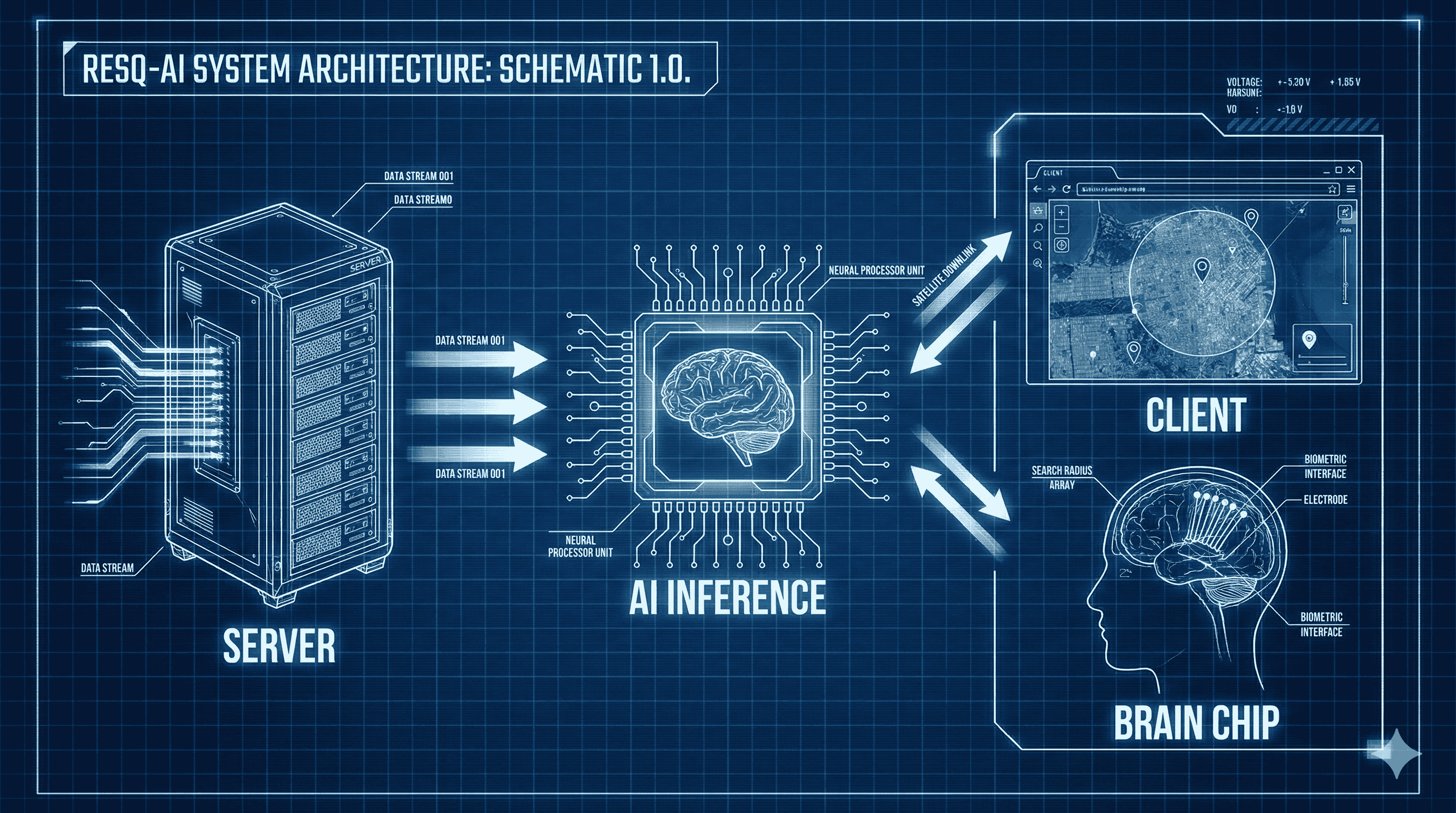
ResQ-AI is a real-time EMS Triage & Command Assistant designed to save lives by reducing cognitive load on paramedics and preventing medical errors during the "golden hour" of emergency response.
Inspiration
Emergency medical services (EMS) operate in high-stress, high-stakes environments where every second counts. Paramedics often have to recall complex protocols, calculate dosages, and communicate with hospitals simultaneously. We were inspired to build a "digital partner" that watches their back—an AI that doesn't just record data, but actively listens, analyzes risks, and ensures no critical step is missed. We wanted to bridge the gap between the chaotic field environment and the structured hospital command center.
What it does
ResQ-AI acts as an intelligent guardian for emergency responders:
Real-time Risk Analysis: It listens to the mission transcript in real-time and uses Cerebras inference to instantly flag drug interactions (e.g., "Warning: Patient on beta-blockers, adjust epinephrine dose") or protocol violations.
Automated SBAR Handoffs: Instead of paramedics frantically scribbling notes, ResQ-AI auto-generates professional SBAR (Situation, Background, Assessment, Recommendation) reports for hospital transfer.
Smart Protocol Retrieval: It intelligently surfaces the correct medical protocols (e.g., Cardiac Arrest, Anaphylaxis) based on the patient's presenting symptoms.
Live Command Dashboard: Provides a geospatial view of all units, hospital bed availability, and live patient telemetry (BP, HR, SpO2) to the command center.
Auditory Safety Alerts: Uses ElevenLabs to speak critical warnings aloud, ensuring the paramedic hears them even if they aren't looking at the screen.
How we built it
We prioritized speed and reliability, choosing a stack that delivers ultra-low latency:
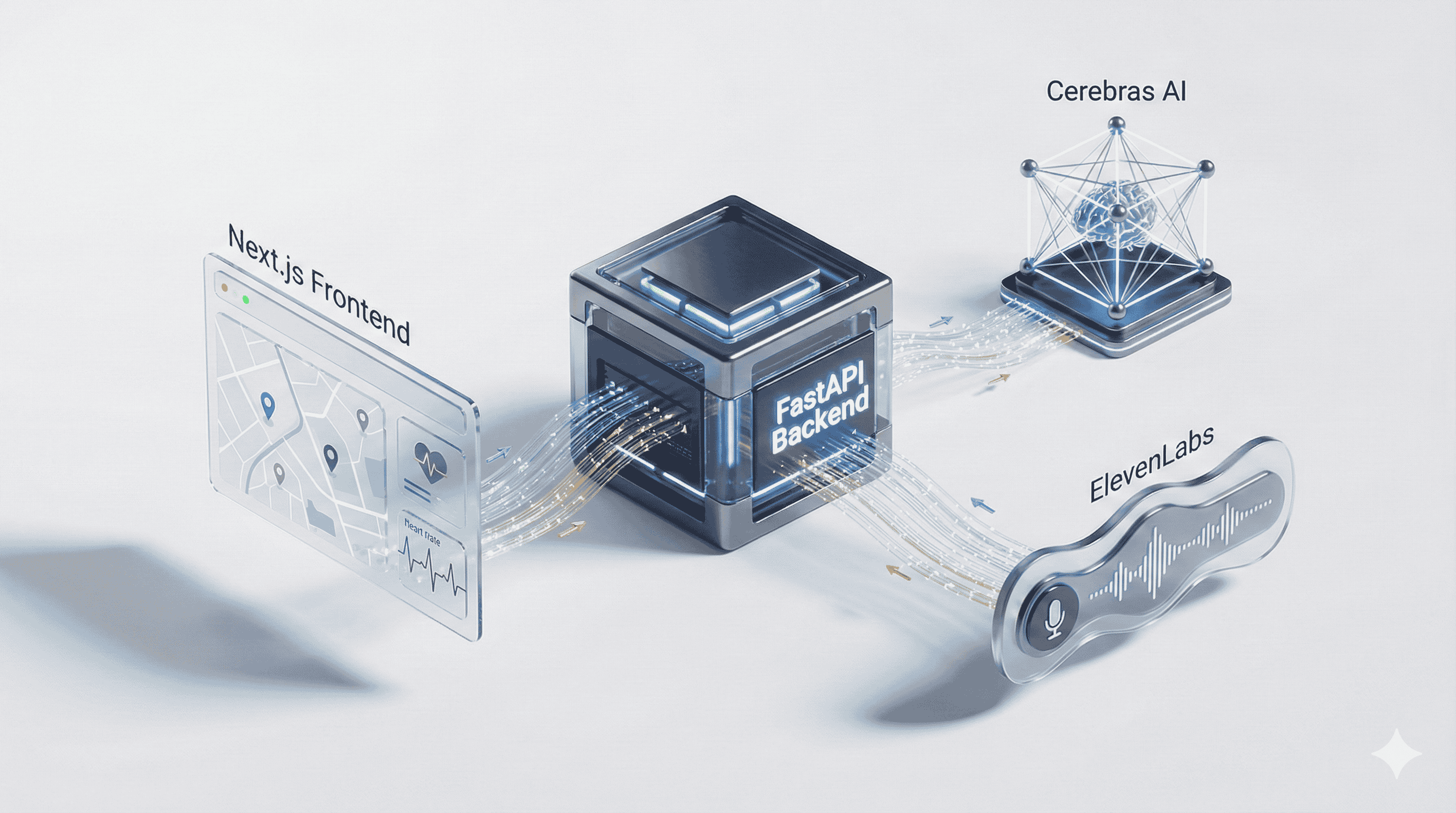
Frontend: Built with Next.js and TypeScript for a robust, type-safe UI. We used Tailwind CSS for a high-contrast, dark-mode "command center" aesthetic and Leaflet for real-time mapping.
Backend: Powered by FastAPI and Uvicorn to handle asynchronous WebSocket connections for real-time bi-directional communication.
AI Engine: We utilized Cerebras Llama-3.1-70b for its blazing-fast inference speed, essential for real-time medical decision support where standard API latency is unacceptable.
Voice Integration: Integrated ElevenLabs text-to-speech API to give the AI a clear, distinct voice for urgent safety interventions.
State Management: Implemented a custom "SmartMemory" system to maintain persistent patient context (allergies, history, meds) across the entire session.
Challenges we ran into
Latency vs. Accuracy: Balancing the need for a massive 70B parameter model for medical accuracy with the requirement for sub-second response times. Switching to Cerebras was the breakthrough here.
Context Management: Keeping track of a patient's evolving state (e.g., vitals changing, meds administered) in a stateless LLM environment required building a robust session manager.
Map Integration: Getting Leaflet to work seamlessly with Next.js server-side rendering (SSR) required dynamic imports and careful state handling.
Accomplishments that we're proud of
Sub-Second Safety Guardrails: Achieving near-instantaneous feedback on dangerous drug interactions.
The "Co-Pilot" Feel: The system feels like a partner, not just a tool. The combination of the live feed, risk analysis, and voice alerts creates a cohesive support system.
Professional Handoffs: The SBAR generator produces reports that sound like they were written by a seasoned veteran, significantly reducing administrative burden.
What we learned
Speed is a Safety Feature: In medical AI, latency isn't just an annoyance; it's a safety risk. Fast inference enables checks that otherwise wouldn't be possible in real-time.
Structured Output is Key: Forcing the LLM to output strict JSON/Pydantic models (rather than free text) was crucial for integrating AI decisions reliably into the UI.
User Experience in Crisis: Interfaces for EMS need to be high-contrast, uncluttered, and glanceable. Information density had to be carefully balanced with readability.
What's next for ResQ AI
IoT Integration: Connecting directly to cardiac monitors and defibrillators to ingest vitals automatically without manual entry.
Offline Edge Deployment: Optimizing the model to run on local hardware in ambulances for areas with poor cellular connectivity.
Voice-to-Text Input: Implementing real-time transcription of the paramedic's voice so they can interact with ResQ-AI completely hands-free.
Multi-Agency Support: Scaling the backend to handle mutual aid scenarios involving police and fire departments.
Built With
- cerebras
- elevenlab
- fastapi
- leaflet.js
- lucidreact
- nextjs
- pydantic
- raindrop
- react
- tailwindcss
- typescript
- uvicorn
- websockets'


Log in or sign up for Devpost to join the conversation.