Inspiration
Emergency dispatchers must make critical decisions under pressure, often with incomplete information. Preparing for that responsibility takes practice, but creating realistic training scenarios requires time and resources. I built ResponseRoom to explore how AI can support that preparation. Our goal is to give trainees more opportunities to practice difficult calls while helping instructors understand where each trainee needs support.
What it does
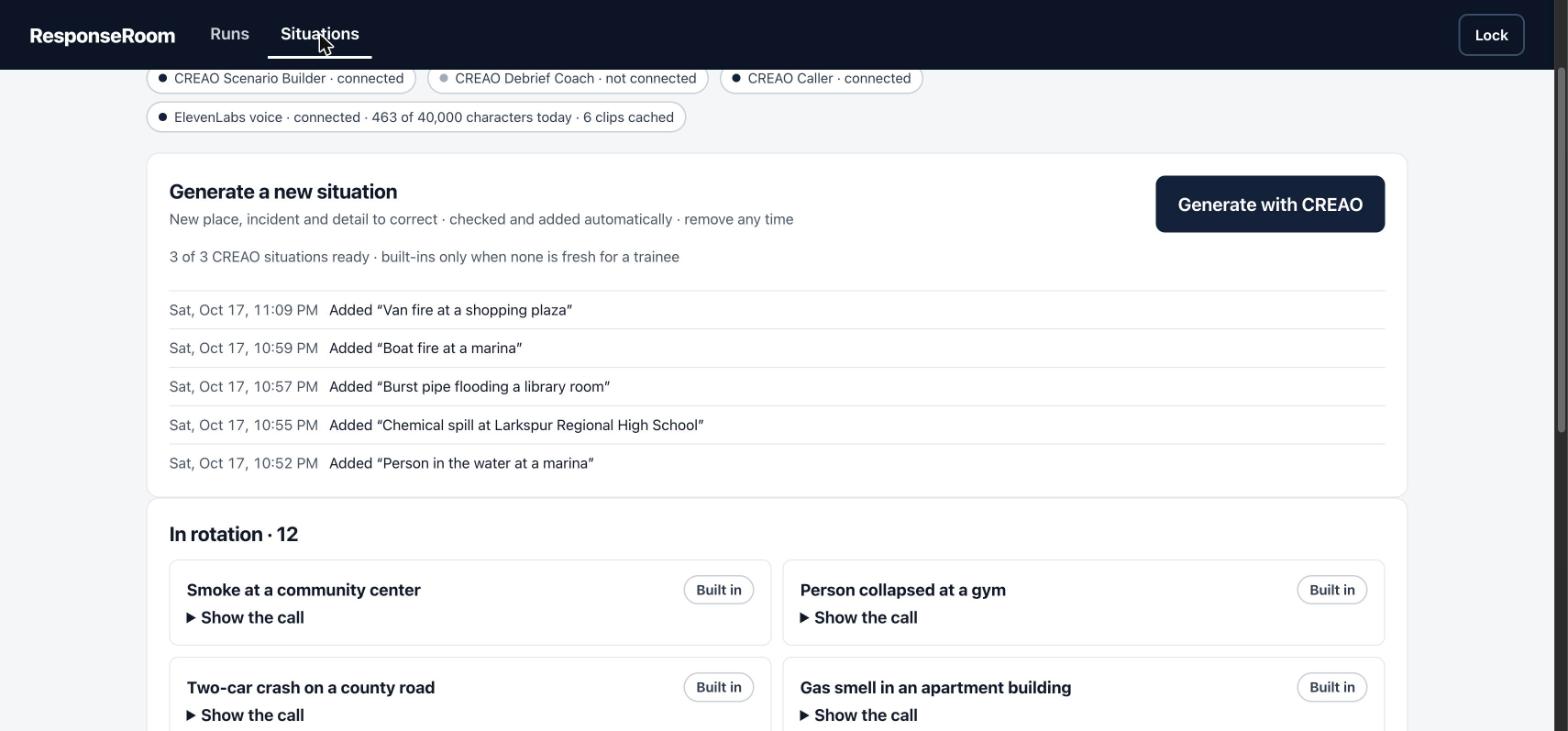
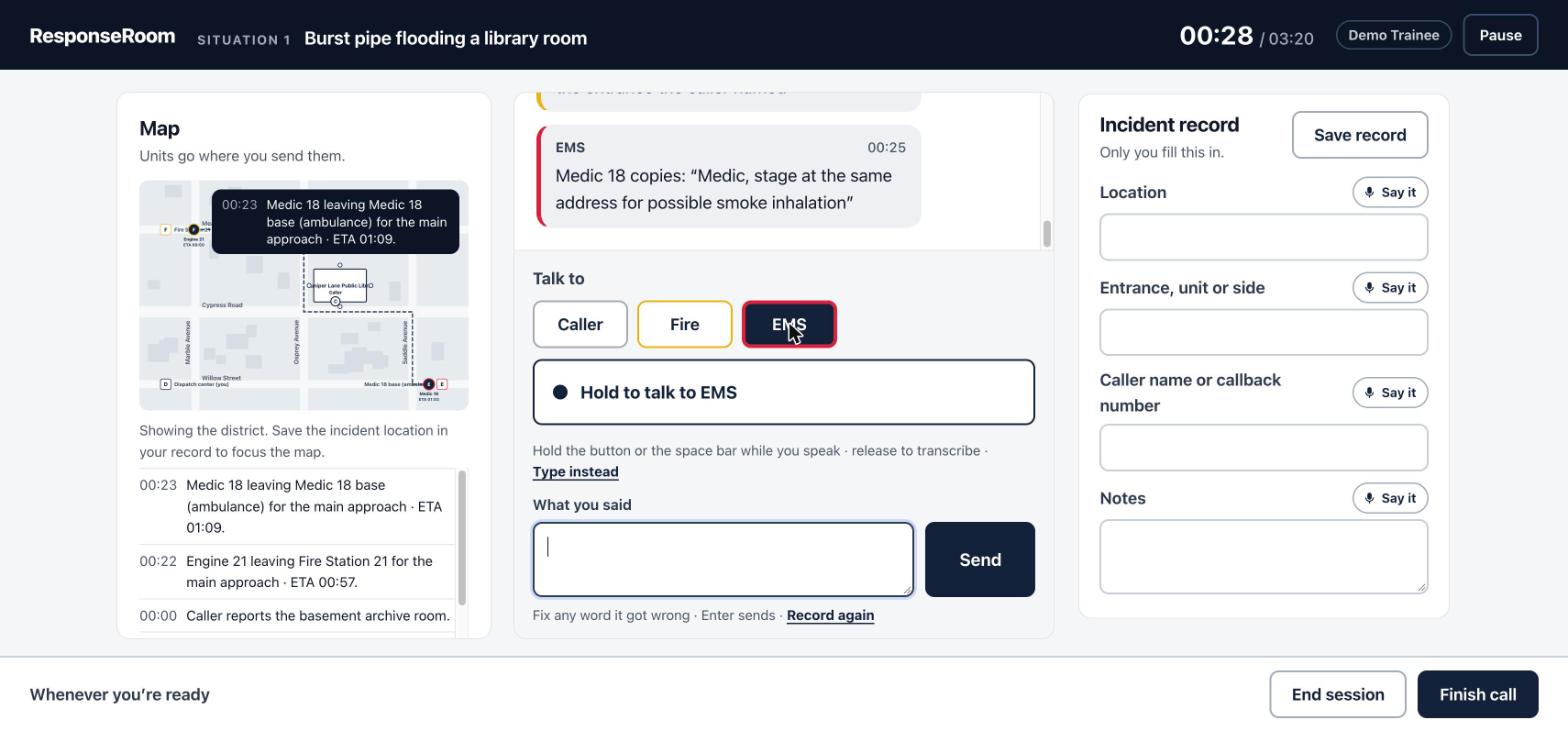
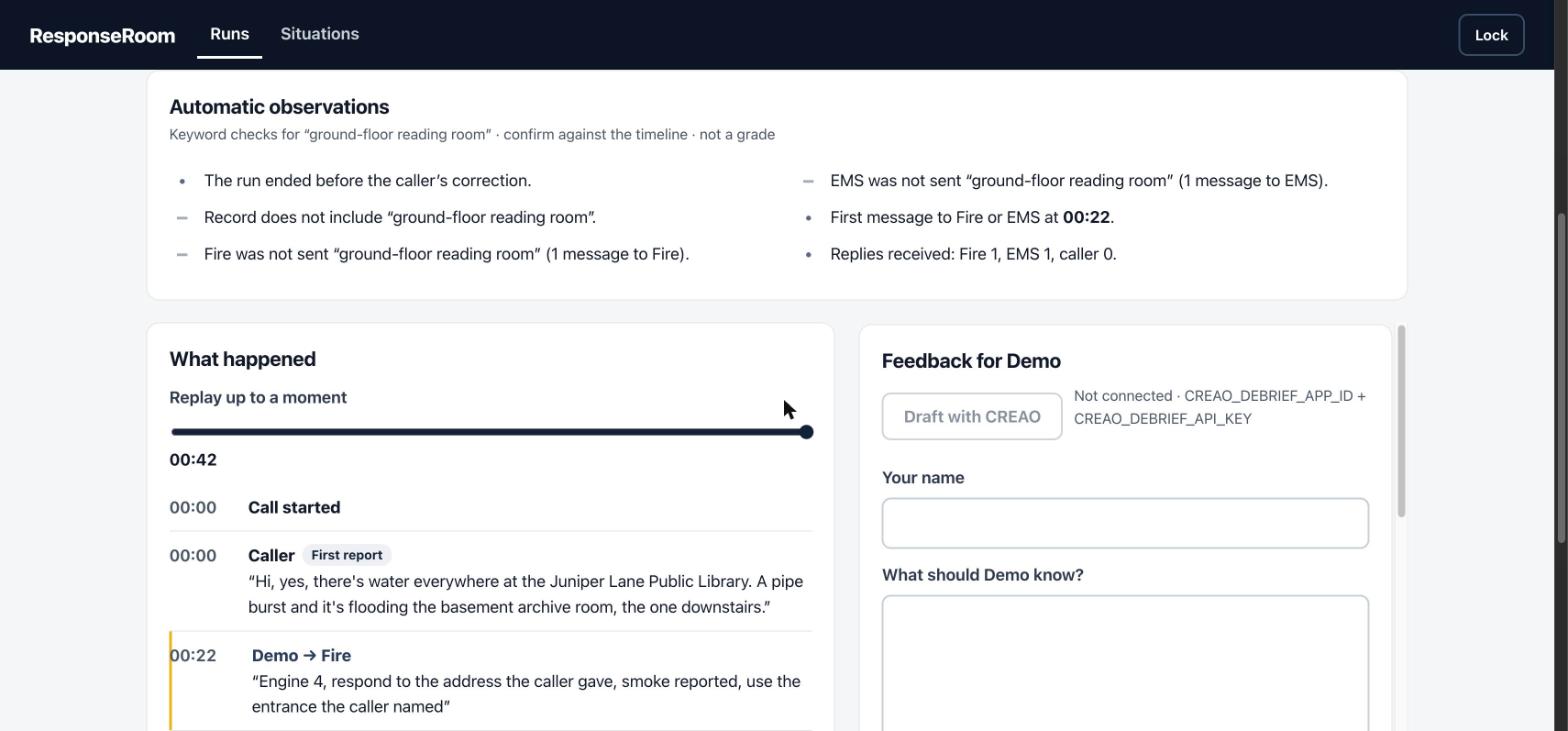
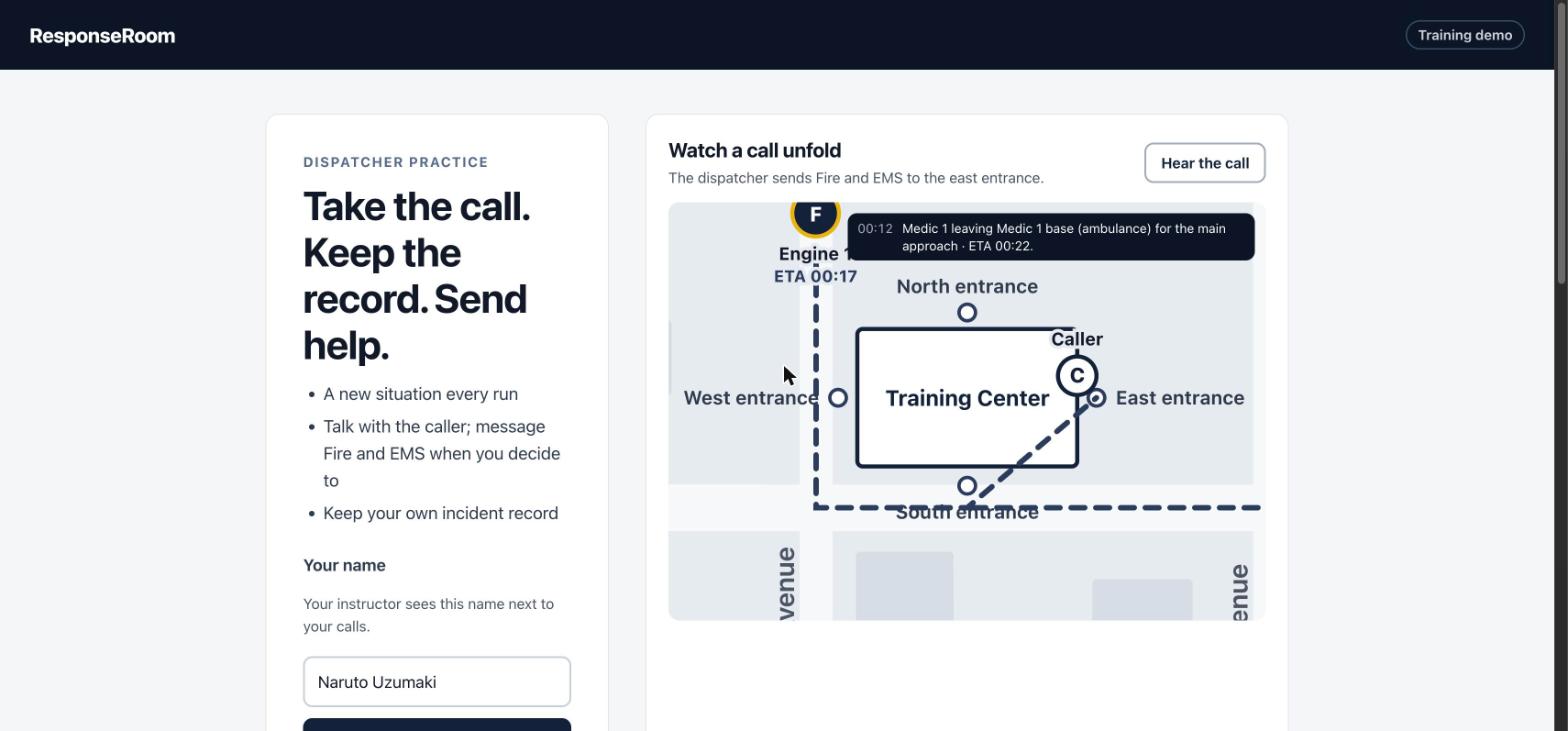
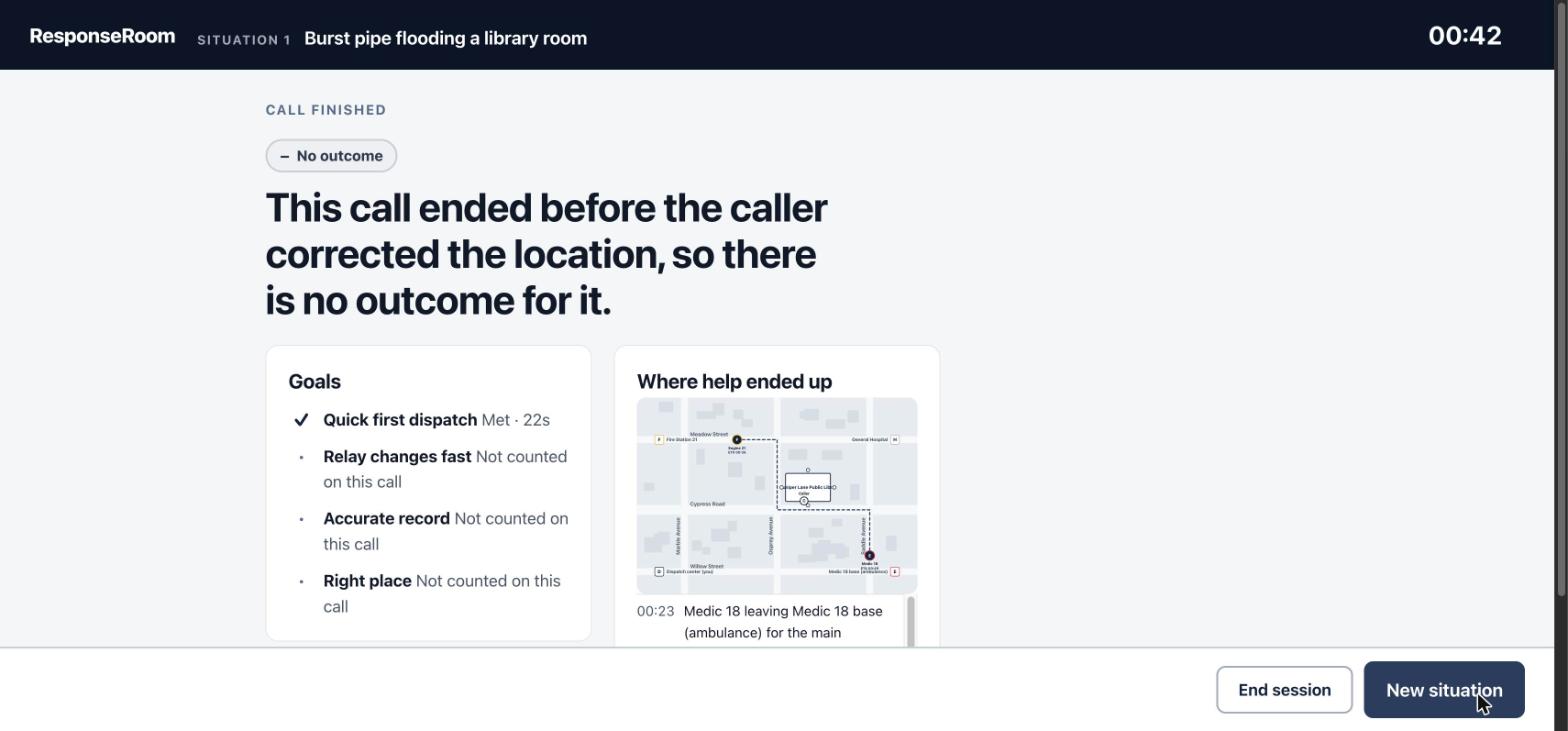
ResponseRoom is an AI-powered emergency response training simulator. It places trainees in realistic scenarios where they respond to audio cues, receive status updates, and work to guide a caller to safety. Trainees can practice across AI-generated situations, while instructors review their results, progression, and AI-assisted feedback. The experience creates a repeatable cycle of practice, review, and improvement.
How we built it
ResponseRoom runs on three CREAO AI agents, coordinated by a lightweight Node.js server that validates their outputs before they reach trainees:
- Scenario Builder: Generates new emergency situations in the background.
- Caller Agent: Responds to the trainee using only information the simulated caller would know.
- Debrief Coach: Reviews session results and drafts feedback for instructor approval. Separating these responsibilities lets us connect scenario creation, interactive practice, and instructor-guided review in one training workflow.
Challenges we ran into
A central design challenge was balancing realistic conversations with controlled training scenarios. The simulated caller needs to respond naturally without revealing information they would not actually know. I also needed to coordinate three agents with different responsibilities and validate their outputs before using them in the training experience. For feedback, I kept instructors involved so AI-generated observations support human judgment.
Accomplishments that we're proud of
I brought scenario generation, simulated caller conversations, and post-session feedback into one training workflow.
What we learned
Building ResponseRoom reinforced that effective AI tools need more than convincing responses. They need clear boundaries, validated outputs, and human oversight. I also learned that the value of a training simulator comes from the entire learning cycle: presenting a meaningful situation, letting someone work through it, and helping them understand what to improve.
What's next for ResponseRoom AI Powered Emergency Response Tool
I want to expand the scenario library and strengthen progress tracking so instructors can identify recurring skill gaps. Beyond dispatch, we see potential for adapting this framework to aviation, paramedic training, and other fields where communication under pressure matters.
Built With
- creaoai
- node.js
