-
-
Dashboard
-
Simulate response plan
Inspiration
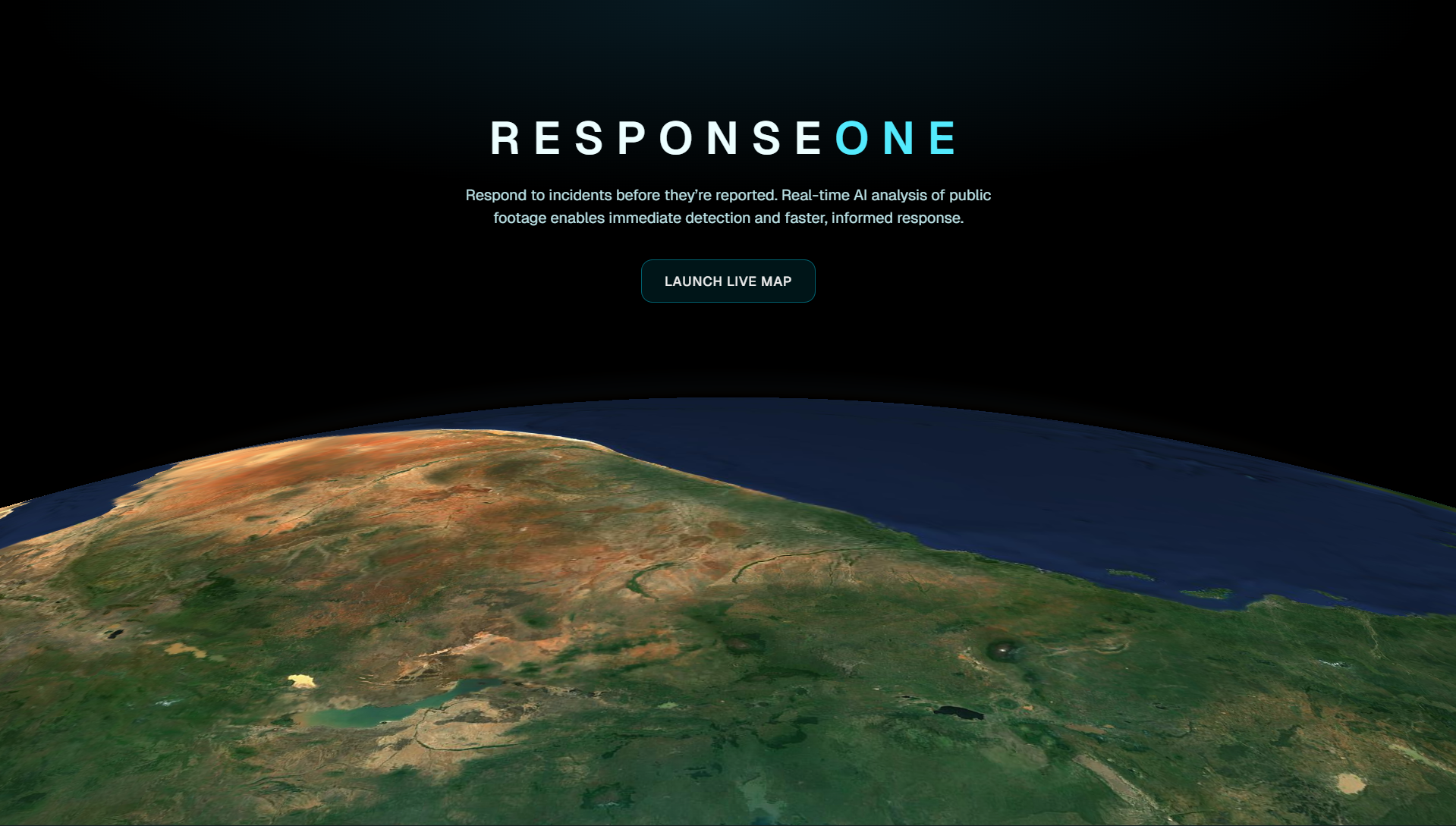
Response is often delayed because incidents are reported after the fact. The idea of detecting and analyzing incidents before they are reported allows for faster and more informed response.
What it does
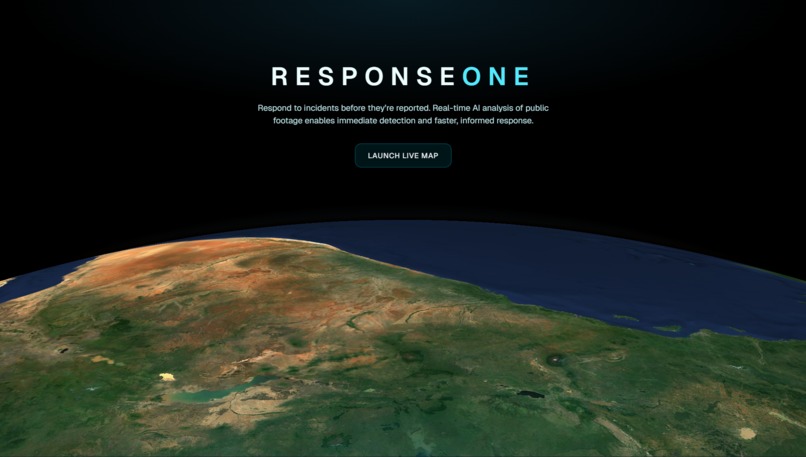
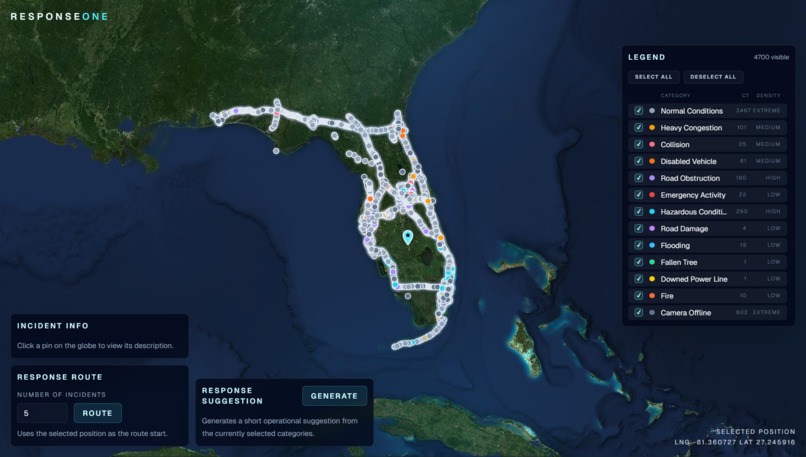
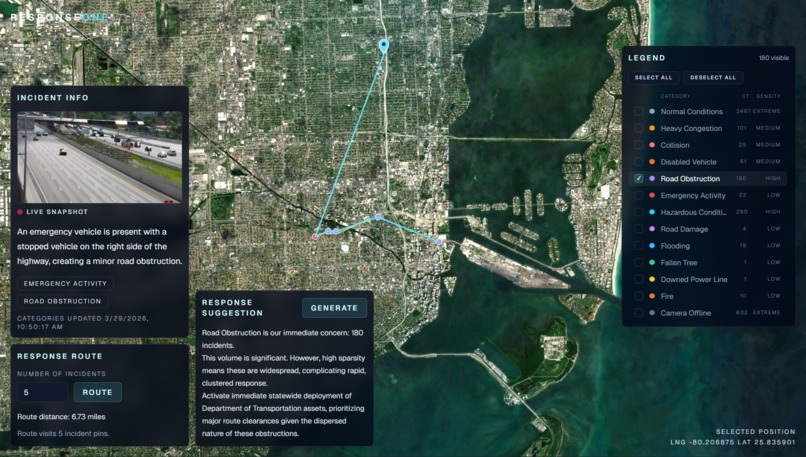
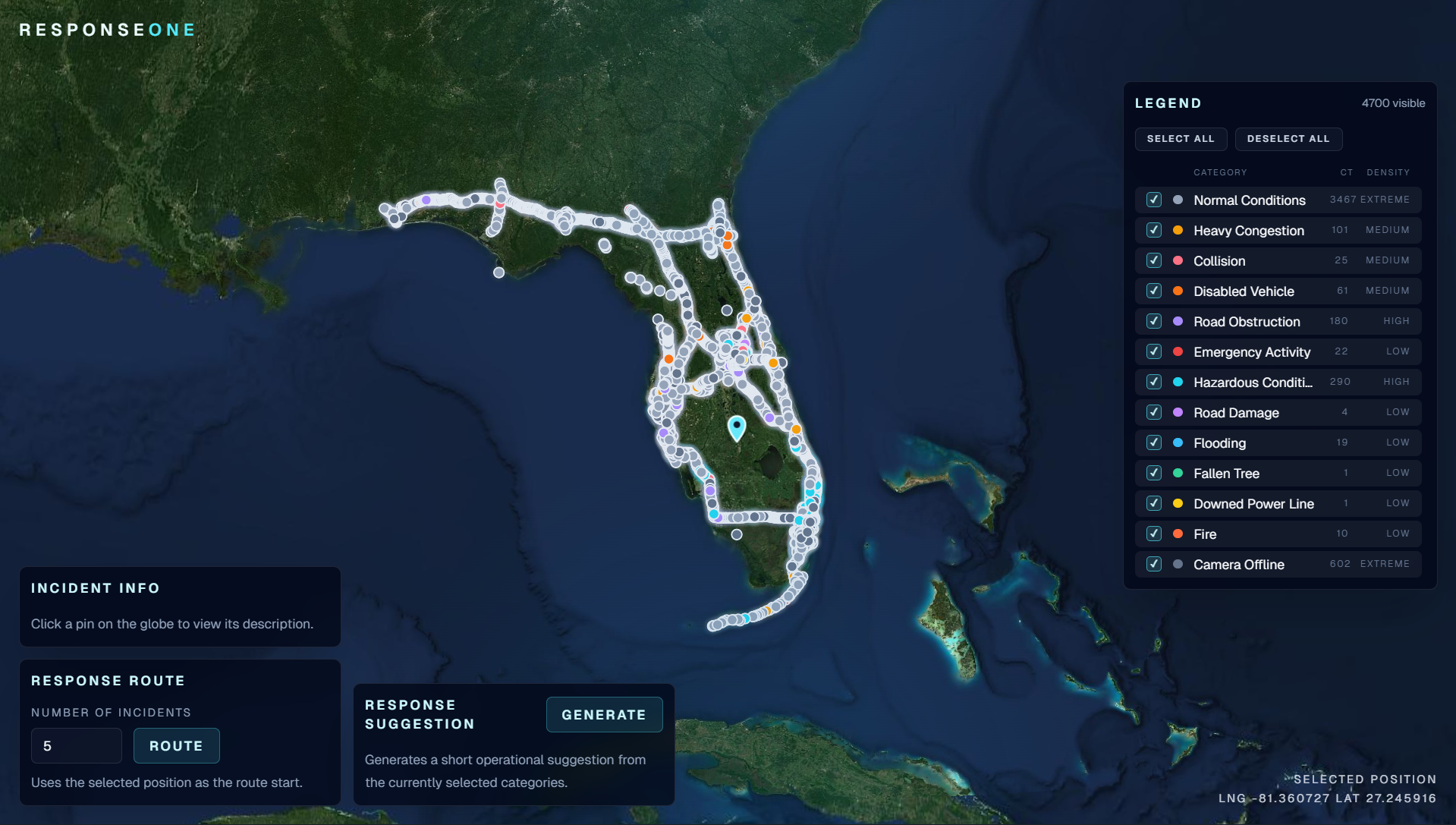
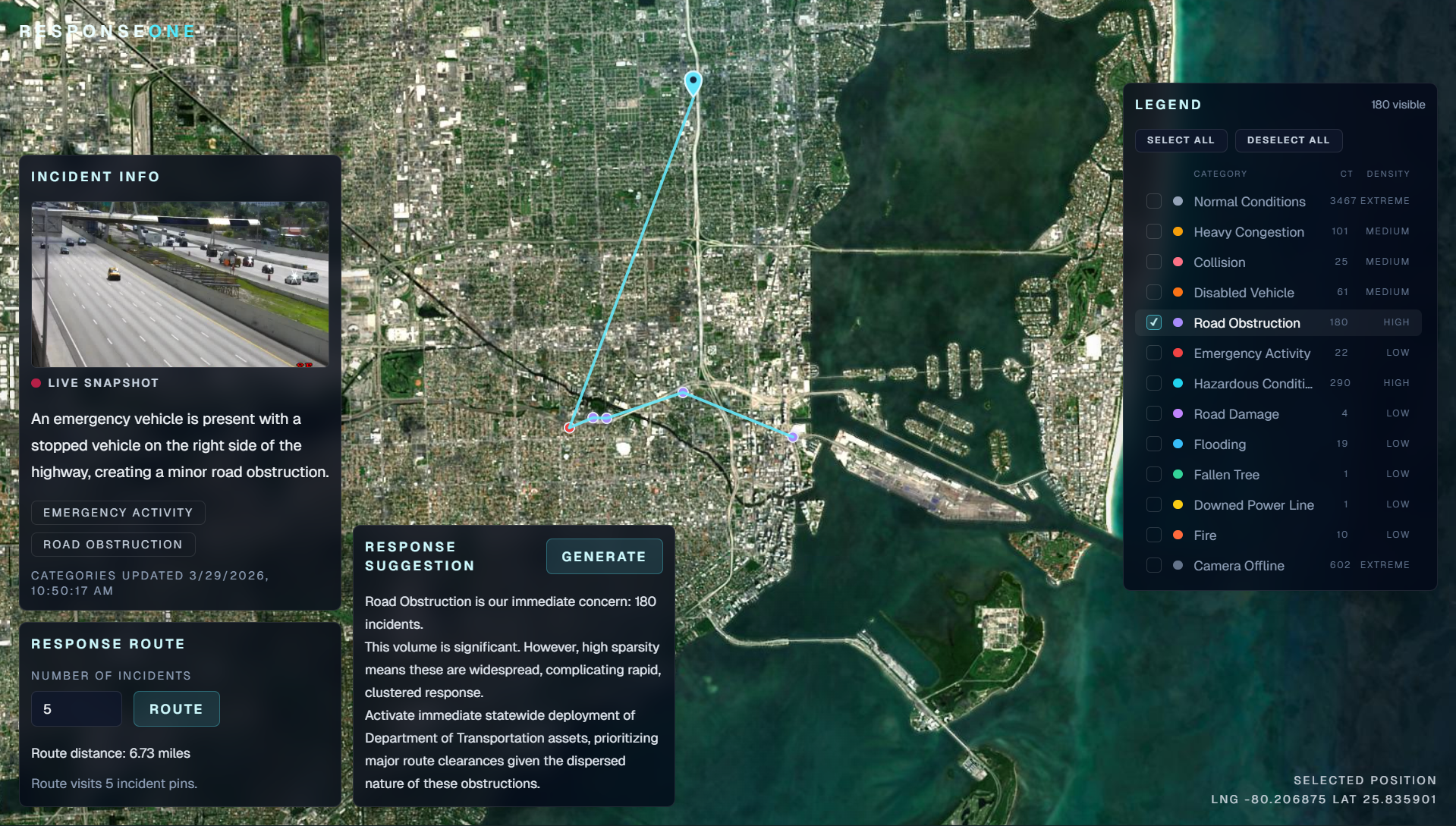
ResponseOne uses live CCTV feeds across Florida and processes the footage with the Gemini API to detect and categorize incidents in real time. It then allows users to map a response route and generates a suggested response plan.
How I built it
The frontend and API are built with Next.js. Data is stored in MongoDB. Gemini is used to process both text and images. A separate server continuously analyzes camera footage in parallel to handle scale.
Challenges I ran into
Accessing and processing a large number of CCTV feeds in real time is difficult. This required building a dedicated system that runs continuously and processes streams in parallel. Another challenge is model accuracy, especially with low quality footage. The false positive rate can be high, although false negatives are relatively low, which is critical for this use case.
Accomplishments that I'm proud of
Building a system that can continuously process live footage at scale and surface incidents in real time despite noisy data.
What I learned
I learned that scaling real time systems requires careful handling of concurrency, reliability, and cost. I also learned that model performance is highly dependent on input quality, and that system design needs to account for imperfect predictions.
What's next for ResponseOne
Improve analysis accuracy by testing different models and refining prompts. Expand the camera network to increase coverage. Enhance routing and response planning to make recommendations more actionable.


Log in or sign up for Devpost to join the conversation.