-
-
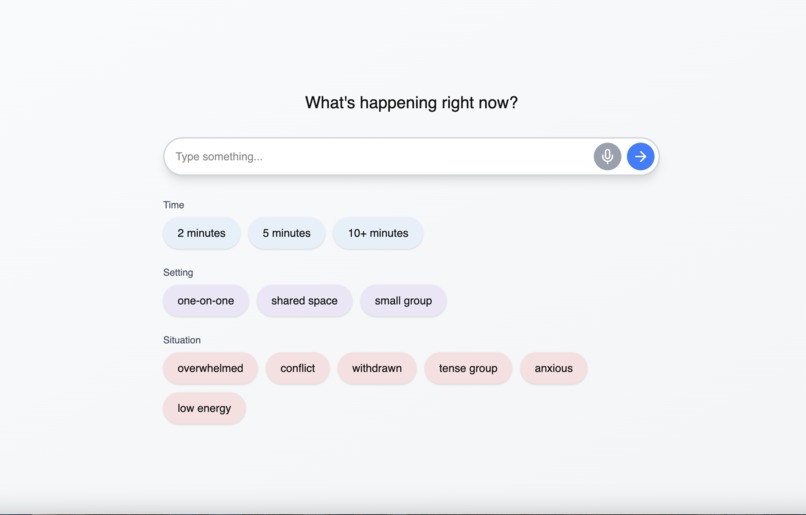
Front Page
-
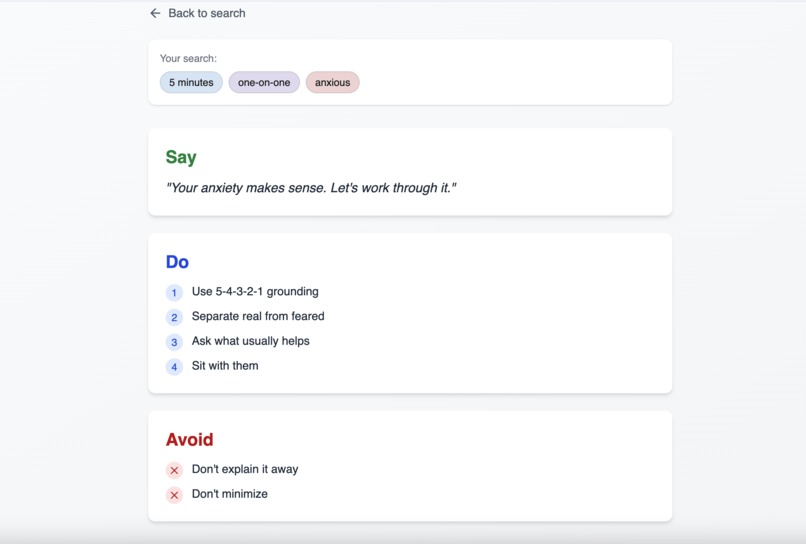
Search Result Example
Inspiration
Women living in shelters often face emotional stress while rebuilding stability. At the same time, helpers and volunteers want to provide support but may feel unsure what to say in difficult moments. We created Response Compass to guide supportive, trauma-informed communication in real time.
What it does
Response Compass helps helpers choose: what to say what to do what to avoid in emotionally difficult situations. Users describe a situation in natural language, and the tool: identifies the emotional context suggests an interaction style provides supportive response examples highlights actions to take and responses to avoid
How we built it
We built Response Compass using a rule-based classification system with a safety-checking layer that maps user input to emotional categories, urgency levels, and interaction styles. The interface is designed to be simple and usable in real-time situations.
Challenges we ran into
A key challenge was designing guidance that felt supportive without being overwhelming or clinical. We also ensured the tool supports helpers appropriately without replacing professional care.
Accomplishments that we're proud of
We’re proud that Response Compass: supports trauma-informed communication works in real-time interactions empowers volunteers and peer helpers includes both suggested responses and responses to avoid
What we learned
We learned how structured communication support can improve everyday supportive interactions and how thoughtful design helps make emotional support more accessible.
What's next for Response Compass
Next, we plan to
- Use AI to make context-aware interpretation
- Trauma-informed professionals contribute to responses
- Risk levels and situational protocol for emergency detection
- Using beyond shelters

Log in or sign up for Devpost to join the conversation.