-
-
Logo
-
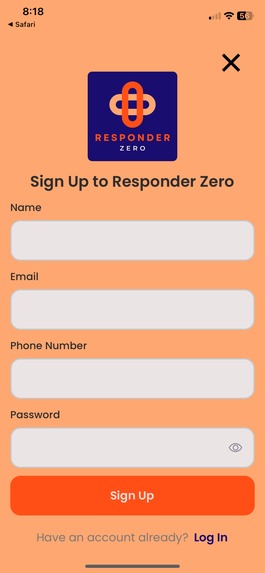
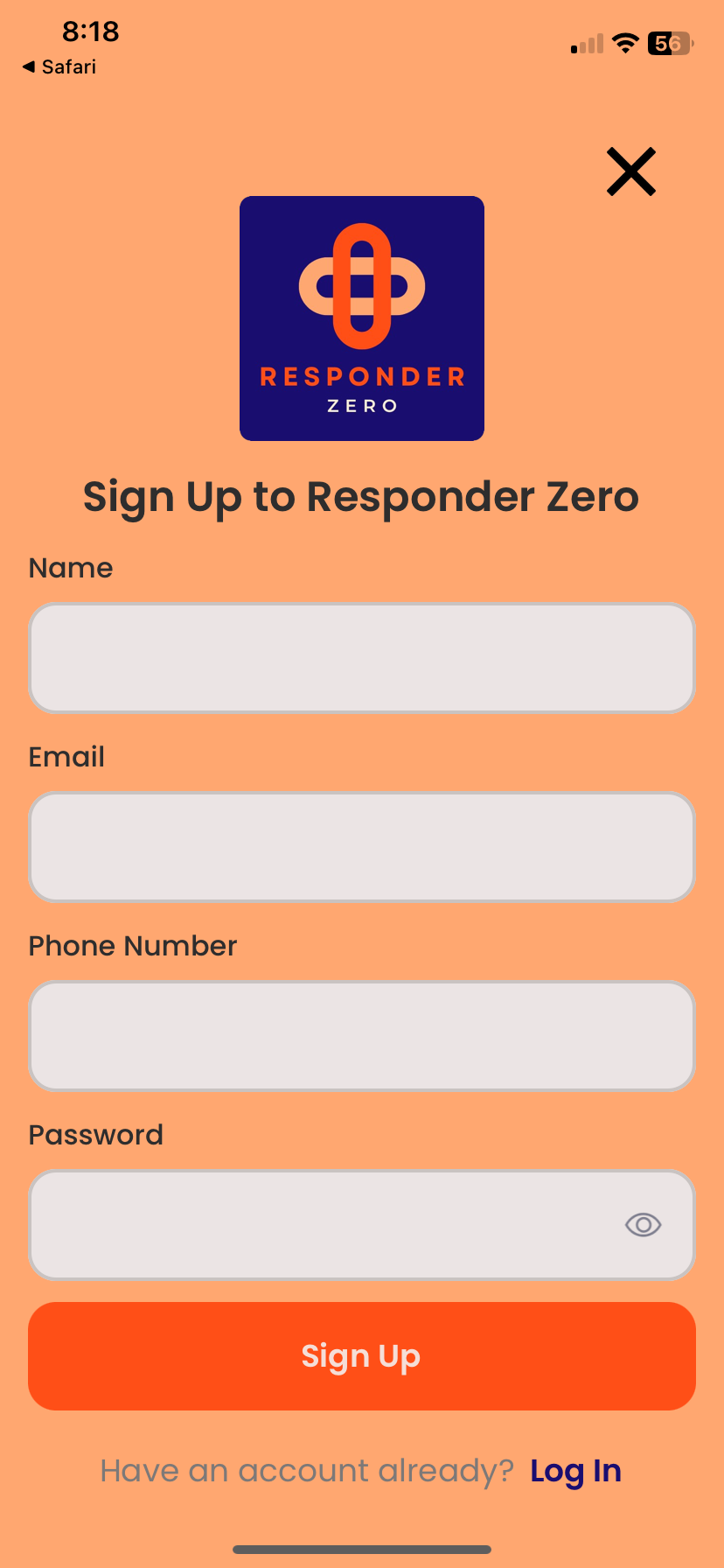
Sign Up Screen
-
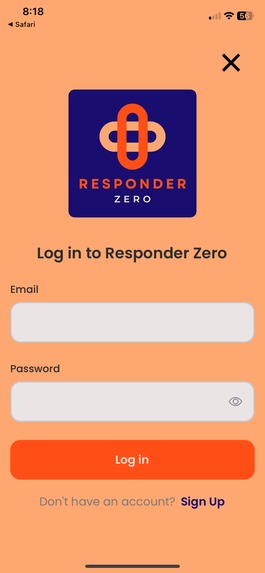
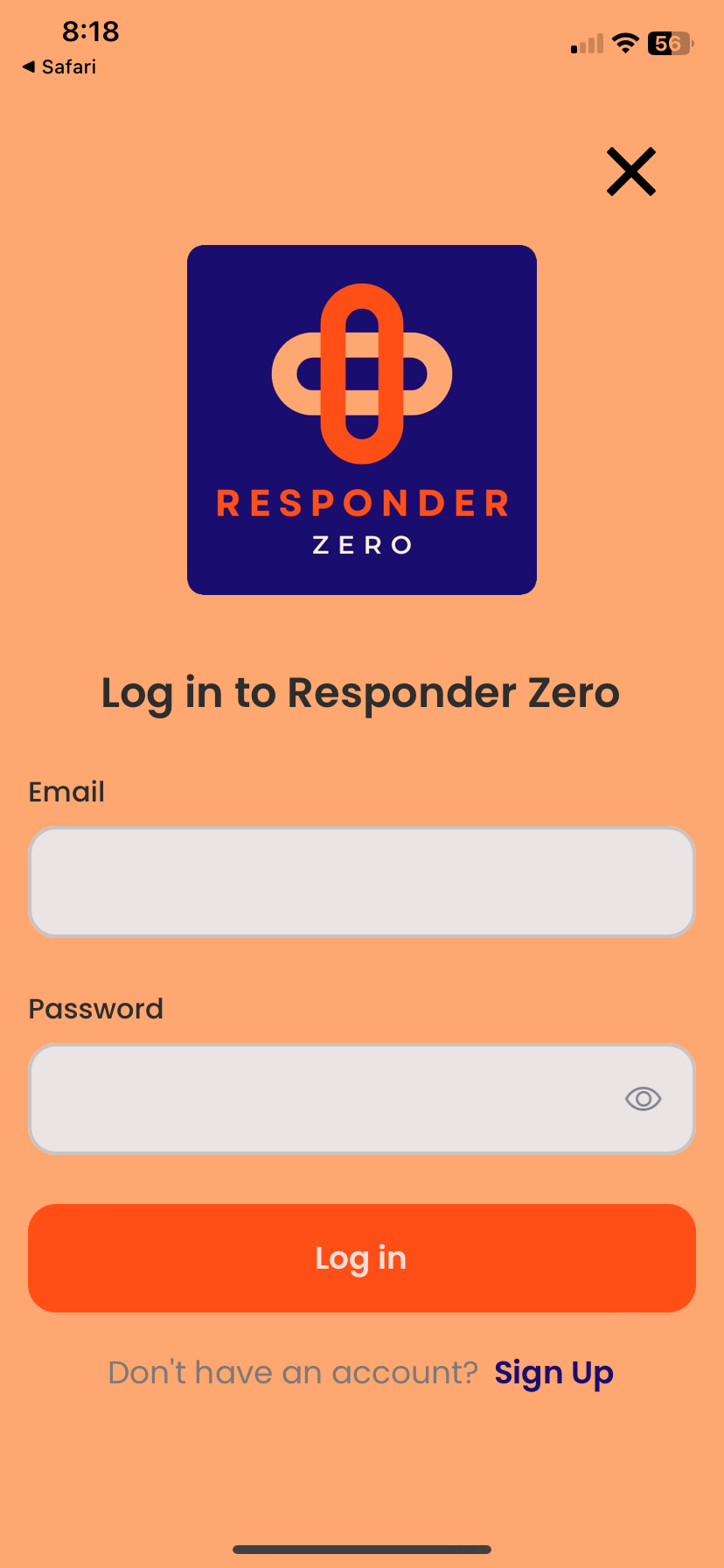
Log In Screen
-
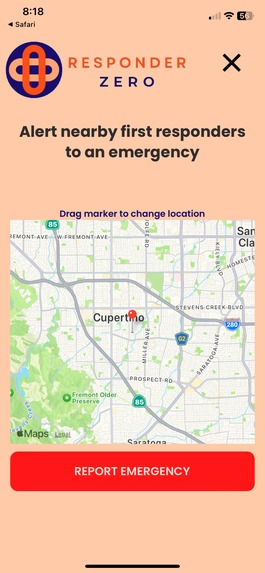
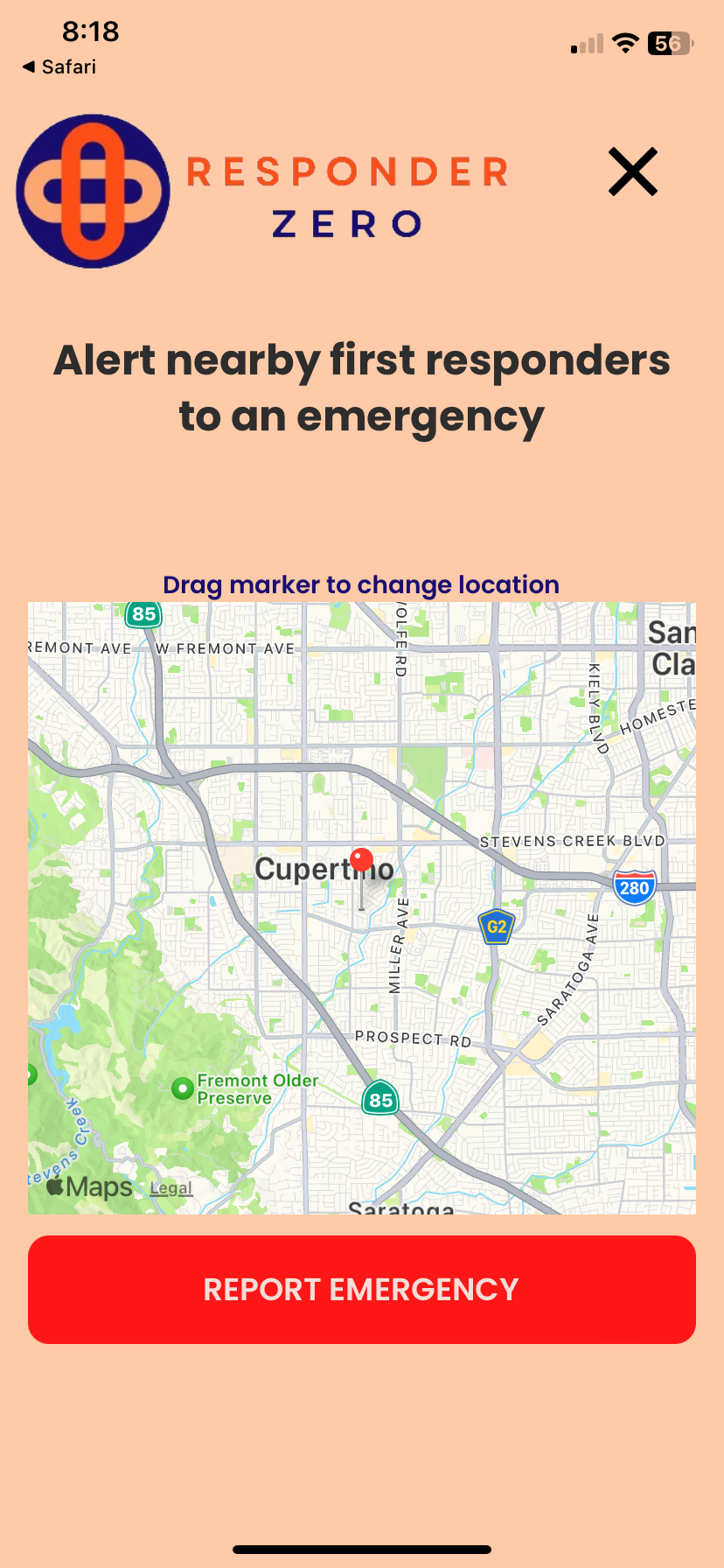
Report Screen
Project Downloads
Expo Go Android Install Link
Expo Go iOS Install Link
APK Download Link
Inspiration
In a medical emergency, it takes 911 time to dispatch EMTs and for EMTs to get on scene. However, there are many people across the country who are trained first responders that could potentially save lives if they could get there sooner. However, as it stands, there is no way of knowing if your neighbor two doors down needs medical assistance. This is why Responder Zero aims to tackle this problem by allowing trained first responders to sign up and receive emergency calls in the area.
What it does
An app that will allow trained first responders living nearby to get to an emergency faster than first responders that are dispatched. In the case of a medical emergency, we know the faster a first responder can get there the better. However, it takes time for dispatched first responders to arrive at an emergency. This app will send an SMS message to all nearby first responders near the emergency to allow for faster treatment. This application works on both iOS and android.
How we built it
The entire application is built upon react-native and expo. The location services make use of Apple and Google Maps to allow users to pinpoint a location using the map. This also means that the user can enable their location and have the marker preset to where they currently are for faster reporting. The SMS is sent using the expo SMS service which brings up the native messaging app for each system. The backend is built in appwrite, allowing for quick authentication and database setup. All of the branding and logos were designed in Canva and then exported as .png images.
Challenges we ran into
Appwrite has a rate limit for its endpoint, often halting the progress of testing the application. On top of that, I have not previously worked with React or React-Native at all, so I spent the entire week learning React-Native from scratch to build the application. This was challenging given the short time frame while picking up on new technologies such as expo, Google Maps API, and Appwrite cloud. The most challenging was exporting or deploying a usable application without having to overspend. In the end, I used expo development builds.
Accomplishments that we're proud of
I am proud to have made a complete project within a week and getting familiar with react-native and mobile development. Working with so many new technologies proved to me that I can learn and adapt quickly on the fly and also shows my ability to understand and implement based on documentation.
What we learned
I learned how to code in react-native, opening the doors to future mobile app development. I also learned how to use Appwrite as my database and authentication. This was my first time working with front-end so learning tailwind CSS was helpful and will allow me to carry that over into other applications in React as well as react-native.
What's next for ResponderZero
Responder Zero currently has a very dull UI, a UI update will consist of adding profile sections, color theme preferences and more. On top of that, an in-app directions system instead of using google maps will be significantly quicker. Lastly, there was no time and budget in this project to use an API to send SMS messages but that is the plan for the future. There was also previously a past reports log page that was removed due to time concerns. The ability to expand Responder Zero is endless and will contribute to creating a more tight-knit and safer community for all.
Built With
- android
- apple-maps
- appwrite
- expo.io
- google-maps
- ios
- javascript
- react-native
- tailwind

Log in or sign up for Devpost to join the conversation.