
Inspiration
Respiratory diseases, including pneumonia and other pneumono-related challenges, pose a significant global health burden, affecting millions annually. The urgency to address these issues inspired us to create Respire!. By leveraging AI and technology, we aim to provide practical, impactful, and scalable solutions to aid in early diagnosis, effective treatment, and improved patient management. Our mission is to empower healthcare professionals and patients alike with tools that enhance respiratory health outcomes.
What it does
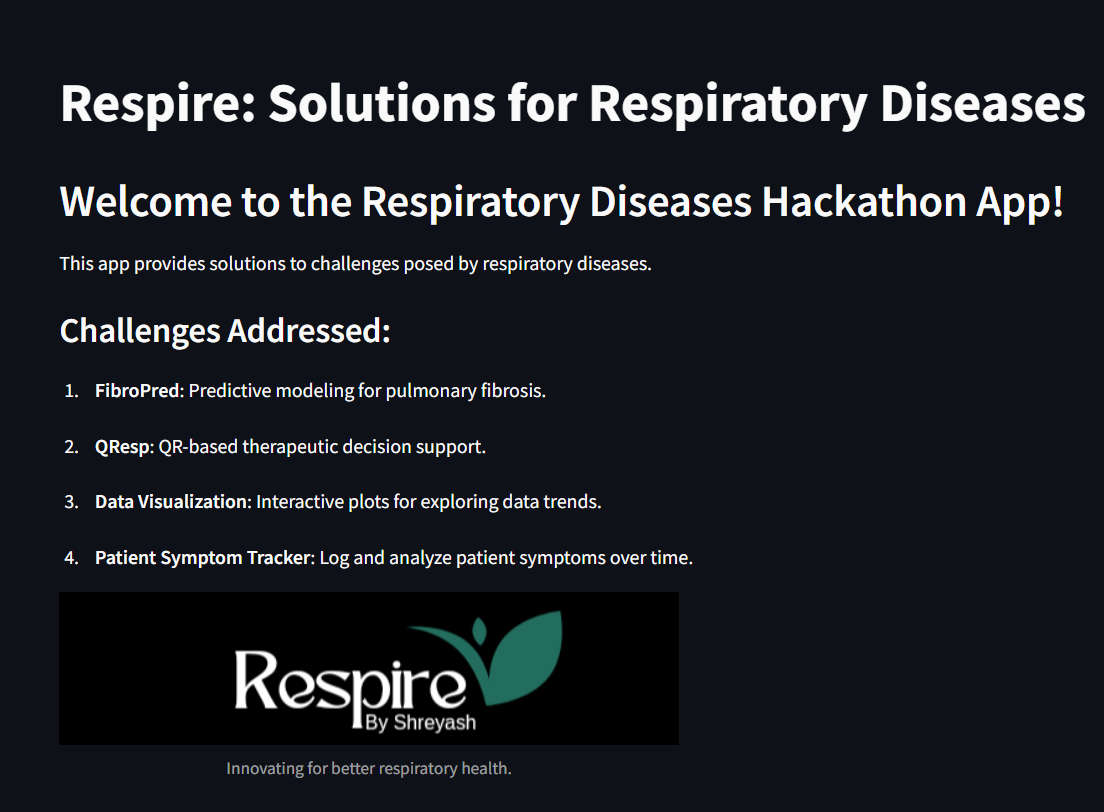
Respire! is an AI-powered application designed to tackle respiratory health challenges. Key functionalities include:
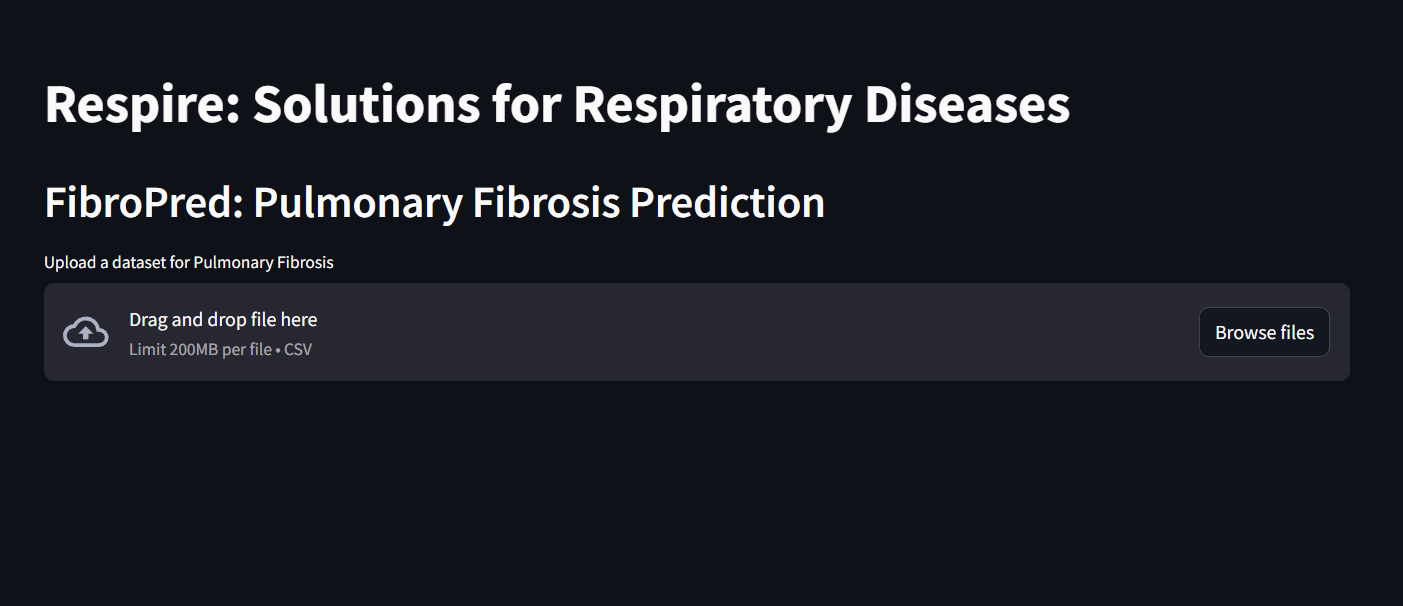
Pulmonary Fibrosis Prediction (FibroPred):
- Enables healthcare professionals to predict pulmonary fibrosis outcomes using machine learning.
- Features interactive data upload, feature selection, and detailed model performance metrics.
Therapeutic Decision Support (QResp):
- Generates personalized QR codes containing patient information, symptoms, and recommendations for therapeutic decisions.
- Ensures quick and accurate access to essential data during emergencies or consultations.
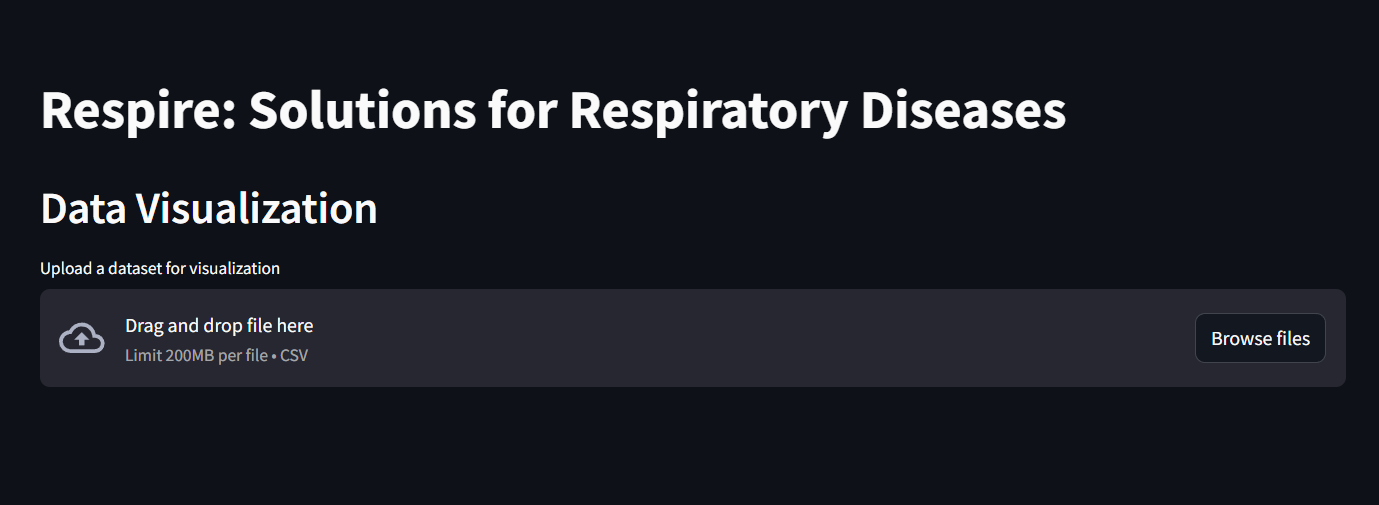
Data Visualization:
- Provides correlation heatmaps, scatter plots, and other visual tools to analyze patient data trends.
- Empowers researchers and clinicians to identify patterns and insights in large datasets.
Patient Symptom Tracker:
- Logs patient symptoms over time, offering a comprehensive record for clinicians.
- Facilitates better tracking of disease progression and response to treatments.
How we built it
Building Respire! involved the following steps:
Ideation:
- Identified critical pain points in respiratory health care through research and discussions with healthcare professionals.
Technology Stack:
- Utilized Python for its robust libraries and frameworks.
- Built the user interface with Streamlit for its simplicity and flexibility.
- Integrated machine learning using scikit-learn for predictive modeling.
- Employed Pandas and NumPy for data manipulation and analysis.
- Created visualizations using Matplotlib and Seaborn.
- Added QR code generation with qrcode and Pillow for therapeutic decision support.
Development Process:
- Designed modules for each feature to ensure modularity and ease of maintenance.
- Incorporated user feedback during testing to refine functionalities and improve usability.
Challenges we ran into
Data Limitations:
- Accessing high-quality, labeled datasets for training the pulmonary fibrosis prediction model was challenging.
- Addressed this by using synthetic data and exploring publicly available datasets.
Model Performance:
- Balancing accuracy, precision, and recall in the predictive model required extensive experimentation with hyperparameters and feature selection.
Integration:
- Combining multiple features, such as QR code generation and data visualization, into a single cohesive app posed design and performance challenges.
User Experience:
- Designing an intuitive interface that caters to both healthcare professionals and patients required iterative improvements.
Accomplishments that we're proud of
End-to-End Solution:
- Successfully built a comprehensive application that addresses multiple aspects of respiratory health care.
Innovative Features:
- Developed novel solutions like FibroPred for pulmonary fibrosis prediction and QResp for QR-based therapeutic support.
User-Centric Design:
- Created an interface that is simple yet powerful, making advanced tools accessible to a broad audience.
Collaboration:
- Effectively combined our team’s diverse skills in AI, healthcare, and software development to deliver a meaningful project.
What we learned
Healthcare Challenges:
- Gained a deeper understanding of the complexities in respiratory diseases and their management.
Technical Skills:
- Enhanced our expertise in machine learning, data visualization, and application development.
User-Centric Development:
- Learned the importance of user feedback in shaping features and improving usability.
Interdisciplinary Collaboration:
- Recognized the value of blending technical and healthcare knowledge to solve real-world problems.
What's next for Respire!
Enhanced Models:
- Incorporate advanced machine learning algorithms like neural networks to improve prediction accuracy.
- Utilize larger and more diverse datasets for training.
Real-Time Data Integration:
- Enable integration with electronic health records (EHRs) and IoT devices for real-time data analysis.
Mobile Application:
- Develop a mobile version of Respire! for wider accessibility and ease of use.
Expanded Features:
- Add modules for detecting other respiratory diseases like asthma and chronic obstructive pulmonary disease (COPD).
- Include features for tracking medication adherence and monitoring environmental factors affecting respiratory health.
Collaboration with Healthcare Providers:
- Partner with hospitals and clinics to pilot the application in real-world settings.
Open Source Community:
- Open the project for contributions from developers and researchers worldwide to foster innovation and scalability.
Respire! represents a step towards leveraging technology for better respiratory health care. Join us on this journey to make a lasting impact!
Built With
- github
- matplotlib
- numpy
- pandas
- pillow-library
- python
- qrcode
- scikit-learn
- seaborn
- streamlit
- vscode


Log in or sign up for Devpost to join the conversation.