-
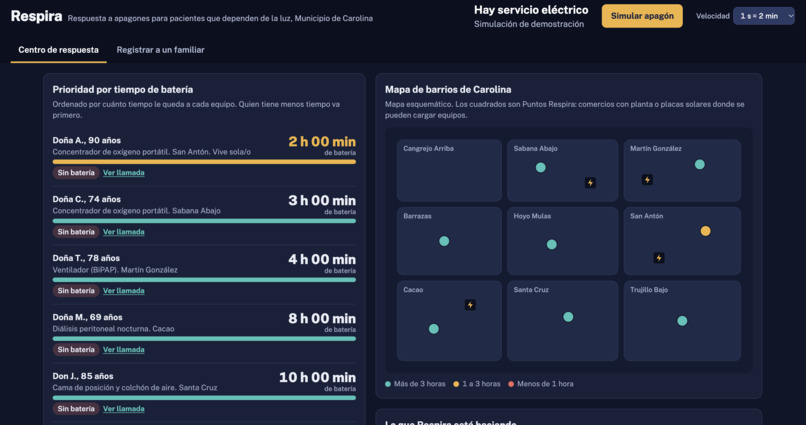
Portal
-
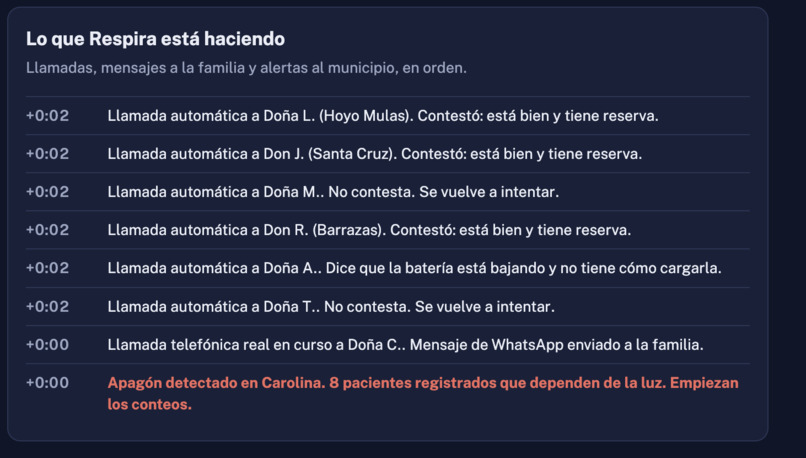
Respira en accion
-
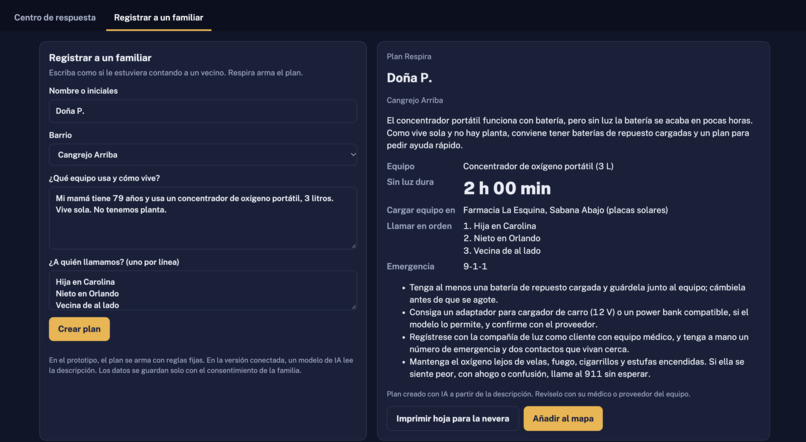
Registro de un familiar
-
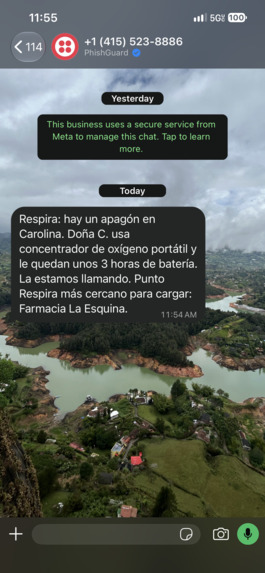
mensaje
-
Inspiration
My grandmother Tita Varada had ALS and breathed with the help of a machine. After Hurricane María, my family in Carolina went nine months without power. We bought generators, waited in gas lines for hours, and took turns at three in the morning refilling the tank. My grandmother Carmen Guadalupe had pulmonary fibrosis and depended on an oxygen concentrator. During Fiona, we watched her battery bars disappear one at a time. Neither of them is with us anymore.
Eight years after María, Puerto Rico still has no unified registry of electricity-dependent patients. Federal data shows more than 47,000 people on the island who depend on electricity to live; the power company's registry has about 3,000. We built the tool our family needed.
What it does
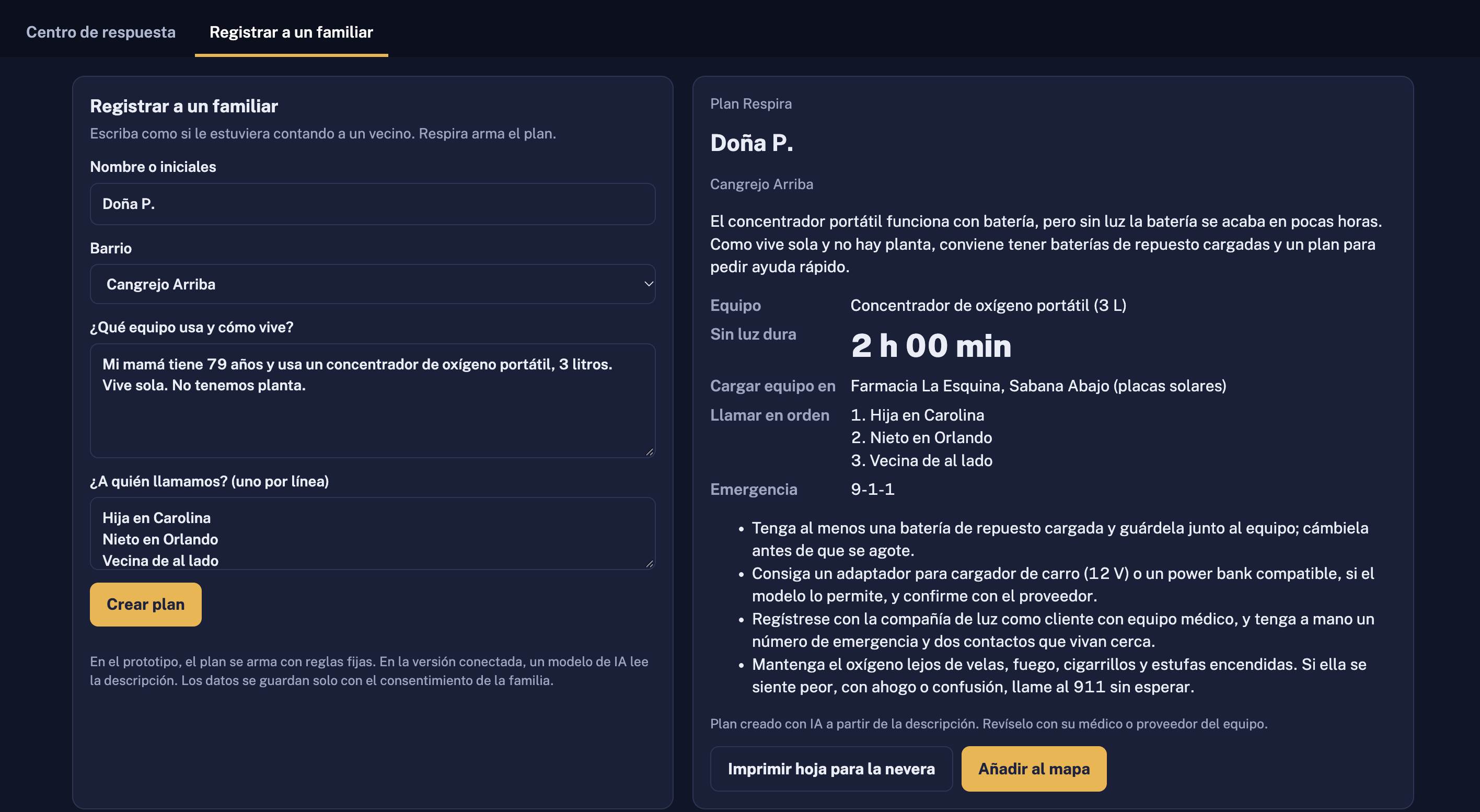
- Family registration: a family member describes the person and their equipment in their own words, and AI builds a Plan Respira: estimated time without power, backups, tips, contacts in order, and a printable sheet for the refrigerator door.
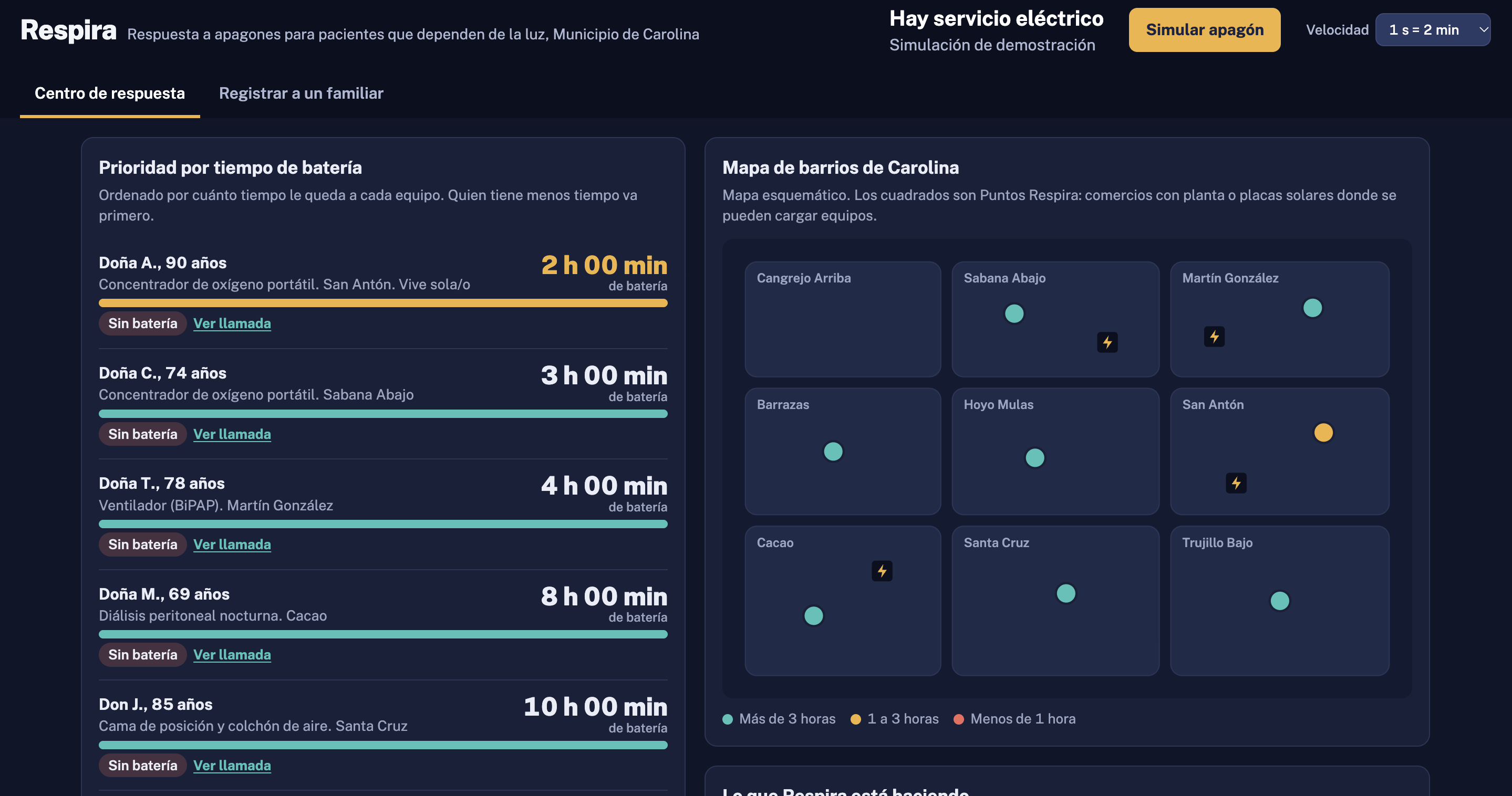
- Outage countdown: when the power goes out, every patient's battery time counts down, and the list re-sorts so whoever has the least time is always first.
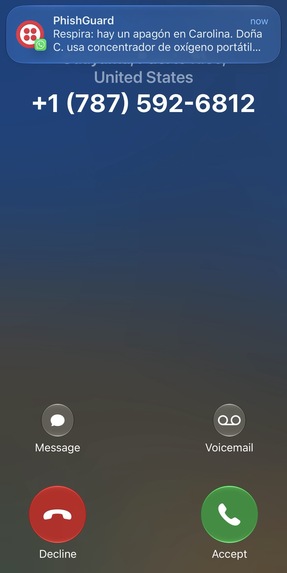
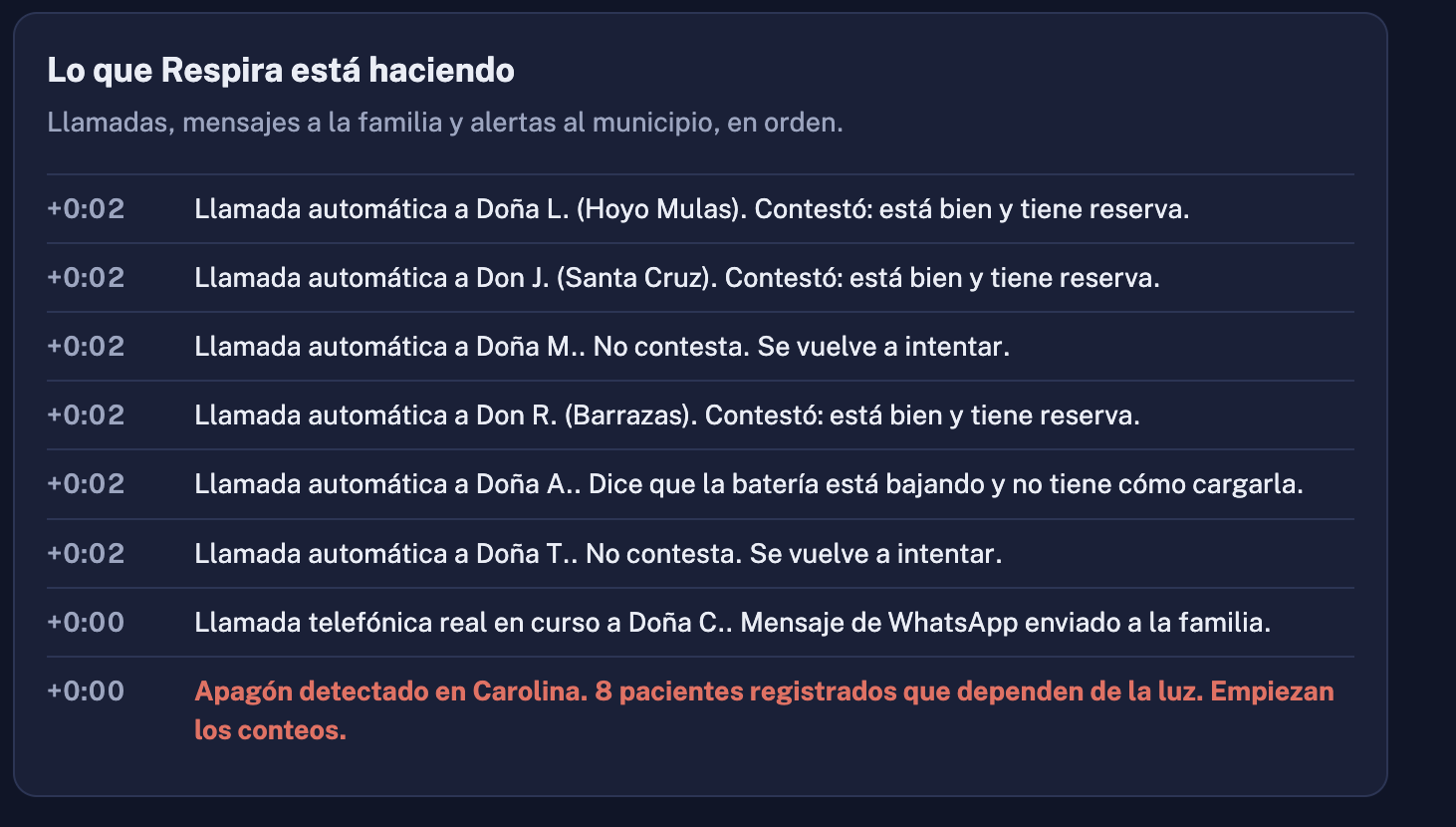
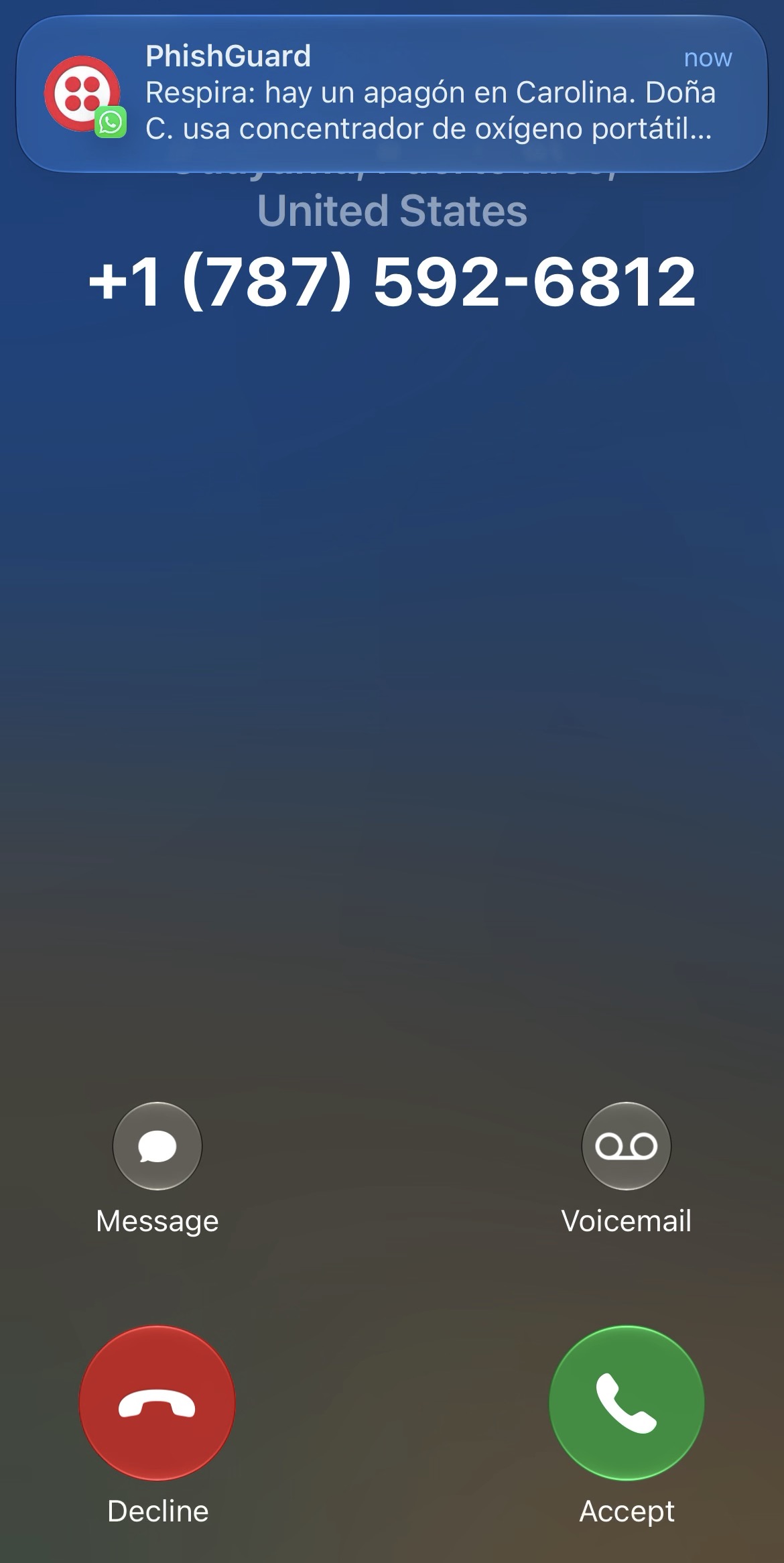
- AI voice call: Respira calls the patient's real phone, speaks Puerto Rican Spanish, identifies itself as automated, and classifies the answer as fine, needs help, or emergency. It triages by safety, not by politeness: if someone says "I'm fine" but their battery is low, it marks them as needing help.
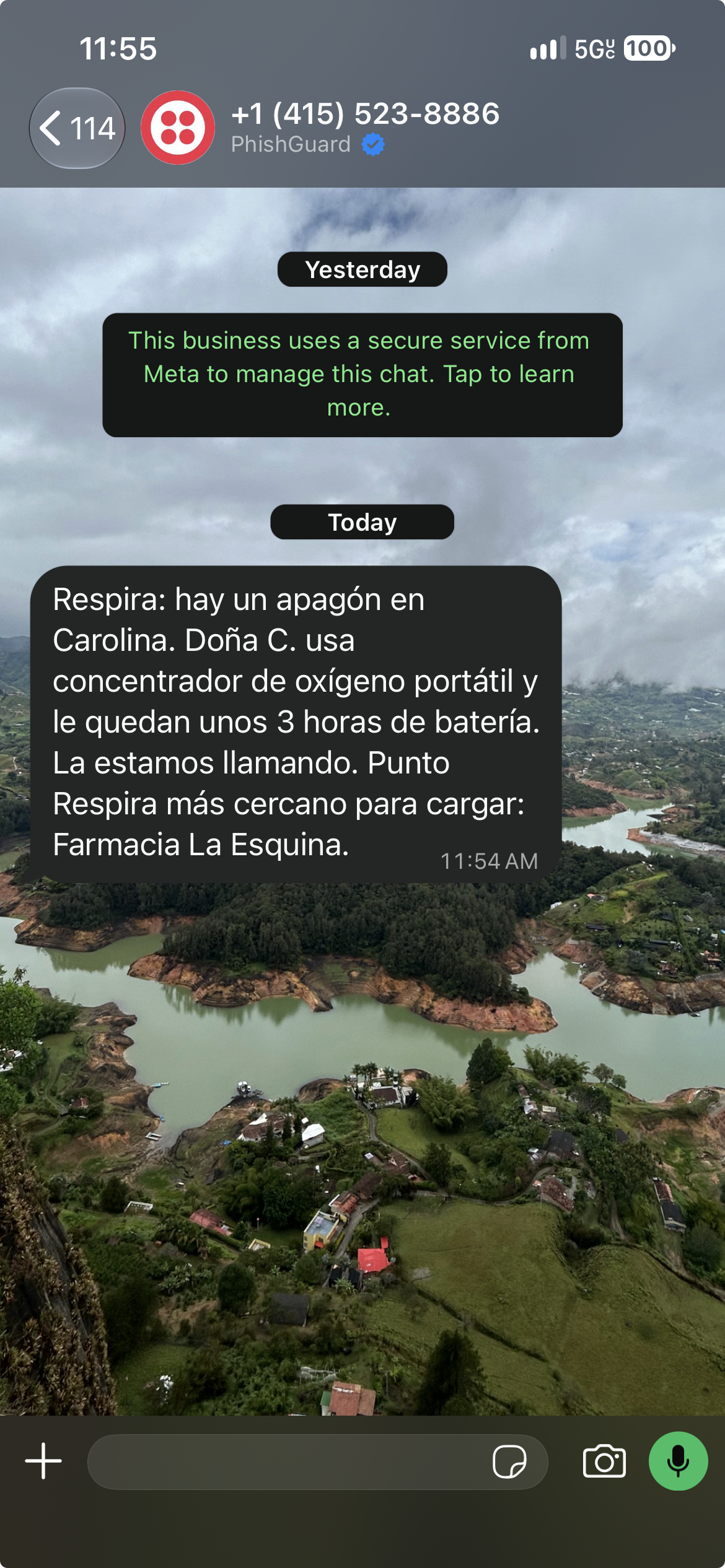
- Escalation ladder: WhatsApp to the family (including relatives abroad), the nearest Punto Respira, the community leader, and finally a municipal priority alert.
- Puntos Respira: colmados, pharmacies, and supermarkets with a generator or solar panels where people can charge medical equipment during outages.
How we built it
A Node.js + Express server serves a lightweight HTML/JavaScript dashboard. Claude (Anthropic API) turns family descriptions into structured plans and runs the phone conversation, returning both the next sentence and a triage classification. Twilio Voice handles the real call with Spanish speech recognition and text-to-speech, and Twilio WhatsApp sends family alerts. Without API keys, the whole demo also runs in a scripted mode.
Challenges we ran into
- Designing an AI phone agent that is warm but never gives medical advice, and that escalates instead of guessing when the answer is unclear.
- Teaching it to classify by safety: elders often say "estoy bien, mija" while their battery runs out.
- Estimating battery time conservatively, and deciding what data not to collect. Respira needs the device and its runtime, not a diagnosis.
Accomplishments that we're proud of
A real phone rings, a real conversation happens in Spanish, and the dashboard updates live. And a project that honors two women who should still be here.
What we learned
The gap isn't technology; it's that nobody knows who these patients are or where they live. Bayamón's municipal registry lists 31 electricity-dependent patients while federal data identifies 2,886. Since 2024, the Department of Health has required insurers to report these patients monthly, and only one has complied. Any solution has to start with the family.
What's next for Respira
- Pilot with the Municipality of Carolina's emergency management office.
- Offer Respira to insurers as the channel for the Department of Health's monthly reporting order.
- Enroll CUD member businesses as Puntos Respira.
- Add a low-cost plug sensor that detects when wall power drops, and integrate utility outage data.
Data and limitations
All demo data is synthetic. The AI gives no medical advice, always identifies itself, and supports 9-1-1 without replacing it. In a real deployment, data would be stored with access controls and shared with municipalities only with family consent.
Built With
- anthropic
- claude
- css
- express.js
- github
- html
- javascript
- ngrok
- node.js
- twilio

Log in or sign up for Devpost to join the conversation.