-
-
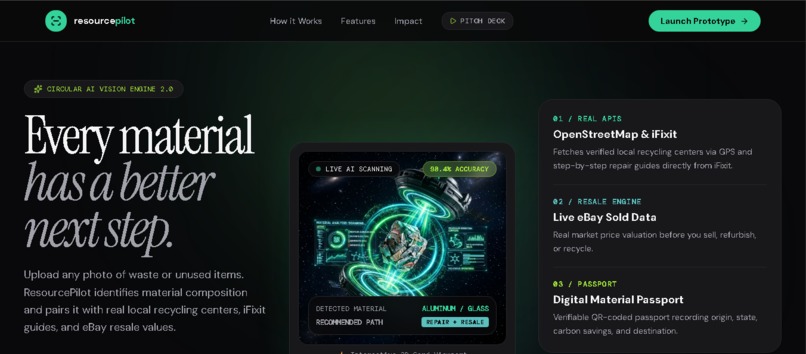
Landing Page
-
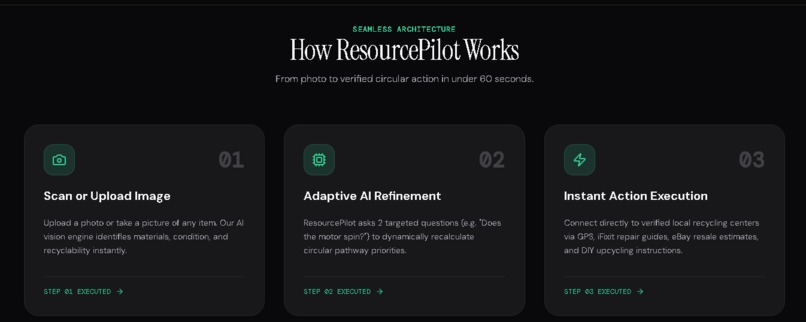
How it Works?
-
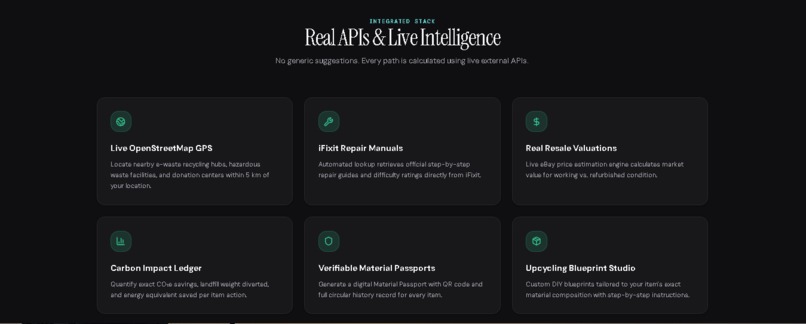
API's and Intelligence
-
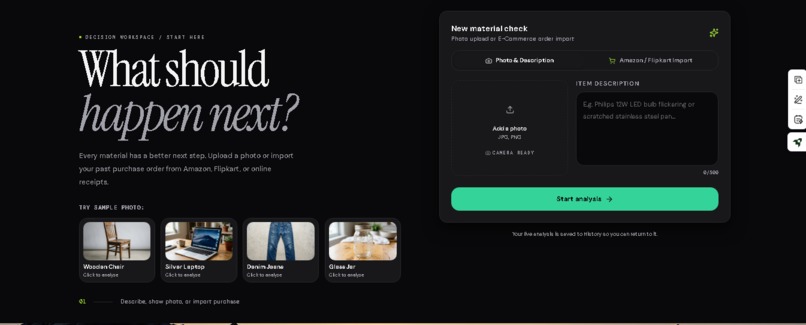
Product upload
-
Demo
-
Product Description
🌍 About the Project
💡 Inspiration
Every day, enormous amounts of material are discarded simply because people don't know what else they can do with them.
A broken electronic device might still contain useful components. A piece of plastic could potentially be reused or recycled. An old object might have value to someone else, or become the raw material for a completely different creation.
The problem isn't always a lack of resources — it's a lack of information and connection.
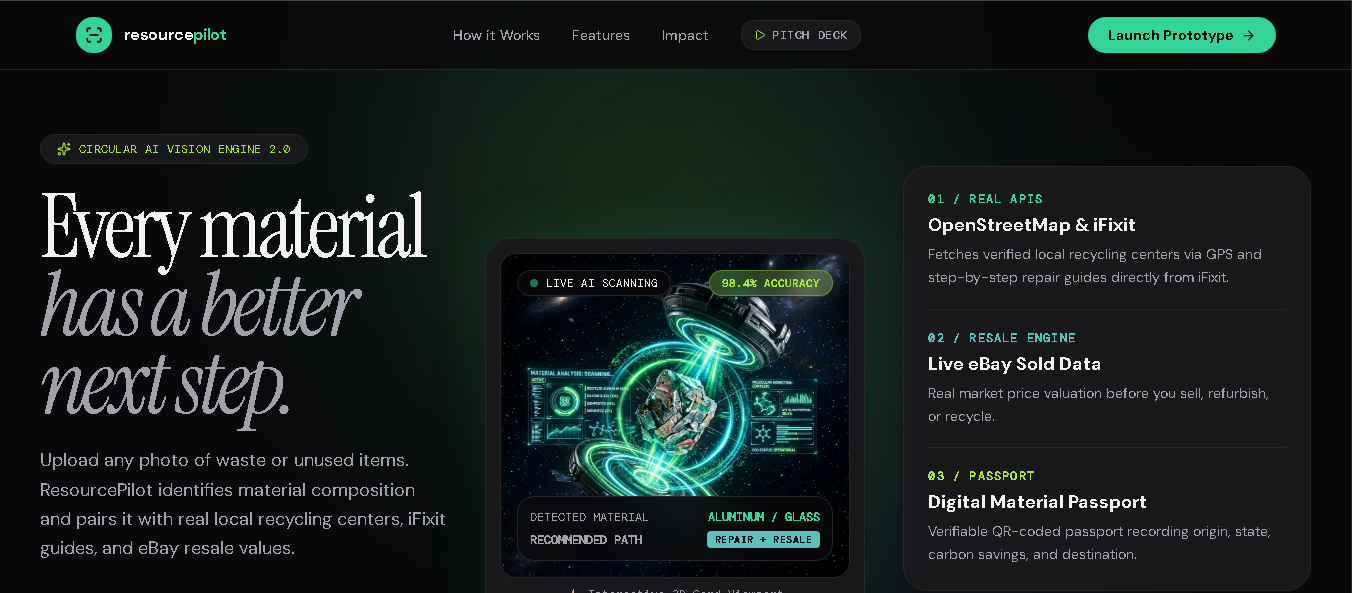
That's what inspired us to build ResourcePilot: an AI-powered material intelligence platform that helps people understand what an unwanted item is made of and discover its best possible next use.
Instead of asking "How do I throw this away?", ResourcePilot asks:
"What can this become?"
🚀 What is ResourcePilot?
ResourcePilot acts as an AI copilot for resource recovery.
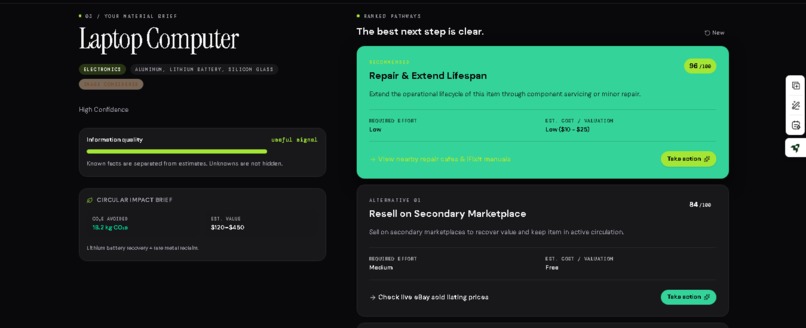
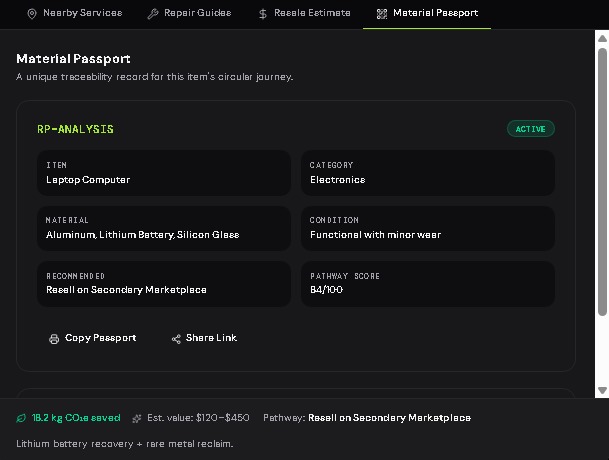
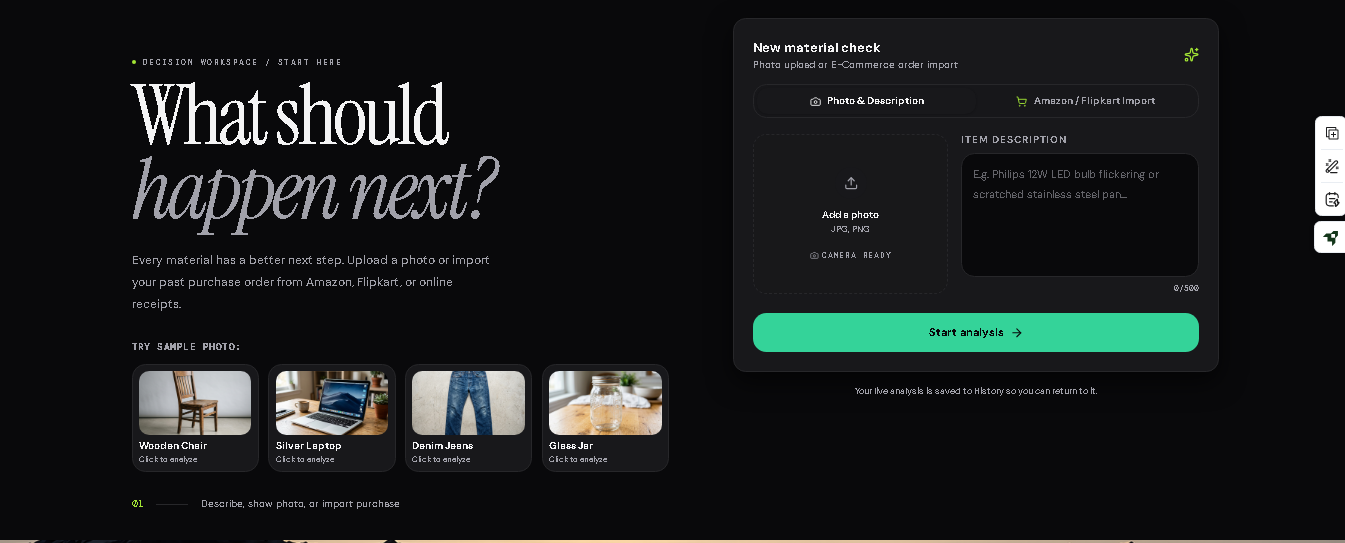
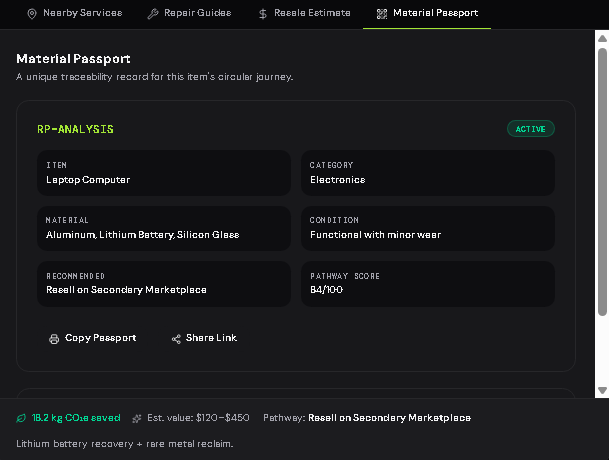
A user can provide an image or information about an unwanted item. The system analyzes it and builds a Material Passport containing useful information about the item's category, materials, potential value, and possible recovery pathways.
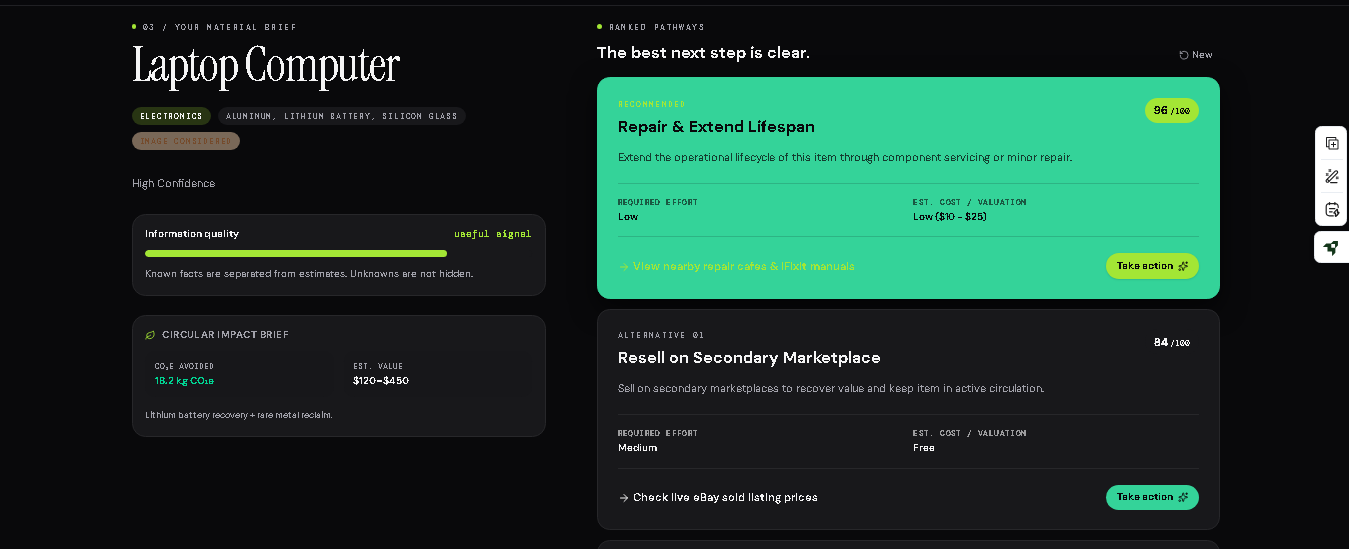
It then guides the user through options such as:
- ♻️ Recycling — Find appropriate recycling pathways and facilities.
- 🔧 Repair — Discover repair possibilities and relevant guides.
- 💰 Resale — Explore whether the item still has monetary value.
- 🛠️ Upcycling — Generate ideas for giving the material a new purpose.
- 📍 Recovery Hubs — Connect users with relevant local resources and facilities.
The goal is to move from a simple "waste" classification toward a more useful question: "What resource is still hidden inside this object?"
🧠 How We Built It
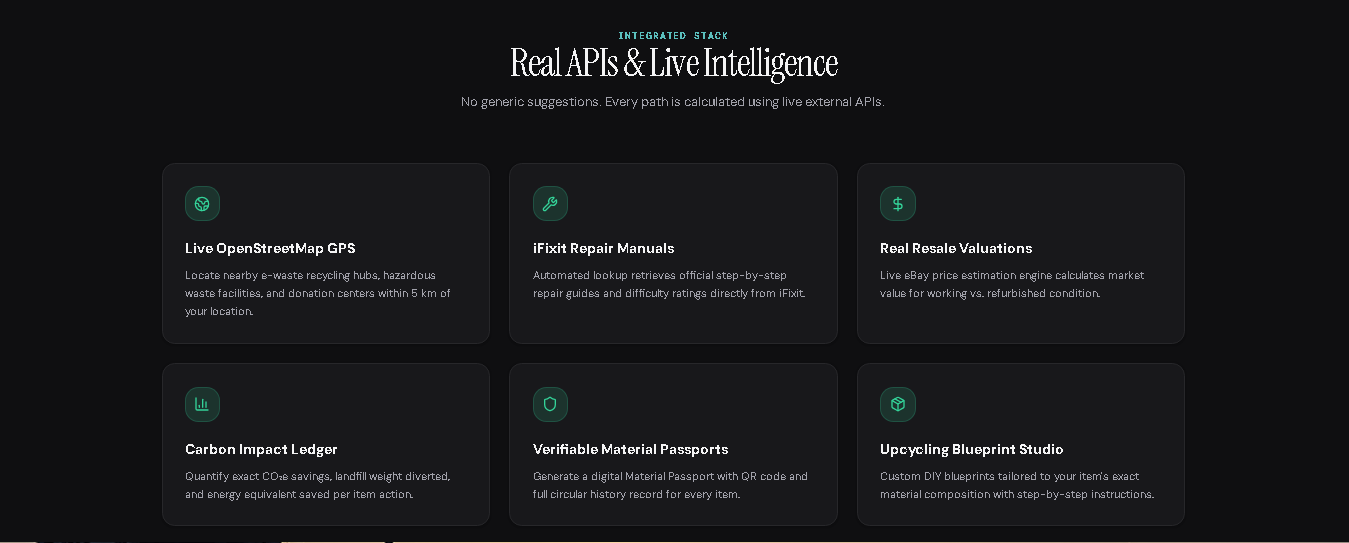
ResourcePilot is built as a modern web application using:
- React 19 + TypeScript for the frontend
- Vite for fast development and builds
- Tailwind CSS for the interface
- Fastify for the backend API
- AI-powered analysis for material and object intelligence
- External APIs and data sources to connect users with recycling, repair, resale, and other recovery options
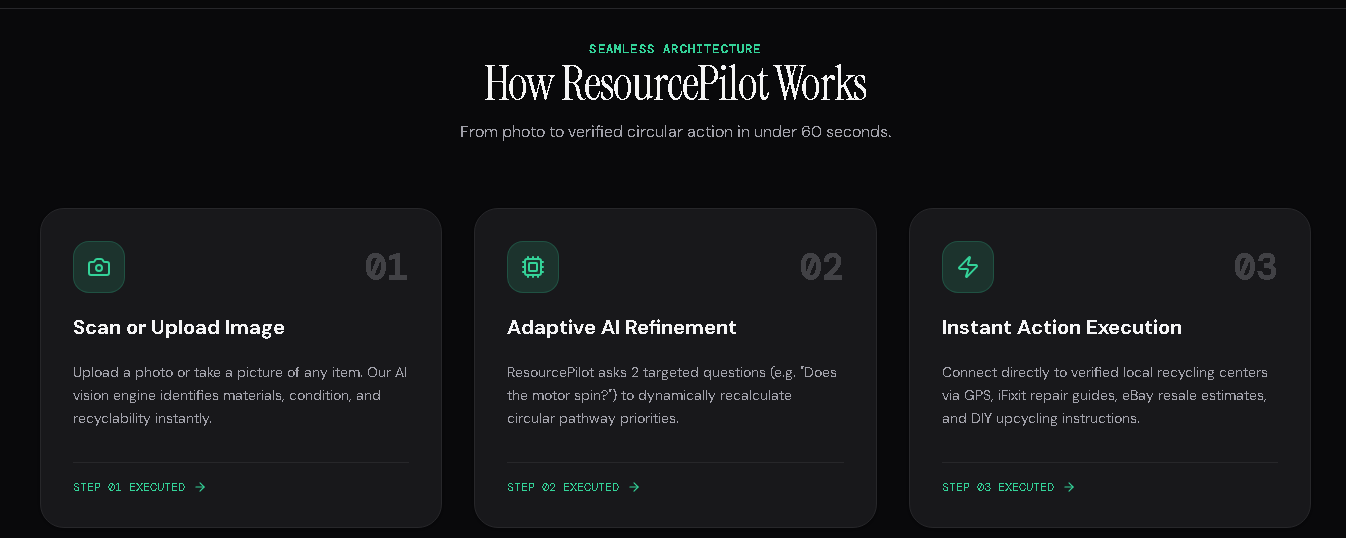
Our core workflow follows a decision pipeline:
Identify → Understand → Evaluate → Find Options → Take Action
The AI first attempts to identify the object and its likely material composition. Based on that information, ResourcePilot determines which recovery pathways may be relevant and presents them to the user in a practical format.
The resulting Material Passport acts as a structured summary that users can use to make better decisions about an item's next life.
📚 What We Learned
Building ResourcePilot taught us that solving a sustainability problem with technology requires more than simply adding AI.
We learned how important it is to:
- Turn AI outputs into actionable information rather than just generating descriptions.
- Combine multiple data sources and APIs to create a useful end-to-end workflow.
- Design interfaces that make complex information understandable to everyday users.
- Think about materials as part of a circular system, rather than treating them as disposable objects.
- Balance ambitious ideas with what can realistically be built within a hackathon.
One of our biggest takeaways was that AI becomes much more useful when it is used as a decision-support layer connecting identification, knowledge, and real-world action.
⚙️ Challenges We Faced
One of the biggest challenges was dealing with the complexity of real-world objects.
An item that looks like a single object can contain multiple materials, components, coatings, or parts. Determining the correct recovery pathway therefore isn't always straightforward.
We also faced challenges around:
- Making AI-generated information useful without overwhelming the user.
- Connecting different sources of information into one workflow.
- Designing a scalable architecture for future APIs and data sources.
- Handling uncertainty when an object's exact material composition cannot be determined from an image alone.
- Building a meaningful prototype within the limited time available during the challenge.
These challenges helped us design ResourcePilot around guidance and possibilities, rather than pretending that every material decision can be perfectly automated.
🌱 What's Next?
ResourcePilot is only the beginning.
In the future, we want to expand the platform with better material recognition, richer material databases, more localized recovery infrastructure, improved resale intelligence, environmental impact estimation, and community-driven data.
We also envision Material Passports becoming useful beyond individual consumers — potentially helping schools, businesses, manufacturers, repair communities, recyclers, and local governments understand where materials go after their first use.
Our long-term vision is simple:
A world where "waste" is no longer the end of an object's story — just the beginning of its next one.
ResourcePilot — Turn Waste into Resources with AI.
Built With
- ai
- css
- fastify
- react19
- tailwind
- vite


Log in or sign up for Devpost to join the conversation.