-
-
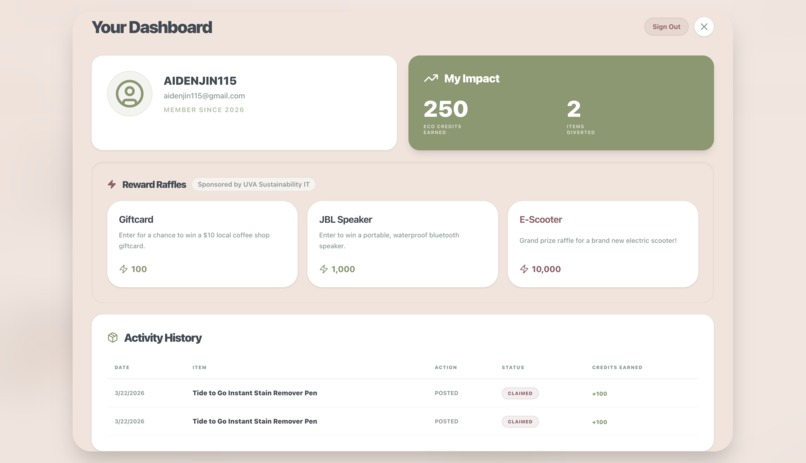
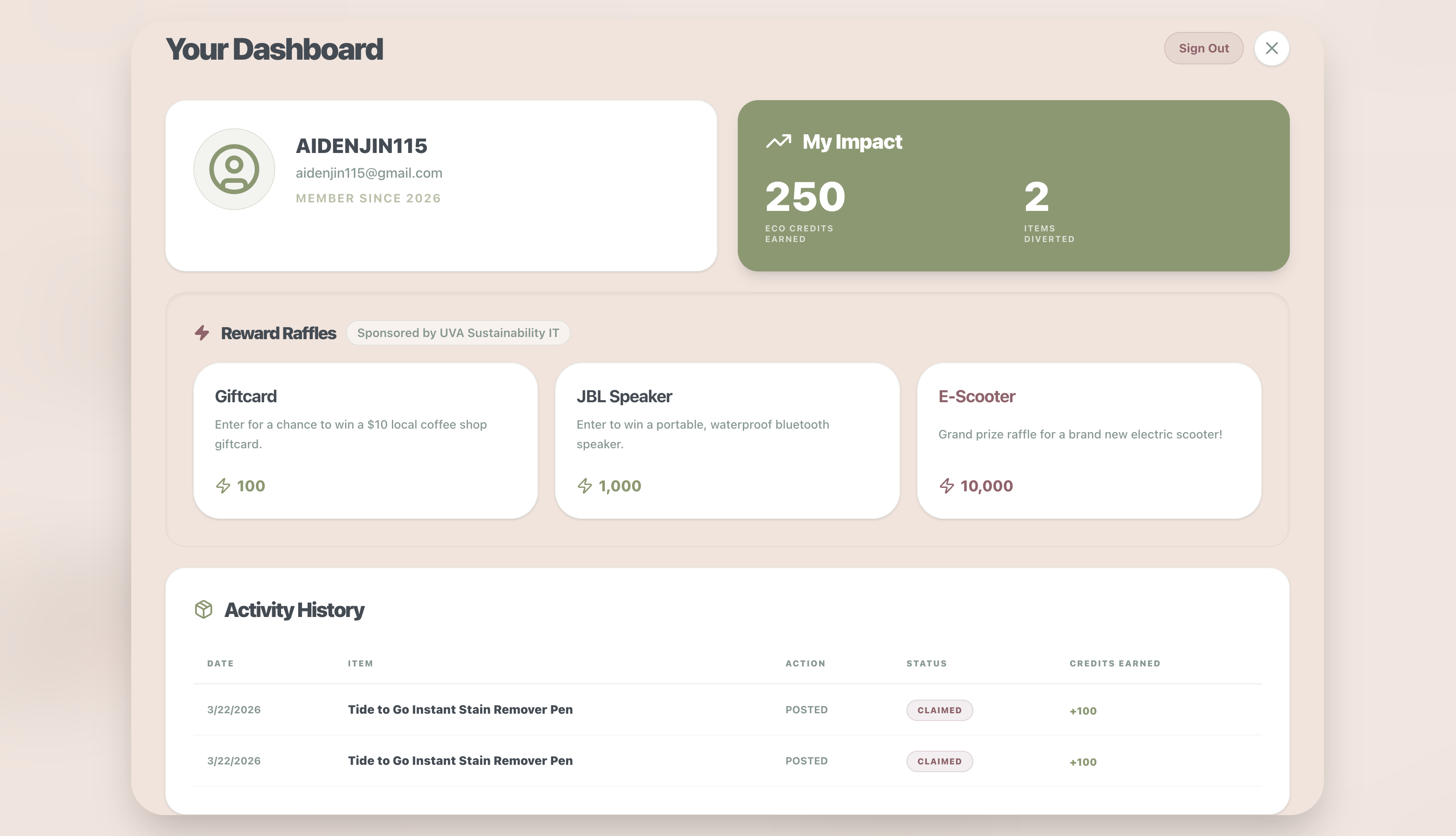
user profile
-
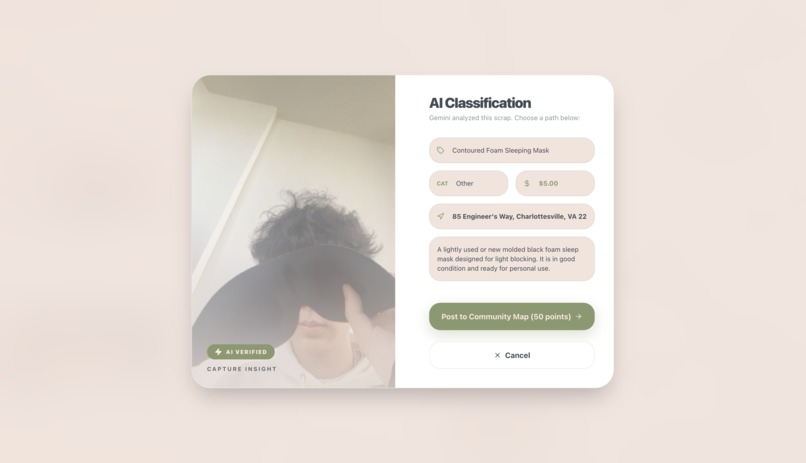
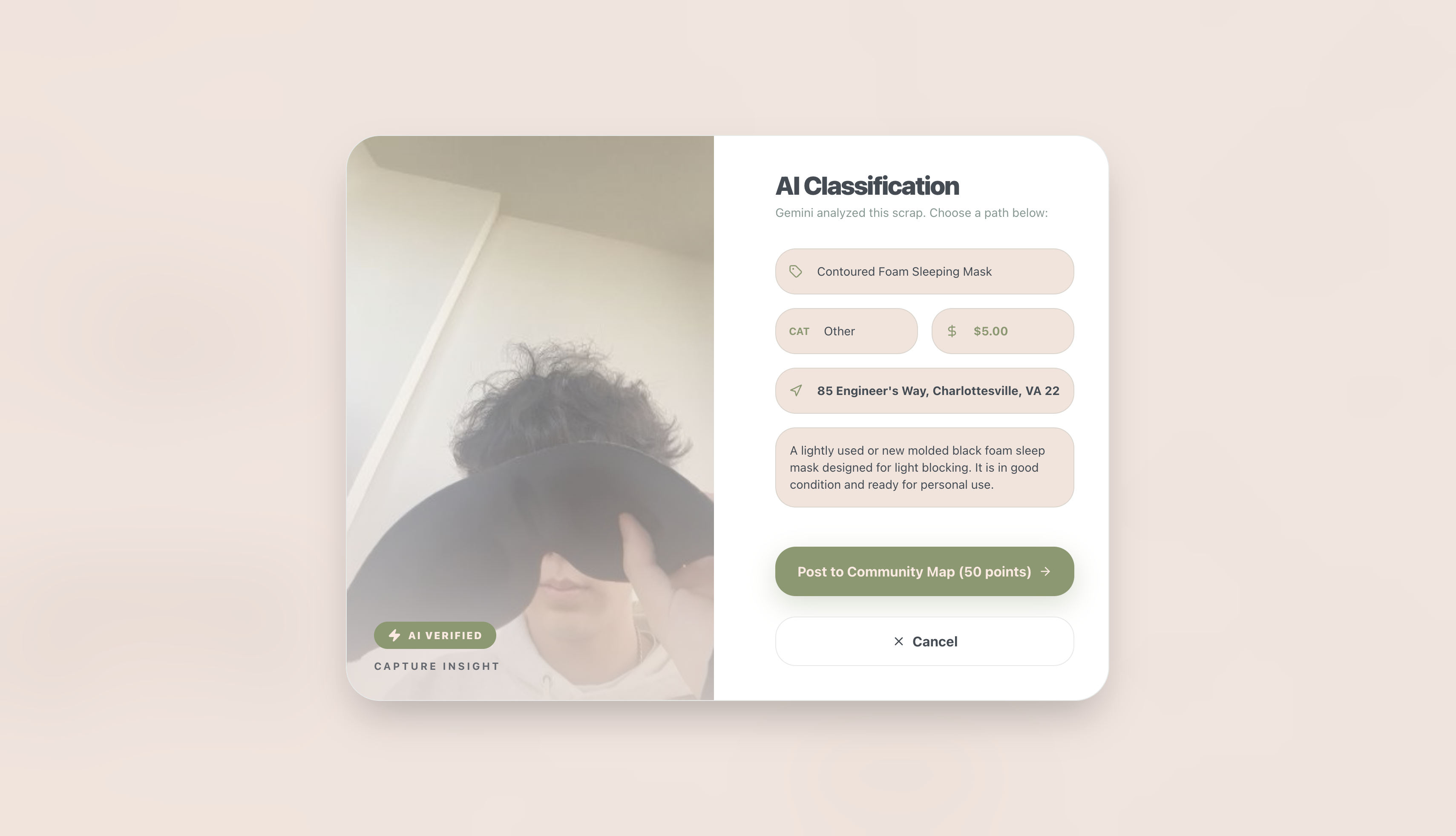
item upload
-
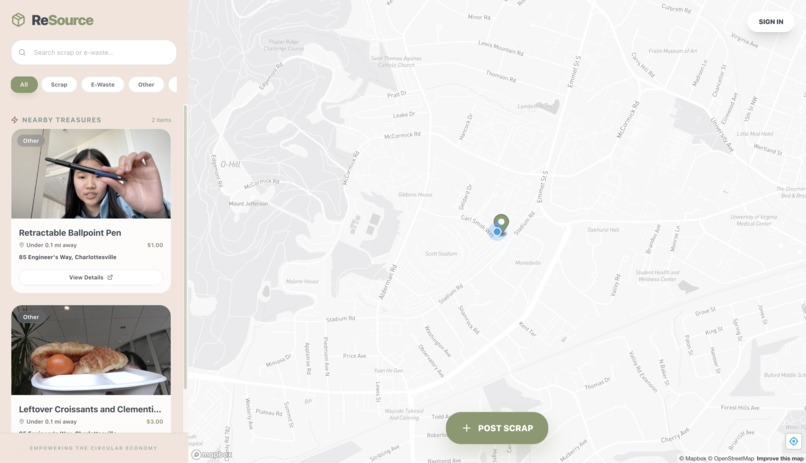
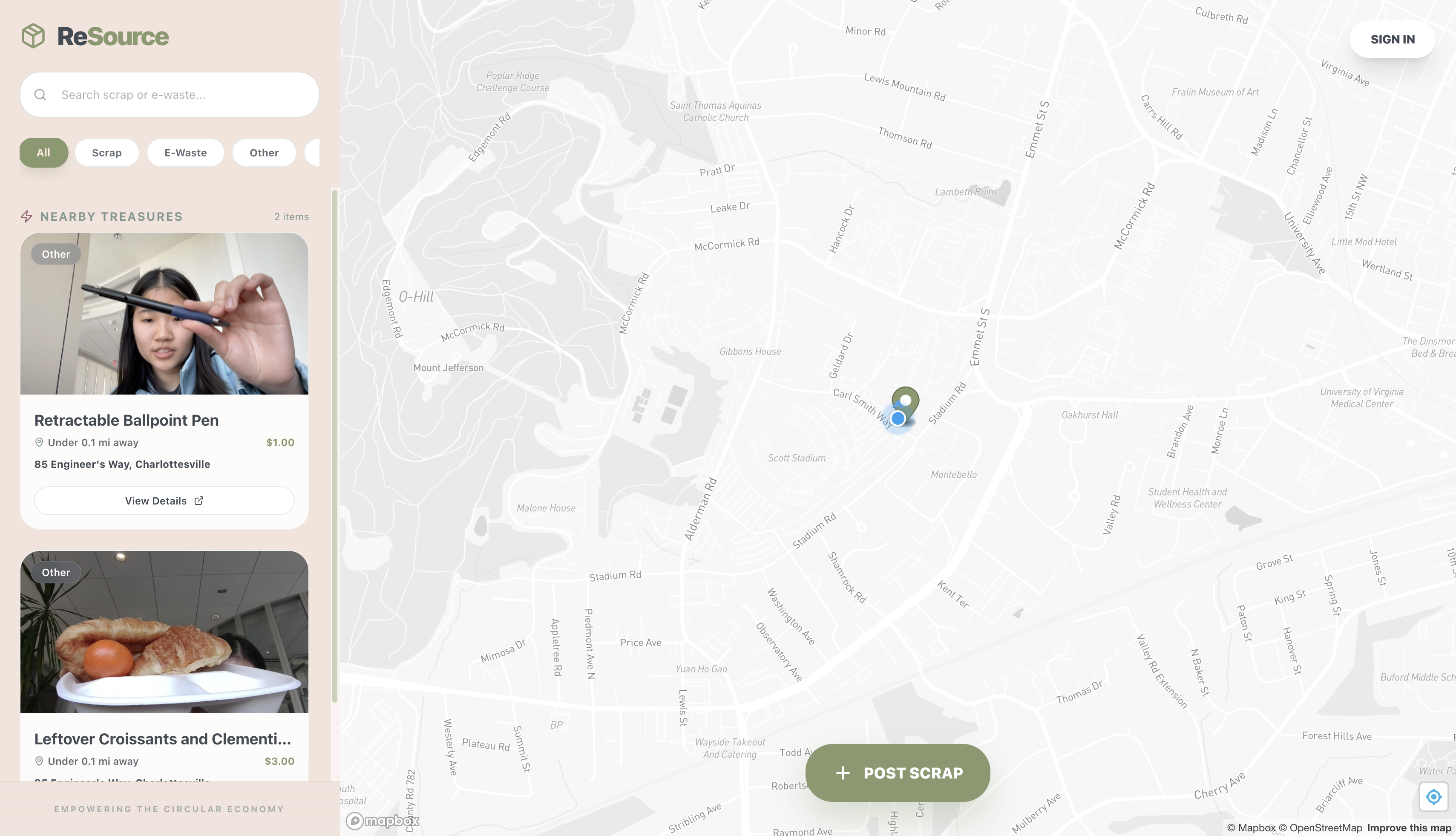
map
-
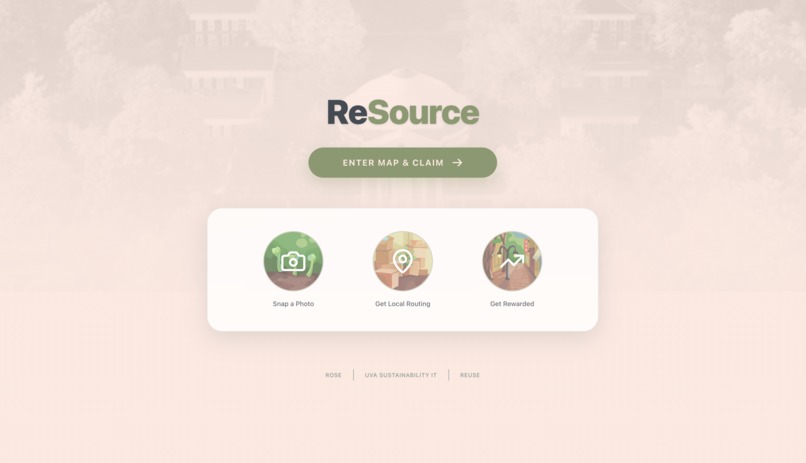
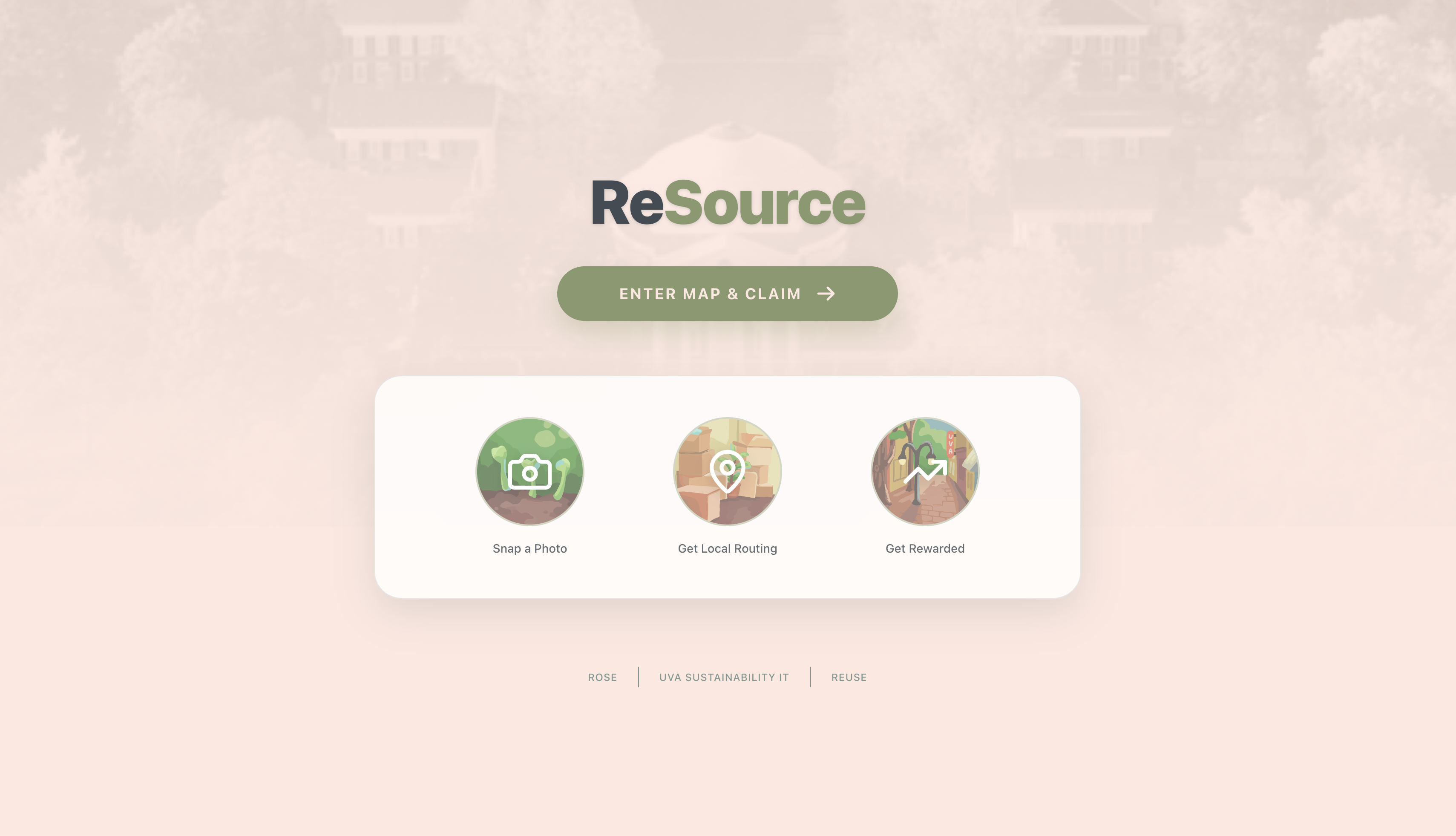
front page
What Inspired Us
We came to HooHacks as three high schoolers from New York and got really interested in sustainability after hearing the opening ceremony presentation and learning more about UVA’s existing work in the space. We saw that UVA already had real systems for reuse, surplus, waste sorting, and sustainable operations, and that made us want to build something that could fit into and strengthen what already existed.
Our first idea was that sustainability is really about making better use of what already exists, which makes it a natural place for tech to help. A lot of useful items get thrown away simply because people do not know what they are, do not know whether anyone would want them, or do not know where they are supposed to go. And while we thought the optimal solution would be what we heard echoed by school and public agencies---increasing the volume of recycling, after further research we actually discovered that reuse was the ideal scenario. Around a campus like UVA, where people are constantly moving, cleaning out rooms, replacing furniture, and getting rid of electronics, that problem is easy to see.
UVA's 2030 Sustainability Plan highlights community engagement as one of three key steps. All of this led us to ReSource: an app where someone can take or upload a picture of an item, get AI help identifying it, and then either post it for someone else to claim or get routed to the right disposal or reuse location. We wanted to make reuse and correct disposal easier and more visible.
What We Learned
One of the biggest things we learned was how we wanted to use AI while building. After hearing ideas at HooHacks, especially from Mike Swift’s presentation, we kept coming back to the idea that we should be managing the AI rather than merely copying from it. We used AI to help us move faster, brainstorm, structure outputs, and generate first drafts, but we stayed in control of the product decisions, the logic, and the final implementation.
Regarding the app itself, we did not want AI making unchecked decisions about waste or safety, so instead of letting the model act on its own, we built guardrails into the flow. The user reviews the AI-generated listing before posting, and items that seem unsafe, broken, hazardous, or unlikely to be claimed are not just treated like normal marketplace posts. The app is designed to escalate uncertain or risky cases into safer routing options, like directing users toward the appropriate disposal or reuse channel instead of encouraging a claim listing.
After spending time at the sustainability station during the career fair, we learned more about sustainability in coding itself, which is something we hadn’t previously considered. That made us think more carefully about not adding extra features just to make the project seem grander. We kept the app focused on the main loop, used lighter-weight contact options like phone numbers instead of unnecessary in-app messaging, and tried to keep the AI and image pipeline efficient.
How We Built It
We built ReSource as a full-stack Next.js app using React, TypeScript, Mapbox, Gemini, and Supabase.
A user can either take a picture in the app or upload one from their device. Gemini analyzes the image and generates a suggested title, category, and next step. The user can then review and edit that information, choose whether to use their current location or enter a specific address, and create a post with an exact map pin. We centered the experience around UVA so the app is immediately useful.
The app supports two main paths. If the item is something people would realistically want, like furniture, cardboard boxes, paint, or usable electronics, it can be posted for others to claim. If it is something like broken electronics, used batteries, or hazardous material, the app can guide the user toward the correct disposal or reuse option instead. This specific implementation also supports donating used items to existing UVA initiatives such as Hoos Reuse and ROSE. To incentivize reuse, credits are awarded when one donates an item or when an item one lists is claimed. We also built a user dashboard so people can manage their listings and activity in one place.
Challenges We Faced
We considered that, because we added a credit system, people would attempt to exploit it for monetary gain. We resolved this by choosing raffles as awards rather than a direct exchange system, which keeps the gamification aspect while lowering operational costs and making exploitation not worthwhile.
Looking Ahead
ReSource is currently modeled around UVA, but is easily scalable to other universities and cities due to the ubiquitous problem of under-reuse, and is perhaps even better suited to more populous areas where governments, schools, or organizations could integrate their drives and donation locations with the app. Some additions that could improve the app include a system where admins verify that items are dropped off at a donation spot before credits are rewarded, or community-wide sustainability statistics/emission goals to motivate collective action and achievement. On a personal level, as our first hackathon, and for most of us our first time building a real project with code, we had a blast at this event. Staying up late and slowly watching the app become real was a uniquely exciting experience. This project made us even more excited to, in college, combine computer science with our other interests, such as biology, astrophysics, global affairs, and art. We are really excited to keep building, learning, and using AI thoughtfully as part of that future.
Built With
- auth
- axios
- css
- css4
- eslint
- framer
- gemini
- javascript
- lucide
- mapbox
- motion
- next.js
- npm
- postcss
- postgis
- postgresql
- react
- sql
- supabase
- tailwind
- typescript
- uuid

Log in or sign up for Devpost to join the conversation.