-
-
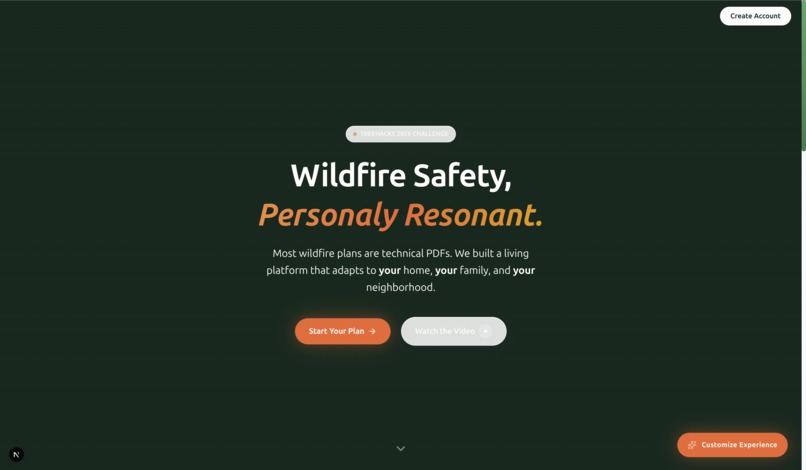
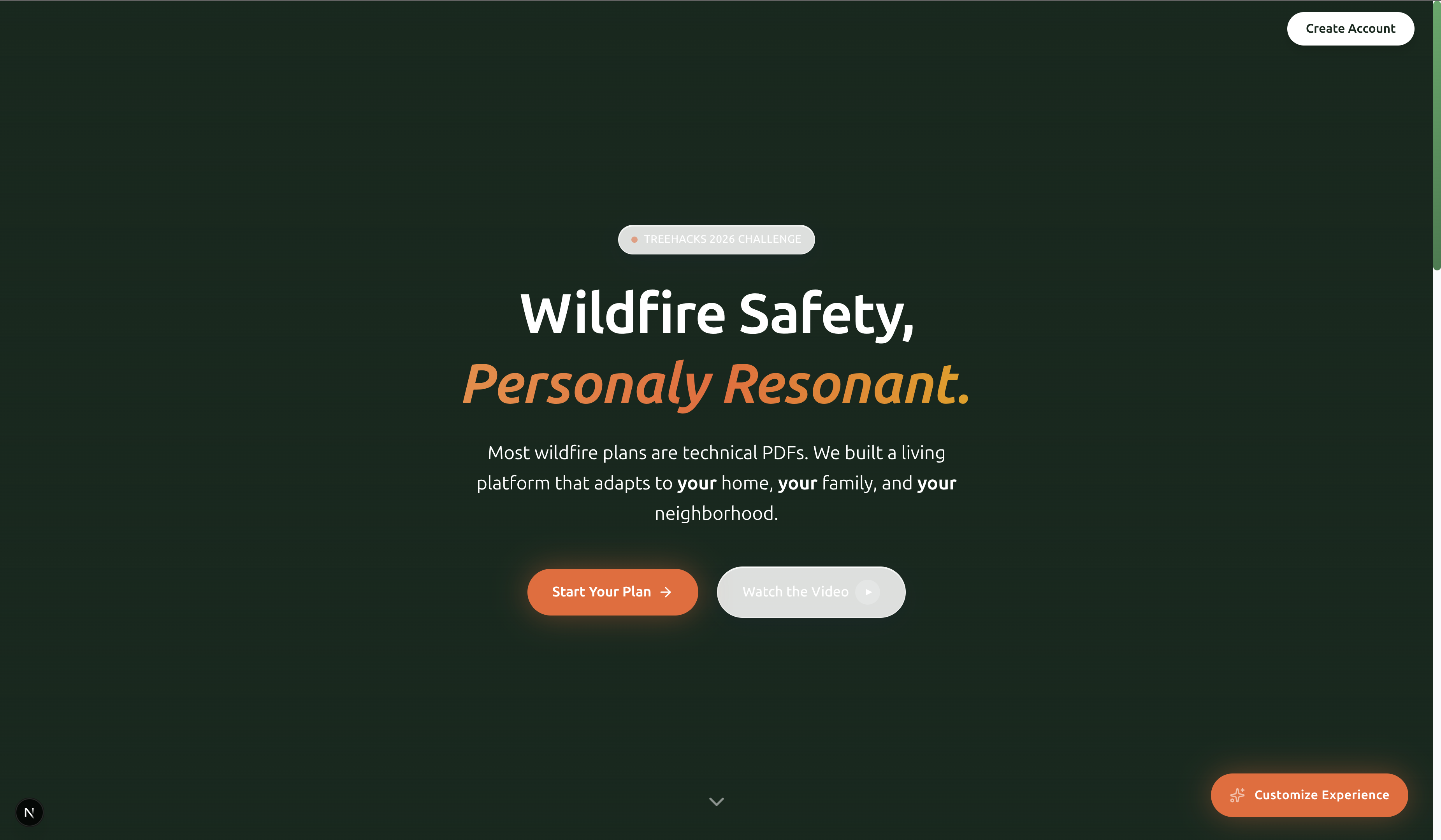
landing page
I arrived in California from India just days before TreeHacks and was immediately struck by how seriously wildfire preparedness is treated here — from evacuation planning systems to structured public communication designed to protect lives and property.
Before coming, I had closely followed recent wildfire events in California and was particularly inspired by how coordinated preparedness efforts were able to significantly reduce loss of life despite the scale of these disasters. This contrast stood out to me, as in many parts of the world disaster response is often reactive rather than preventive.
My academic background and research interest in geospatial AI and disaster risk prediction further shaped this perspective. Through prior work on AI-driven hazard mapping and climate risk modeling, I had seen how powerful spatial data and policy frameworks can be — but also how difficult they are for everyday communities to understand and act upon.
During the hackathon, conversations with a Stanford postdoctoral researcher working on climate communication and a CalFire fire chief reinforced a key insight: residents often do not lack information — they lack accessible, personalized, and actionable guidance.
This inspired me to build Resonant CWPP, a platform designed to translate complex wildfire prevention plans into interactive, user-centered safety guidance that empowers communities in California and has the potential to be adapted globally as climate risks continue to grow.
Built With
- api
- css
- framer
- leaflet.js
- motion
- next.js
- perplexity
- react
- recharts
- sonar
- tailwind
- typescript

Log in or sign up for Devpost to join the conversation.