

Our Inspiration
With all of us having some form of musical background, we were motivated to find ways to make learning music more accessible to all people. Much of playing music is dependent on rhythm. Resonance aims to assist people with visual or hearing impairments to keep count for a trouble-free rehearsal session.
What Resonance Does
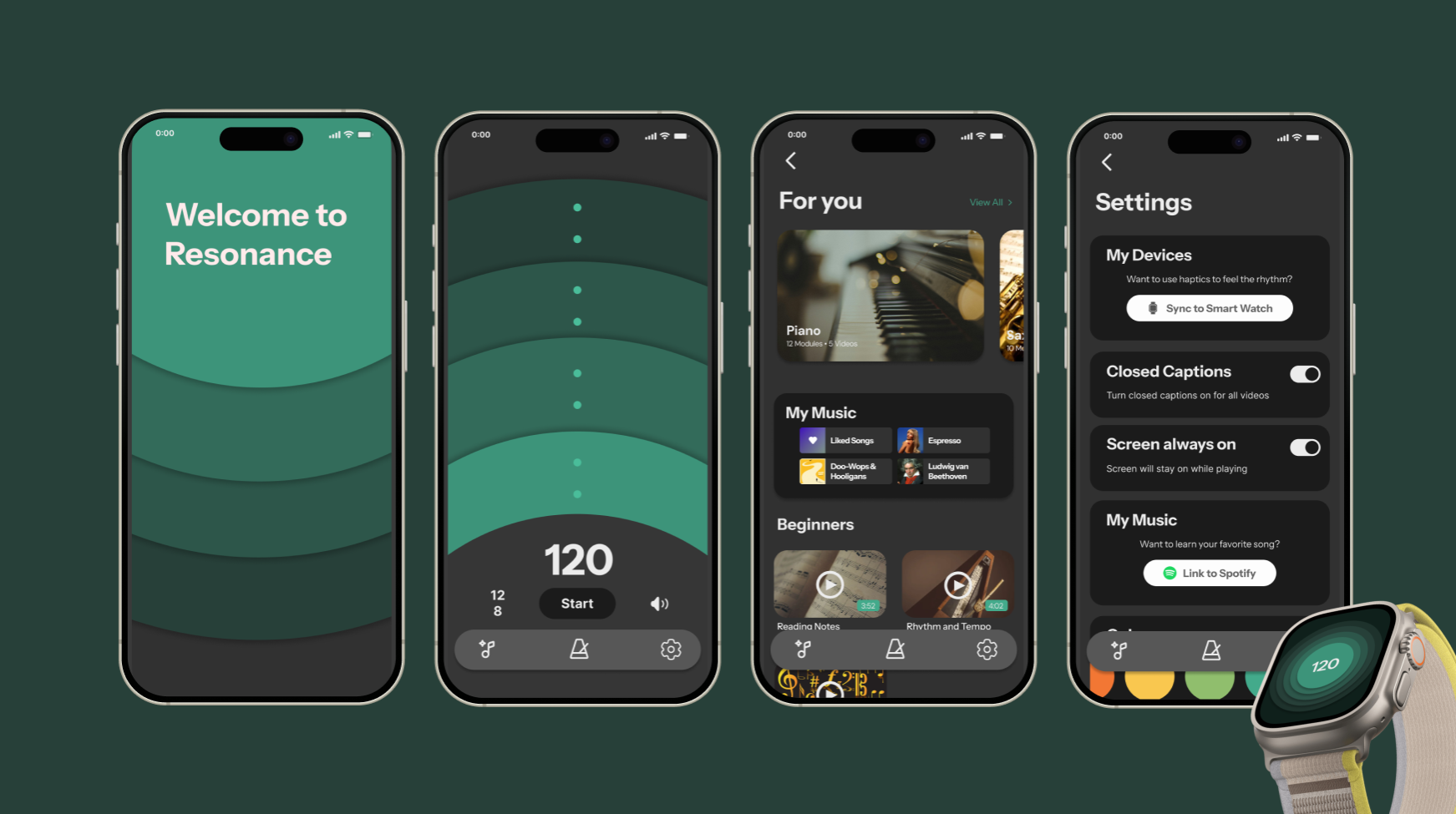
The app features simple ways to visually represent tempo and utilizes iOS haptics on both the iPhone and Apple Watch for a highly tactile metronome for those who encounter trouble listening to its usual clicks. Sync your Apple Watch to your iPhone to combine both visual and tactile representations of tempo.
How We Built Resonance
For our UI, it was designed in Figma and implemented with Xcode. Our app is divided into two main features, the Metronome Page and the Education Page.
The Metronome Page, the default home page, is where users can use our visual metronome with built in haptics. Users may set a desired tempo and subdividers as needed. Additionally, users can adjust the volume and haptic intensity of the metronome clicks and vibrations.
Additionally, we have our Settings Page where users can sync their device to their smart watch and connect to their Spotify account.
Syncing to the smart watch was our main draw to creating this app. Implementing haptics into the Apple Watch provided a solution to learning rhythm through vibration. The user could easily wear their watch and use the vibrations to help indicate the tempo of the music they were learning. This was mainly to increase accessibility for those who are hard of hearing.
Having our app connected with Spotify was something we wanted to incorporate so that users could access new music and their favorite songs with ease. It is not integrated, but the idea is that when linked to Spotify, users can pick a song, and our Metronome would read and determine the tempo, allowing the user to learn rhythms quickly.
Challenges we ran into
When coding, we prioritized setting up the Taptic in our Apple Watch. The main component, syncing to the smart watch, was not cooperating. There was a lot of troubleshooting we had to do, and sometimes it would respond, and other times it would not. It was quite inconsistent for a while.
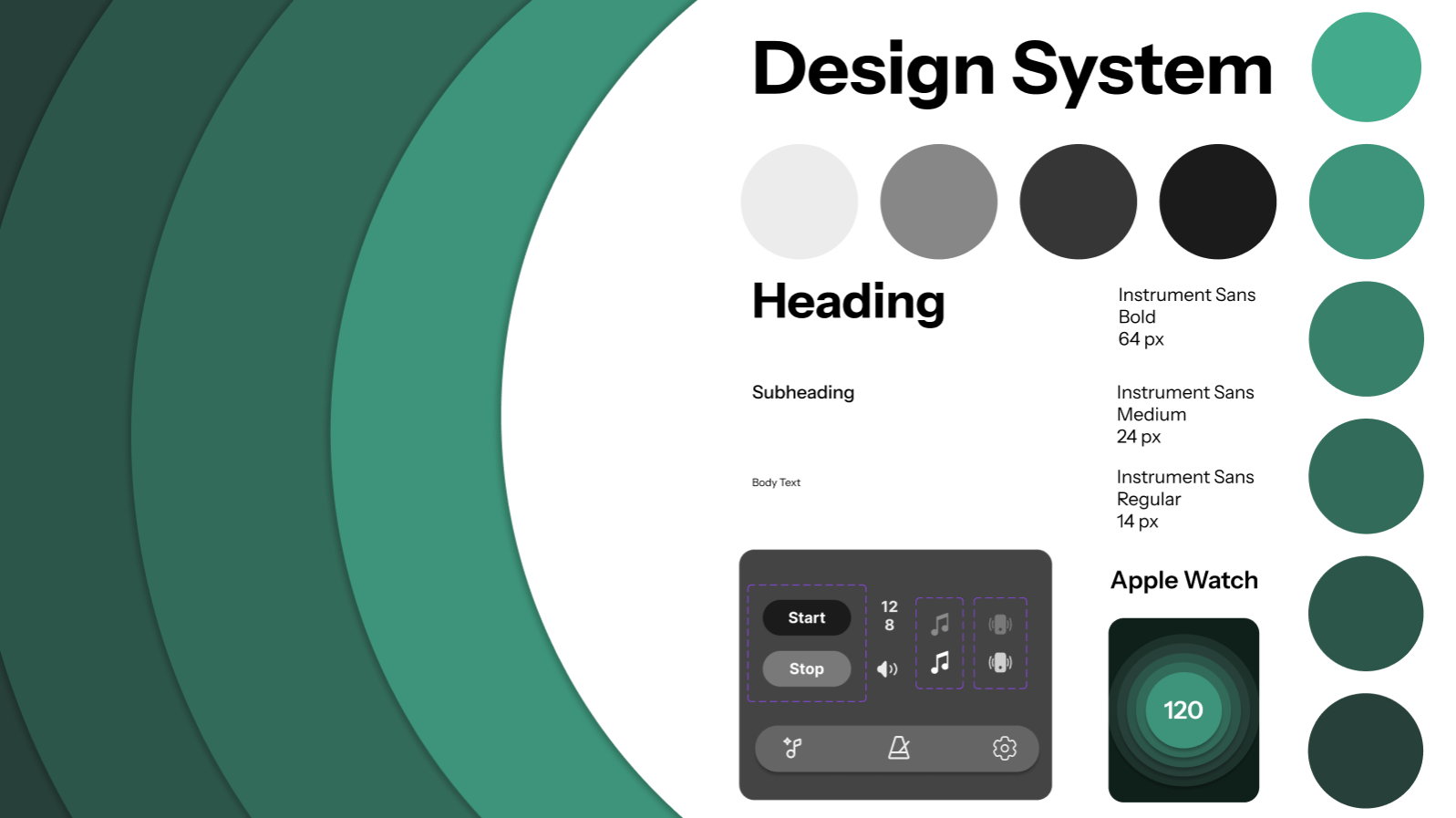
On the design side, figuring out how to visually display the metronome ticking was difficult. When researching and comparing to other metronome applications, the visual display is often minimal and has little to no visual cues. As this is an app intended for all people, we wanted to especially focus on making it accessible to those with visual and hearing impairments. We wanted the visual of our metronome to be the embodiment of sound. We wanted it to flow naturally, just as sound does. The first couple of hours, we just spent iterating and iterating and iterating on how to display it. None of our designs were really speaking to us until we added Drop Shadows, which we usually would stay away from, but it added so much movement to our design. It led the eyes down and out, similar to sound. It was important for our visual design to be strong here because for those who have visual impairment or are visual learners, having a clear distinction between each beat was essential.
So once we were confident in that part of our design, we were able to move forward much quicker with the rest of the process.
Accomplishments!!!
We are so proud! It is all of our first times participating in a Hackathon, and for some of us, it is also our first time experiencing the Designer x Developer dynamic. So it was a great learning experience. We were learning a lot of things on the go, despite that, we were really happy with our end product!
What we learned
We learned how to fully develop a mobile app from start to finish. Working in a team is always a learning experience, and so it was fun throughout pulling an all-nighter to create something we were all passionate about.
What's next for Resonance
Resonance has the opportunity to reimagine what it is to learn and understand music. With more time, we think this can truly be such a great and well-received app. In the future, it would be nice to integrate the Spotify x Resonance connection. Additionally, we would like features to record a user while they are playing their instrument and provide auditory or visual feedback, and we would add more customization to the taptics to allow a user to tailor it to their needs. We think there are lots of opportunities for this app, which is what made it so exciting to create!
Built With
- figma
- swiftui
- xcode


Log in or sign up for Devpost to join the conversation.