






Inspiration
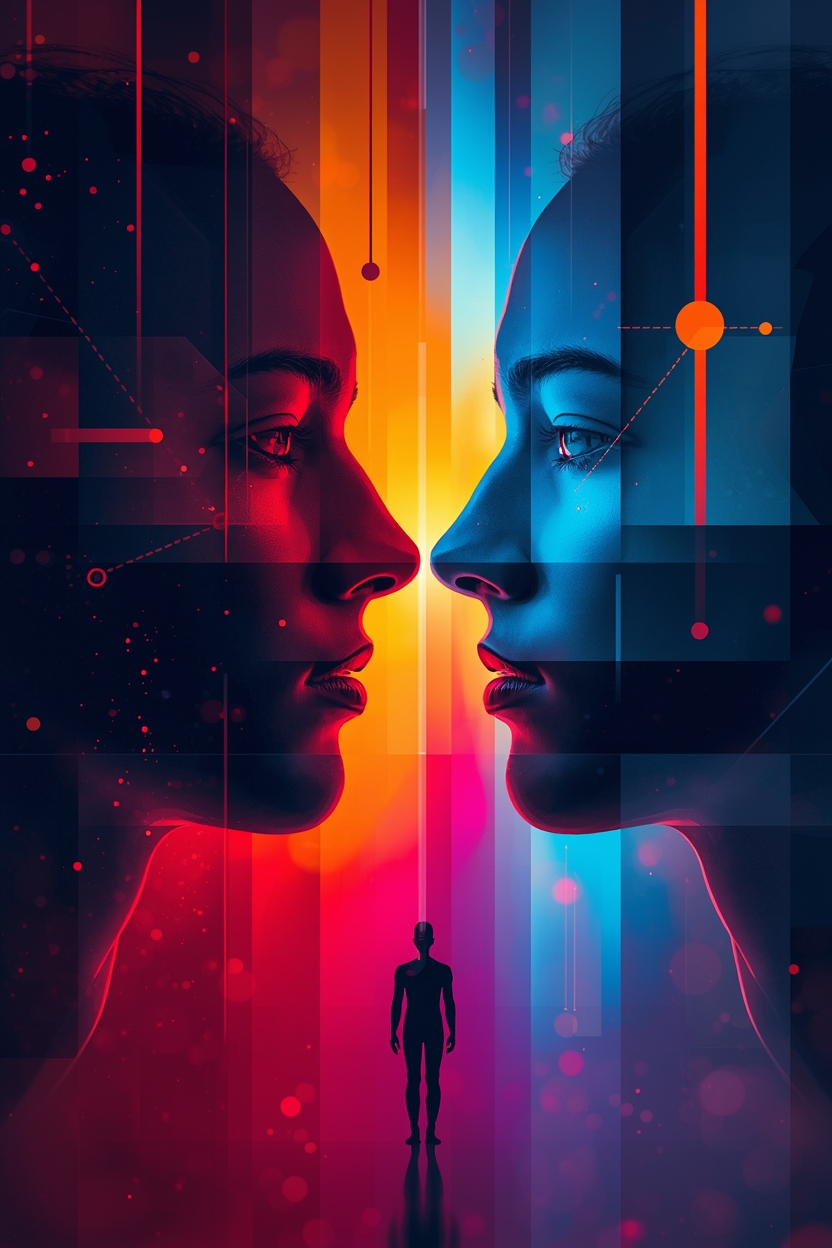
Humans constantly sense emotional atmospheres in rooms. A meeting suddenly feels tense. A classroom feels calm. A crowded train station can feel overwhelming.
We already detect these signals subconsciously through tone of voice, posture, movement patterns, and conversational rhythm.
Modern environments, however, overwhelm our natural perception. Noise, screens, and constant stimulation make it harder to read social dynamics clearly.
Resonance was inspired by the question:
What if emotional environments could be sensed as clearly as temperature or weather?
Just as thermometers reveal invisible heat and radar detects invisible waves, Resonance explores the possibility of making emotional atmospheres perceptible and measurable.
The goal is not surveillance, but awareness—helping people navigate complex social environments with empathy and clarity.
What It Does
Resonance is a speculative wearable interface that detects the emotional tone of environments and translates it into perceivable sensory cues.
The system analyzes multiple signals including:
vocal tone and speech stress
conversational rhythm
movement and proximity patterns
micro facial expressions
optional biometric signals from wearables
Machine learning models synthesize these signals into a spatial emotional map of an environment.
Instead of identifying individuals, the system visualizes collective emotional fields.
Users perceive these signals through:
• augmented-reality color gradients • subtle haptic feedback • ambient audio cues
This creates a new sensory channel that helps users detect tension, harmony, and social dynamics in real time.
How We Built It
The platform is designed as a multi-layer sensing and interpretation system.
Signal Capture Layer
Environmental microphones capture speech stress patterns, while computer vision models analyze body posture and movement rhythms. Optional integrations with wearable devices provide biometric context such as heart rate variability and breathing cadence.
Signal Processing Layer
Extracted behavioral features are normalized and processed into interpretable signals such as conversational intensity, interaction density, and movement synchronization.
AI Interpretation Layer
Multimodal machine learning models synthesize these signals into probabilistic emotional metrics including stress levels, engagement, and social cohesion.
Interface Layer
Insights are translated into intuitive outputs through augmented-reality overlays, wearable haptic alerts, and ambient visualizations designed to minimize cognitive load.
The result is a system that converts complex social signals into a simple and intuitive emotional atmosphere map.
Challenges We Ran Into
Interpreting emotional environments is inherently complex.
One challenge was avoiding oversimplification. Human emotions are nuanced, and the system must represent uncertainty rather than making definitive claims about individuals.
Another challenge was privacy and ethics. Emotional sensing could easily become intrusive if not carefully designed. We addressed this by ensuring that the platform maps atmospheres rather than identities, avoiding facial recognition and individual emotional labeling.
We also faced technical challenges in combining different signal types. Audio, visual, and biometric data all operate at different speeds and scales, requiring careful synchronization to produce meaningful interpretations.
Accomplishments That We're Proud Of
One of the most exciting achievements was designing an interface that feels intuitive rather than analytical.
Instead of presenting complex emotional metrics as charts or dashboards, Resonance translates emotional signals into spatial gradients and subtle sensory cues.
This creates a perception similar to sensing weather patterns in a room.
We’re also proud of building the system around privacy-first principles, ensuring that emotional environments can be analyzed without exposing individual identities.
Most importantly, the project demonstrates that emotional atmospheres—something traditionally considered intangible—can be explored as a measurable phenomenon.
What We Learned
This project revealed how much social information humans already process subconsciously.
When we began modeling emotional signals, we discovered that simple patterns—like speech tempo shifts or movement clustering—often correlate strongly with perceived social tension.
We also learned that designing technology for emotional awareness requires extreme care. The interface must support empathy and reflection rather than judgment or surveillance.
Finally, the project reinforced an important insight:
When technology reveals something previously invisible, it changes how people behave.
Awareness alone can reshape environments.
What's Next for Resonance — Emotional Atmosphere Interface
Future development would focus on improving both sensing accuracy and real-world applications.
One direction is expanding the platform into educational environments where teachers can better understand classroom engagement and stress dynamics.
Another direction involves workplace collaboration tools that help teams detect tension early and prevent conflict escalation.
Longer term, Resonance could evolve into a broader emotional environment intelligence platform, integrating with architecture, urban design, and digital collaboration systems.
Just as meteorology helps societies anticipate storms, emotional atmosphere sensing could eventually help communities design environments that promote psychological safety, empathy, and healthier communication.
In a world increasingly mediated by technology, Resonance explores the possibility that technology might also help us become more aware of each other.

Log in or sign up for Devpost to join the conversation.