-
-
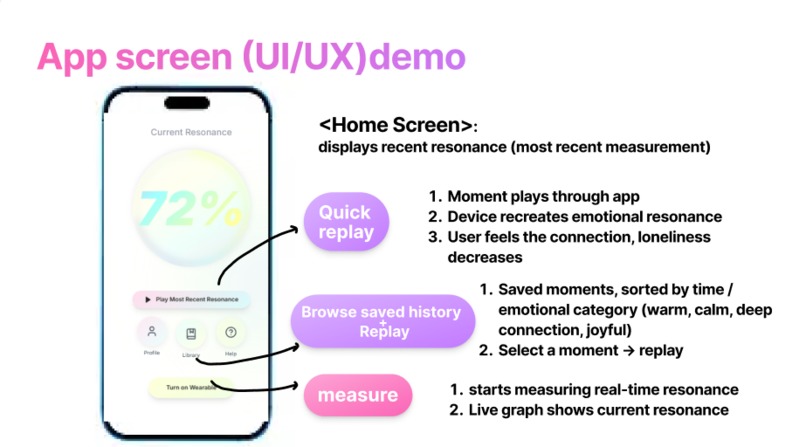
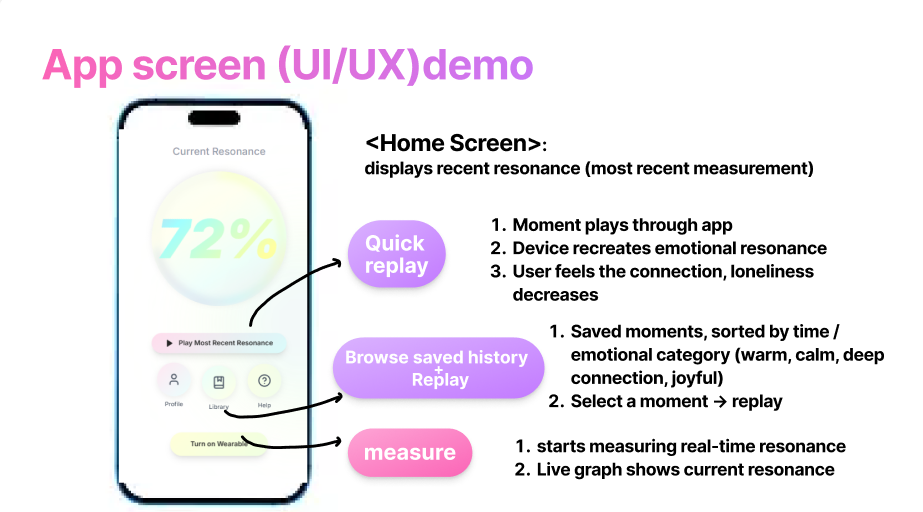
App home screen
-
-
-
Inspiration
Loneliness doesn’t come from simply being alone it comes from not feeling emotionally connected. Even people with many friends can feel lonely, while someone with only one close friend may feel deeply connected.
This idea led us to explore whether moments of emotional resonance between people could be captured and revisited. If meaningful moments of connection could be measured and replayed, people might be able to reflect on their relationships and feel less alone even when they are physically by themselves.
What it does
Resonance is a conceptual app that works with a futuristic device designed to sense and visualize emotional connections between people.
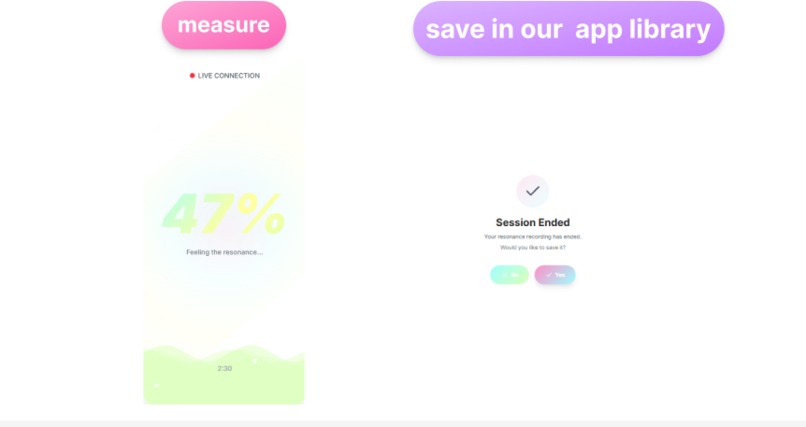
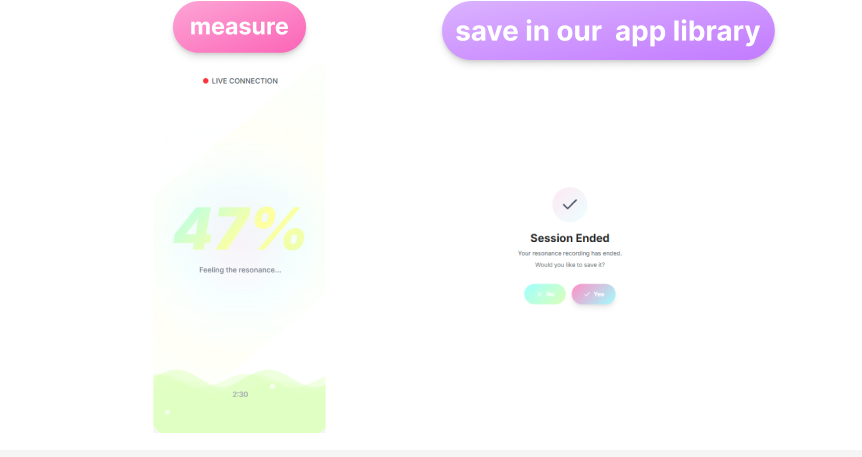
During social interactions, the device measures emotional resonance in real time and translates it into a single “resonance score.” The app then visualizes this data, allowing users to see how emotionally connected they are with others in the moment.
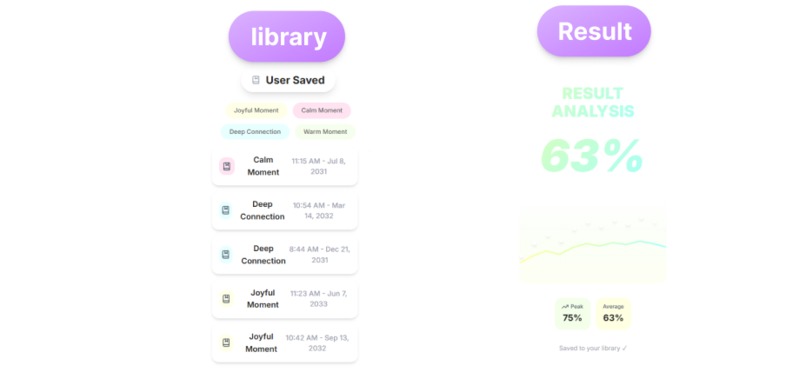
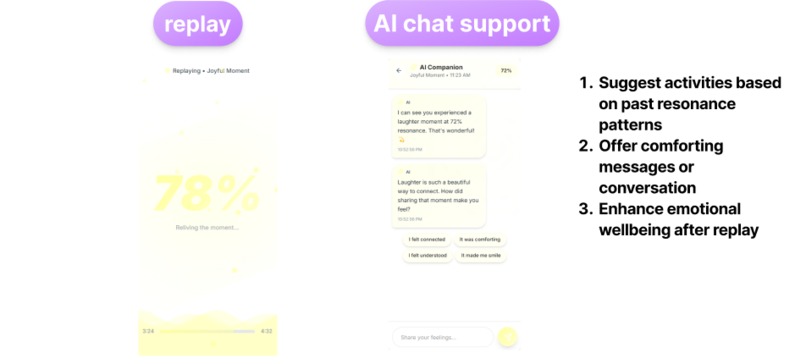
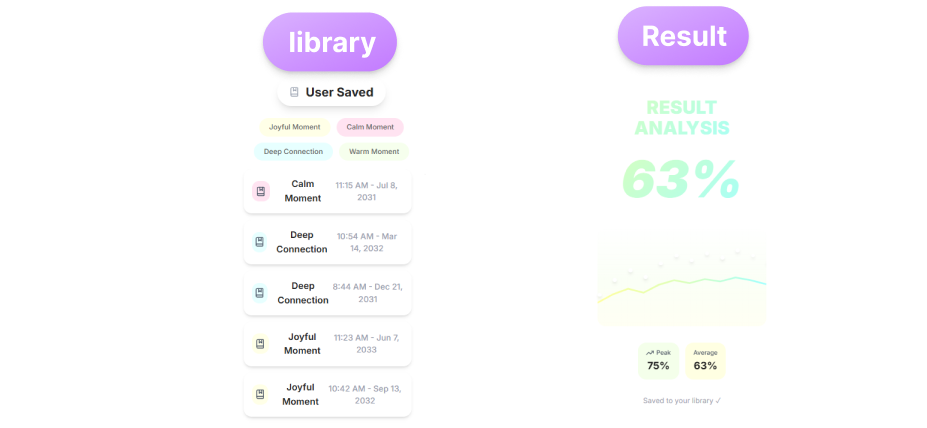
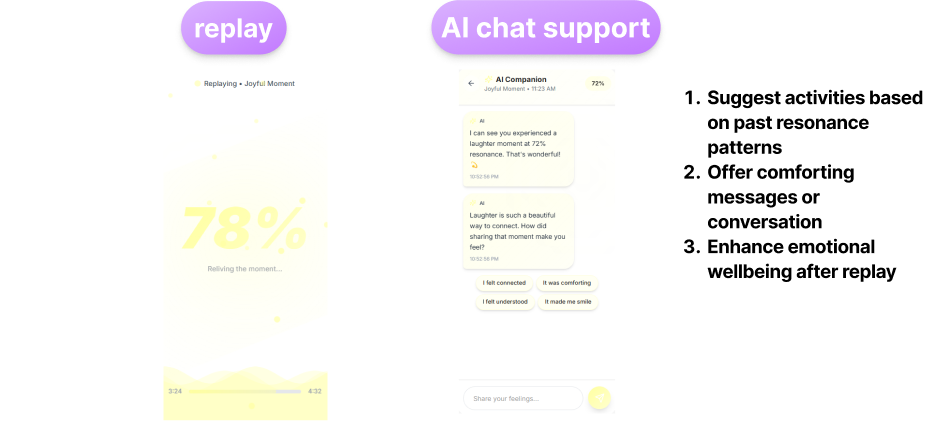
Meaningful moments can be saved as memories, which users can later replay to revisit the feeling of connection. The app also encourages reflection on relationships and supports emotional wellbeing by helping users recognize meaningful social moments.
The conceptual device senses signals such as facial micro-expressions, voice tone, body proximity, movement, and physiological responses, combining them into a single resonance measurement.
How we built it
We designed the Resonance app UX/UI to visualize emotional resonance in a simple and intuitive way.
Our team created a complete user flow that includes measuring resonance, saving meaningful moments, replaying them later, and reflecting on past interactions.
To communicate the concept clearly, we developed visual prototypes, slides, and a demo video that illustrate how the device and app would work together. We also structured the app around key features such as recent moments, quick replay, and a library of past memories.
Privacy and consent were built into the design to ensure users have full control over their emotional data.
Challenges we ran into
One of the biggest challenges was representing something as intangible as emotional resonance in a way that felt believable while still being imaginative.
We also needed to ensure that the replay feature enhances human connection rather than replacing real interactions. Designing with emotional data raised ethical questions as well, including how to protect privacy, obtain consent, and responsibly handle sensitive memories.
Accomplishments that we’re proud of
Designed a complete user journey: measure → save → replay → reflect → reduce loneliness
Created engaging visualizations for an abstract emotional concept
Integrated privacy and consent considerations into the design
Used storytelling scenarios to demonstrate the emotional impact of the idea
What we learned
We learned that the quality of emotional connection matters more than the number of interactions people have.
We also discovered that storytelling and clear visual demonstrations are essential when explaining futuristic or abstract concepts. Designing systems that involve emotional data requires careful attention to ethics, privacy, and user control.
What’s next for Resonance
Next, we plan to develop a more interactive prototype so users can explore resonance scoring and replay features directly.
We are also interested in exploring AI-driven features that could encourage stronger connections, such as reflective prompts or suggestions for shared activities.
In the future, we hope to test the concept with users and investigate how similar technologies might be integrated with real sensing devices.
Built With
- figma
- figmamake


Log in or sign up for Devpost to join the conversation.