AI-Powered Voice Feedback Platform
📖 About The Project
Hey there! We're the team behind this AI-Powered Voice Feedback Platform – Yash, Pranav, and Rut – and this is a little bit about our journey building it for AgentHacks 2025.
🌱 What Inspired Us
We've all experienced those lengthy, impersonal feedback surveys, right? And on the flip side, for businesses, manually calling customers for feedback is a huge time sink. We saw a gap where modern AI, especially conversational agents, could make a real difference. The idea of creating a smart system that could actually talk to customers, ask their specific questions, and then deliver actionable insights felt like a genuinely valuable problem to solve.
The theme of AgentHacks 2025, focusing on bridging AI research with real-world applications, really pushed us to think about how we could leverage cutting-edge agent capabilities to build something practical. We wanted to create a tool that could give businesses a direct, almost human-like line to understanding their customers, without the traditional overhead.
🧠 What We Learned
This hackathon was a whirlwind of learning!
- Diving into Leaping AI: Figuring out how to configure voice agents, make outbound calls via their API, and especially exploring how to make our survey agent dynamic enough to handle custom questions from our users was a big learning curve. Pranav really got into the weeds here.
- Full-Stack Integration: Connecting all the dots – Yash's frontend for user input, our Flask backend to orchestrate everything, and Rut's plans for data processing and sentiment analysis – was a classic hackathon integration challenge. We learned a ton about API contracts and making sure different parts of the system could talk to each other smoothly.
- The Nuances of Voice AI: It's one thing to send text; it's another to make a voice interaction feel natural. We touched upon how crucial the agent's persona, tone, and ability to handle conversational flow are.
- Rapid Prototyping & Pivoting: We had ideas about how certain features would work, and like any hackathon, we had to adapt. For instance, figuring out the best way to pass custom questions to the Leaping AI agent involved a few iterations in our design discussions.
- Teamwork Makes the Dream Work (Seriously!): Coordinating under pressure, dividing tasks, and helping each other debug – especially when you're all a bit sleep-deprived – really solidifies a team.
🏗️ How We Built It
We tried to break the project down into manageable chunks:
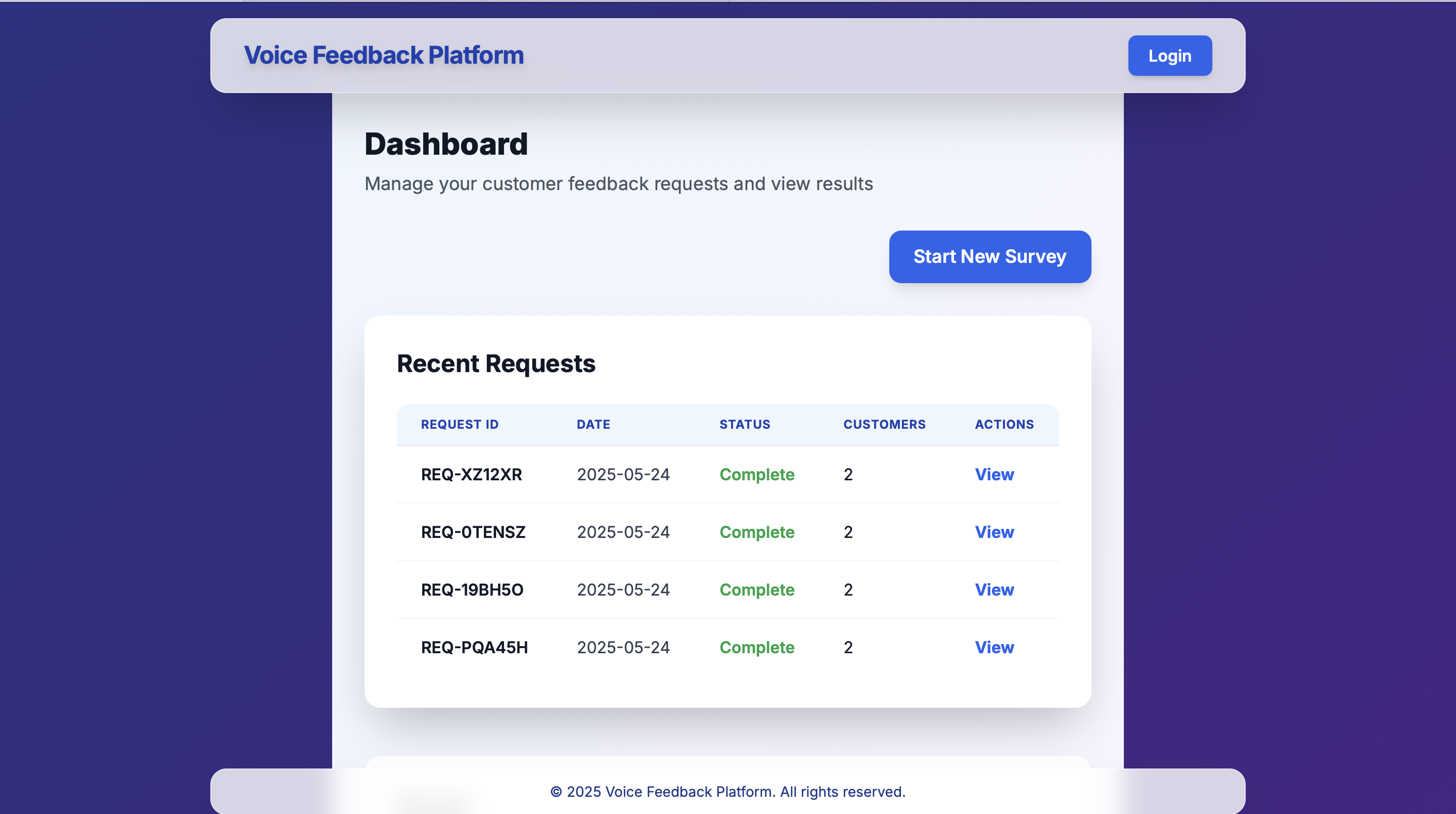
- The Vision: We started by whiteboarding the core user flow: a user types in customer details and their survey questions, hits "go," and a call happens. Then, results appear.
- Frontend (Yash): Yash focused on creating a clean interface for users to input their customer list and, crucially, the custom questions they wanted the AI agent to ask.
- Backend API (Rut & Pranav): We opted for Flask for its simplicity and speed in setting up API endpoints.
- One endpoint (
/schedule-call) was designed to take the data from Yash's frontend. Pranav then integrated this with Leaping AI, figuring out how to structure the API calls to initiate the outbound "Stage Calls" with the right agent and customer details. This involved working with environment variables for API keys and agent IDs. - Another endpoint (
/receive-call-data) was set up to act as a webhook receiver for when Leaping AI completed a call, ready to pass that data on for further processing (which Rut would handle next).
- One endpoint (
- Leaping AI Agent (Pranav): Pranav spent time in the Leaping AI Studio (and looking at their APIs) to set up a base agent. We discussed making this agent flexible enough to use the custom questions passed from the frontend – initially by planning to update a template agent programmatically.
- Data Flow & Integration (All): We mapped out how data (customer info, questions, call transcripts, sentiment scores) would move between the frontend, backend, Leaping AI, and Rut's data processing components.
We used Git for version control (a lifesaver!) and had lots of quick huddles to sync up.
💪 Challenges We Faced
It wouldn't be a hackathon without a few hurdles!
- Dynamic Agent Questions: Our biggest technical head-scratcher was how to best make the Leaping AI agent ask fully custom questions provided by the user on the frontend. We explored using pre-configured templates and then programmatically updating them, which requires careful payload construction for the Leaping AI API. Getting this just right is tricky.
- API Nuances & Debugging: Working with any third-party API always has its moments. We ran into a few error messages from the Leaping AI API that took some detective work to decipher (like those timestamp format issues, and then the
agent_idone!). It’s a reminder that reading the docs very carefully and testing incrementally is key. - Real-time Webhooks Locally: Setting up the
/receive-call-dataendpoint and testing it with Leaping AI webhooks meant figuring out how to expose our local Flask server to the internet (hello, ngrok!). - Time, the Eternal Foe: As always, the clock was ticking! Deciding which features to prioritize for an MVP and what to leave for "future enhancements" was a constant discussion.
- Keeping it "Human": Ensuring the AI agent's prompts and interactions felt natural and not too robotic, even when asking a predefined set of custom questions, was something we were mindful of.
Overall, it was an intense but incredibly rewarding experience. We're proud of what we managed to build and excited about the potential of AI agents to transform how businesses interact with their customers!
Built With
- ai
- flask
- leaping
- react.js


Log in or sign up for Devpost to join the conversation.