-
-
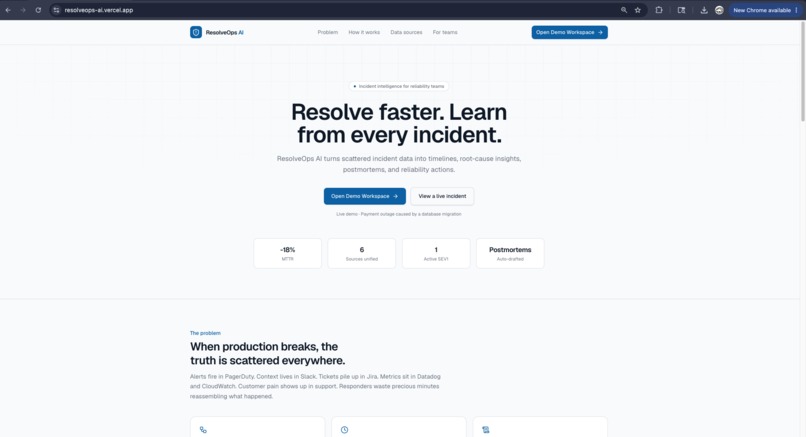
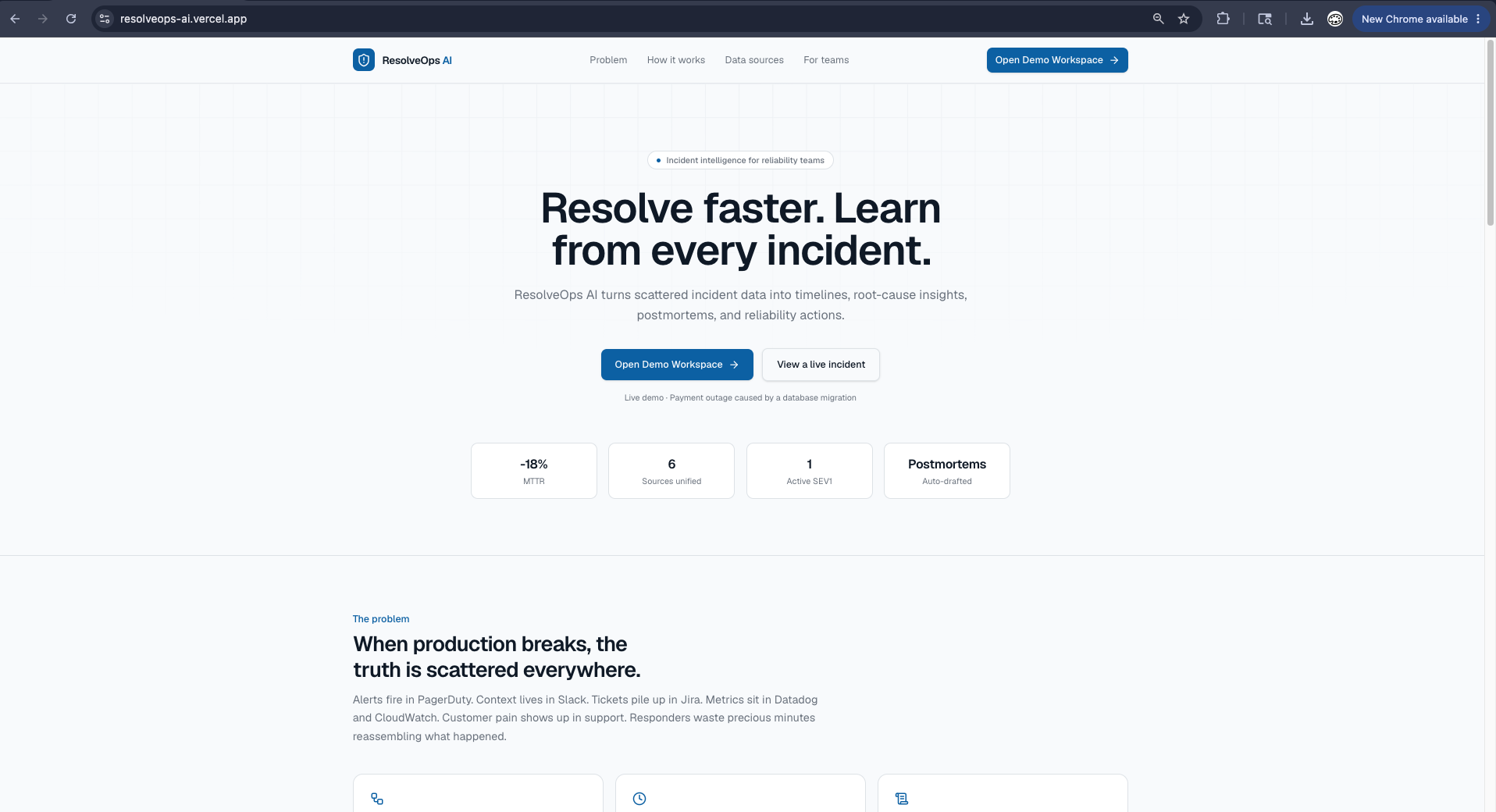
Landing Page
-
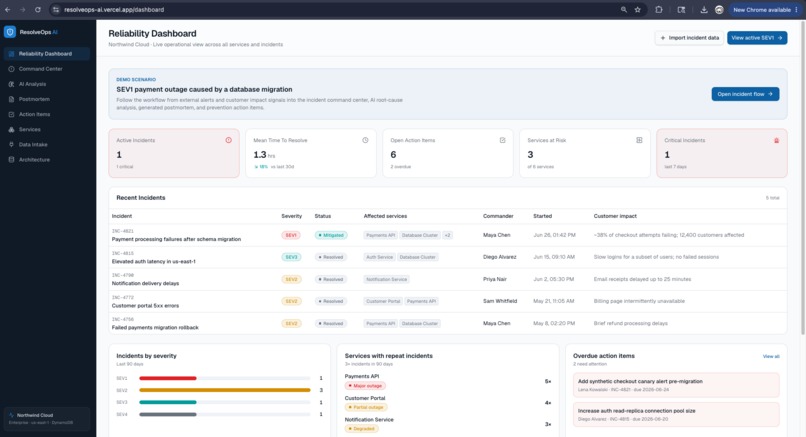
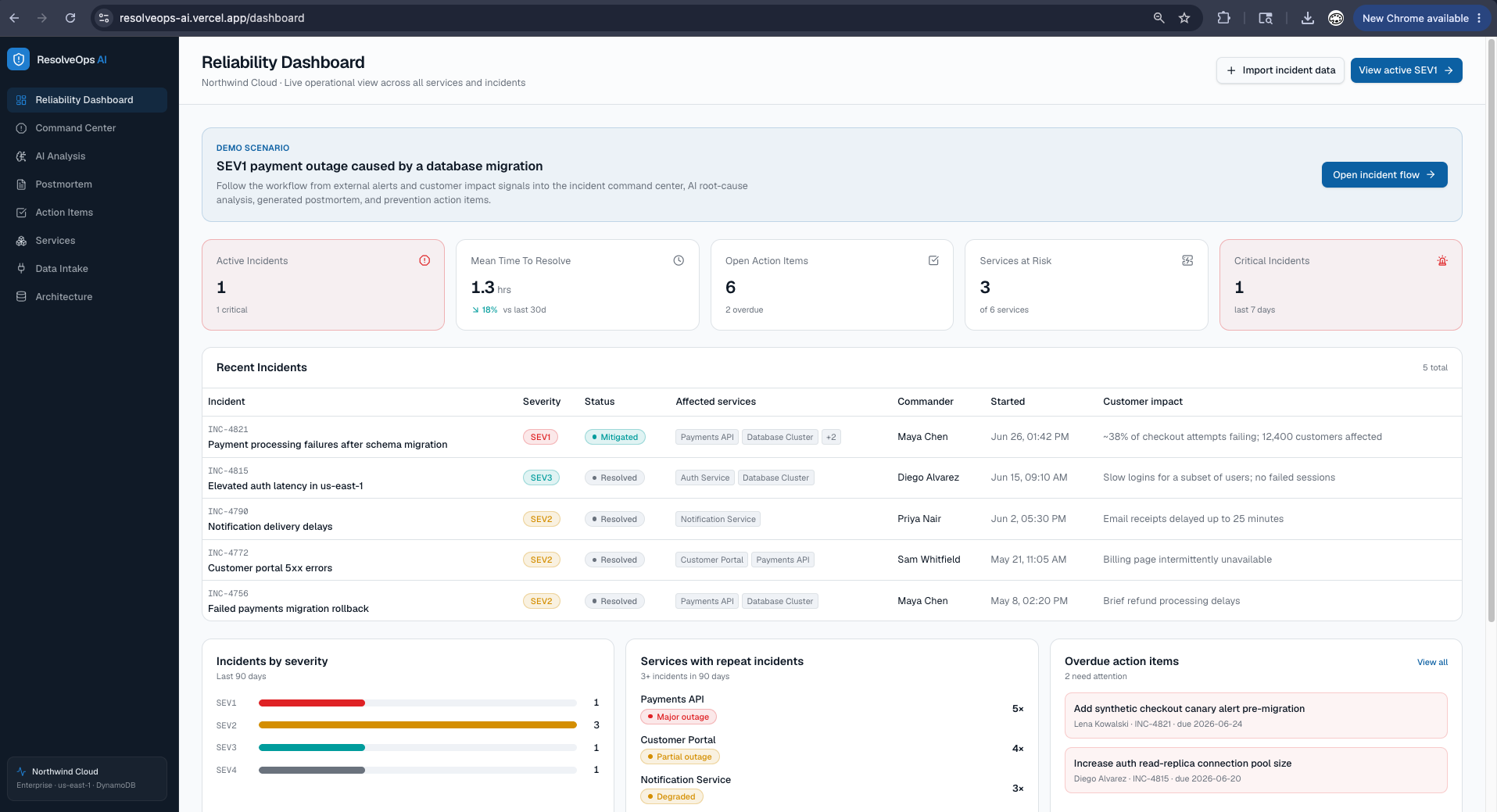
The Dashboard
-
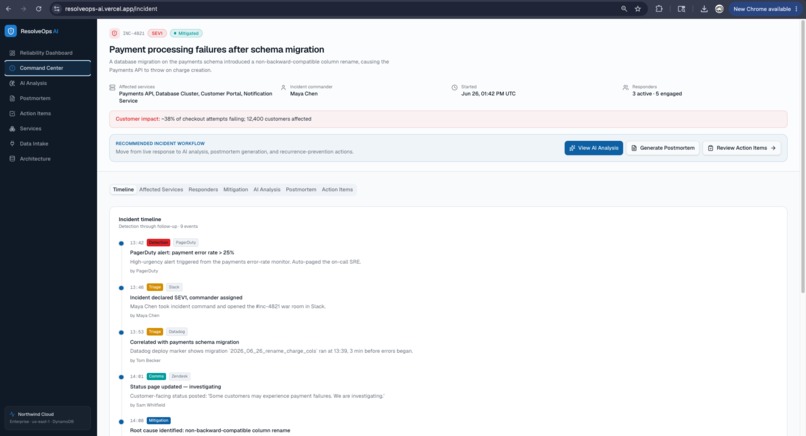
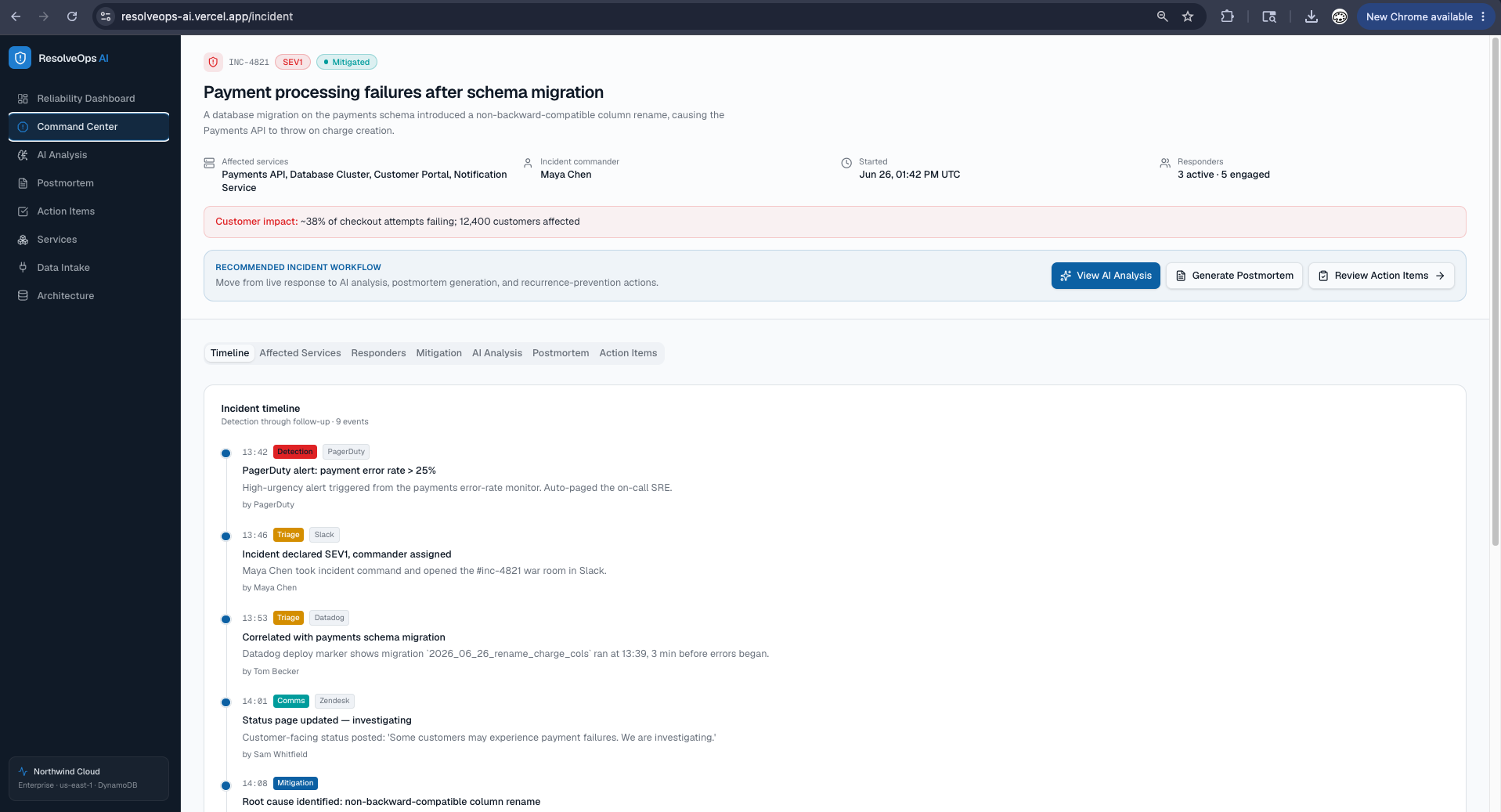
The command center
-
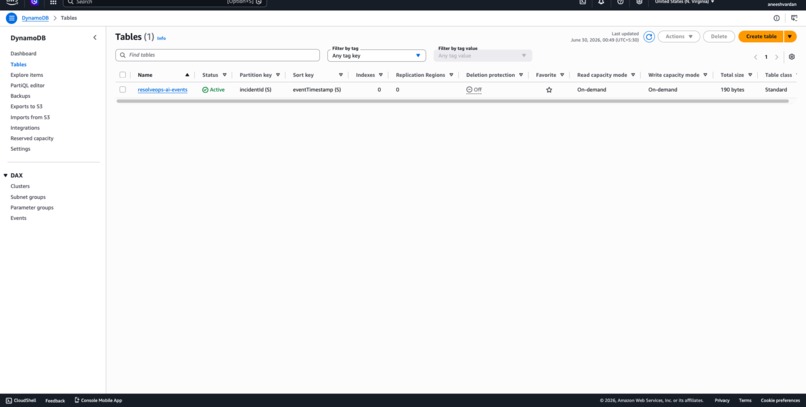
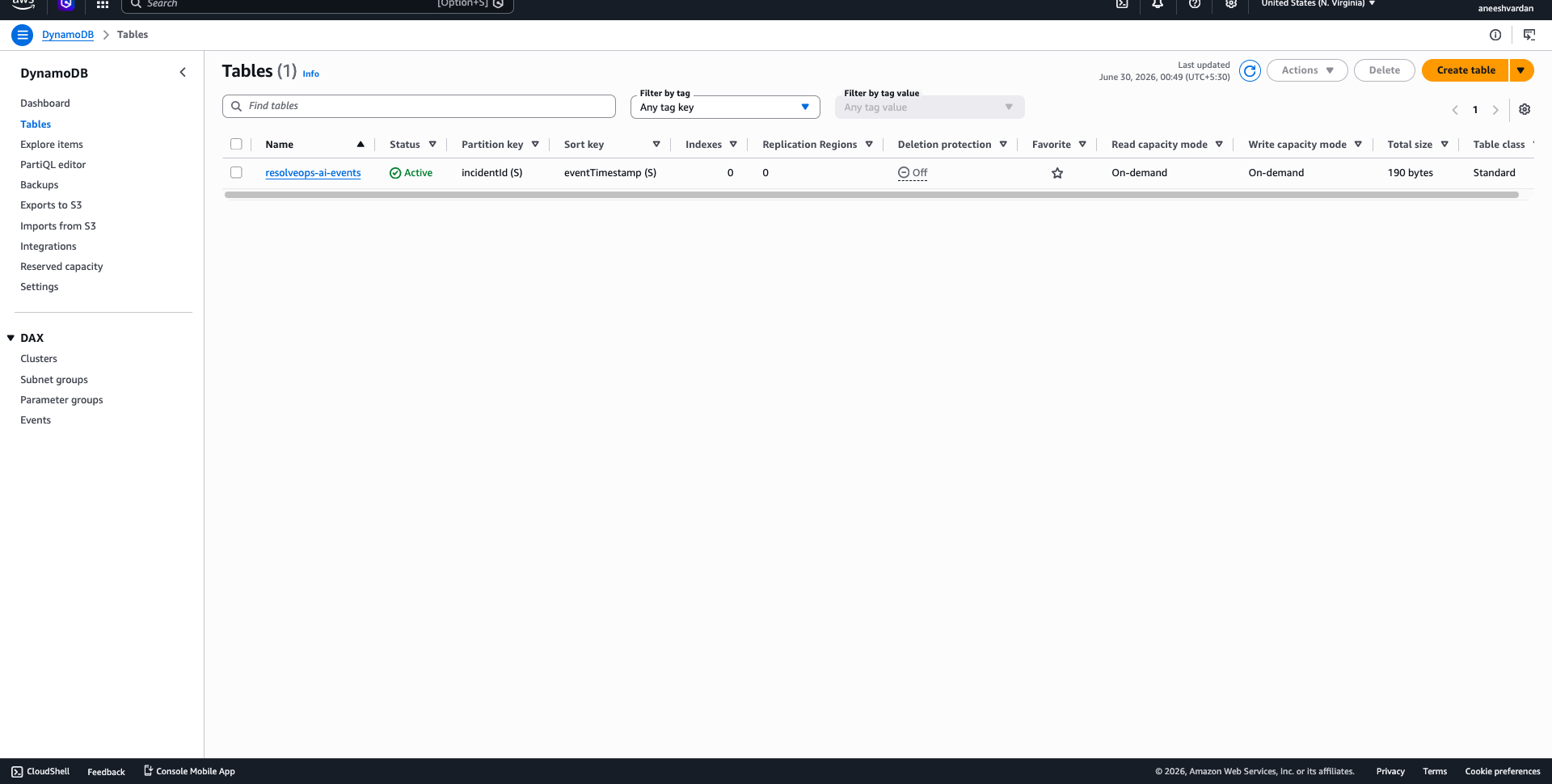
DynamoDB screenshot
Inspiration
Production incidents are stressful because the truth is scattered across too many systems. Alerts may be in PagerDuty, conversations in Slack, tickets in Jira, metrics in CloudWatch or Datadog, and customer impact in support tools like Zendesk. During a SEV1 outage, responders waste valuable time stitching together context instead of resolving the issue.
ResolveOps AI was built to help reliability, DevOps, and engineering teams move faster from incident detection to root cause, postmortem, and prevention.
What it does
ResolveOps AI is an incident intelligence platform that brings operational signals into one workflow.
The app provides:
- A reliability dashboard for active incidents, MTTR, services at risk, and open prevention actions
- An incident command center with customer impact, affected services, responders, timeline, and mitigation status
- AI-assisted incident analysis that summarizes what happened, identifies likely root cause, highlights recurrence risk, and shows supporting evidence
- Auto-generated postmortems with timeline, root cause, impact, and follow-up sections
- Action item tracking so incidents turn into measurable reliability improvements
The demo scenario shows a SEV1 payment outage caused by a non-backward-compatible database migration.
How we built it
The application is built with Next.js and deployed on Vercel. The UI was generated and iterated using v0, then refined with custom code and deployed through GitHub and Vercel.
For the AWS database requirement, ResolveOps AI uses Amazon DynamoDB. The DynamoDB table is named resolveops-ai-events. It stores incident signals and workflow events using incidentId as the partition key and eventTimestamp as the sort key. This design fits high-volume, time-ordered incident events coming from tools like PagerDuty, Slack, Jira, CloudWatch, Datadog, and Zendesk.
Challenges we ran into
One challenge was creating a demo that felt realistic within the hackathon time limit. We focused on a complete end-to-end incident workflow instead of building many disconnected features.
Another challenge was aligning the database story with the working AWS proof. We initially explored Aurora PostgreSQL, but moved to DynamoDB because it was faster to provision and better matched the high-volume event intake use case for incident signals.
Accomplishments that we are proud of
We are proud that ResolveOps AI demonstrates a full incident lifecycle: detection, command center, AI analysis, postmortem, action items, and AWS database proof.
The app feels like a realistic B2B SaaS product for reliability teams, and the DynamoDB model gives a clear technical foundation for storing time-ordered incident events.
What we learned
We learned how important it is to tell a clear product story in a hackathon. The strongest demo is not just showing screens, but showing how a team moves from chaos to clarity during a production incident.
We also learned how DynamoDB can be used effectively for event-driven operational workflows where fast retrieval by incident and timestamp matters.
What’s next for ResolveOps AI
Next, ResolveOps AI could integrate with real PagerDuty, Slack, Jira, CloudWatch, Datadog, and Zendesk APIs. It could also support real-time incident collaboration, role-based workflows, automated executive summaries, and reliability trend analytics across multiple incidents and services.
Built With
- amazon-dynamodb
- amazon-web-services
- github
- lucide
- next.js
- react
- tailwind-css
- typescript
- v0
- vercel


Log in or sign up for Devpost to join the conversation.