-
-
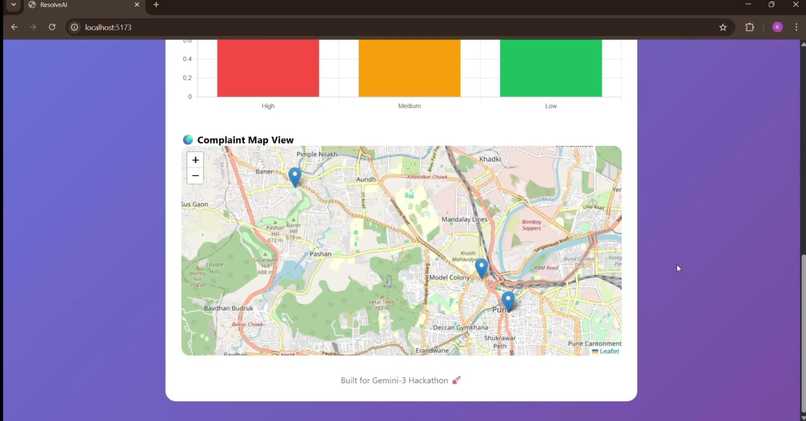
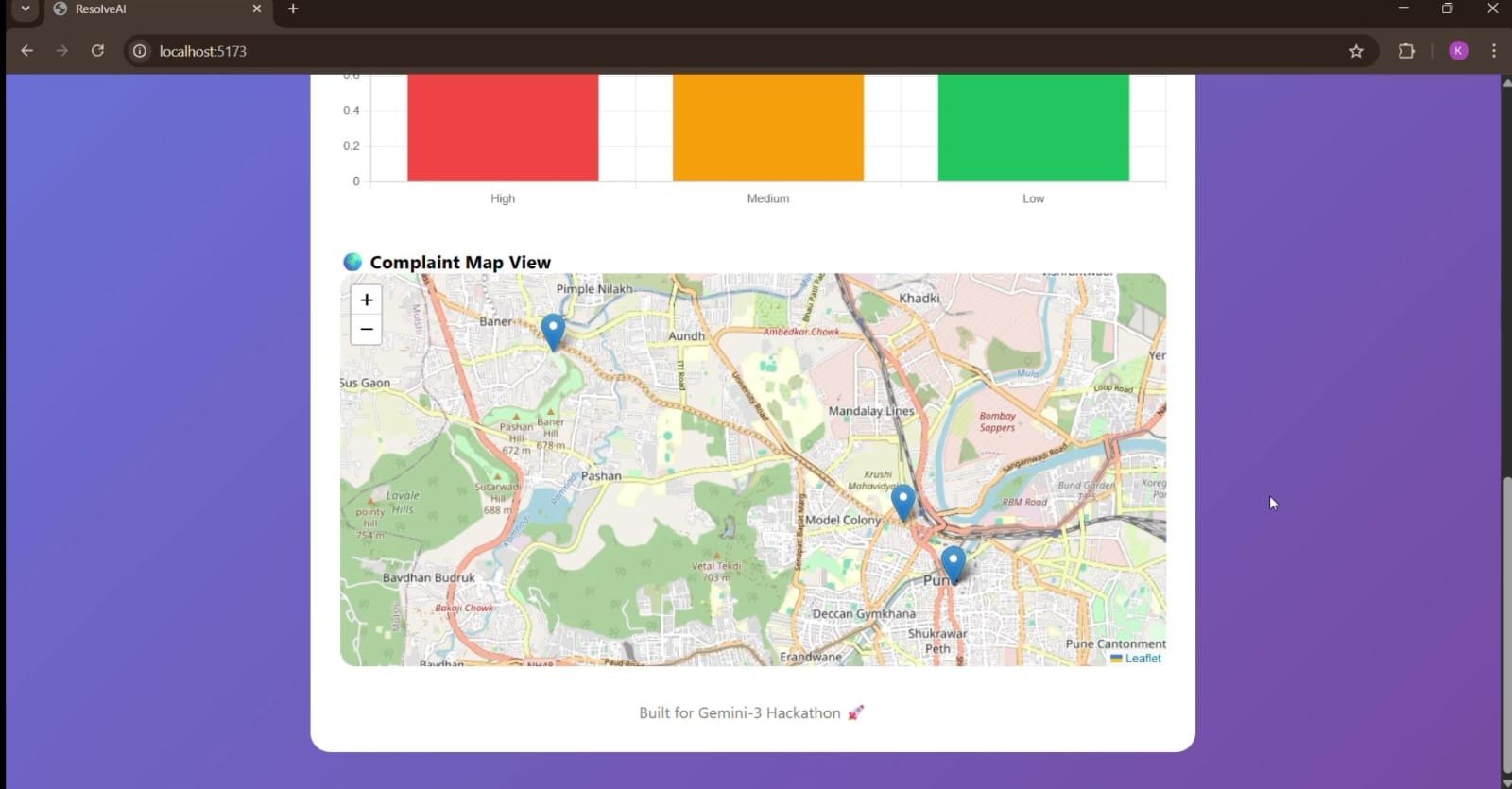
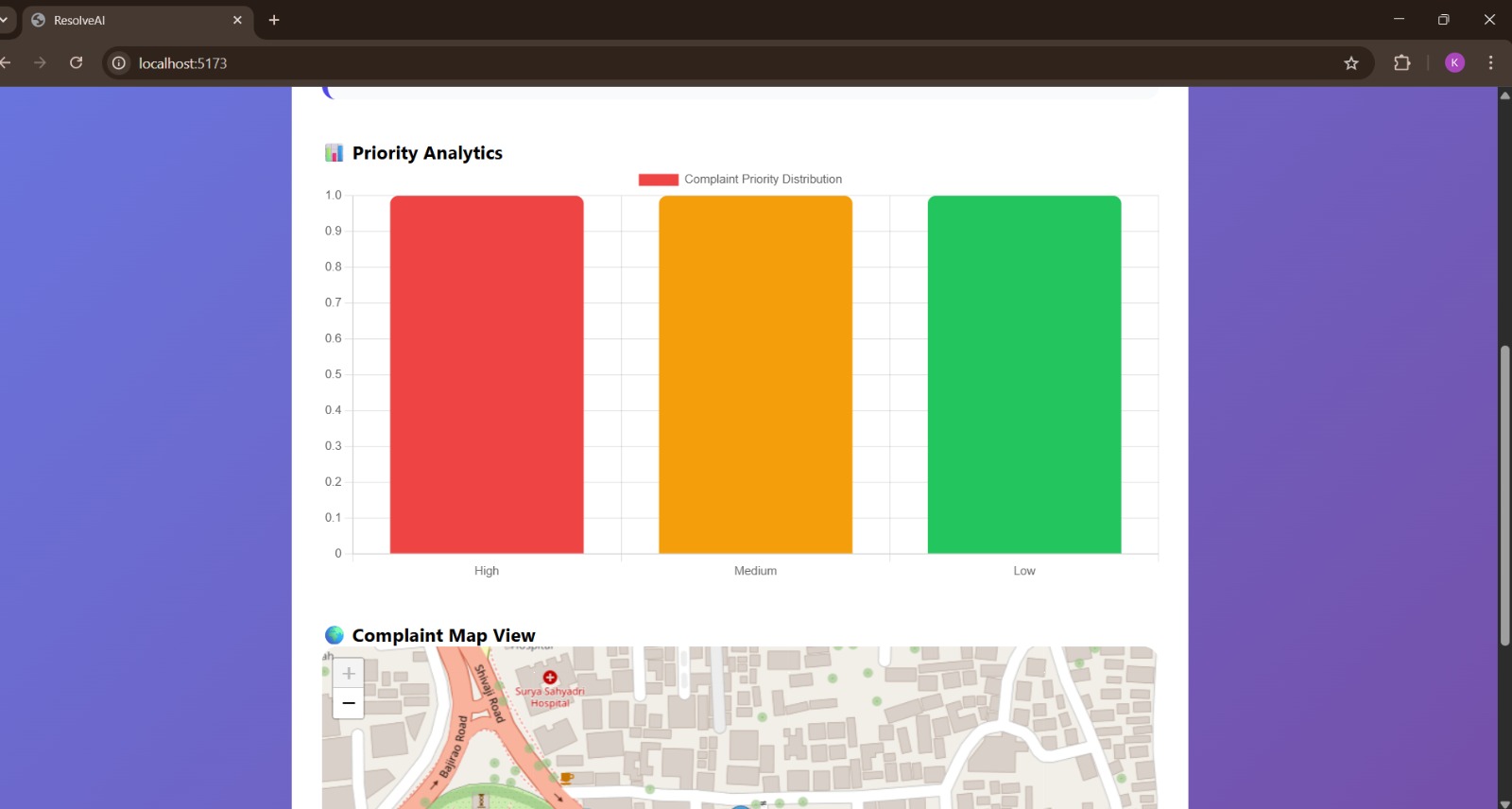
Geographic visualization of complaints using an interactive map.
-
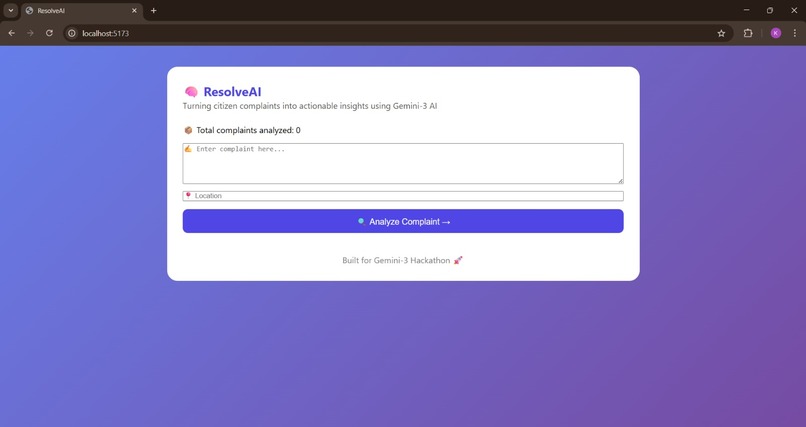
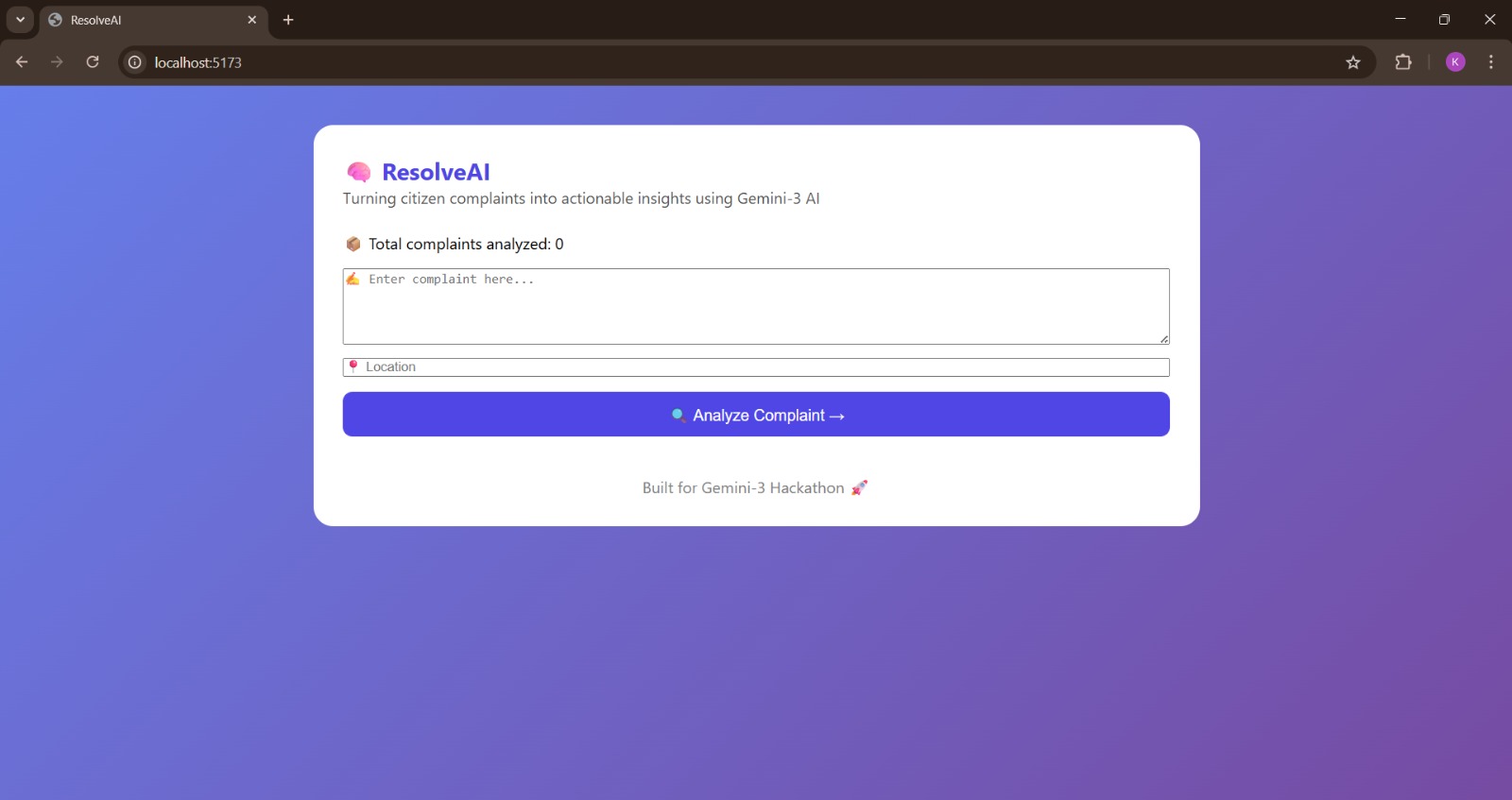
Simple interface for submitting new citizen complaints.
-
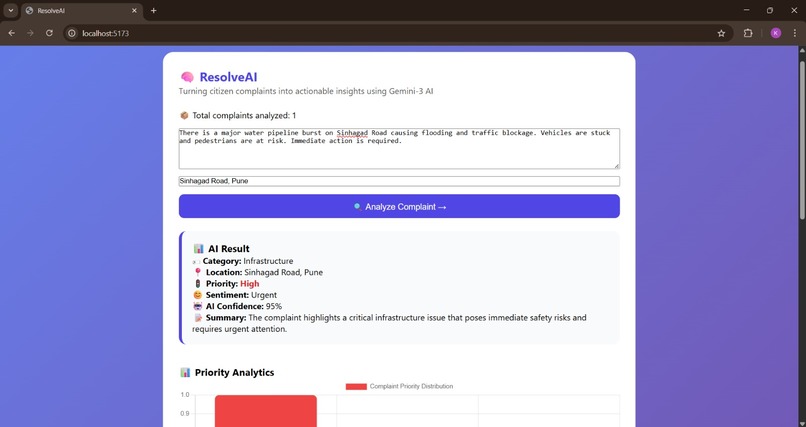
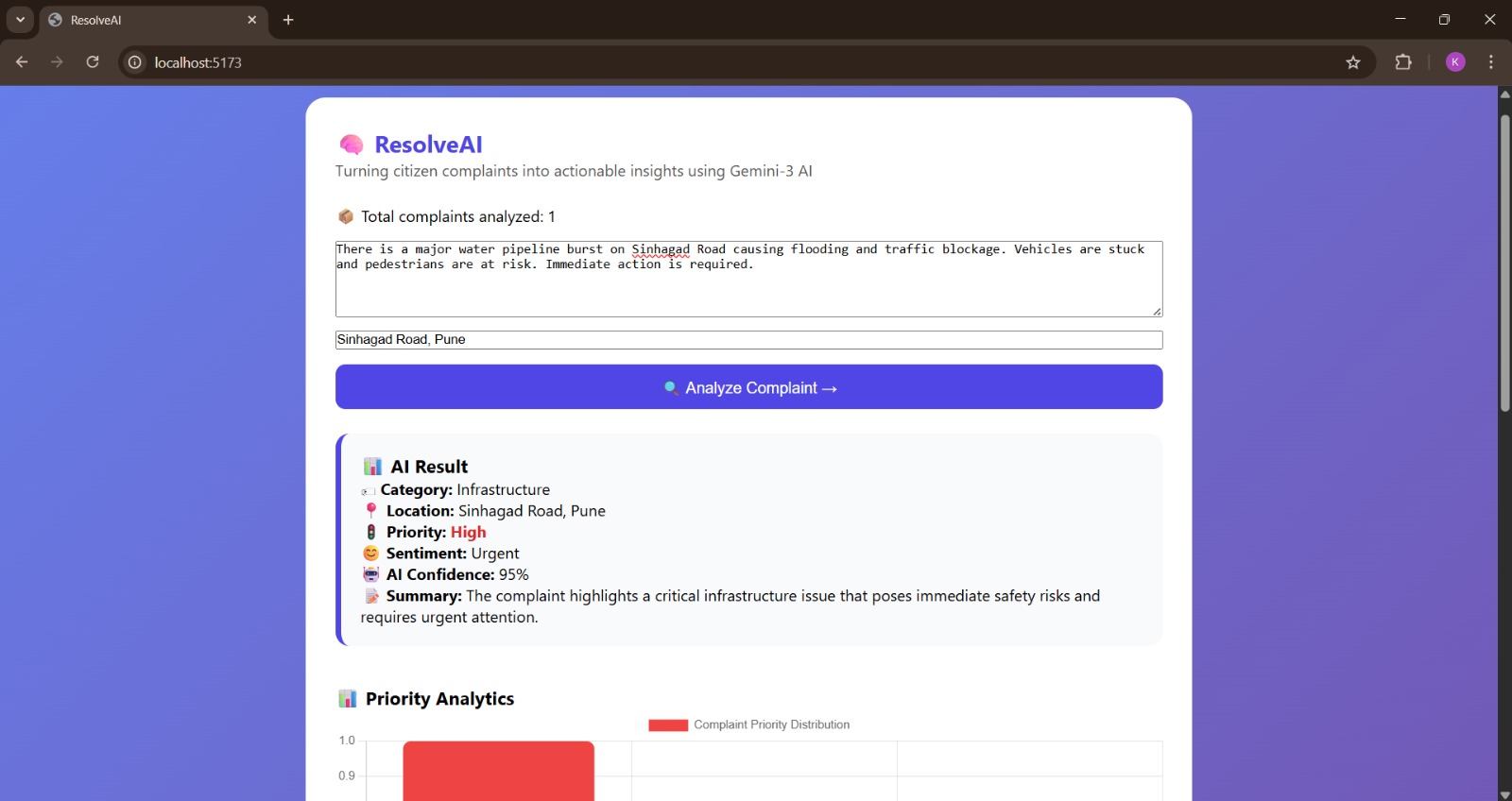
Critical complaints detected and flagged as high priority.
-
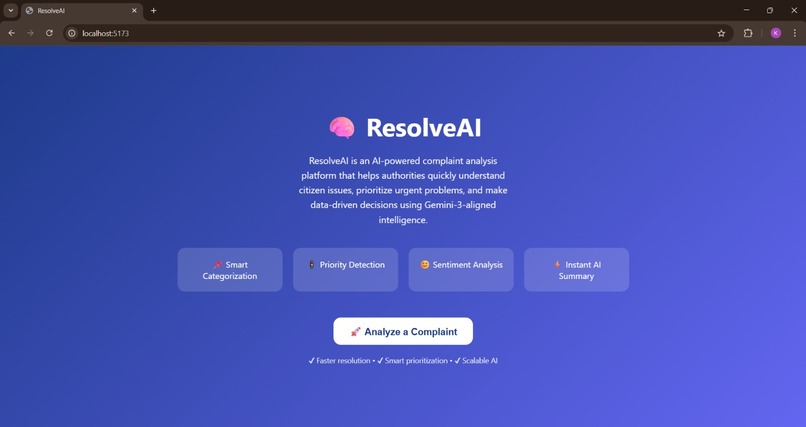
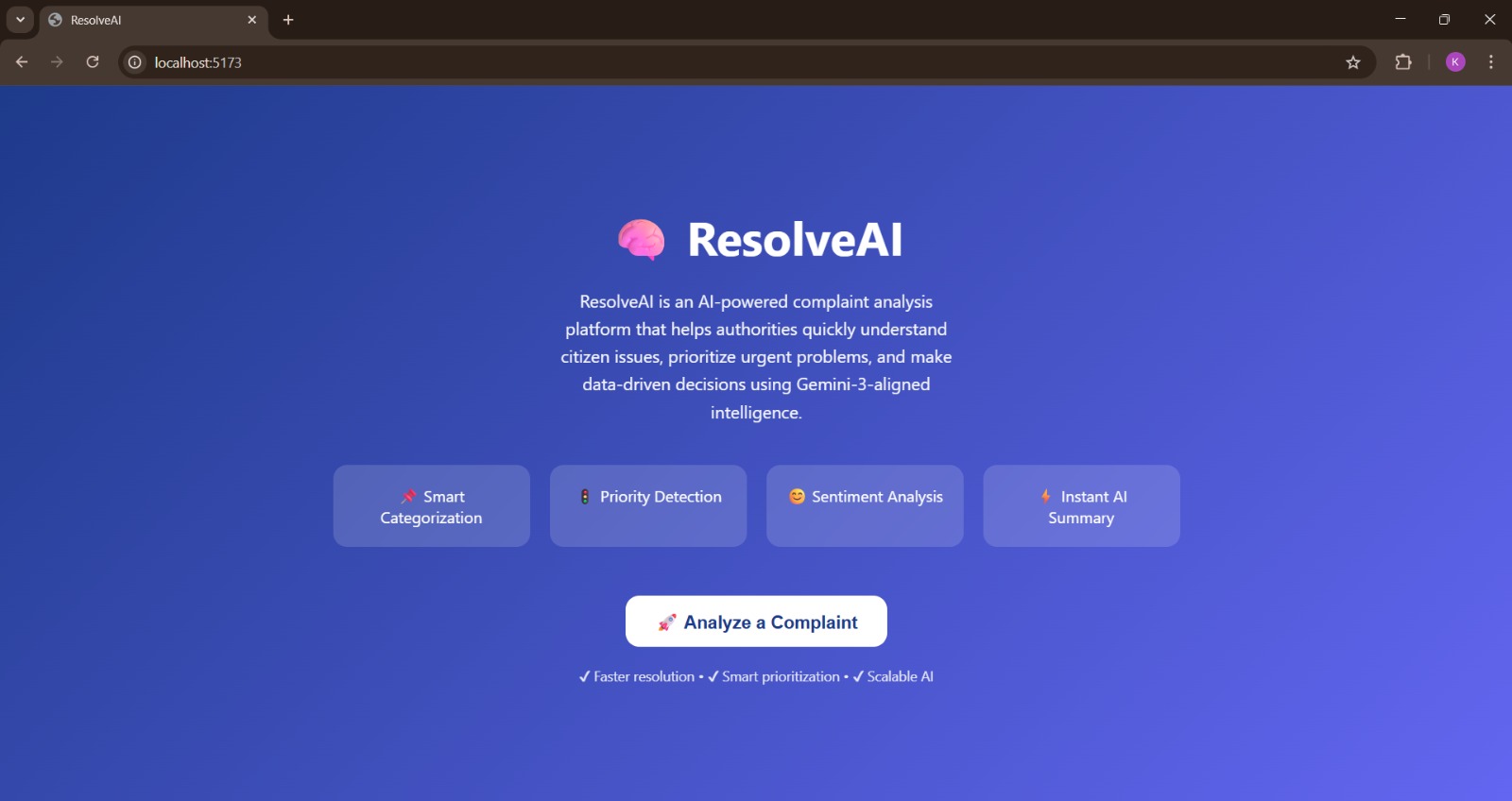
ResolveAI homepage showcasing key AI-powered features.
-
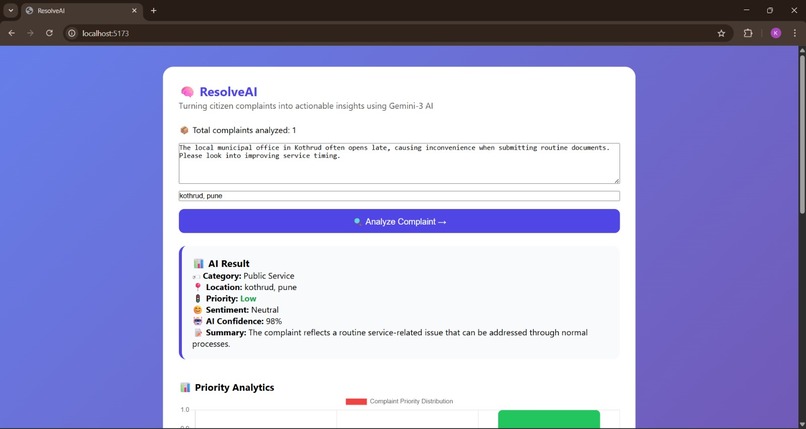
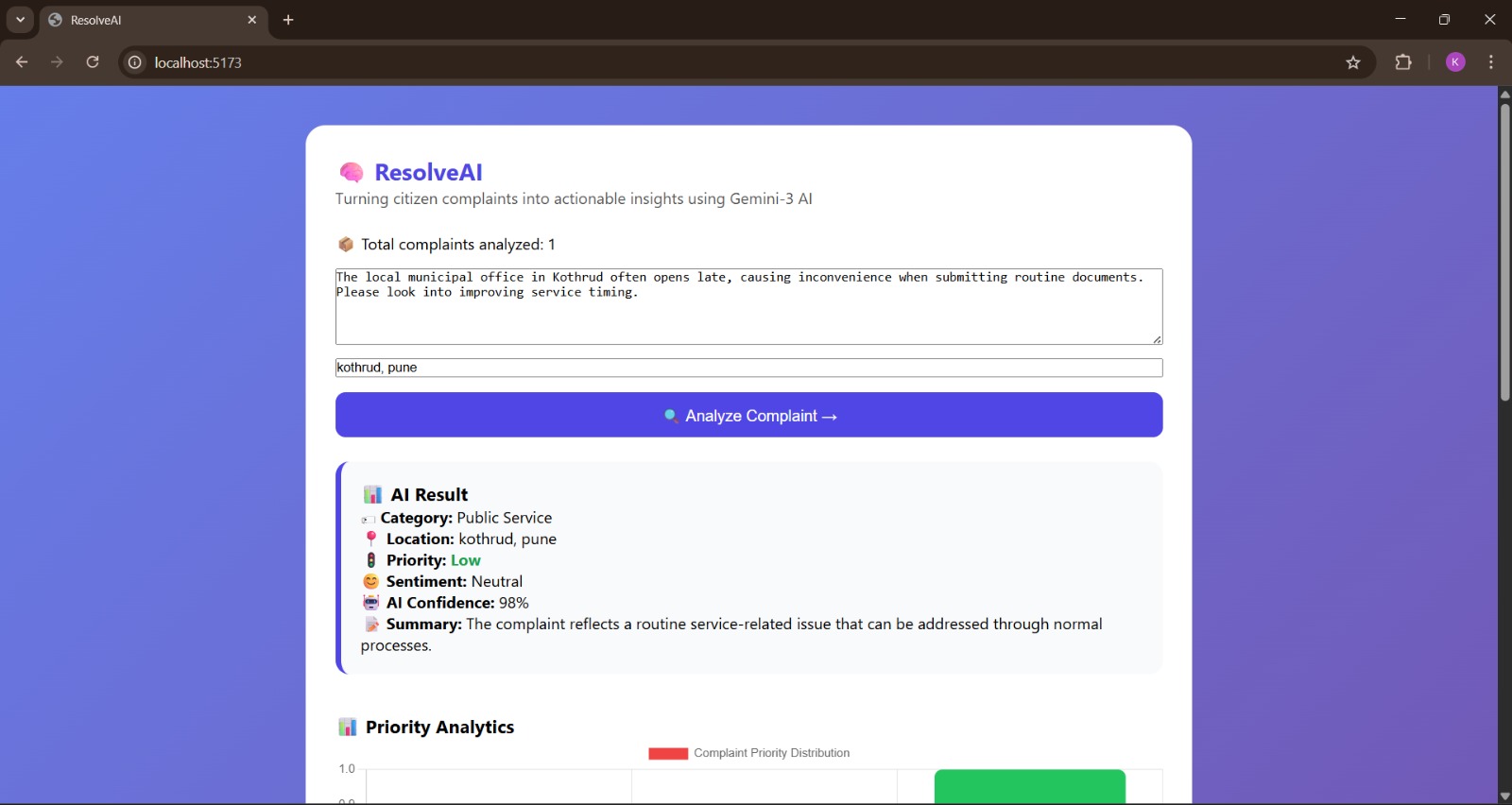
Citizen complaint analyzed with category, sentiment, and priority.
-
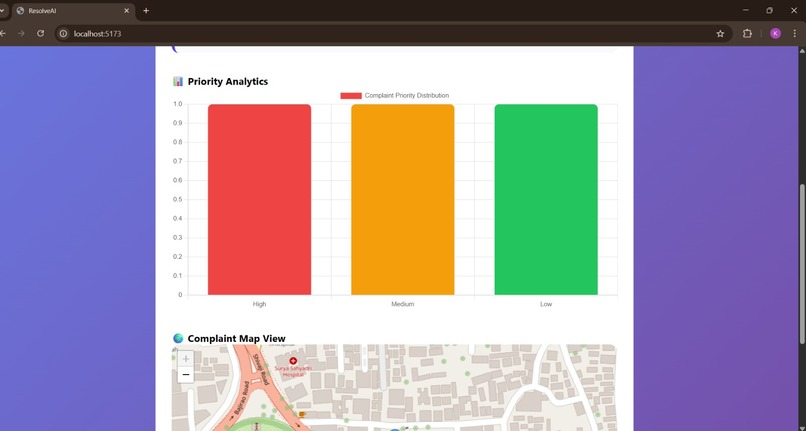
Complaint priority distribution for data-driven decision making.
Inspiration
City authorities receive thousands of citizen complaints every day, but many of them are written in free text and lack clear prioritization. As a result, urgent issues like infrastructure failures or public safety risks often get delayed alongside routine complaints. We were inspired to build ResolveAI to explore how Gemini‑3‑style reasoning can help transform unstructured civic complaints into actionable, prioritized insights for smarter governance.
What it does
ResolveAI is an AI‑powered platform that allows users to submit civic complaints along with a location. The system analyzes each complaint to: Understand the issue using natural language processing Classify it into categories such as Infrastructure, Sanitation, Transport, or Public Services Assign a priority level (High, Medium, or Low) Detect sentiment and generate a concise AI summary The complaints are then visualized on an interactive map with real‑time analytics, helping authorities quickly identify critical problem areas.
How we built it
We built ResolveAI using a React frontend and a Node.js + Express backend. The frontend handles user input, displays AI results, shows analytics using charts, and visualizes complaints on a map using Leaflet. The backend implements Gemini‑3‑aligned smart‑mock reasoning logic to simulate AI decision‑making for classification, priority assignment, sentiment analysis, and summarization. The system is designed so that the smart‑mock logic can be easily replaced with the real Gemini‑3 API in the future without frontend changes.
Challenges we ran into
One of the main challenges was correctly distinguishing between Medium‑ and High‑priority complaints, especially when issues involved safety but were not emergencies. We also faced challenges with map visualization, such as ensuring that all complaints appeared correctly and handling location inconsistencies. Debugging state updates and ensuring clean integration between backend responses and frontend visualizations required careful iteration.
Accomplishments that we're proud of
Successfully building a full end‑to‑end product within hackathon time constraints Creating a clear and intuitive demo with real‑time maps and analytics Implementing meaningful AI‑style reasoning instead of simple keyword matching Designing a scalable architecture ready for real Gemini‑3 API integration
What we learned
Through this project, we learned how to design AI‑assisted decision systems, integrate frontend visualizations with backend reasoning logic, and debug real‑world issues related to data flow and UI behavior. We also gained experience in presenting AI concepts clearly for non‑technical stakeholders, which is critical in civic and governance applications.
What's next for ResolveAI
In the future, we plan to integrate the live Gemini‑3 API, add real geocoding for precise locations, store complaint history in a database, and build dashboards specifically for municipal authorities. We also envision extending ResolveAI to campuses, smart societies, and other large‑scale community systems.
Built With
- ai
- aligned
- chart.js
- css
- express.js
- gemini?3
- html
- javascript
- leaflet.js
- node.js
- react
- rest-apis
- smart?mock

Log in or sign up for Devpost to join the conversation.