Inspiration
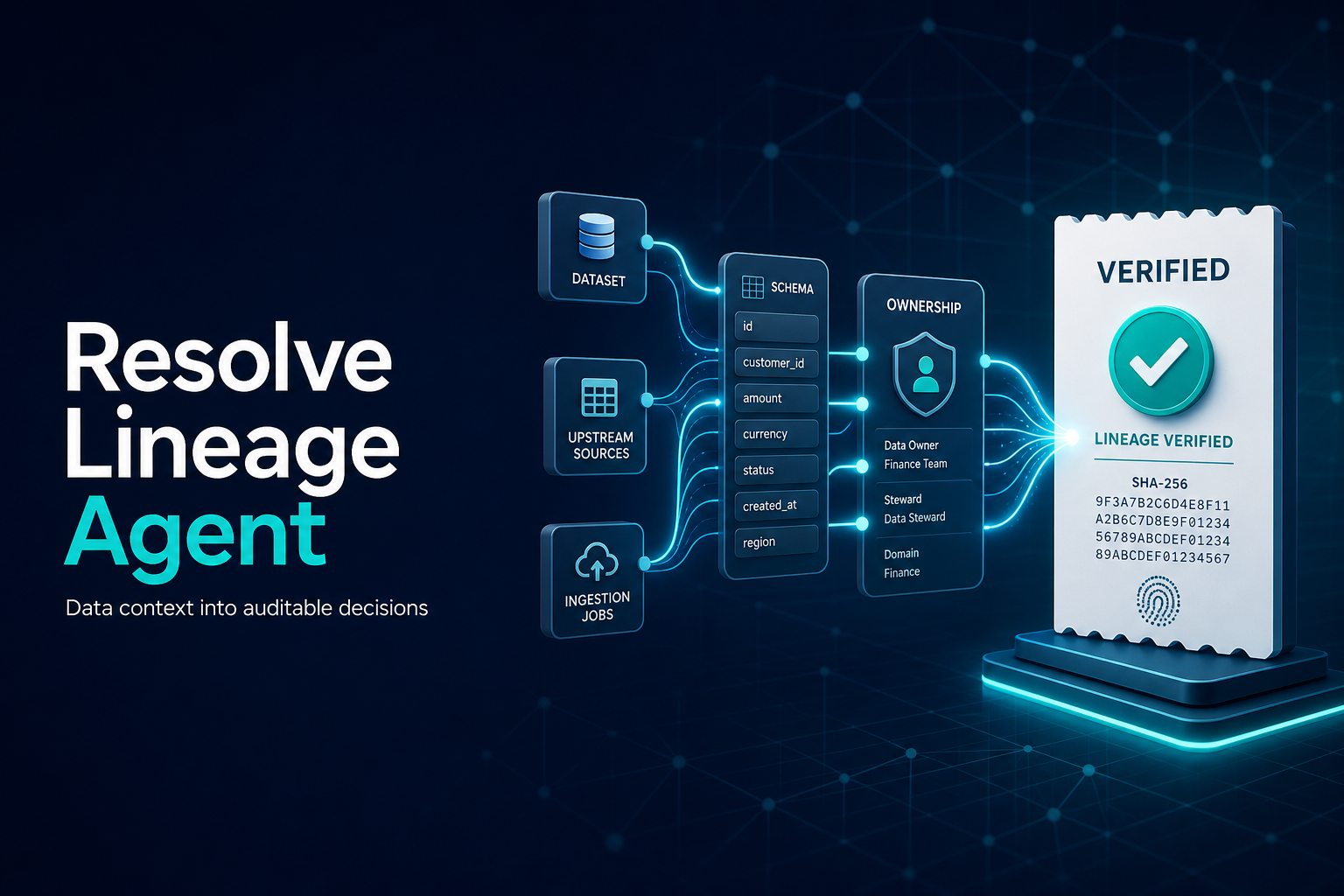
Environmental and operational evidence is often reviewed as an isolated file. A matching hash proves integrity, but it does not prove that the evidence came from the expected dataset, that the dataset has an accountable owner, or that upstream sources and claimed fields are trustworthy. Resolve Lineage Agent uses DataHub's context graph to make those relationships part of the decision.
What it does
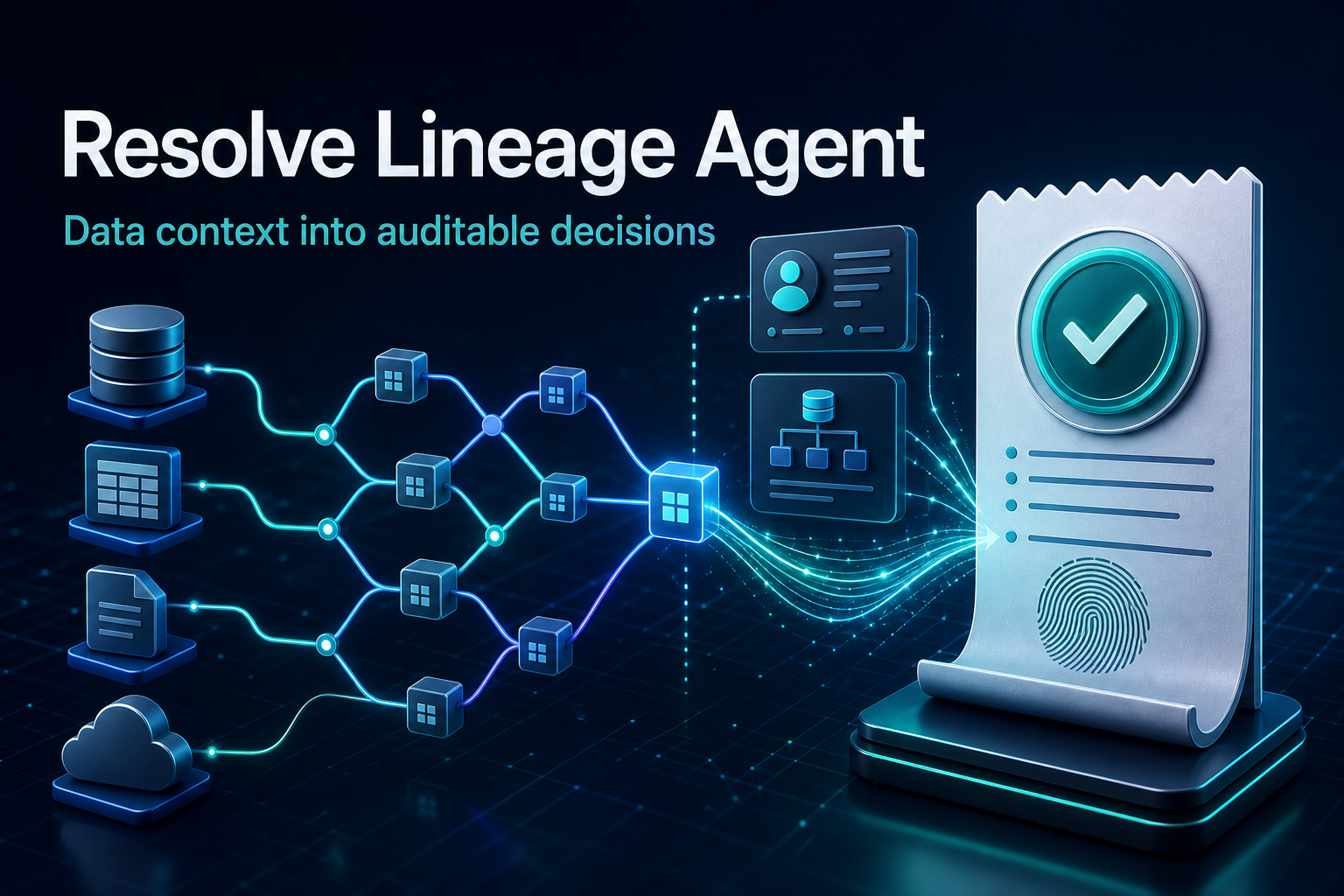
Resolve receives an evidence manifest with a DataHub dataset URN, claimed fields, and observations. It reads dataset properties, schema metadata, ownership, and upstream lineage; applies deterministic governance checks; and returns a canonical SHA-256 resolution receipt. When connected with write-back enabled, it stores the status, digest, timestamp, and finding count as dataset custom properties so the next reviewer or agent inherits the result.
A complete package becomes VERIFIED. Missing ownership, unknown lineage, schema mismatches, or incomplete observations become explicit BLOCKED findings instead of silent assumptions.
How we built it
The project is an independent Python package created during the hackathon. The gateway uses the official DataHub SDK and GraphQL client to obtain context and DatasetPatchBuilder to preserve unrelated properties while adding Resolve results. The decision engine is intentionally deterministic and testable: identical canonical inputs produce identical receipts. A CLI supports both a reproducible offline fixture and a live DataHub server.
Challenges
The main design challenge was separating cryptographic integrity from governance trust. We also designed write-back to be additive and auditable, avoiding destructive replacement of existing metadata. The local environment did not initially include Docker, so we built a credential-free fixture path while keeping the same evaluation contract used by the live gateway.
Accomplishments
- Meaningful reads of ownership, schema, lineage, and dataset properties.
- Safe write-back of compact resolution context.
- Canonical receipts that can be independently reproduced.
- Verified and intentionally blocked examples.
- Four automated tests covering evaluation and gateway behavior.
- Apache-2.0 public repository with setup instructions.
What we learned
Context is not decoration for an agent. It is part of the evidence. DataHub turns organizational knowledge into machine-readable constraints that make autonomous decisions safer and easier to audit.
What's next
Next steps include event-driven triggers, richer policy packs, signed receipts, human-review escalation, and multi-dataset impact analysis before evidence is accepted.

Log in or sign up for Devpost to join the conversation.