ResoLink
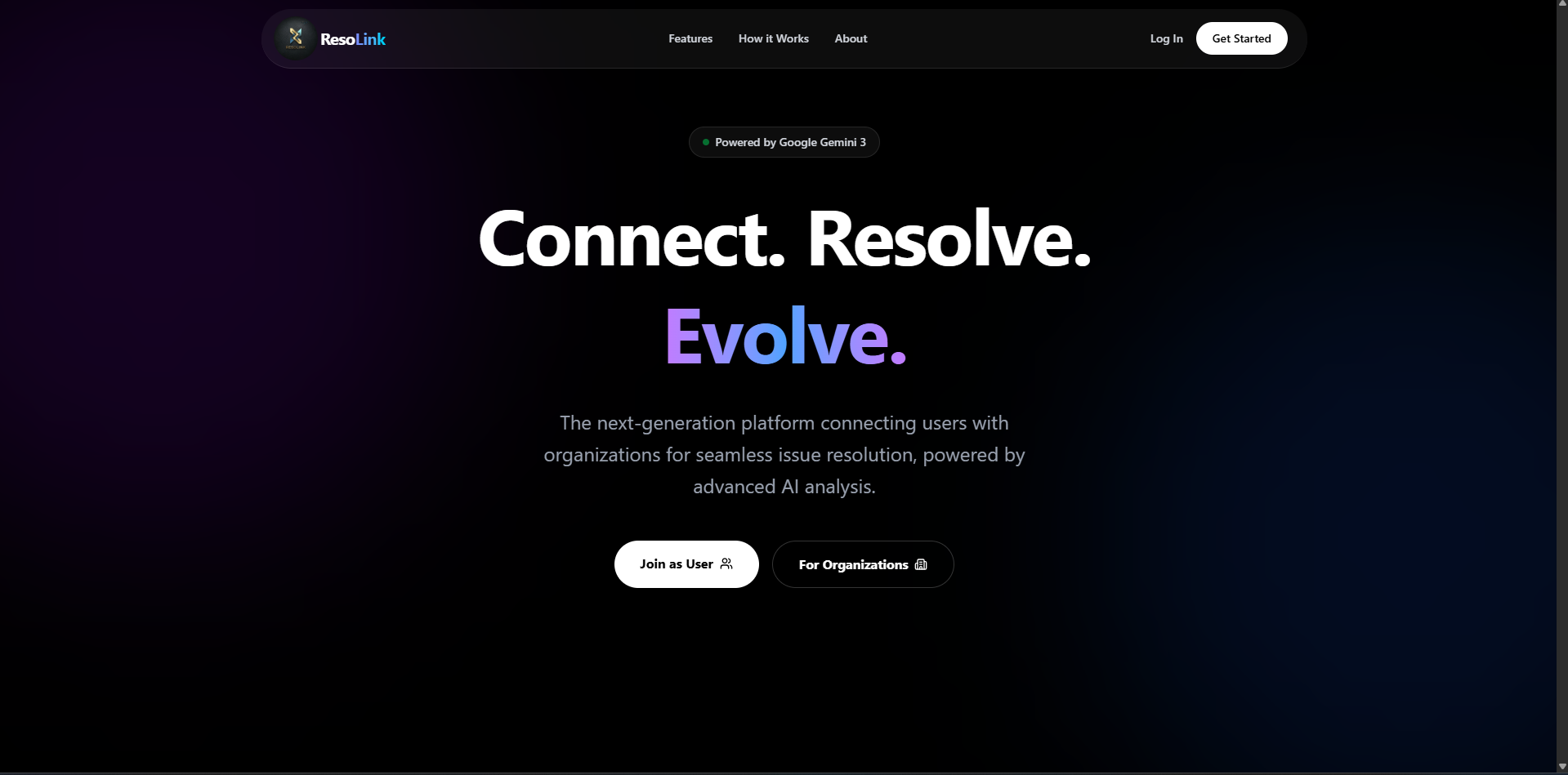
ResoLink is a civic tech platform that connects citizens and organizations in a meaningful way so that public issues can be reported, surfaced, and prioritized intelligently.
Inspiration
In many parts of the world — especially in countries like India — citizens face real everyday problems such as potholes, water shortages, sanitation issues, and unsafe road conditions. These issues often get buried among thousands of complaints because there’s no easy way for governments and organizations to see what matters most.
ResoLink was inspired by the need to give a voice to citizens and help institutions act faster and smarter.
What it does
ResoLink lets users:
- Submit issues with text and optional images
- View and like issues submitted by others
- Organizations view insights and prioritize issues
- AI-powered analysis to categorize and summarize complaints
Users can interact with posts just like a social platform, but the emphasis is on problem reporting, community verification, and actionable insights.
How we built it
This project uses a modern full-stack web architecture:
Frontend
- Built with React and Vite
- Styled using Tailwind CSS
- Uses Axios for API calls
- Provides separate views for citizens and organizations
Backend
- Built with Node.js and Express
- Handles authentication and issue APIs
- Stores data in a database (e.g., MongoDB)
- Integrates with AI for smart categorization
AI Integration We use the Gemini API to classify complaints, generate summaries, and assist with insights.
Challenges we ran into
- Designing a platform for multiple user roles
- Mapping unstructured text into meaningful categories
- Integrating AI features in a way that’s useful and reliable
- Keeping the UI intuitive while adding powerful tools
These challenges helped us improve both the product and our teamwork.
Accomplishments that we're proud of
- A working full-stack application with authentication and dashboards
- Integrated analysis powered by AI rather than simple tags
- A UI that is responsive, simple, and user-friendly
- Citizens and organization views that both serve real needs
What we learned
- How to build user-centric platforms with real impact
- The importance of structuring data before analysis
- How to integrate AI for summarization and categorization
- Ways to design interfaces for non-technical users
What's next for ResoLink
- Issue location mapping and heatmaps
- Support for multiple languages
- Trend dashboards for organizations
- Real-time alerts for critical issues
- Advanced reporting tools for officials
These enhancements will make ResoLink even more useful for communities and leaders.

Log in or sign up for Devpost to join the conversation.