Inspiration
Environmental apps give us plenty of information: AQI, UV, temperature, particulate matter, and forecasts. But we kept coming back to one question: what are people actually supposed to do with that information?
The same conditions can affect people differently, and simply telling someone to “stay inside” isn't always realistic. People still have to work, go to school, exercise, and live their lives. We built Resilio to make environmental data more personal and actionable.
What it does
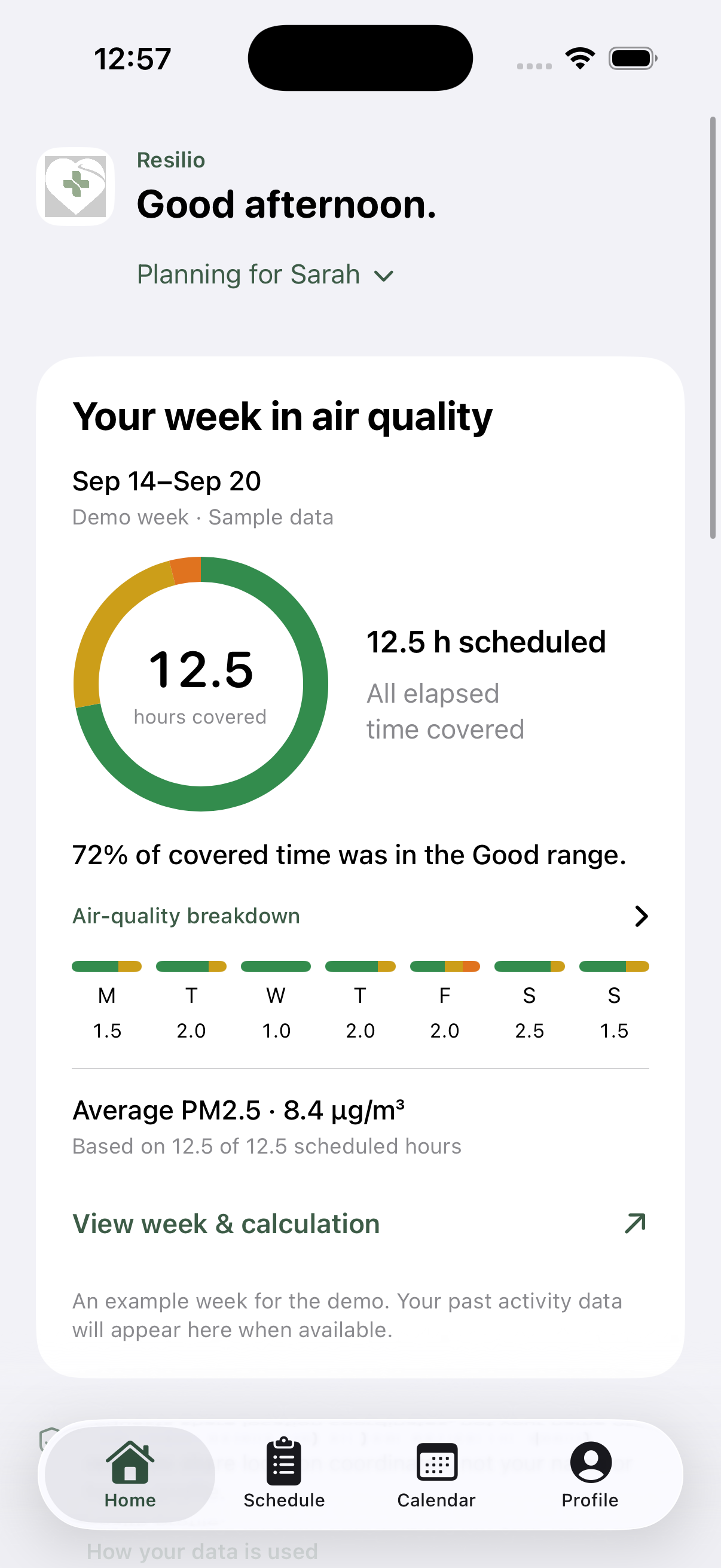
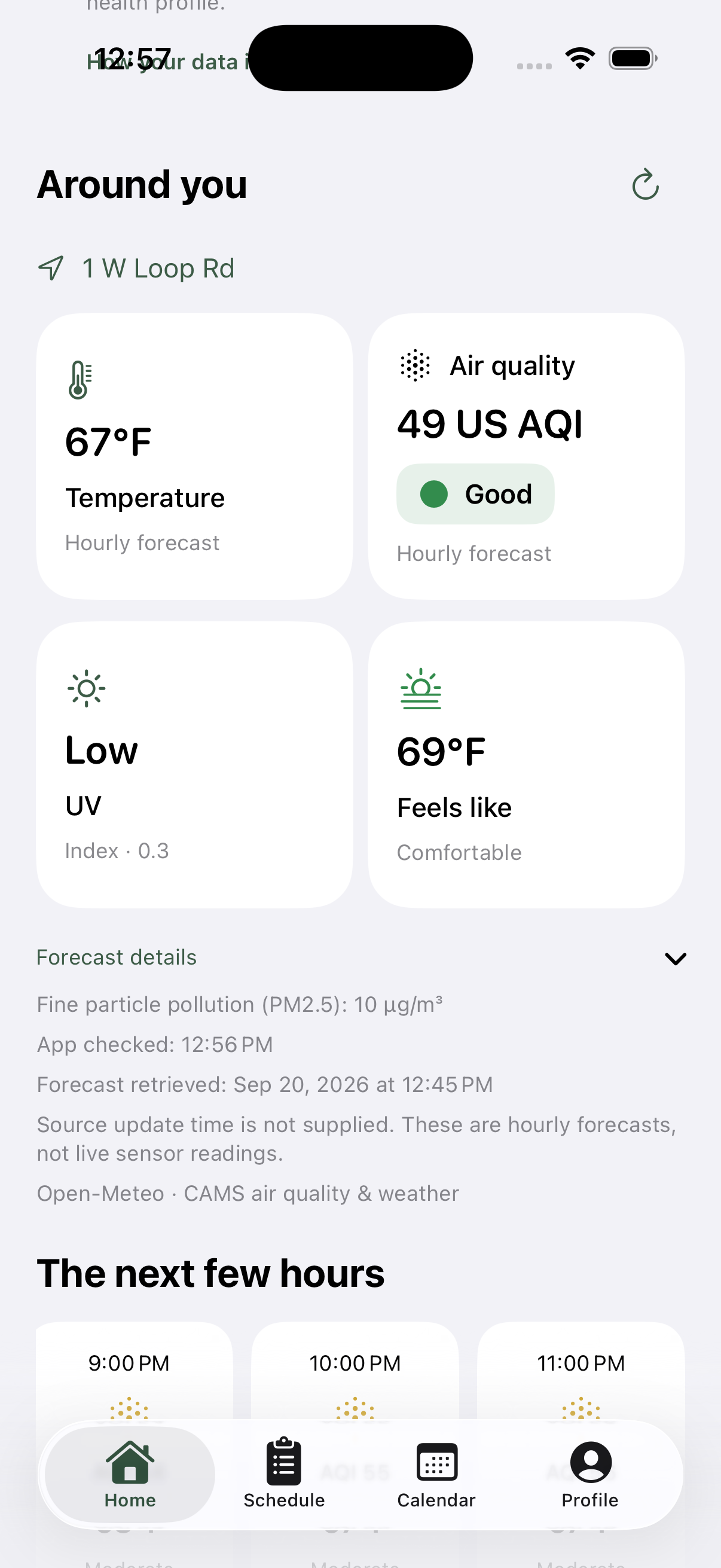
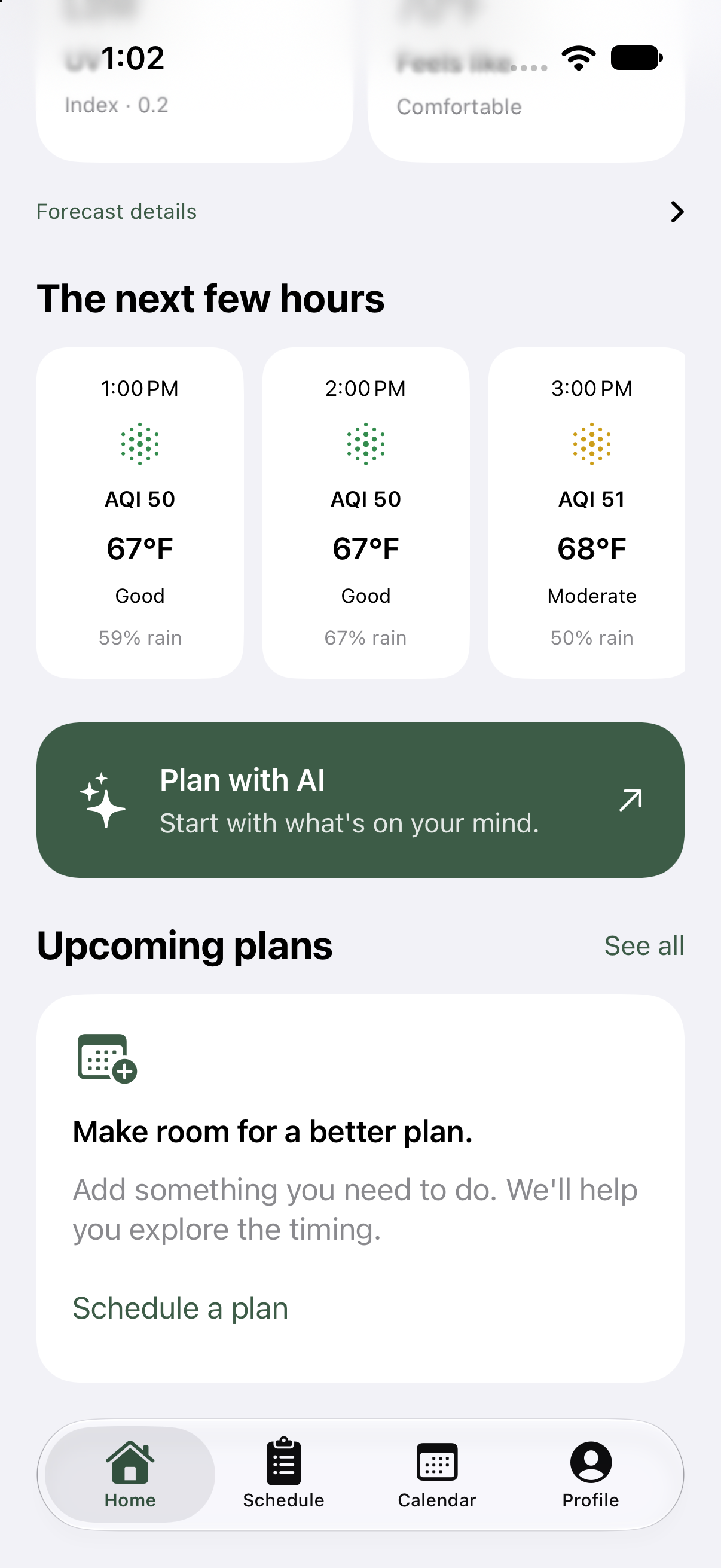
Resilio combines real environmental data with a user's location, health context, and daily plans. Users can create multiple household profiles, explore conditions relevant to them, and plan activities around environmental risks.
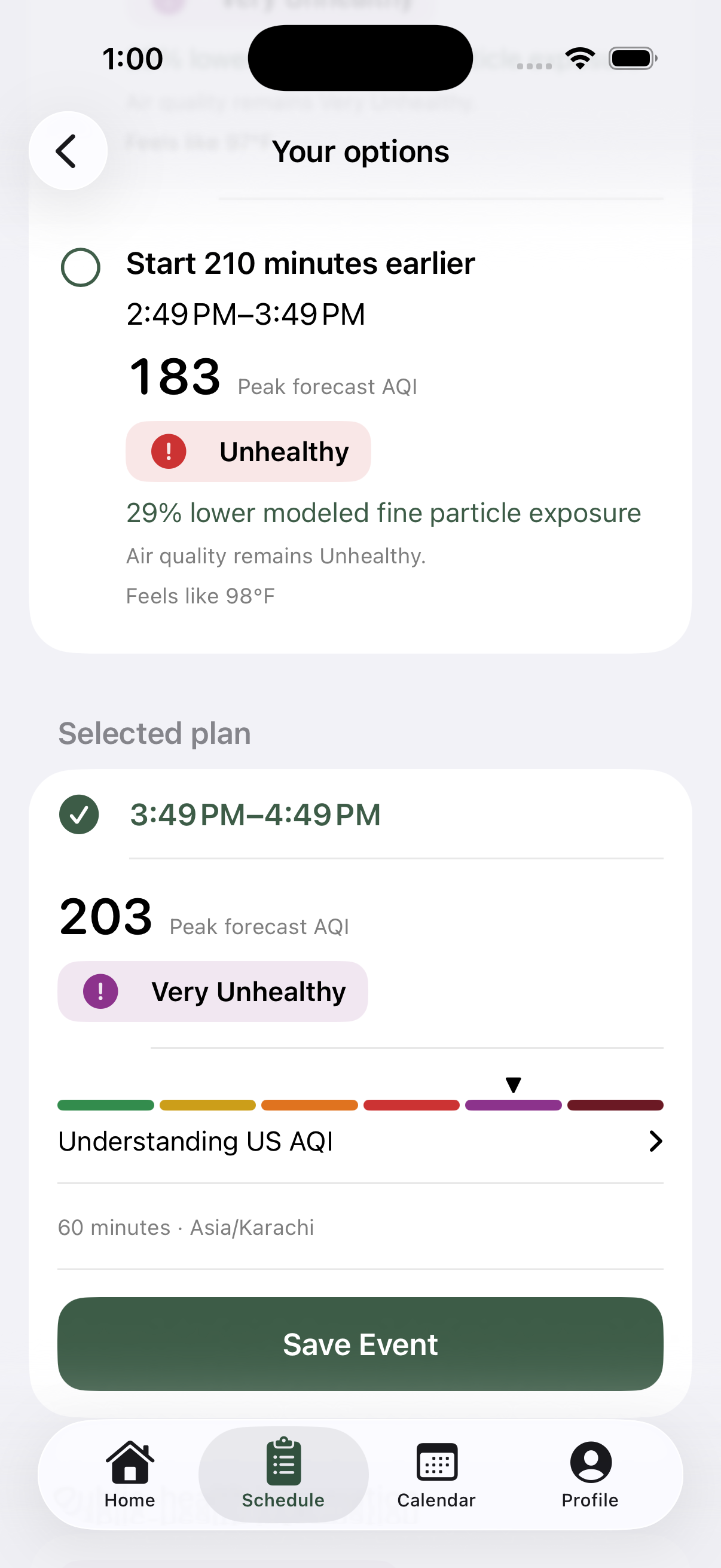
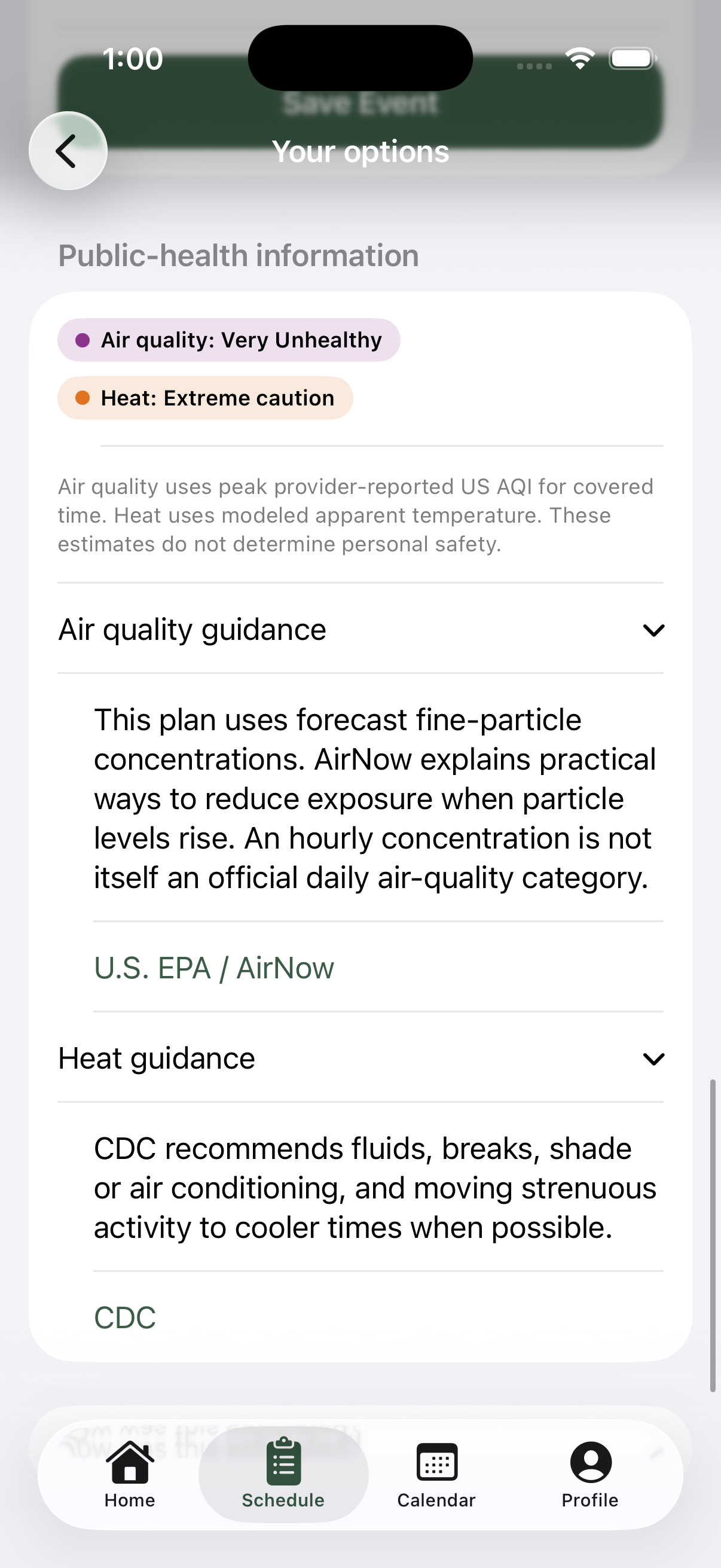
Resilio compares different times for an activity and shows tradeoffs in factors like air quality, heat, and UV instead of simply labeling conditions as “good” or “bad.” Users can save plans to their calendar and reassess them as conditions change.
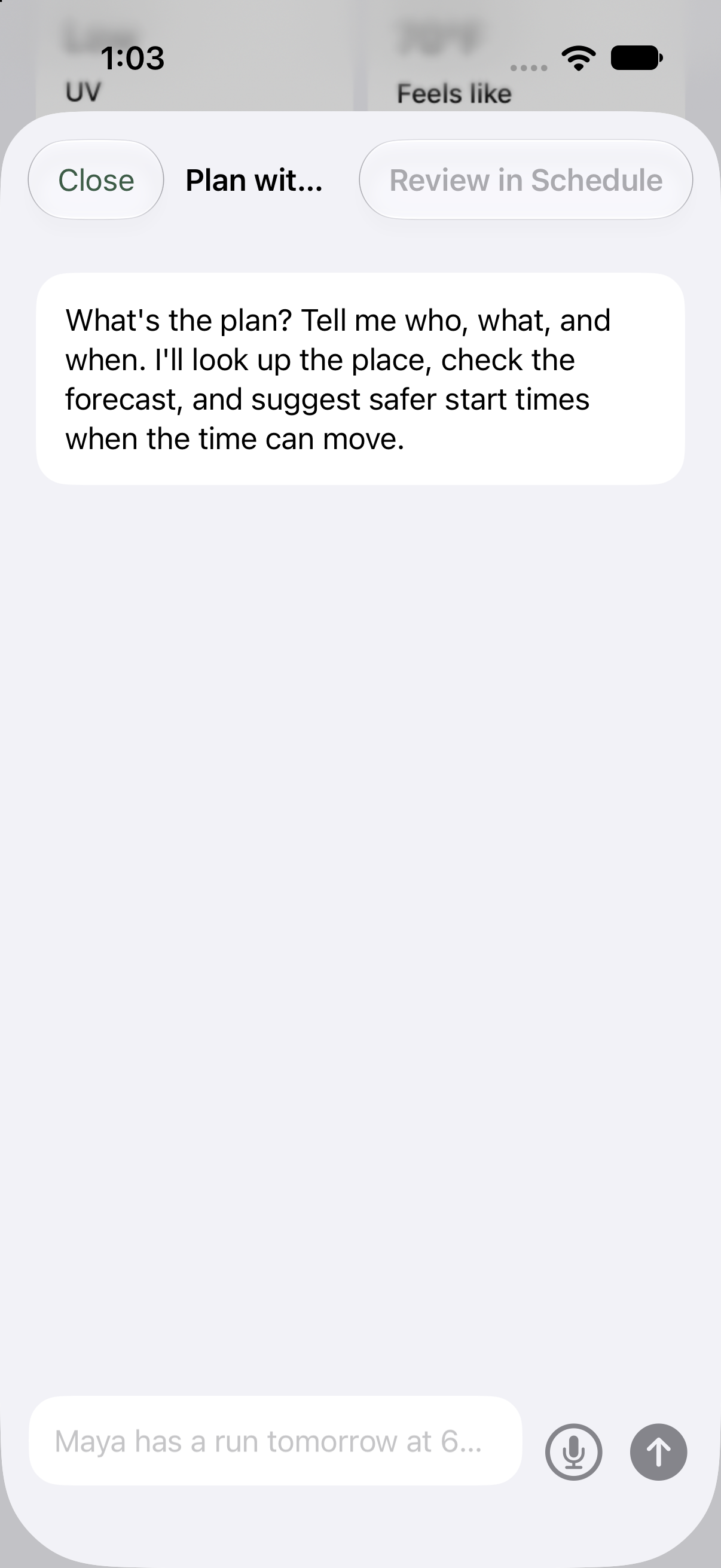
We also built Reso, an AI assistant that lets users describe an event naturally and automatically adds it to their schedule.
How we built it
We built Resilio using real weather and air-quality data, combined with profile and activity information to provide personalized context. We focused heavily on privacy and user choice: health information is voluntary and used for context, not diagnosis.
Challenges & What We Learned
Our biggest challenge was turning complex environmental data into useful guidance without oversimplifying it. A time with better air quality might have worse heat or UV, and sometimes there isn't a significantly better option.
That led to our biggest takeaway: climate-health technology shouldn't just provide more data. It should help people understand their options and make informed decisions within the realities of their lives.

Log in or sign up for Devpost to join the conversation.