-
-
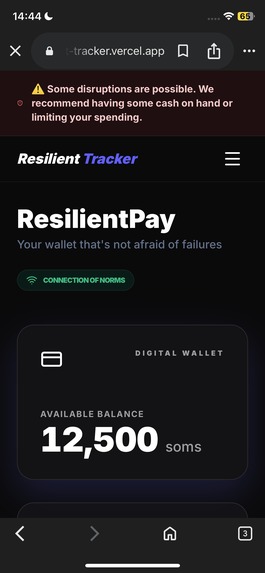
main page
-
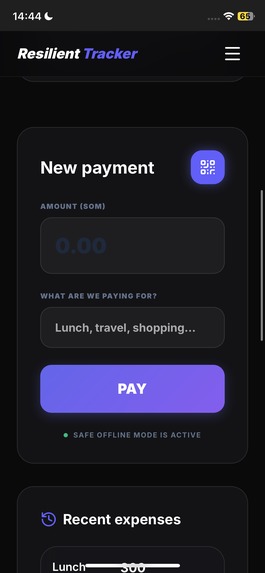
payment
-
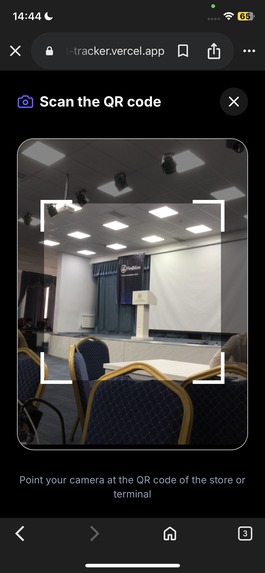
qr-code
-
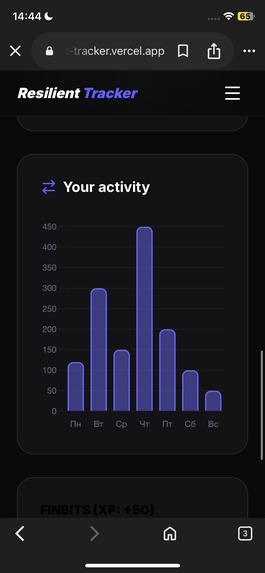
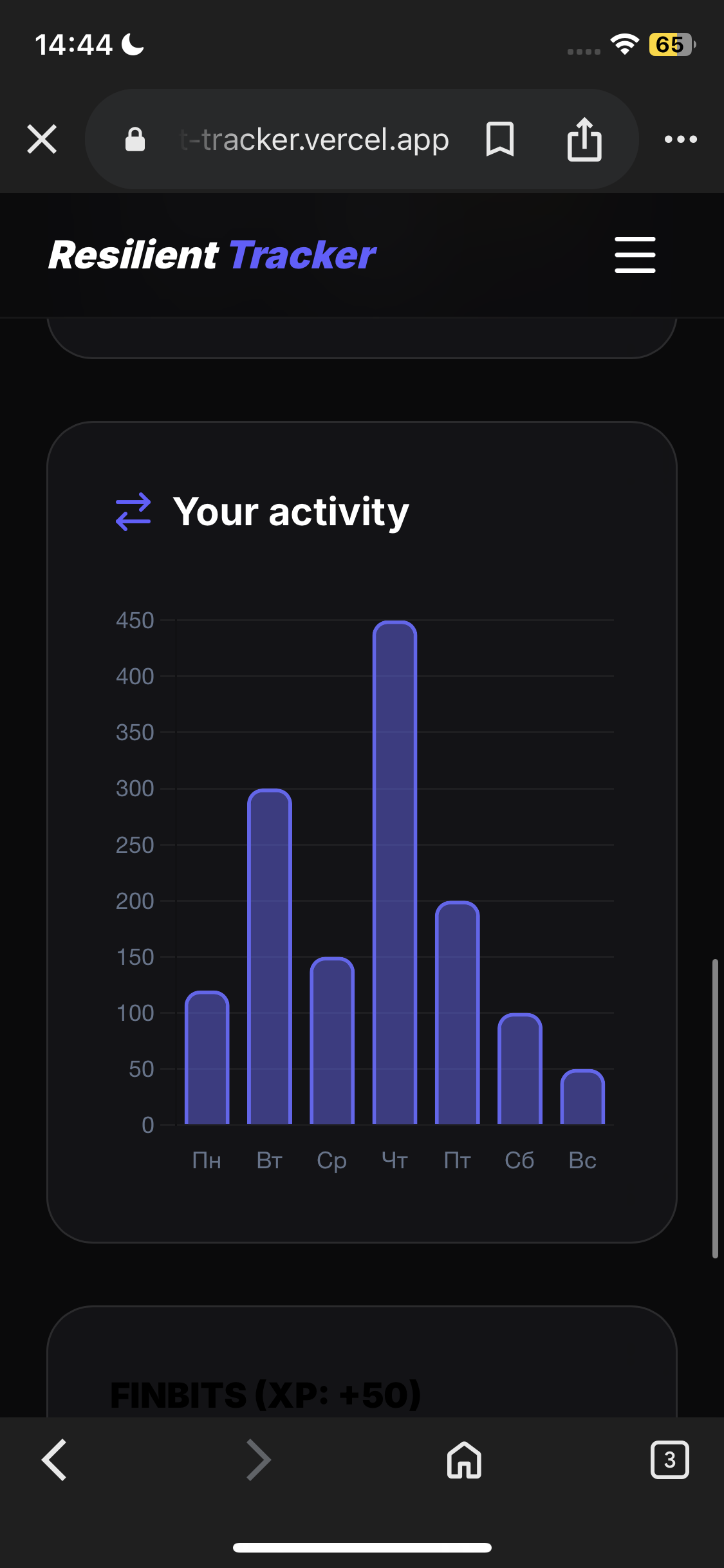
payment analytics
-
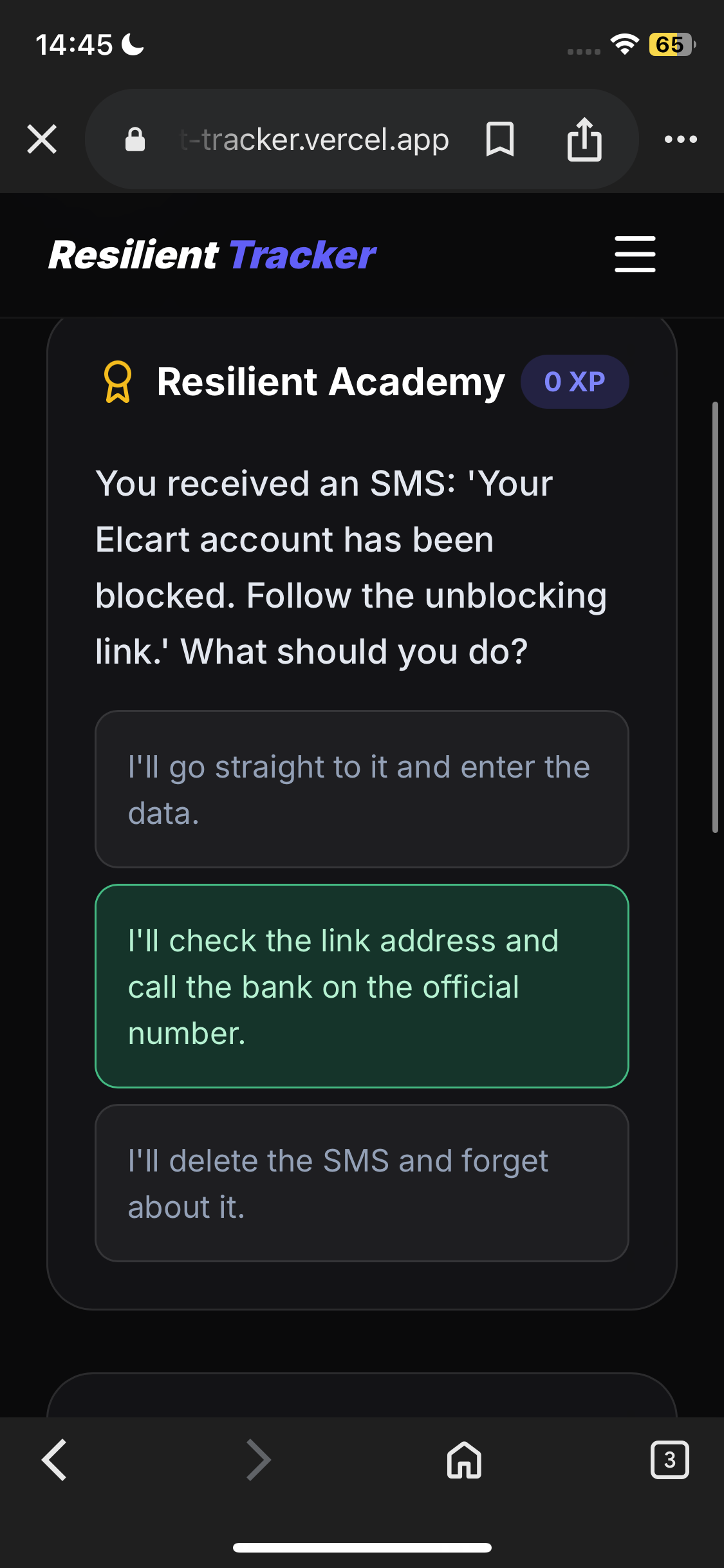
quiz
💡 Inspiration
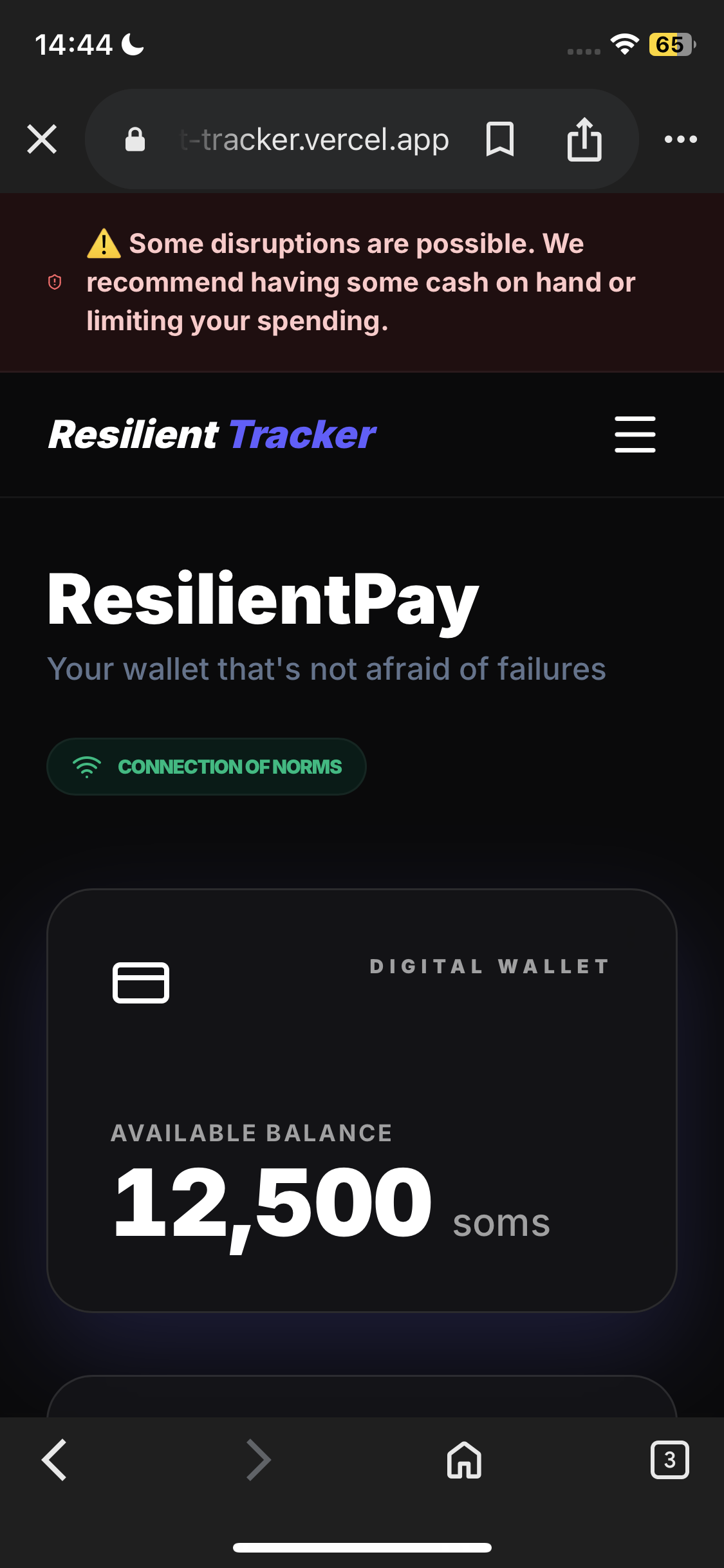
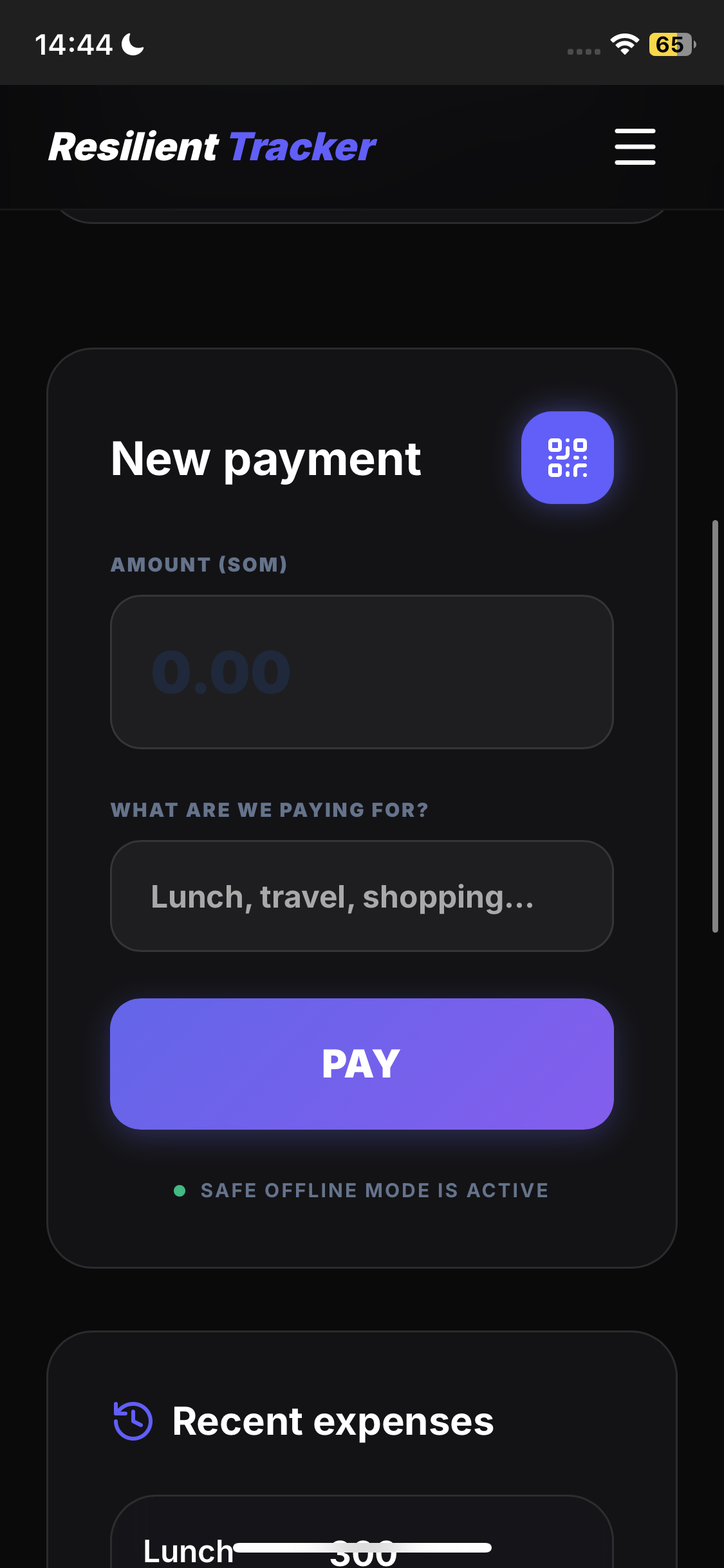
In Kyrgyzstan, the digital economy is booming—QR payments grew 20x in just the first half of 2025. But infrastructure hasn't kept up. We found that 27% of transaction failures are due to server crashes, electricity blackouts, or weak connectivity. This leaves our most vulnerable users—teenagers (13–18)—stranded at bus stops or school cafeterias without cash and without a working app. We realized that true financial inclusion requires resilience. We set out to build a payment system that works even when the internet doesn't.
🤖 Gemini 3 Integration: The Reasoning Engine
We didn't just want an offline app; we wanted an intelligent one. We integrated the Gemini 3 API to power the core logic of ResilientPay:
Predictive Reasoning (Gemini 3 Flash): Instead of reactive alerts, we use Gemini’s advanced reasoning capabilities to analyze historical infrastructure data and real-time network logs. The model calculates a dynamic "Risk Score" for the user's geolocation. If the model reasons that a blackout is imminent, it proactively nudges the user: "High probability of network failure in 2 hours. Caching 200 SOM for offline use."
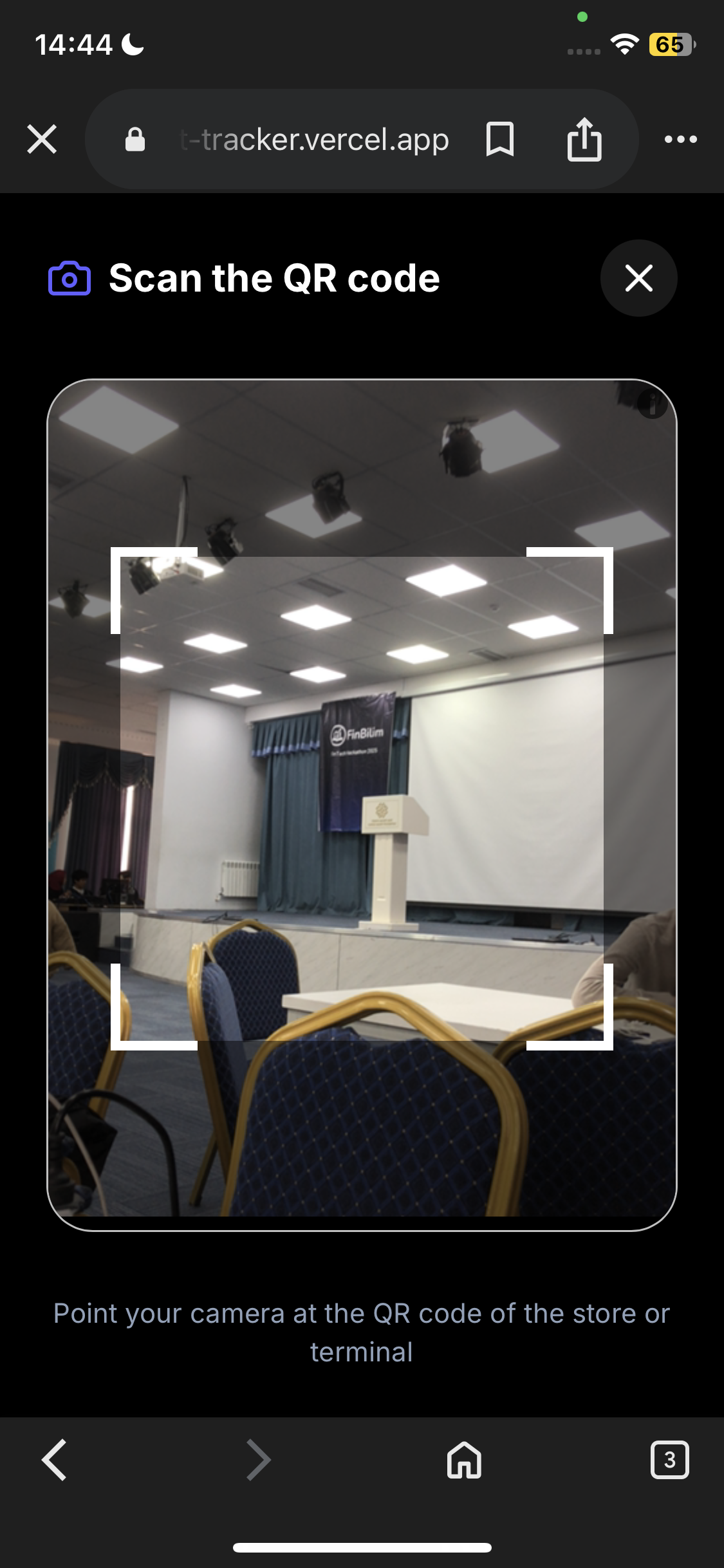
Multimodal Transaction Parsing: In rural areas, digital QR codes aren't always available. We leverage Gemini 3's multimodal vision to let users scan handwritten IOUs or physical paper receipts. The model instantly parses this unstructured visual data into a verified digital transaction intent, which is then stored in our offline vault.
🛠️ How we built it
Architecture: We adopted an "Offline-First" approach.
Mobile Core: Built with [Flutter / React Native / MIT App Inventor] for cross-platform compatibility.
Backend: Firebase handles data persistence and synchronization when connectivity is restored.
AI Layer: We used Google AI Studio to prompt-engineer Gemini 3, optimizing for low-latency JSON outputs that our mobile app can parse easily, even on low-end devices.
🚧 Challenges we ran into
The biggest challenge was "Reasoning at the Edge." We had to ensure that Gemini's insights were delivered efficiently before the network cut out completely. We experimented heavily with Gemini 3's context window to balance between detailed infrastructure analysis and speed (latency). Another hurdle was ensuring that the "Offline Tokens" generated by the app were cryptographically secure so they couldn't be tampered with before syncing.
🏅 Accomplishments that we're proud of
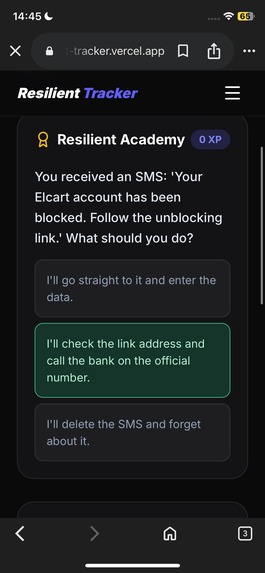
We successfully built a working prototype that bridges the gap between high-tech AI and low-tech infrastructure. We are proud of our Gamified Literacy module, where Gemini generates unique, context-aware cybersecurity scenarios for each student, turning financial safety education into an engaging game rather than a chore.
📖 What we learned
We learned that latency saves lives (or at least, lunch money). The speed of Gemini 3 Flash allowed us to implement real-time checks that wouldn't have been possible with older, heavier models. We also deepened our understanding of the specific financial constraints facing teenagers in Central Asia.
🚀 What's next for ResilientPay
Pilot: deploying the MVP to 10 schools in Bishkek and Osh.
Voice Integration: Using Gemini 3's native audio capabilities to create a hands-free interface for visually impaired students.
Scale: Partnering with local banks to feed our "Outage Prediction" data back into the national financial ecosystem.
Built With
- figma
- gemini3
- nextjs
- react
- sql
- supabase
- tailwindcss
- typescript
- vercel


Log in or sign up for Devpost to join the conversation.