Inspiration
Our inspiration was the devastating wildfires in Los Angeles. With so many homes burned down, there was an incredible amount of loss, both material and emotional. One positive thing that does come out in times of crisis, though, is community banding together - the inspiration behind Resilient!
What it does
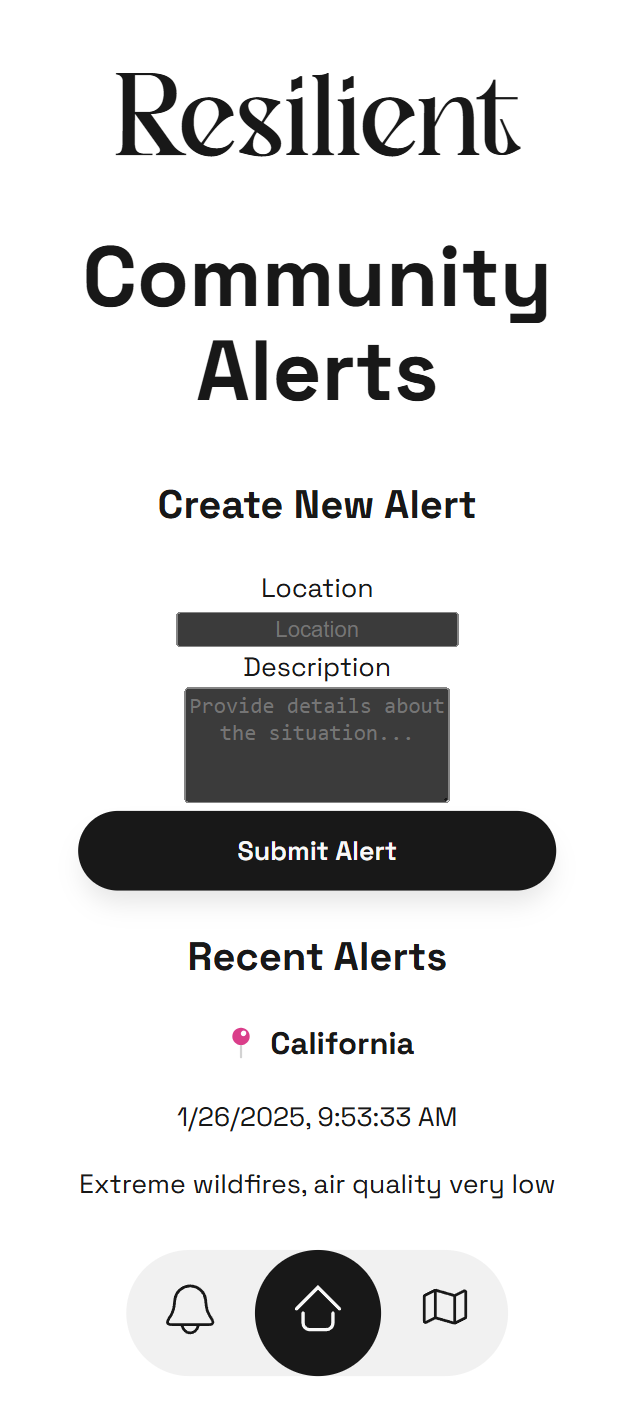
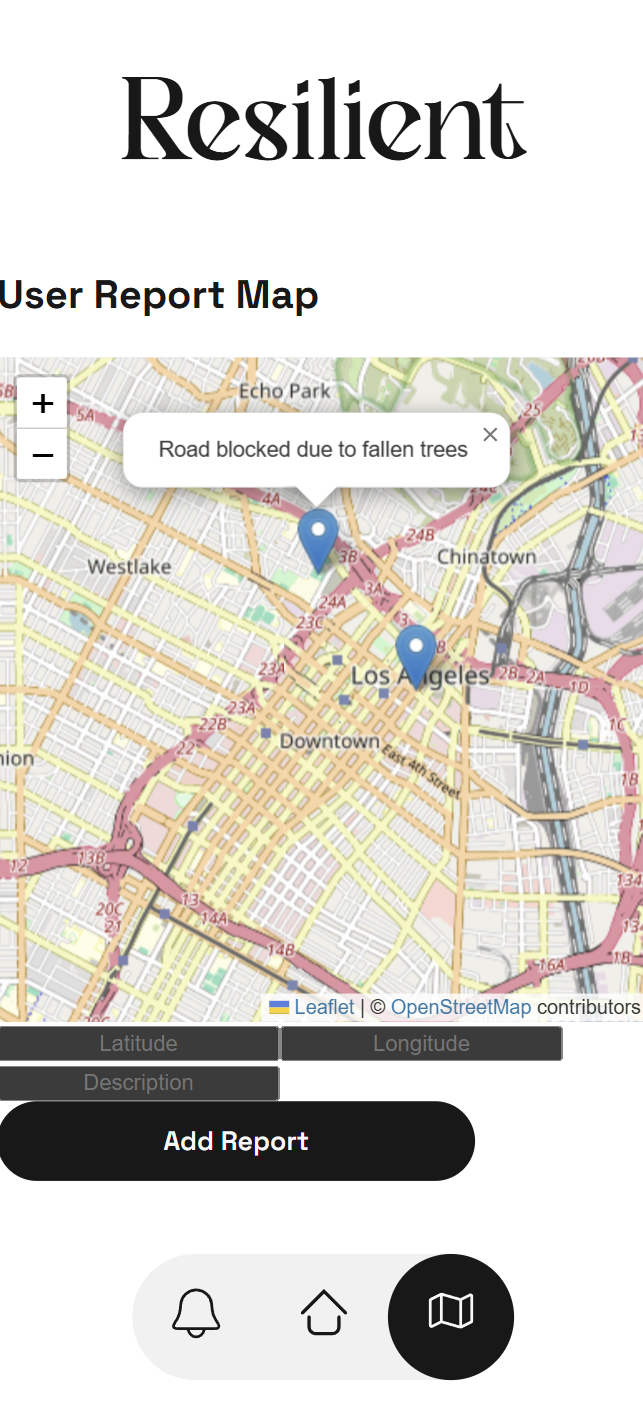
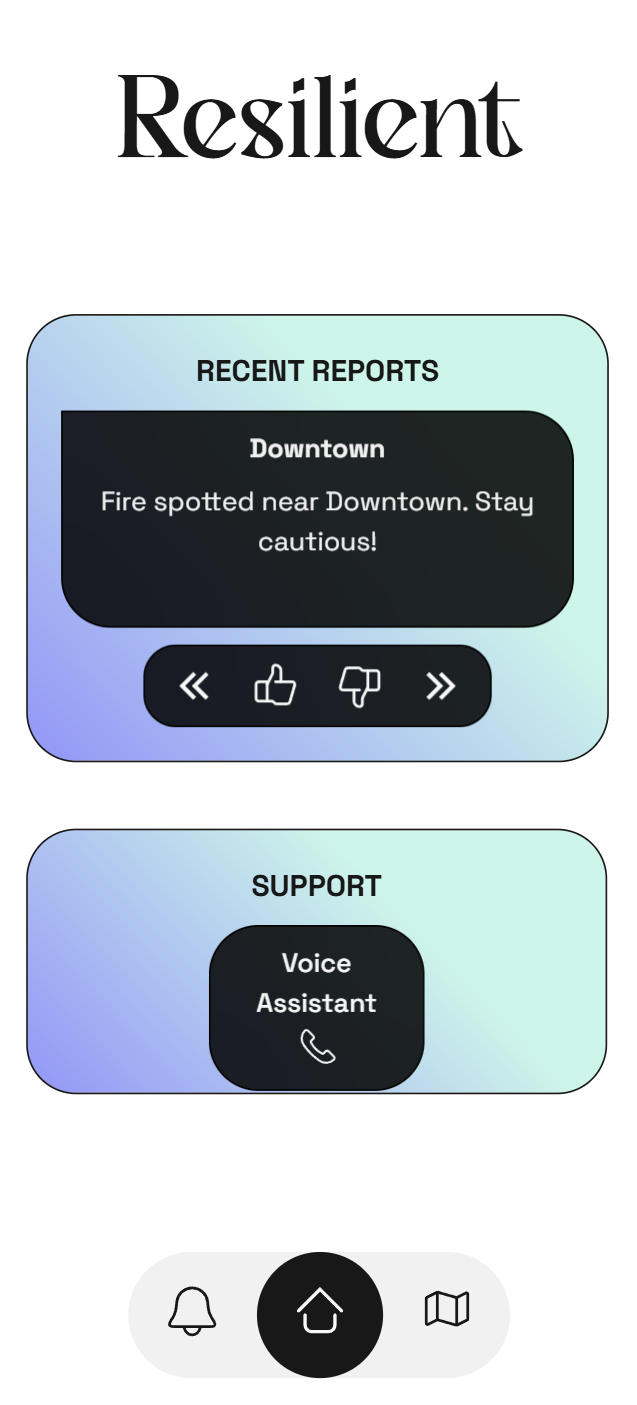
Our web app allows users to report critical information relating to wildfires (and more generally any natural disaster) and rate other information present on the app. With our sophisticated algorithms that factored in a rater's proximity to the incident location, the time since the report was posted, and the user's trust score, we were able to ensure that verified info gets to the top - and we also use this verified info as a knowledgebase for our Voiceflow AI voice agent to keep it accurate in realtime!
How we built it
We leveraged React + Vite for our frontend and used Google Cloud functions to serverlessly manage our backend logic (knowledgebase updating, Firebase DB management, info rating/voting algorithm). For our AI voice agent, we leveraged Voiceflow to create the flow of the conversation and Twilio to connect our agent to a phone number. We also utilized Voiceflow's KnowledgeBase API to dynamically update our agent's knowledge everytime a report got verified since realtime information is critical in life or death situations. Our frontend was deployed on Vercel and is linked to our backend logic by Google Cloud functions and Firebase.
Challenges we ran into
Oh there were a lot... Due to unforeseen circumstances, our team had a late start to hacking which already meant we were behind, and we really wanted to flesh out the idea, so we didn't start development until quite late. Once we did, the problems just kept on piling up - from switching back and forth between using Node.js with AWS EC2 vs just using Google cloud functions to constant issues with getting our AI agent to work properly (probably because we're noobs at Voiceflow), the issues just never stopped. We solved most of these challenges, but just due to the sheer lack of time, even after staying up the whole night (seriously, just got half an hour of sleep), our project was not polished to our standard. We feel that the idea is so great and applicable to what's happening in our world right now (especially with climate change initiatives facing roadblocks now that the U.S. has backed out of the Paris agreement), that we just had to build it even if it was an ambitious goal.
Accomplishments that we're proud of
- Getting our frontend to be functional after spending so much time on the design, only to let many design elements fall through at the end since we ended up having to prioritize functionality so we can present an MVP
- Getting our voice AI agent LIVE WITH A PHONE NUMBER!!! (super cool Twilio integration that Voiceflow has)
- Creating a sophisticated (yet one that has many opportunities for improvement) algorithm for weighing ratings in the app
- Making a killer powerpoint presentation that we're hyped to present to judges along with our demo as evidence of why our idea makes business sense
What we learned
- How to stay up all night and not get violent...
- How to use Google cloud functions and Firebase
- How to deploy a React frontend to Vercel
- How to properly assess feasibility (financials and non-financials)
- Why project scope is important
- How to use Voiceflow + Twilio to build production-ready voice agents
- Uses of AI beyond maximizing shareholder value
What's next for Resilient
- Going to improve the Voiceflow agent by adding logic that allows it to calculate distances to verified reports of danger areas to more accurately let the caller know if they are in danger or not
- Employ statistical prediction methods + ML algorithms to analyze verified reports and do preventative maintenance
- Use custom LLMs like Deepseek (notoriously cheap) to make project more feasible at large scale and cut latency times
Built With
- figma
- firebase
- google-cloud
- javascript
- react
- vercel
- vite
- voiceflow


Log in or sign up for Devpost to join the conversation.