Inspiration
AI agent demos usually assume every model, tool server, and memory store is healthy. Real production systems fail. We built Resilient Agents Lab to show what users should see when an agent hits outages, latency, brownouts, or missing tool data.
What it does
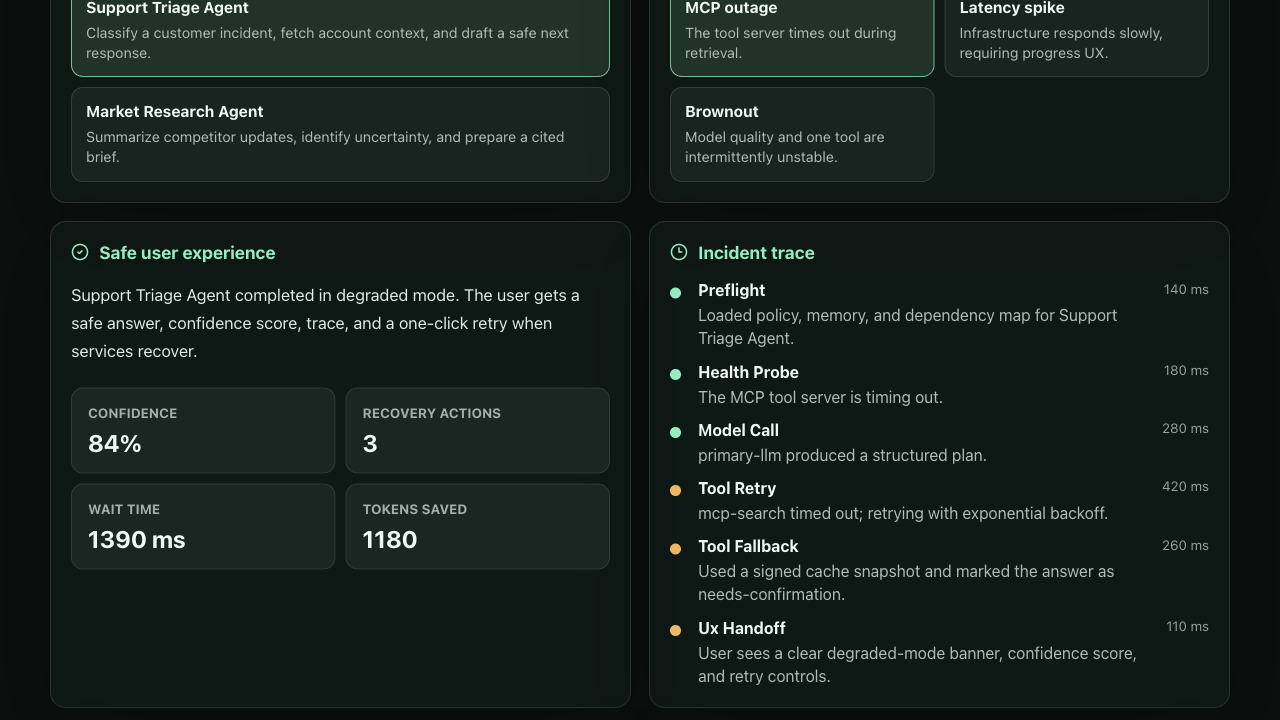
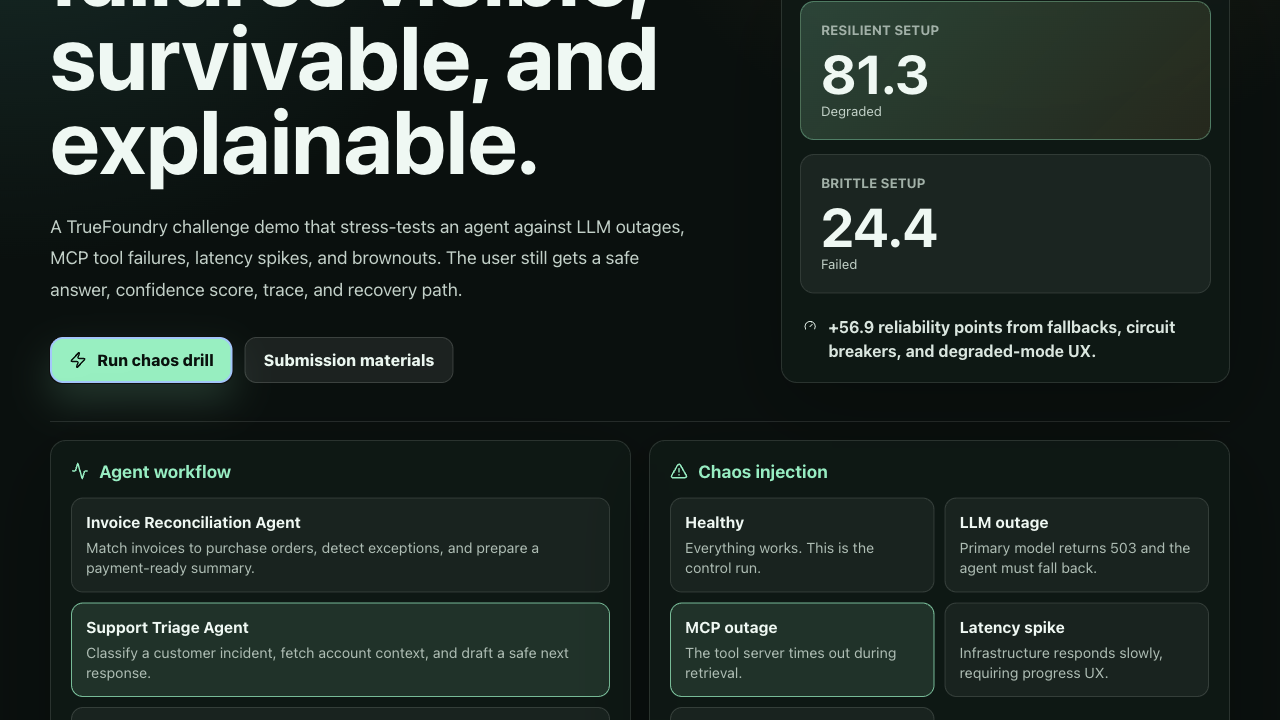
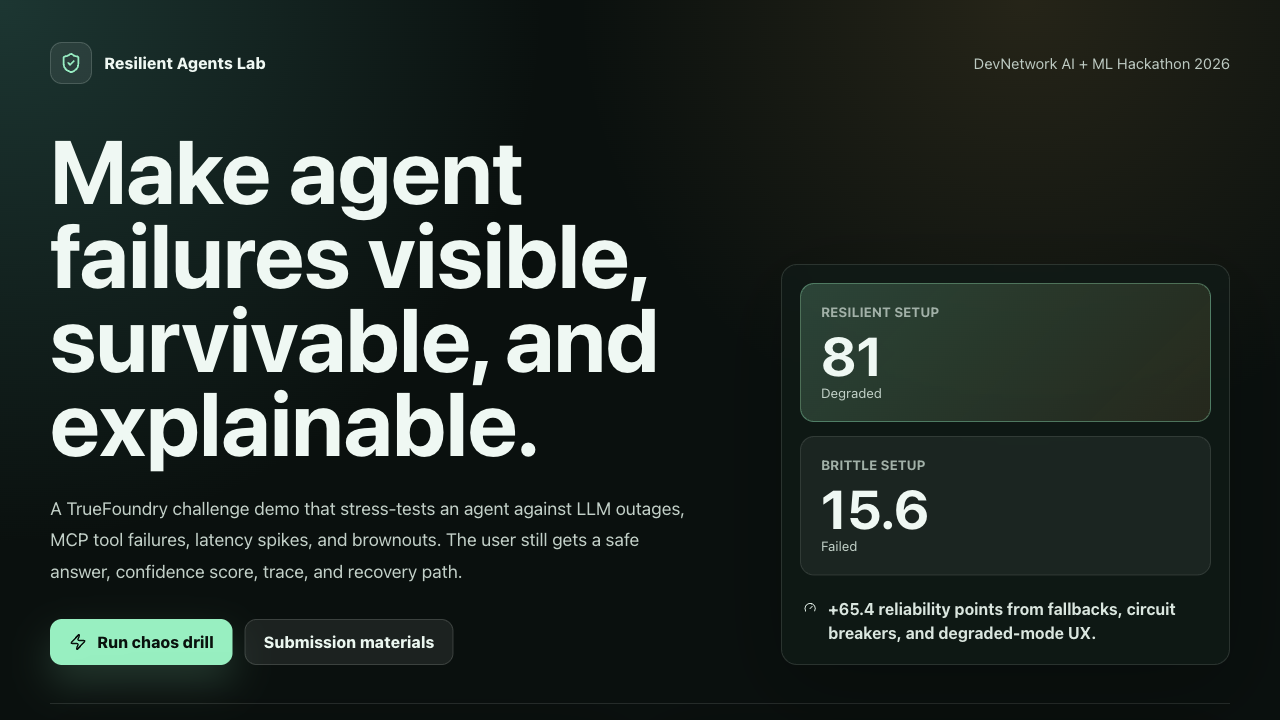
Resilient Agents Lab simulates agent workflows under failure. It lets judges inject LLM outages, MCP tool failures, latency spikes, and brownouts, then compares a brittle agent with a resilient one using fallbacks, retry budgets, circuit breakers, degraded-mode UX, confidence scores, and incident traces.
How we built it
We built a local-first React, TypeScript, and Vite app with a deterministic resilience simulator. The simulator models dependency health, failure modes, fallback behavior, recovery actions, latency, confidence, and reliability scores. Vitest covers the core simulator behavior.
Challenges we ran into
The hardest part was making resilience understandable without requiring real API keys or unsafe production dependencies. We kept the demo deterministic so judges can reproduce every scenario while still showing realistic failure-handling patterns.
Accomplishments that we're proud of
We built a working, testable demo that turns backend failure handling into a clear user experience. The app does not just say an agent is resilient; it shows the score difference, recovery path, degraded-mode answer, and phase-by-phase trace.
What we learned
Good agent resilience is not only backend engineering. Users need to know when an answer is degraded, what data is uncertain, what recovery action happened, and when they should retry.
What's next for Resilient Agents Lab
Next, we would connect the simulator to live agent infrastructure, add real observability traces, support custom dependency maps, and turn the demo into a lightweight resilience test harness for production AI agent teams.
Built With
- lucide-react
- react
- typescript
- vite
- vitest

Log in or sign up for Devpost to join the conversation.