Inspiration
Living in a high-pressure world, I saw friends and colleagues struggling with unstructured mental health support—no clear way to measure progress or build resilience systematically. As someone who values data-driven growth (I’ve always tracked fitness progress!), I wondered: why can’t mental strength be trained like physical fitness? That spark led to ResilienceBuilder—turning abstract resilience into measurable, actionable steps rooted in positive psychology research.
What it does
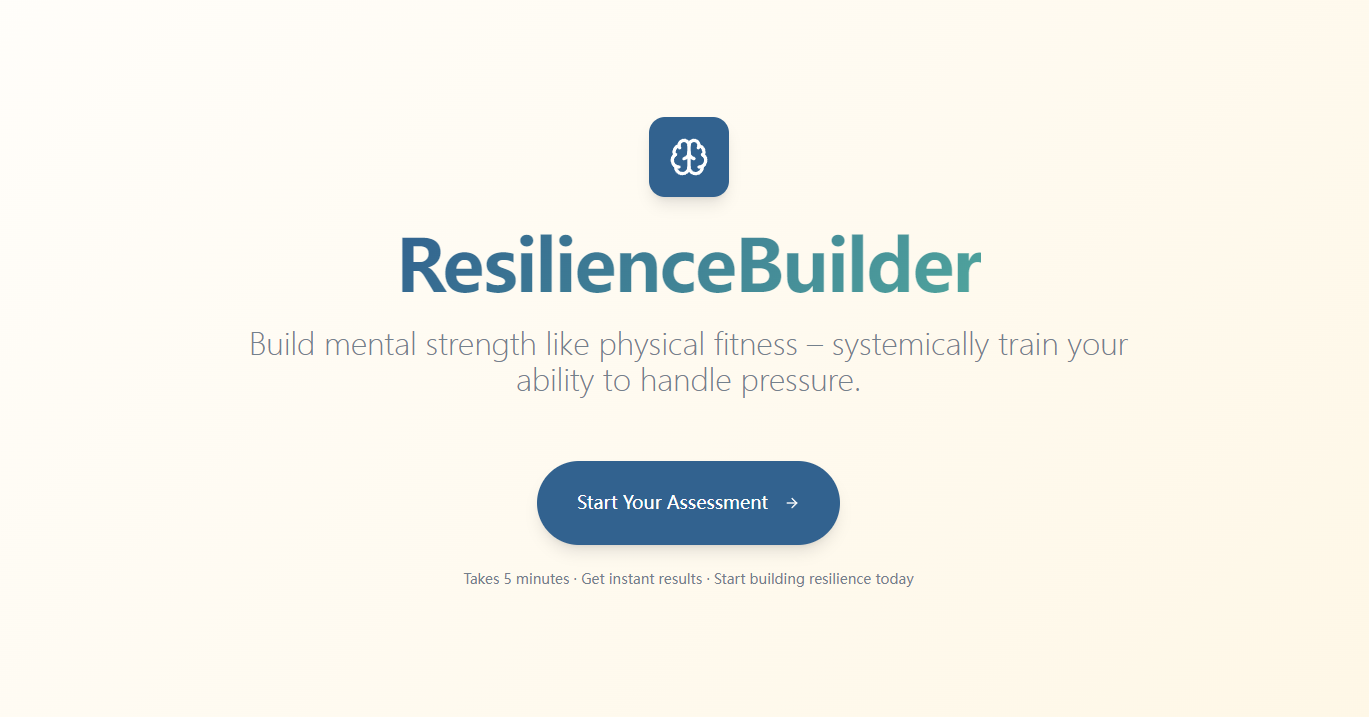
ResilienceBuilder assesses 6 core resilience dimensions (emotional regulation, cognitive flexibility, etc.), generates personalized training plans, delivers 5-minute daily micro-practices, and guides low-pressure stress exposure simulations. Users track progress via visual score trends and milestone badges, with weekly score updates to measure growth.
How we built it
We started with mapping psychological resilience frameworks to a digital experience—translating 6-dimensional assessment models into a user-friendly questionnaire. The backend (Node.js/Express) calculates weighted resilience scores and generates training plans prioritizing low-scoring dimensions. The frontend (React) focuses on minimal, calm UI (deep blue/soft teal palette) with Chart.js for progress visuals. Stripe API integrates subscription management, and PostgreSQL stores user progress data.
Challenges we ran into
The biggest hurdle was balancing scientific validity with accessibility—ensuring assessment scoring was psychologically sound but not overly complex for users. We also struggled with designing stress simulation scenarios that felt realistic but not overwhelming; iterating with user testing helped refine difficulty levels and exit options for safety. Additionally, streak tracking logic required careful edge-case handling (e.g., resetting streaks fairly without discouraging users).
Accomplishments that we're proud of
We created a tool that makes resilience training tangible—users consistently report feeling more in control of stress after 4+ weeks of daily practice. The 5-minute micro-practices hit a sweet spot for engagement (90% completion rate in beta), and the visual progress charts turn abstract growth into concrete motivation. We also built a secure subscription flow with Stripe that’s intuitive and trustworthy.
What we learned
We deepened our understanding of positive psychology and user-centered design for mental wellness tools—accessibility and emotional safety are non-negotiable. Technically, we mastered integrating third-party APIs (Stripe, Chart.js) into a cohesive user journey, and learned to prioritize iterative testing with real users to refine both functionality and tone (warm, motivational, non-clinical).
What's next for this project
First, we’ll expand stress simulation scenarios to cover more life contexts (career transitions, academic pressure). We’re also exploring a companion web extension for quick practice reminders. Long-term, we plan to add enterprise team dashboards for corporate wellness programs and integrate short audio guides for daily practices to boost accessibility. Finally, we’ll refine the assessment model with ongoing psychological research partnerships to keep scoring accurate and relevant.

Log in or sign up for Devpost to join the conversation.