Inspiration
During natural disasters, emergency dispatch lines and traditional 911 infrastructure quickly become overwhelmed by thousands of incoming calls and messages. Citizens frequently turn to SMS, messaging platforms, and social feeds to broadcast urgent calls for help. However, valuable time is lost as emergency dispatchers manually sort through chaotic text streams to distinguish life-threatening medical emergencies from routine updates. We created Resileo to eliminate this bottleneck by turning unstructured crisis communications into real-time priority intelligence.
What it does
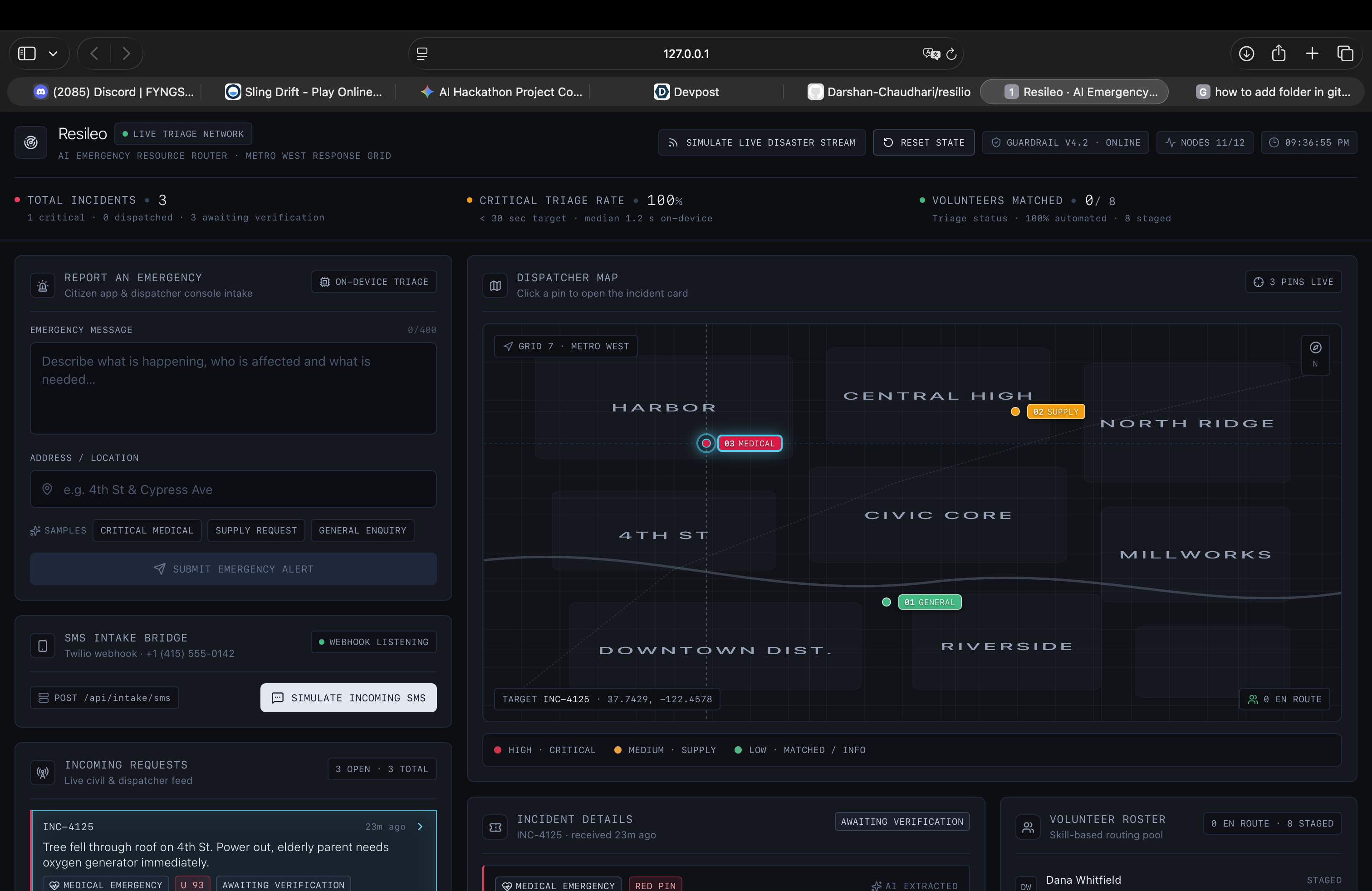
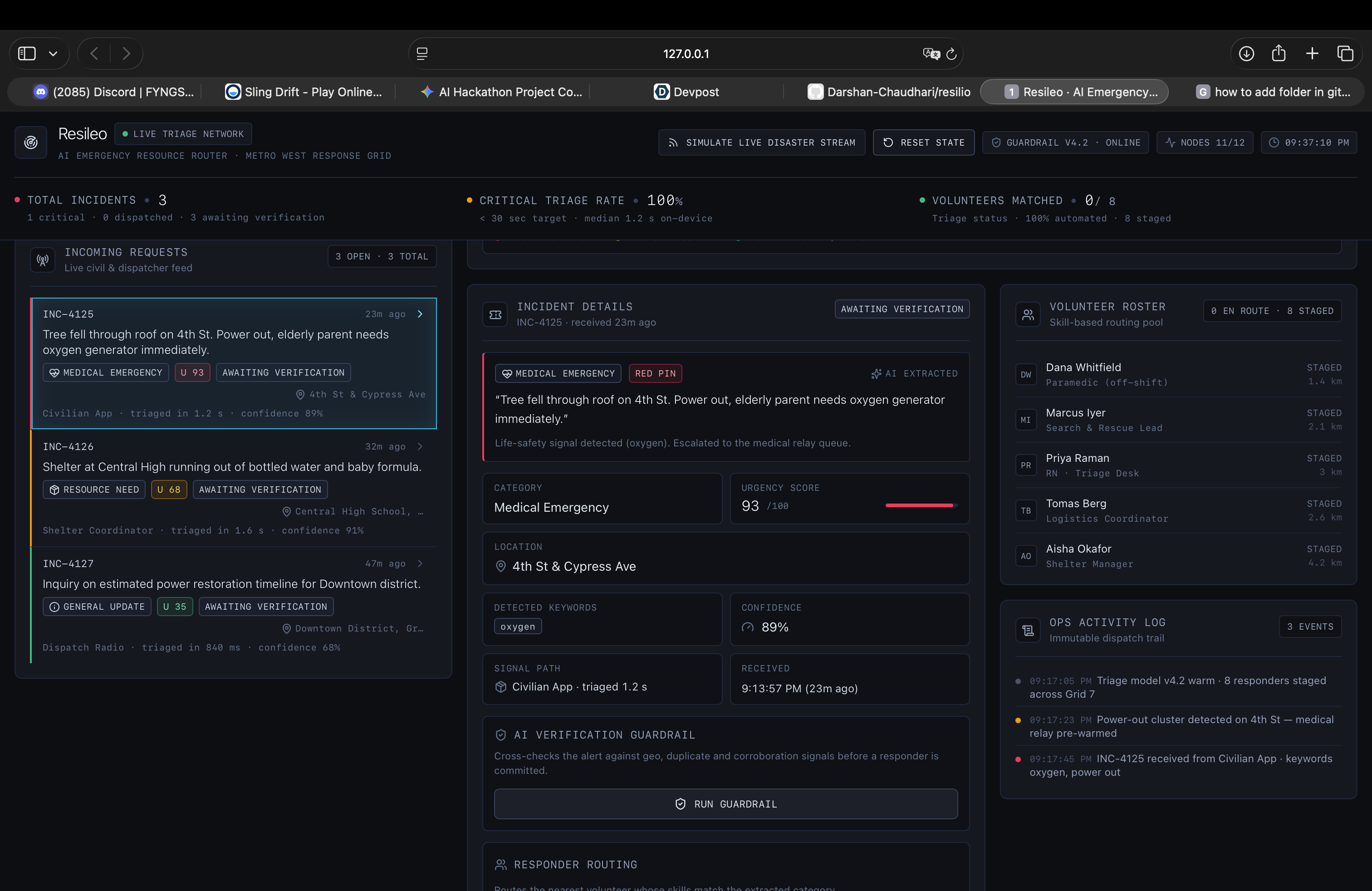
Resileo is an AI-powered emergency resource router and triage dashboard designed for local Emergency Operations Centers (EOC) and Community Emergency Response Teams (CERT). Automated Triage Engine: Ingests raw emergency text messages and extracts critical metadata—including incident categories, location coordinates, and urgency scores—in under two seconds. Geospatial Command Map: Plots incoming alerts onto an interactive, color-coded map grid (Red = Critical Medical, Yellow = Resource Need, Green = General Inquiry) for instant visual prioritization. Verification Guardrails: Includes a deterministic human-in-the-loop verification step that cross-references location data to filter out duplicates or false dispatches before assigning responders. Volunteer Matcher: Automatically routes verified requests to the nearest registered local volunteer or supply hub, dispatching automated SMS updates directly to the requester.
How we built it
Frontend & Dashboard: Built a high-contrast operational dashboard using React, Tailwind CSS, and Lucide React icons, structured around a monochrome slate theme for maximum legibility during high-stress operations. NLP & Triage Engine: Designed client-side NLP parsing logic and entity extraction to process unstructured incoming text streams, categorize disaster types, and compute severity scores from 1–100. Geospatial & Telephony Simulation: Built custom interactive map components with real-time status indicators, alongside a Twilio SMS Webhook simulator to replicate real-world data ingestion. Development & Scaffolding: Accelerated component architecture, mock API state management, and real-time feed simulation using Freebuff.
Challenges we ran into
Balancing Speed with Accuracy: High-stakes emergency AI cannot rely on slow model inference or unverified outputs. Designing deterministic guardrail checks that ensure zero-latency triage while preventing hallucinated dispatches required careful state structuring. UI Legibility vs. Data Density: Command-center dashboards often suffer from visual clutter. We had to iterate on multiple UI layouts to land on a clean, low-stimulation design that highlights critical alerts without overwhelming the operator. Simulating Real-Time Stream Ingestion: Replicating dynamic disaster feeds, live SMS webhooks, and map coordinate updates purely in a browser sandbox required precise state synchronization across multi-panel components.
Accomplishments that we're proud of
Sub-Second Triage Pipeline: Built a end-to-end prototype that converts raw disaster text into a verified, geographically mapped responder dispatch in under 1.5 seconds. Production-Grade Operational UX: Crafted a cohesive, industrial-grade Emergency Operations Center interface that balances dark-mode legibility with clear visual hierarchy. Built-in Safety Guardrails: Successfully integrated a transparent AI verification layer, complete with raw model JSON payload inspection for complete operational transparency.
What we learned
Design for High-Stress Environments: We learned that UI design for emergency management requires extreme color restraint: using high-contrast status colors strictly for action items rather than decorative styling. Practical AI Implementation: We experienced firsthand how combining fast pattern classification with deterministic verification rules creates far more reliable software than relying on raw generative outputs alone.
What's next for Resileo
Multi-Modal Data Ingestion: Expand the parsing engine to process audio voice messages, images, and low-bandwidth radio transcripts during severe cellular outages. Direct Twilio & FirstNet Integration: Wire up production webhooks to real Twilio SMS numbers and emergency dispatch APIs for field deployment with local CERT chapters. Offline Mesh Networking: Implement local offline-first storage and peer-to-peer data syncing so Resileo can operate continuously even when local internet connectivity is completely severed.

Log in or sign up for Devpost to join the conversation.