-
-
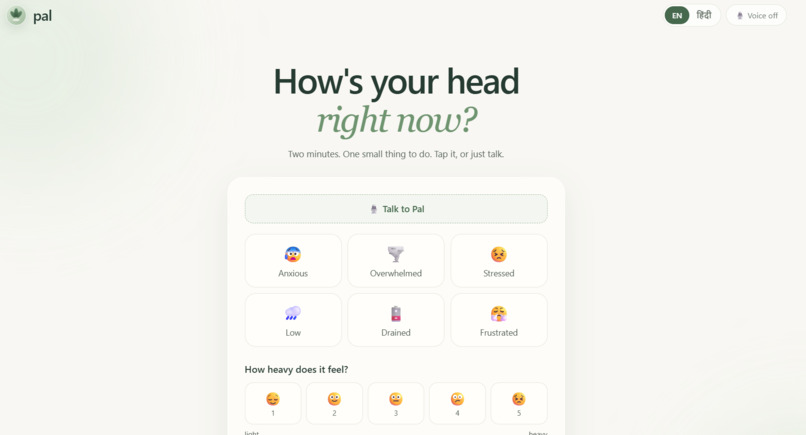
pal lets users select how they're feeling and begin a short, guided reset in English or Hindi.
-
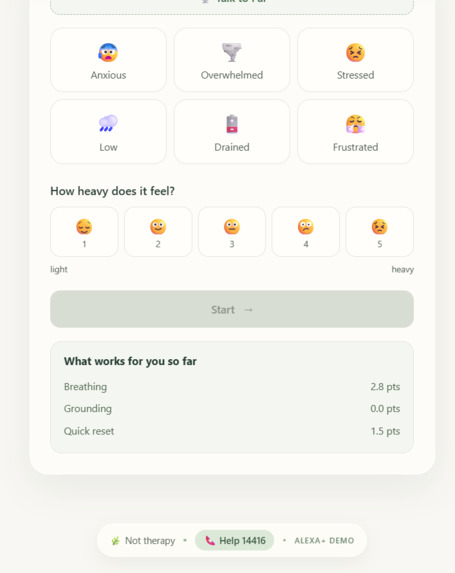
Each session offers a small activity, such as guided breathing or grounding, with spoken cues and tap-based alternatives.
-
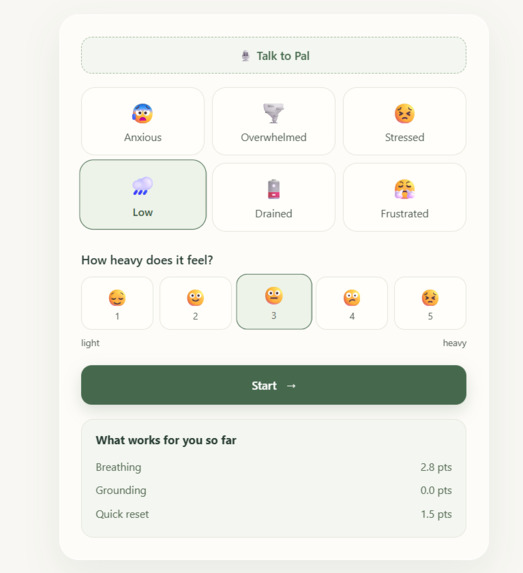
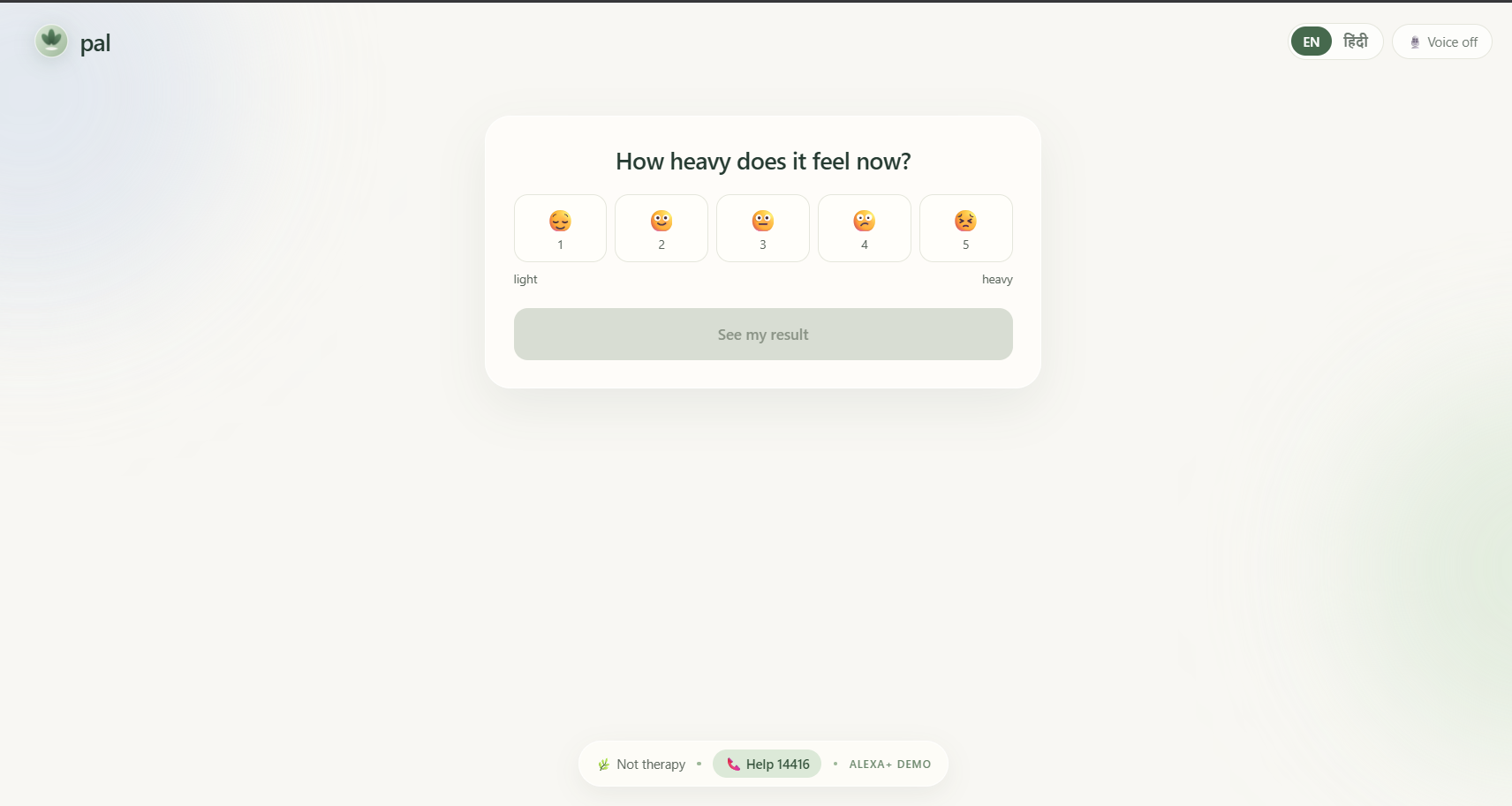
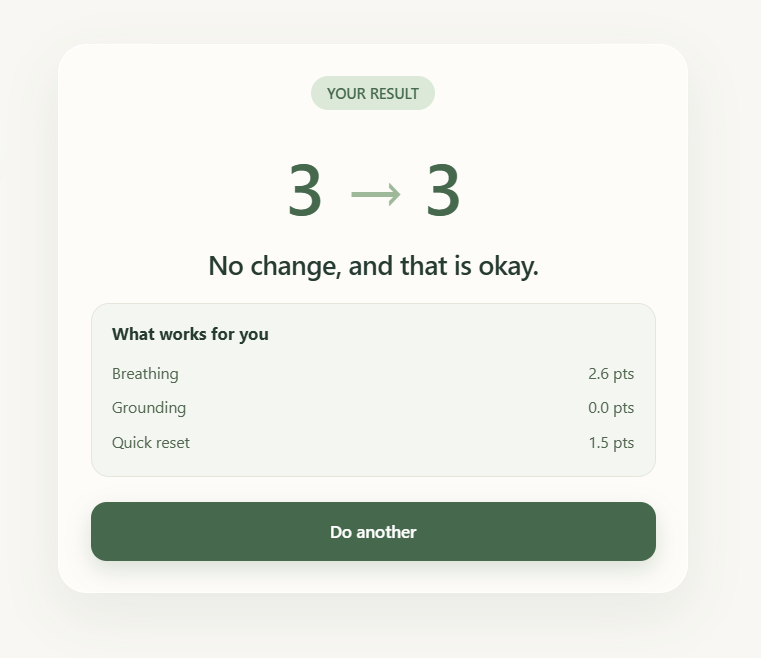
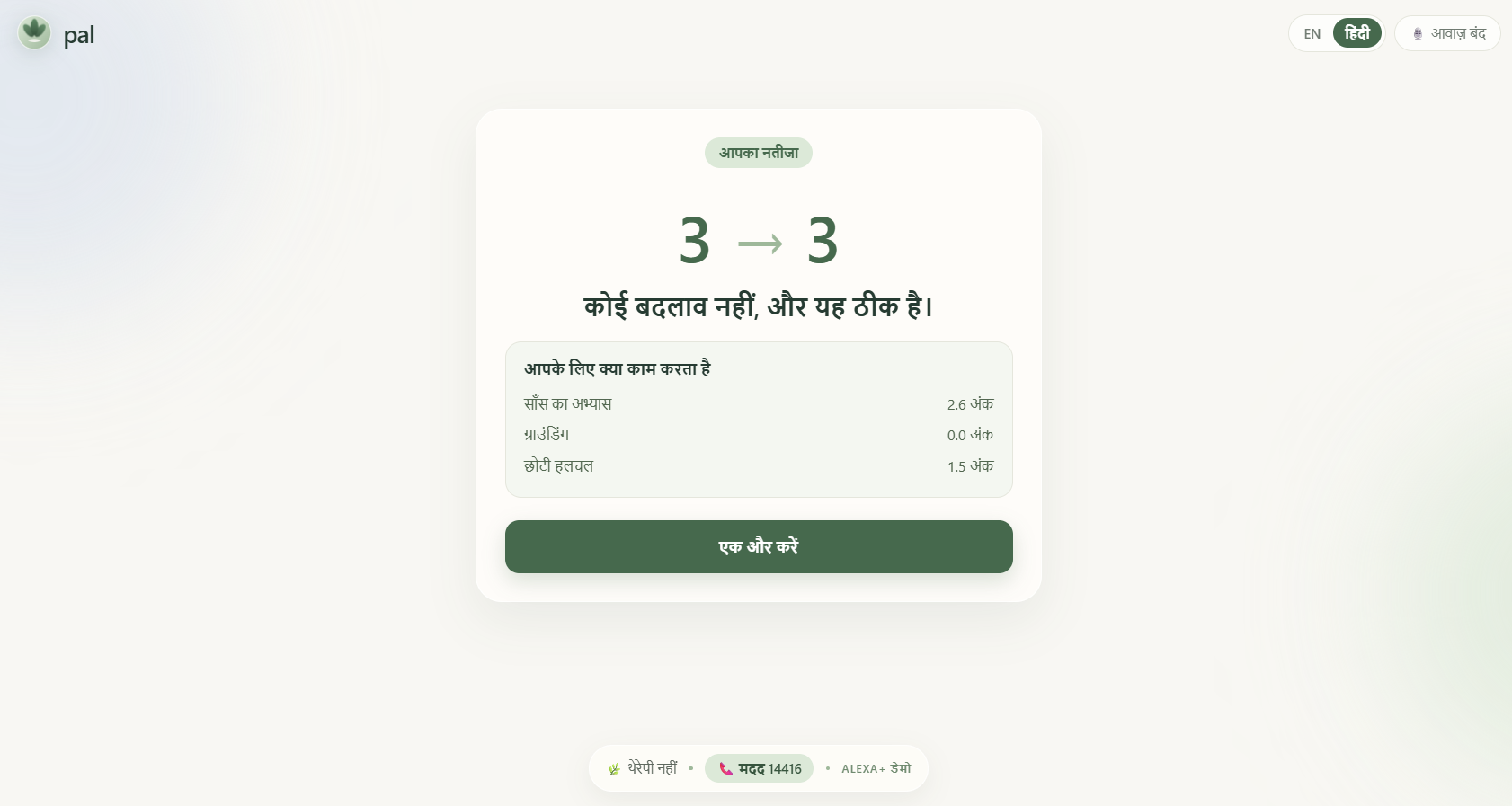
Users rate their heaviness before and after an activity to see how their feelings changed during the session.
-
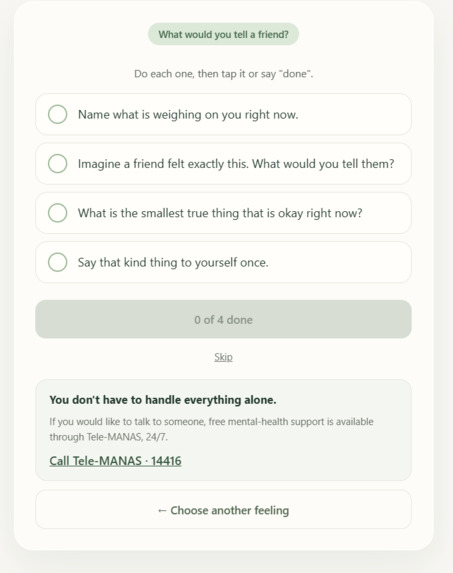
Each session offers a small activity
-
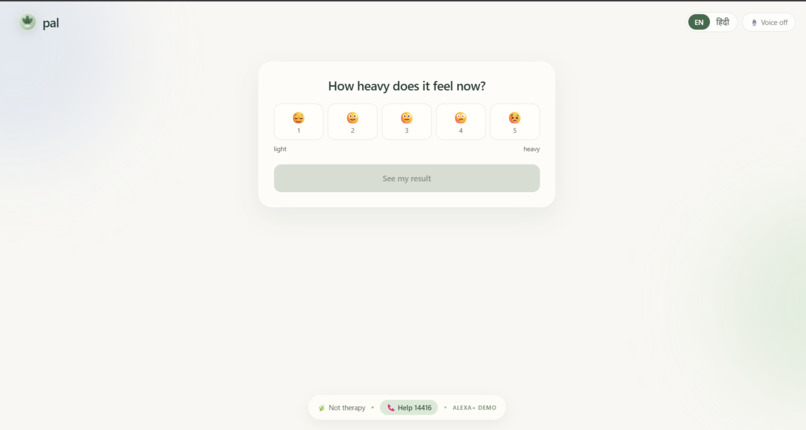
Users rate their heaviness before and after an activity to see how their feelings changed during the session.
-
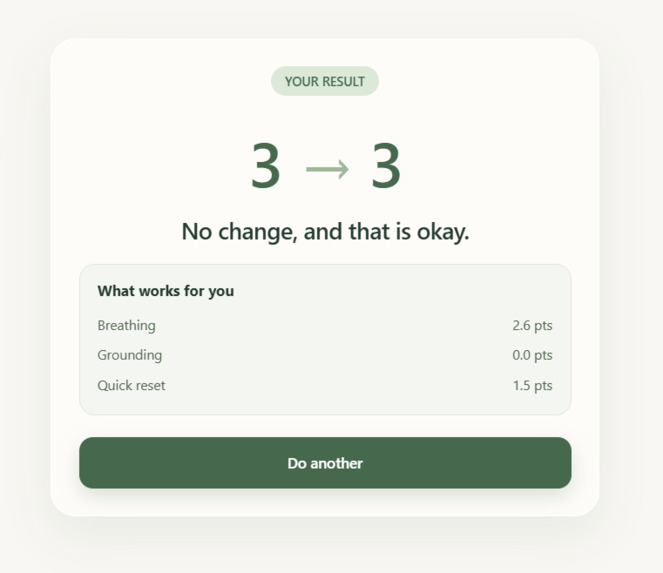
pal uses saved session ratings to compare activity types and guide future selections based on the user's recorded results.
-
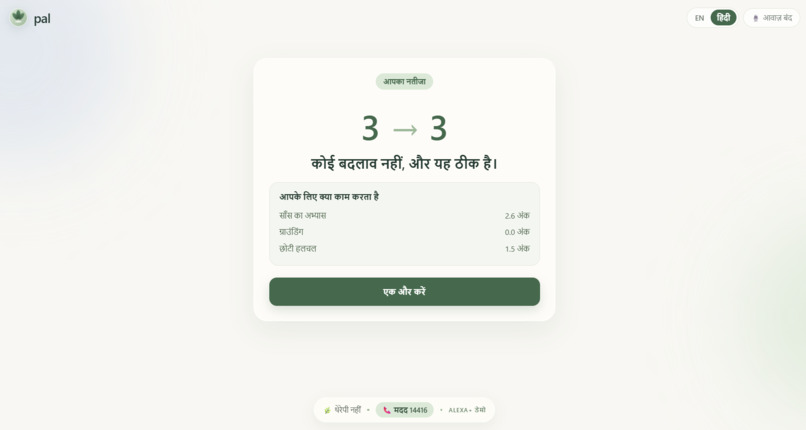
Users can switch between English and Hindi for the interface and supported activities.
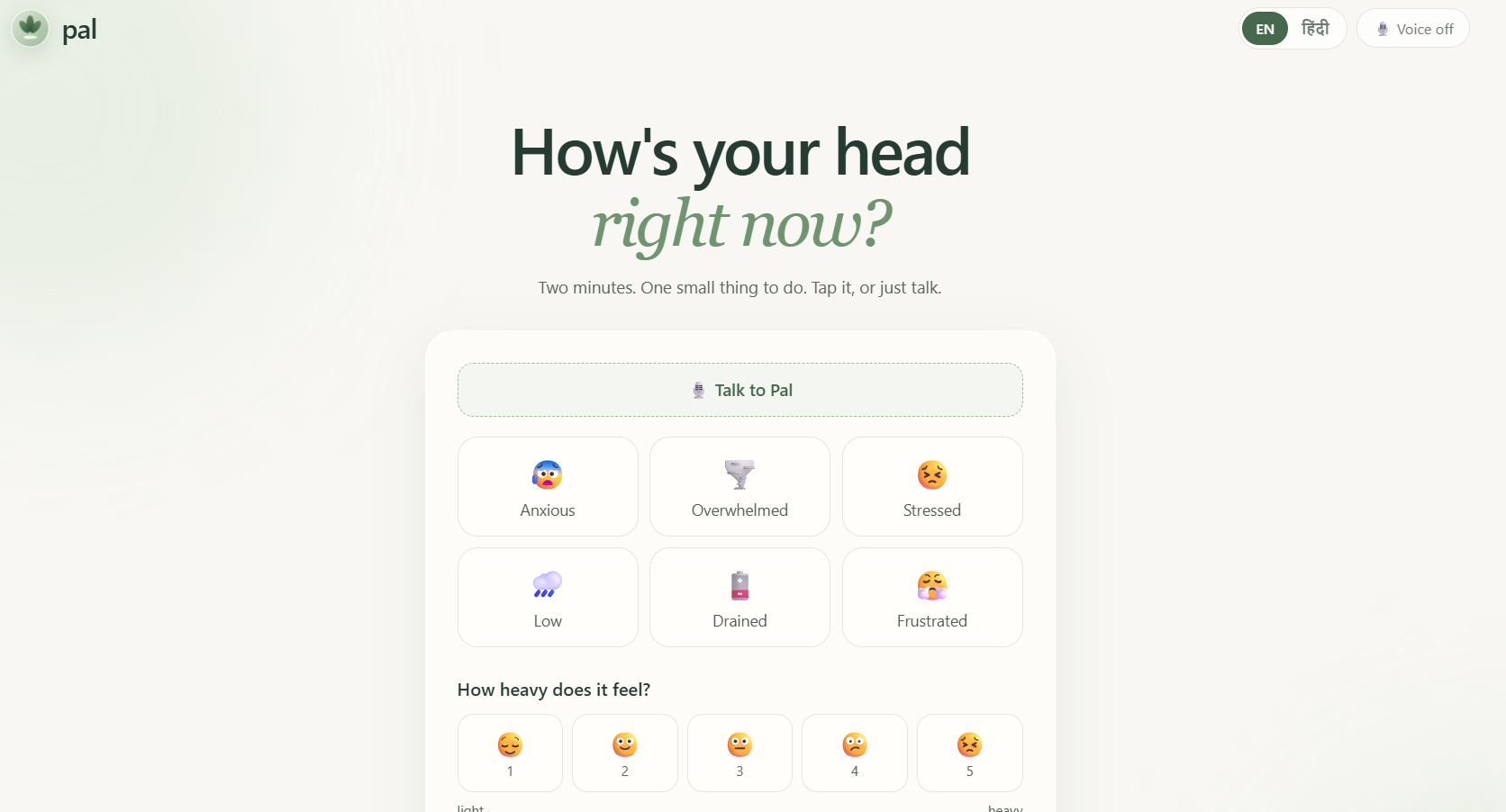
pal — A Two-Minute Mind Reset
Inspiration
Sometimes you feel anxious, overwhelmed, mentally exhausted, or simply unable to focus. When that happens, reading a long article or searching for a meditation exercise can feel like another task.
We wanted to build something that helps people pause and reset in the moment.
Inspired by the idea of a voice-first assistant, pal (पल) — meaning a moment — offers a short, guided experience that helps users slow down, reconnect with the present, and reflect on how they feel.
The goal isn't to solve every problem in two minutes. It's to make taking a small pause easier.
What it does
pal is a bilingual, voice-first mental wellness prototype built around short, guided activities.
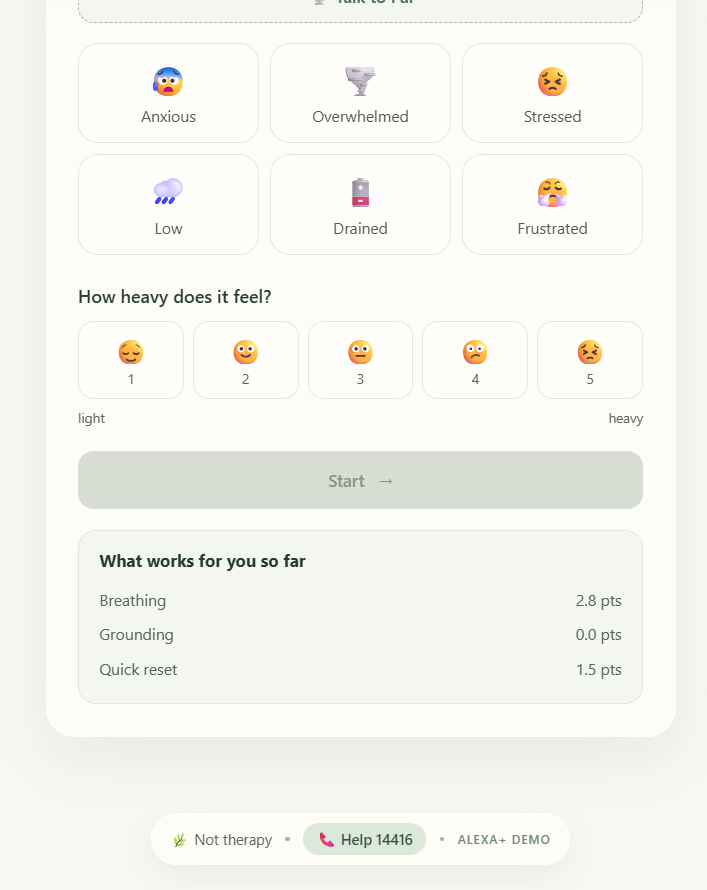
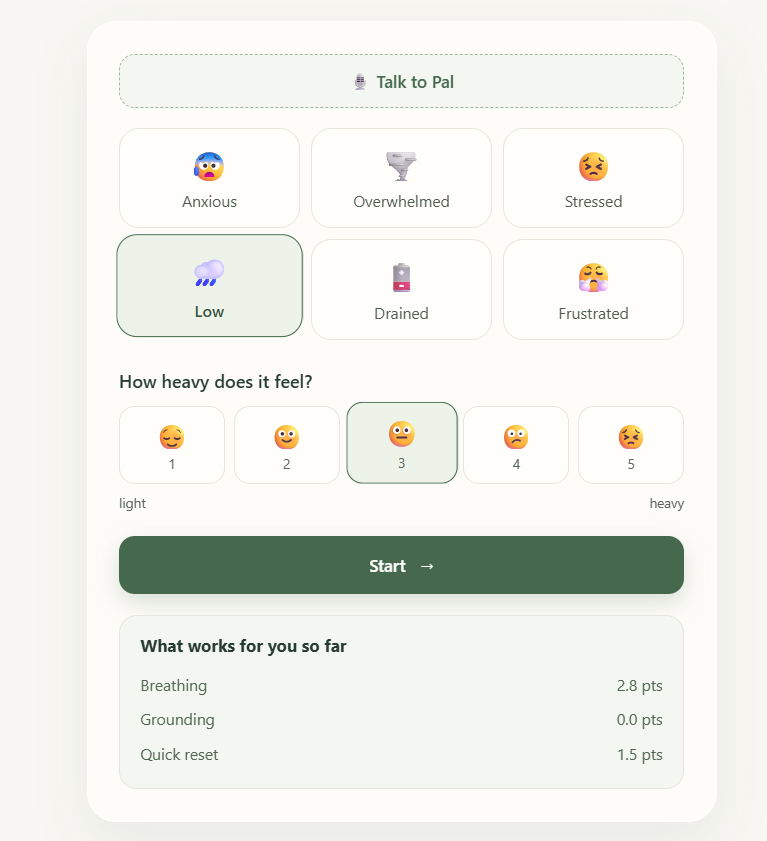
- Start with how you feel: Choose from several moods, including anxious, overwhelmed, stressed, sad, tired, and frustrated.
- Rate your mental heaviness: Record how heavy you feel on a scale of 1–5 before and after the activity.
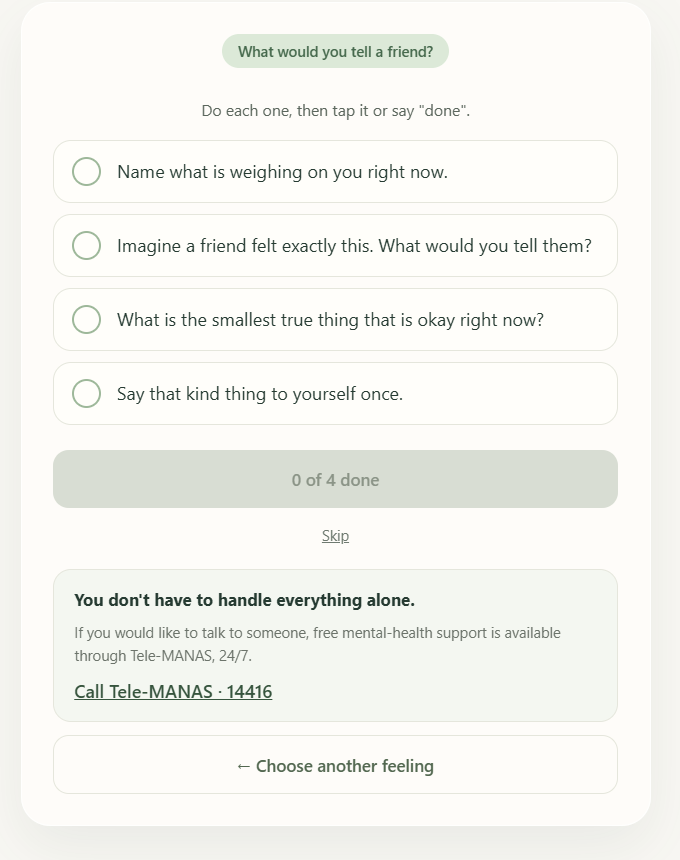
- Try a guided reset: The app provides breathing exercises, grounding prompts, reframing exercises, or a quick checklist-based activity.
- Talk or tap: Use spoken prompts and speech recognition where supported, or complete the experience using the regular interface.
- Switch languages: Use the interface in English or Hindi, with localized activity content and voice interaction.
- Reflect on the result: Compare your before-and-after ratings and view activities that have been helpful in previous sessions, when enough history is available.
- Find support: The interface provides access to India's Tele-MANAS mental health helpline at 14416 and displays additional support messaging when relevant.
pal is a wellness prototype, not a diagnostic tool, a therapist, or a substitute for professional care.
How we built it
The frontend is built with React and Vite. It manages the mood-selection flow, ratings, activity player, language selection, voice controls, and results screen.
The browser's Web Speech APIs provide speech synthesis and speech recognition. The app includes timeouts, retries, microphone-permission handling, and manual interaction paths to make the experience more resilient when voice input is unavailable or unreliable.
The interface supports English and Hindi through a shared localization layer. Activity content is localized before being displayed, and the selected language is retained between visits where browser storage is available.
The frontend communicates with a FastAPI backend for reset selection, result submission, and retrieval of previously helpful activities.
MCP integration: The project also uses a Model Context Protocol (MCP) server to expose the reset workflow through tools. The exact tool definitions, transport, persistence implementation, and selection logic should be described here according to the final backend code and verified demo.
Challenges we faced
- Making voice interaction feel natural without allowing speech recognition to capture the tail end of the app's own spoken prompts.
- Handling missing microphone permissions, silence, recognition failures, and unsupported browser features without removing the manual experience.
- Supporting Hindi as an interaction language rather than translating only the visible interface.
- Designing a short activity flow that works for different moods without presenting the result as a clinical assessment.
- Displaying useful historical feedback without implying that a small amount of user data proves an activity will work for everyone.
What we're proud of
We're proud of building a complete user-facing flow: a person can choose a mood, record how they feel, complete a guided activity, rate their experience again, and view the result.
We also focused on practical details that are easy to overlook in a demo: bilingual controls, persistent language selection, voice fallbacks, accessible interaction states, and visible access to support resources.
Most importantly, pal is designed around a small, realistic promise: help someone take a moment, without asking them to do too much first.
What we learned
Building pal taught us that voice-first experiences require more than text-to-speech. They need careful handling of timing, recognition errors, permissions, retries, and alternative ways to complete an interaction.
We also learned that bilingual support affects the entire experience, from prompts and speech recognition to activity content and interface feedback.
Finally, tracking a before-and-after rating helped us build a feedback loop while reminding us to distinguish a user's reported experience from scientific evidence of effectiveness.
What's next
- Expand the activity library with carefully reviewed breathing, grounding, and reflection exercises.
- Improve voice recognition and speech quality across Indian languages.
- Make activity-personalization decisions more transparent as more session data becomes available.
- Strengthen crisis-support handling and review safety messaging with qualified professionals.
- Explore delivery through voice-assistant platforms while preserving the existing web experience.
- Continue improving privacy, accessibility, and the reliability of the MCP-backed workflow.
Important limitations
pal is a prototype. Voice capabilities vary by browser and installed language support. Its mood and crisis phrase detection are limited and should not be treated as clinical or emergency assessment. Its before-and-after ratings represent users' own reports, not proof of medical effectiveness.
The current project demonstrates a guided wellness experience with bilingual and voice interaction. Any claims about external voice-assistant deployment, clinical validation, or AI-based prediction would require additional implementation and evaluation.

Log in or sign up for Devpost to join the conversation.