-
-
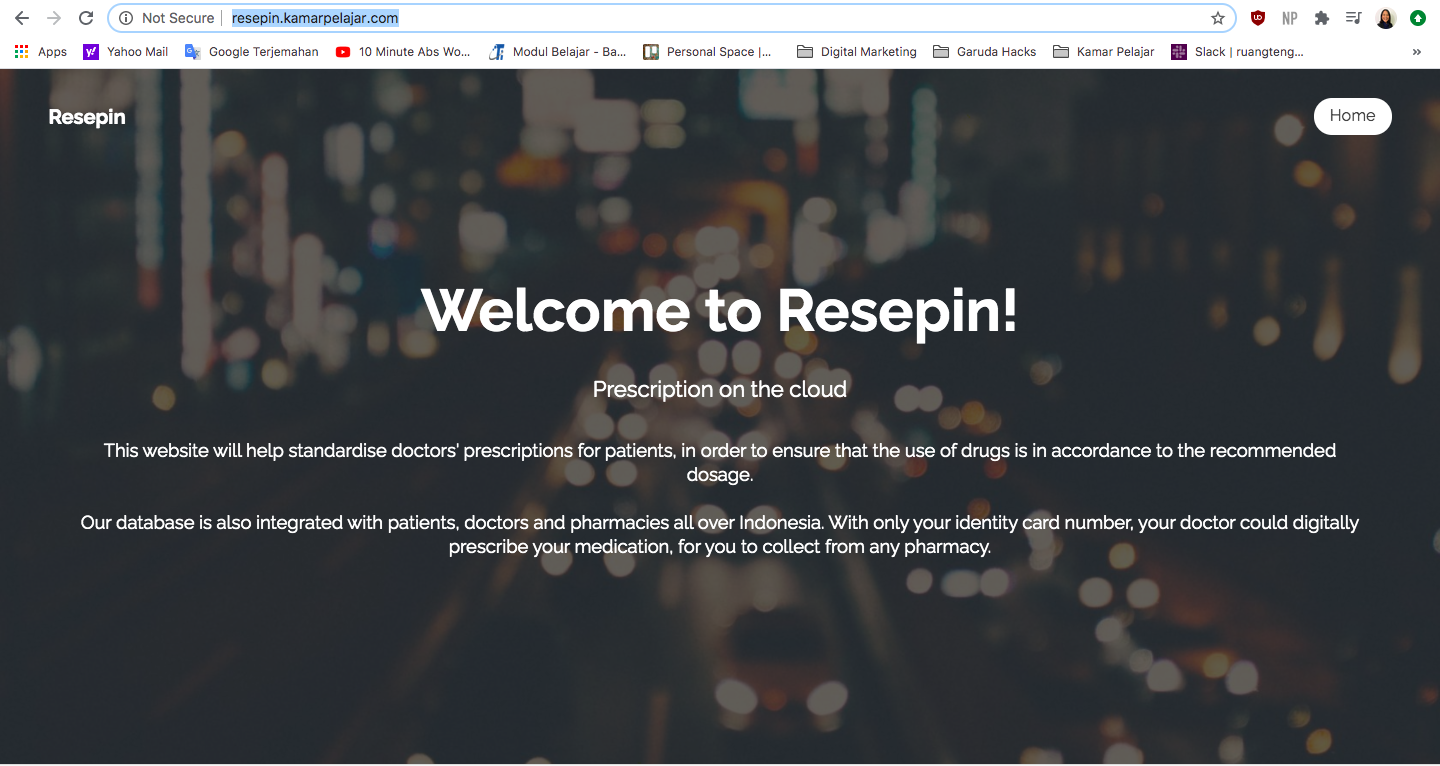
Resepin Home Page (1)
-
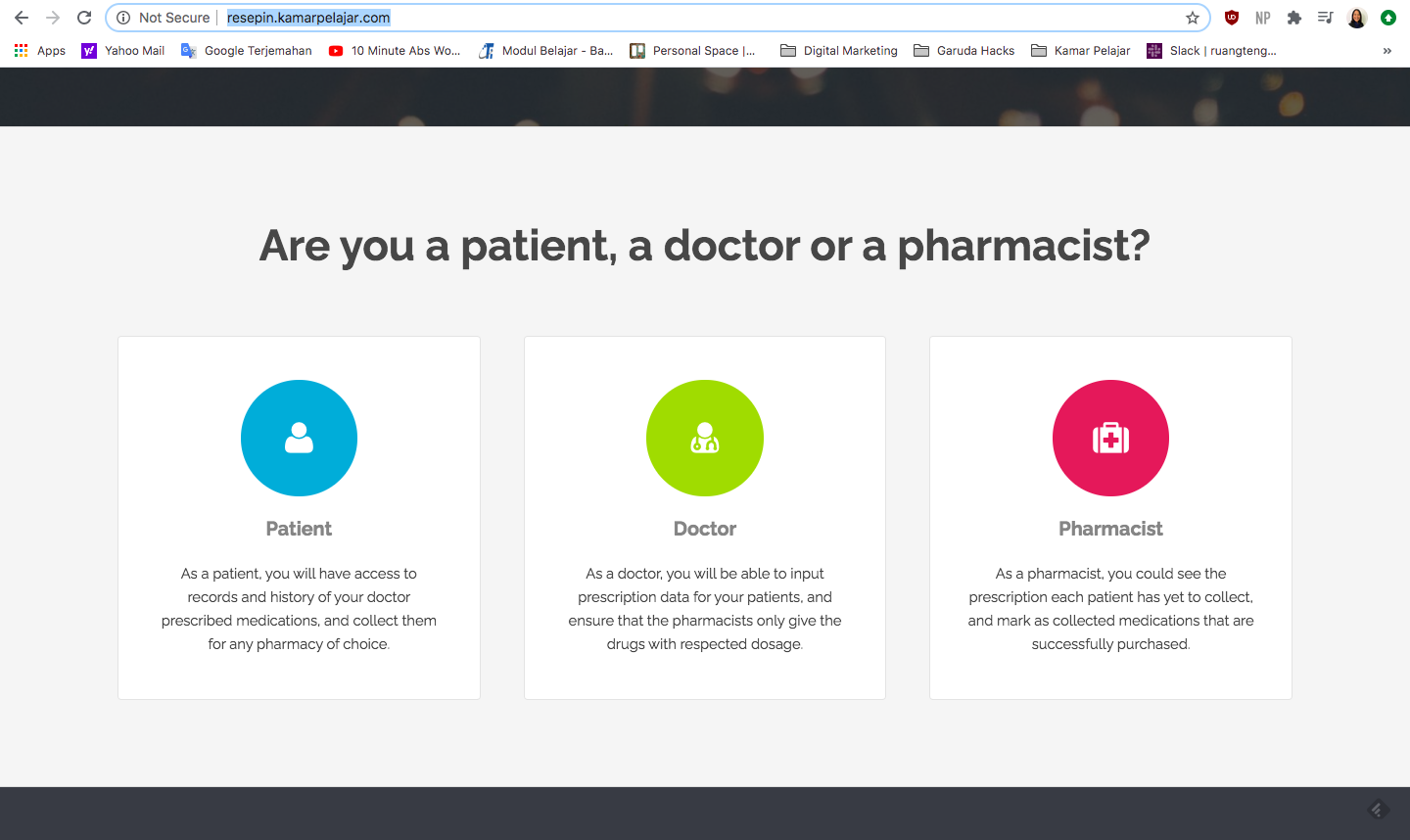
Resepin Home Page (2)
-
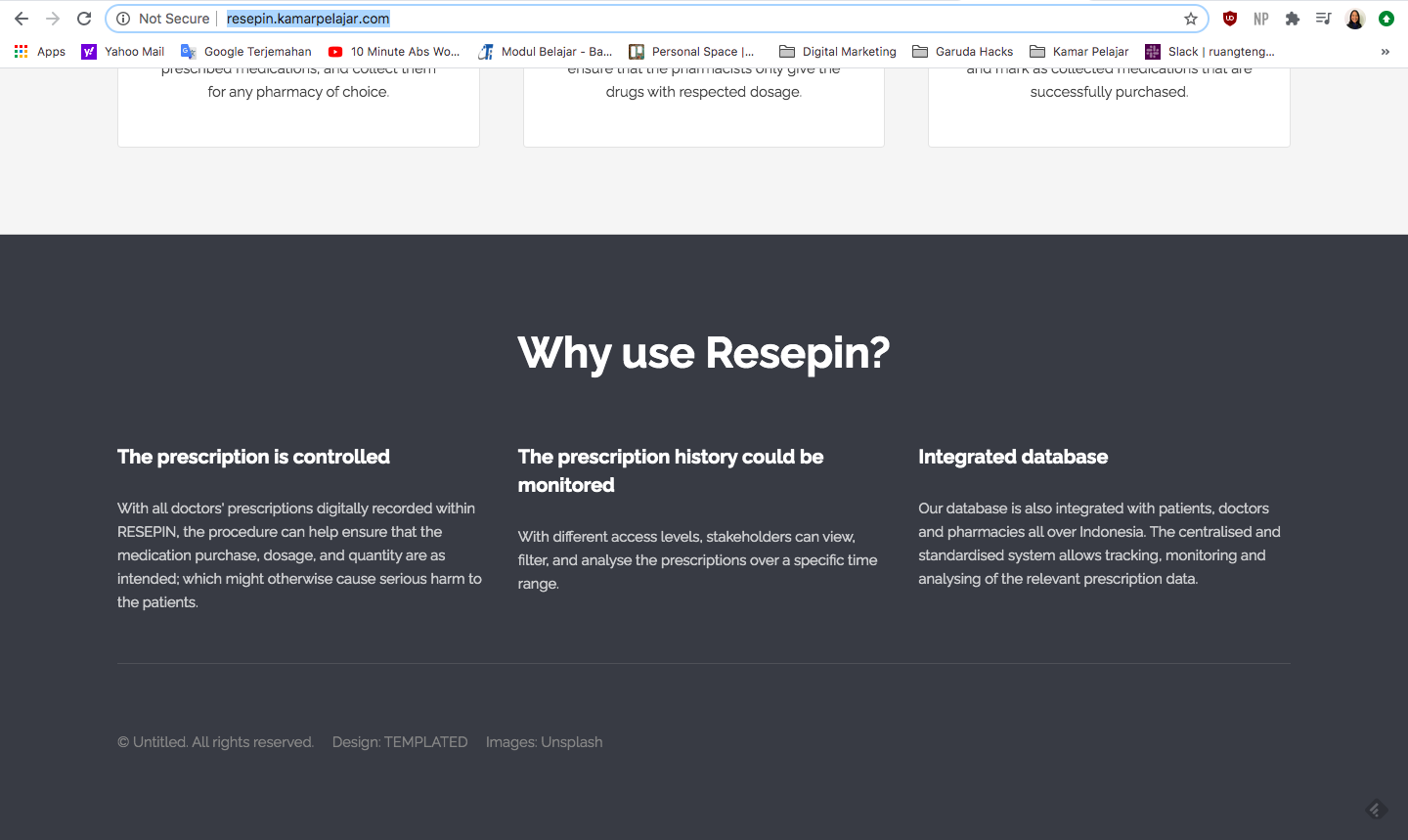
Resepin Home Page (3)
-
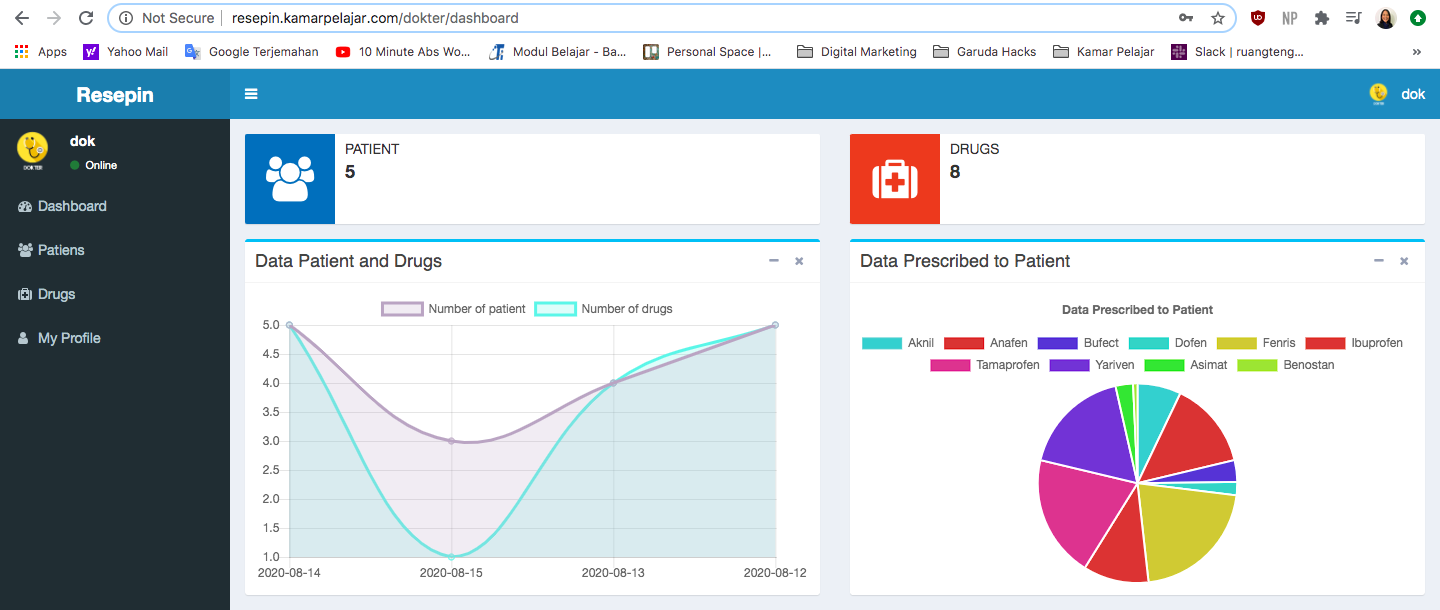
Doctor's Dashboard
Inspiration
The consumption of antibiotics and other drugs in Indonesia is overused. Contributed by lack of industry centralisation and standardisation in medication purchase, Indonesians often buy medication without doctors' prescription - either due to repeat of supposedly one-off drugs, system abuse, or drug dependence. This potential excessive use of drugs may result in drug resistance. The Centers for Disease Control and Prevention (CDC) calls antibiotics resistance “one of the world’s most pressing public health problems,” of particular concern in developing countries like Indonesia. Additionally, according to WHO's Antimicrobial Resistance Global Report, the alarming resistance rates if left unchecked, can lead to common infections and minor injuries resulting in death.
In Indonesia, there are platforms that provide online consultation services to general practitioners and specialists, and the delivery of medications directly to the customer's home. However, we found a market gap for digital platforms that provide a centralised hub for prescription control, and have decided to work on a solution for that gap. With doctors, patients, and pharmacists having a role to play in solving some of the most pressing healthcare industry issues, we would like to offer a platform to facilitate change and help Indonesians achieve better health.
What it does
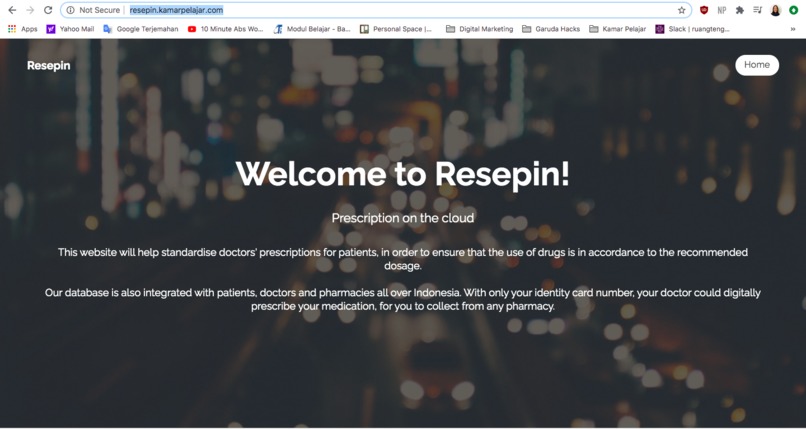
Resepin is a website to standardise doctors' prescriptions for patients, in order to ensure that the use of drugs is in accordance to the recommended dosage.
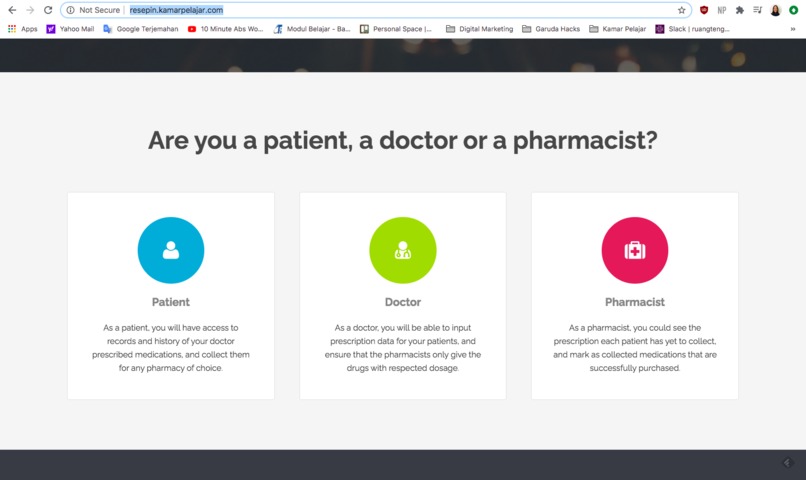
This website is dedicated for three users: patients, doctors and pharmacists.
- As a patient, you will have access to records of your doctor’s prescribed medications, and collect them for any pharmacy of choice. You will see the history of your prescription in a specific range of time (e.g. 6 months, 1 year, 3 years).
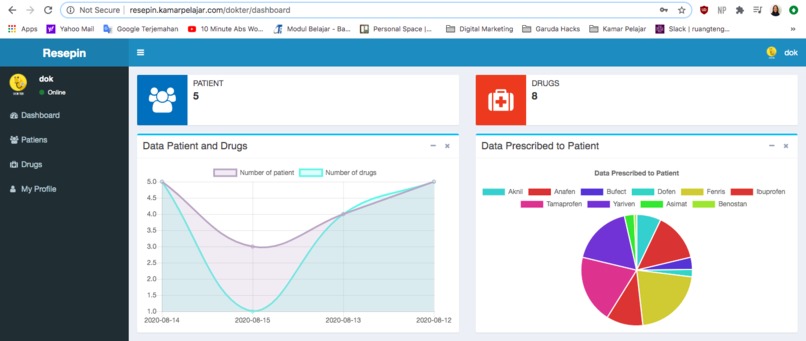
- As a doctor, you will be able to input prescription data for your patients, and ensure that the pharmacists only give the drugs with respected dosage.
- As a pharmacist, you could see the prescription each patient has yet to collect, and mark as collected medications that are successfully purchased.
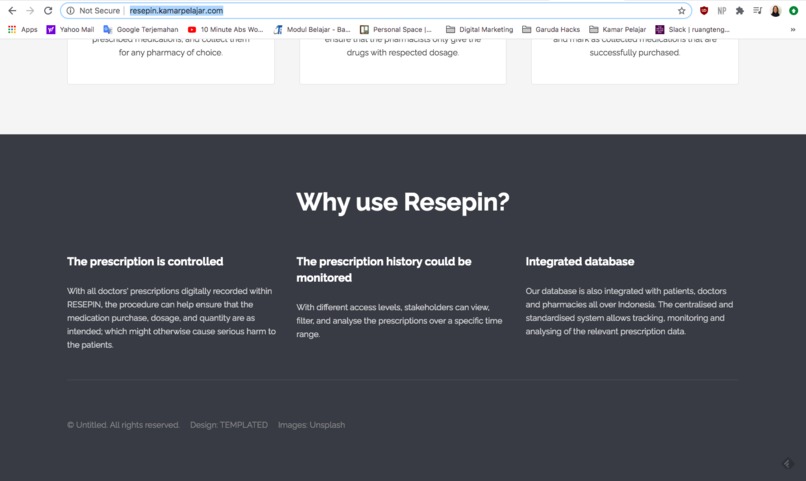
Furthermore, our database is also integrated with all of the patients, doctors and pharmacies all over Indonesia. The centralised and standardised system allows tracking, monitoring and analysing of the relevant prescription data.
How we built it
The tools we used include: PHP and MySQL for the backend; Laravel for the framework; HTML, CSS, and Javascript for the frontend. Since we are time-restricted, we used the admin LTE dashboard for the CRUD.
Challenges we ran into
- We have 2 developers, 1 data engineer and 1 project manager in our team. Initially, we thought that the programming-related tasks could be equally divided between the 2 developers. However, some software changes (eg. admin LTE) meant that only 1 had knowledge of how to use them, and thus there was more waiting time than expected. Nevertheless, with great management, we solved this issue by redefining other tasks to ensure fair task distribution and contribution to our end product.
- Every tool has its own advantages and disadvantages. One challenge was running into hidden issues in regards to admin LTE. We chose the tool to simplify the creation of the dashboard CRUD, however it led to further challenges including the customisation difficulties and compatibility issues.
- We spent a significant amount of time brainstorming ideas. We had a lot of ideas, but none had the ‘wow’ factor. In the end, we came across the issue of antibiotic resistance and came up with a solution to centralise the data
- We already formed our team some time prior to the Hackathon, because we come from the same company. Last minute however, one of the team members dropped out. Luckily, we sorted this issue and had a replacement very quickly.
- Due to some skill limitations, we had to divert from our initial plan, which was to build a mobile application.
Accomplishments that we're proud of
- Even if it's very far from perfect, we proudly say that we finish this project on time.
- The roles of each person were very clear. We had two developers for programming, 1 data engineer to create data analytics in this platform and one project manager to ensure the project is completed on time, whilst taking care of the copywriting and all non-technical support.
- The members are in 3 different time zones, we are proud of how we managed our communication and used the supposed complication to our advantage - by working and monitoring announcements around the clock.
What we learned
- We learned a lot of things since this is the first hackathon for all the team members. We learned to develop a platform in 42 hours, adapt with at times challenging situations, learn as much as we can from the webinar and crucially, the importance of teamwork.
- We learned to brainstorm ideas, plan a project, and make decisions with consideration of every team member’s opinions.
What's next for RESEPIN
- Build a mobile application for this platform
- Add new features, e.g. patient medical history
- From our integrated database, we could develop other things related to the health field. The platform can also be extended to include more users, such as hospitals or clinics, and government regulating bodies.
Team Member
We are from Kamar Pelajar (kamarpelajar.com), an Indonesian startup based on Sweden:
- Muhammad Megananta Adam
- Evita Widjaja
- Satu Cahaya Langit
- Cuni Candrika


Log in or sign up for Devpost to join the conversation.