-
-
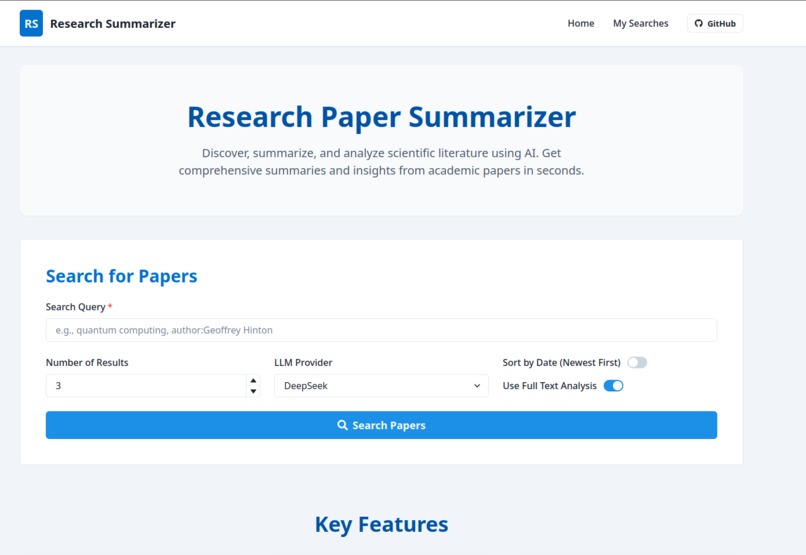
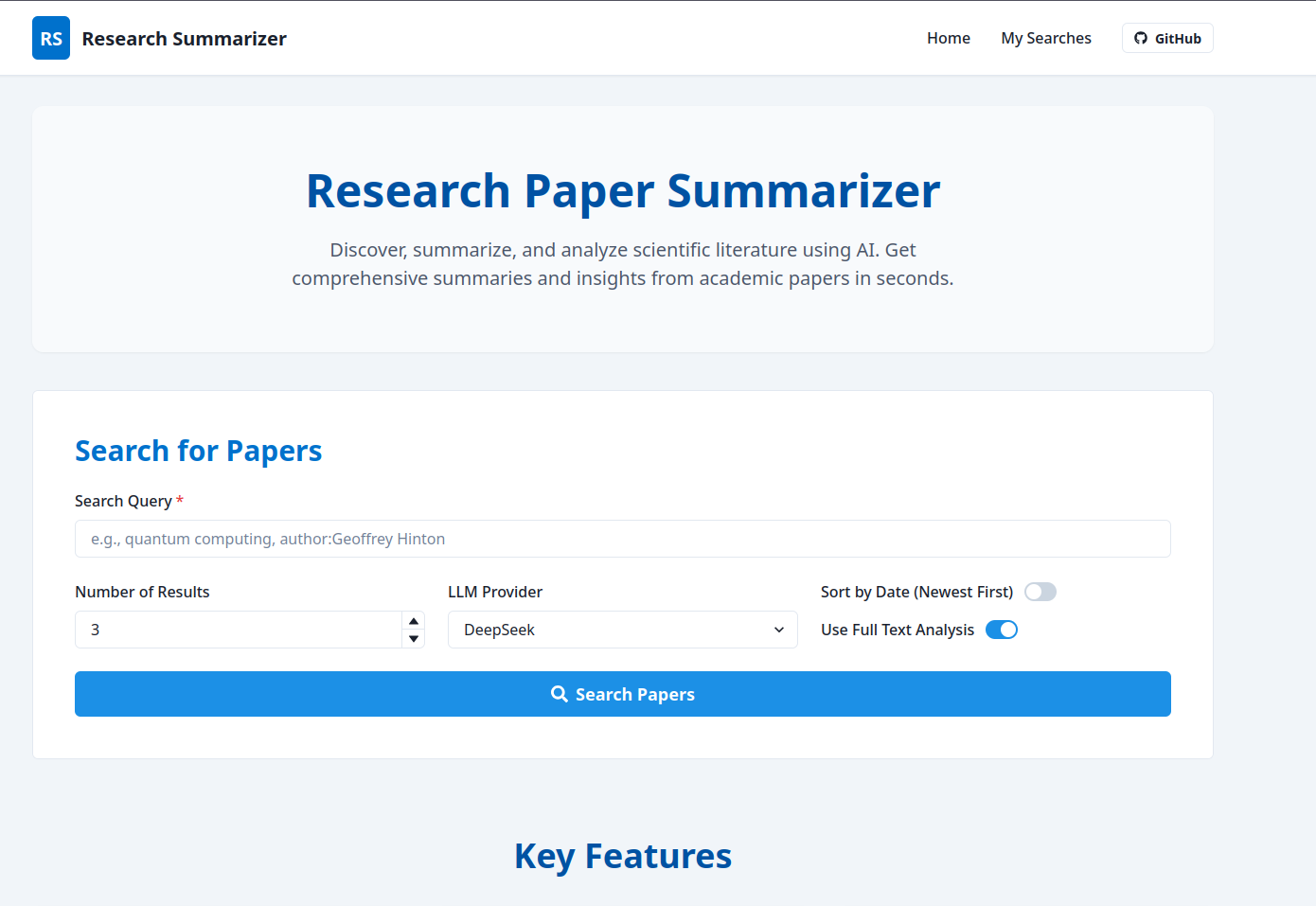
Main Page
-
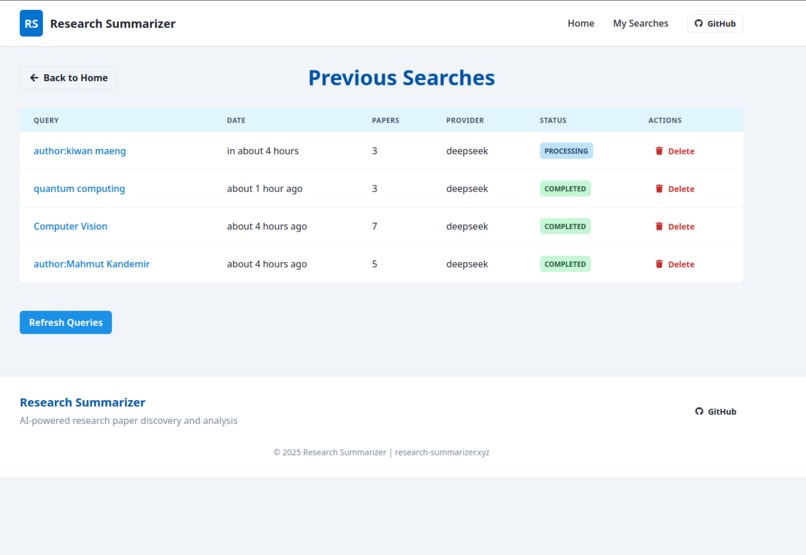
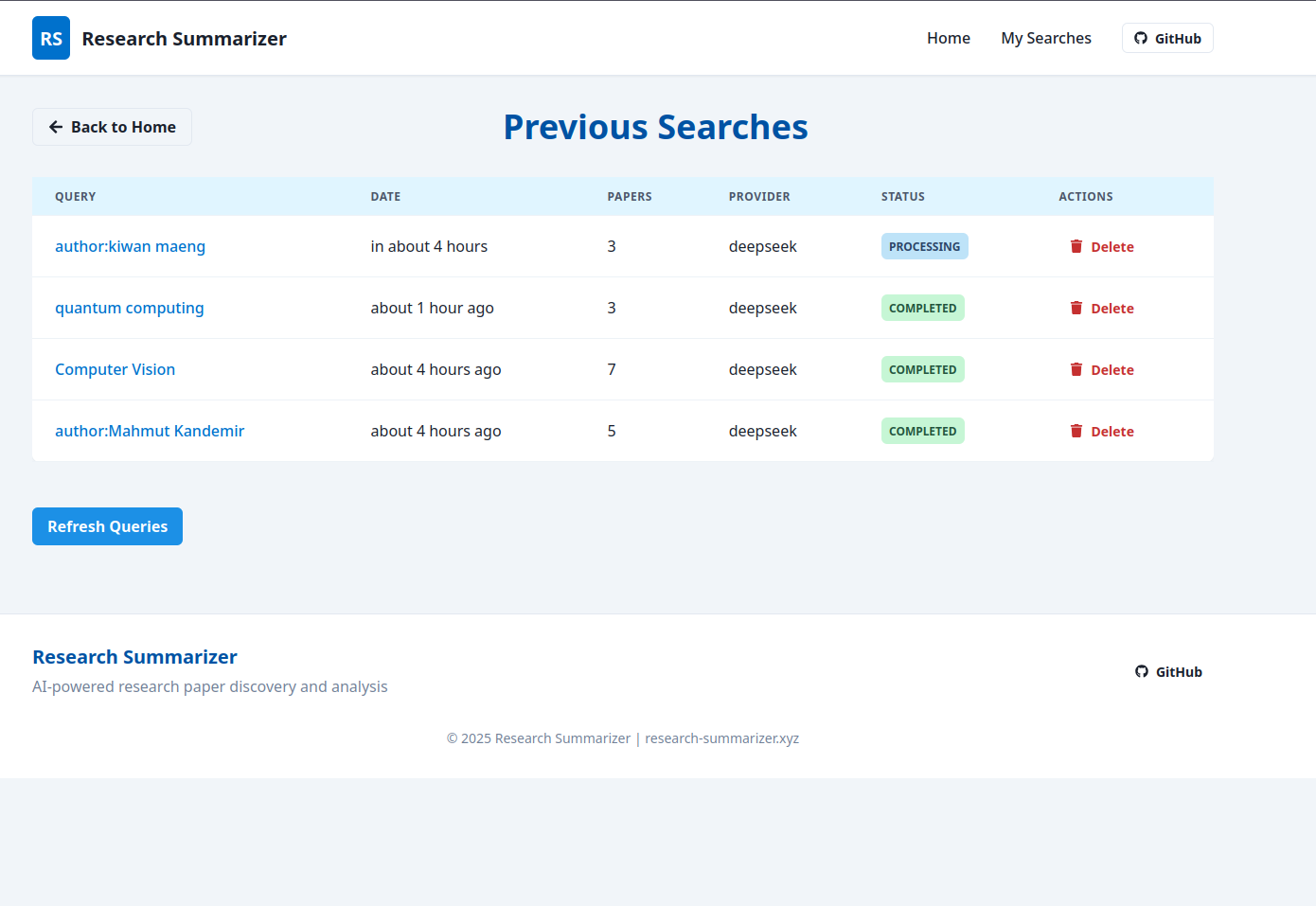
Past Queries Page
-
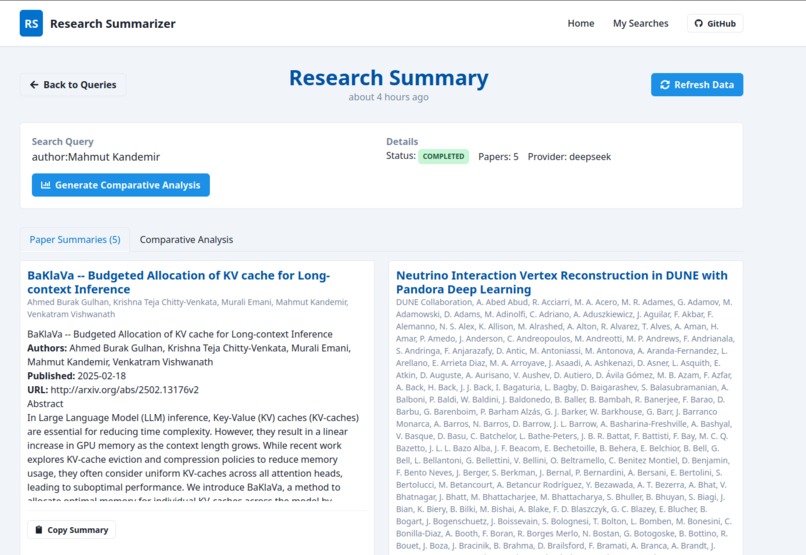
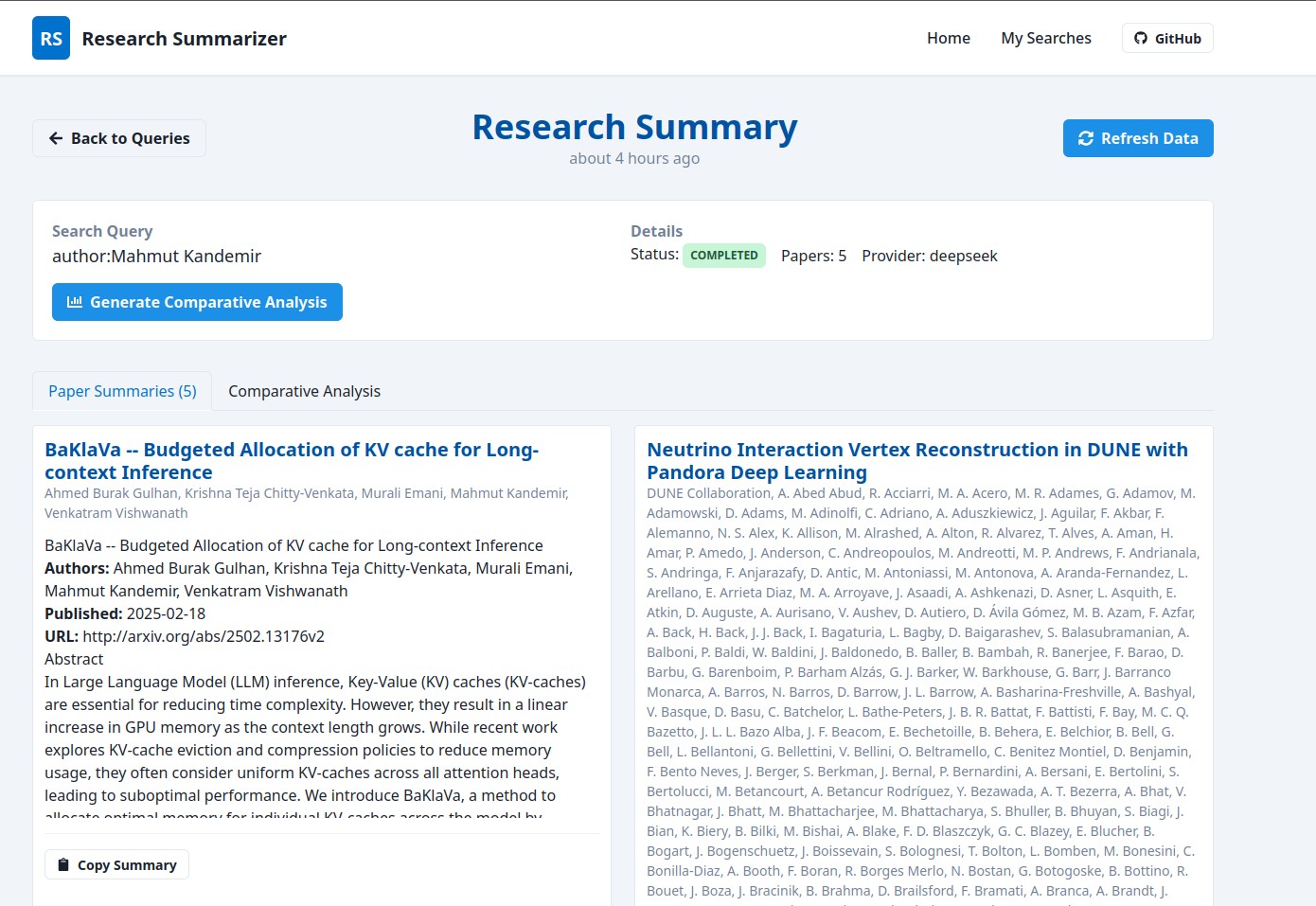
Author Summary Page
Inspiration
The explosion of academic research makes it increasingly difficult for researchers, students, and knowledge workers to keep up with relevant literature. We were inspired by the challenge of information overload in academia, where valuable insights are buried in dense papers that take hours to digest properly. We wanted to create a tool that would make research more accessible and efficient, allowing users to quickly grasp the key concepts and contributions of multiple papers without sacrificing depth of understanding.
What it does
ResearchTLDR is an AI-powered research paper summarization platform that helps users quickly understand scientific literature. The application:
- Fetches research papers from arXiv based on user search queries
- Generates comprehensive, structured summaries of each paper including key findings, methodology, and implications
- Creates comparative analyses between papers to highlight relationships and contrasts
- Organizes summaries in a clean, searchable interface
- Supports searching by topic, keyword, or specific author
- Allows users to track their search history and revisit previous summaries
How we built it
We built ResearchTLDR using a full-stack approach:
- Backend: Developed in Python using FastAPI to create a robust API for paper processing and database operations
- Frontend: Built with React and Chakra UI for a responsive, modern user interface
- AI Integration: Integrated with multiple LLM providers (DeepSeek, Anthropic's Claude, OpenAI's GPT) to generate high-quality summaries
- Database: Used SQLite for development and PostgreSQL for production to store user queries and paper summaries
- Deployment: Implemented CI/CD using Render.com for seamless deployment to our custom domain
The core of the system uses advanced prompt engineering to guide the AI in generating structured, informative summaries that capture the essence of research papers, focusing on the elements most valuable to researchers.
Challenges we ran into
Building ResearchTLDR presented several significant challenges:
- PDF Processing: Extracting clean, structured text from academic PDFs with complex formatting, equations, and figures
- Handling Large Papers: Many papers exceed token limits of AI models, requiring intelligent chunking and synthesis
- API Reliability: Managing rate limits and ensuring consistent quality across different LLM providers Real-time Feedback: Creating a responsive UI that provides meaningful updates during the potentially lengthy summarization process
- Database Design: Structuring the database to efficiently store and retrieve summaries while maintaining relationships between papers
- Deployment Complexities: Navigating environment configuration issues when deploying to production
Accomplishments that we're proud of
Despite the challenges, we achieved several noteworthy accomplishments:
- Created a tool that genuinely saves time for researchers and students
- Successfully implemented a system that produces high-quality, consistent summaries across diverse research fields
- Developed an intuitive, modern UI that makes research more accessible
- Built a scalable architecture that can easily extend to more features and additional paper sources
- Achieved excellent performance even when processing multiple papers simultaneously
- Successfully deployed a production-ready application with a custom domain and SSL
What we learned
This project was a significant learning experience in multiple areas:
- Advanced prompt engineering techniques to guide AI in producing structured content
- Techniques for processing and chunking long-form content for LLMs
- Best practices for building React applications with real-time feedback
- Strategies for error handling in asynchronous processing pipelines
- Database design for applications with complex document relationships
- Deployment optimization for applications with compute-intensive backend processes
What's next for ResearchTLDR
We have ambitious plans to expand ResearchTLDR's capabilities:
- Adding support for more academic paper sources beyond arXiv (PubMed, IEEE, ACM)
- Implementing citation graph analysis to show relationships between papers
- Creating personalized recommendation systems for relevant papers
- Adding collaborative features for research teams
- Developing browser extensions for seamless integration with academic websites
- Expanding language support for non-English papers
- Building mobile applications for on-the-go research review
As AI models continue to improve, we'll continuously refine our summarization techniques to deliver even more accurate and insightful research summaries.
Built With
- fastapi
- llm
- postgresql
- python
- react
- sqlite


Log in or sign up for Devpost to join the conversation.