Inspiration
What it does
How we built it
Challenges we ran into
Accomplishments that we're proud of
What we learned
What's next for ResearchPilot: Multi-Agent Research Intelligence
Inspiration
Research today is broken into too many disconnected tools. Students jump between Google Search, research papers, AI chatbots, YouTube explainers, citation managers, and note-taking apps just to answer a single question.
We wanted to build a system that thinks more like a human researcher instead of a search engine. Instead of returning a list of links, ResearchPilot acts as an AI research team that debates ideas, evaluates evidence, identifies gaps, and generates structured reports.
The inspiration came from platforms like NotebookLM, Perplexity, and ChatGPT, combined with a simple question:
"What if one AI agent searched for information, another challenged it, another verified the evidence, and a final agent wrote the conclusion?"
That question became ResearchPilot.
What it does
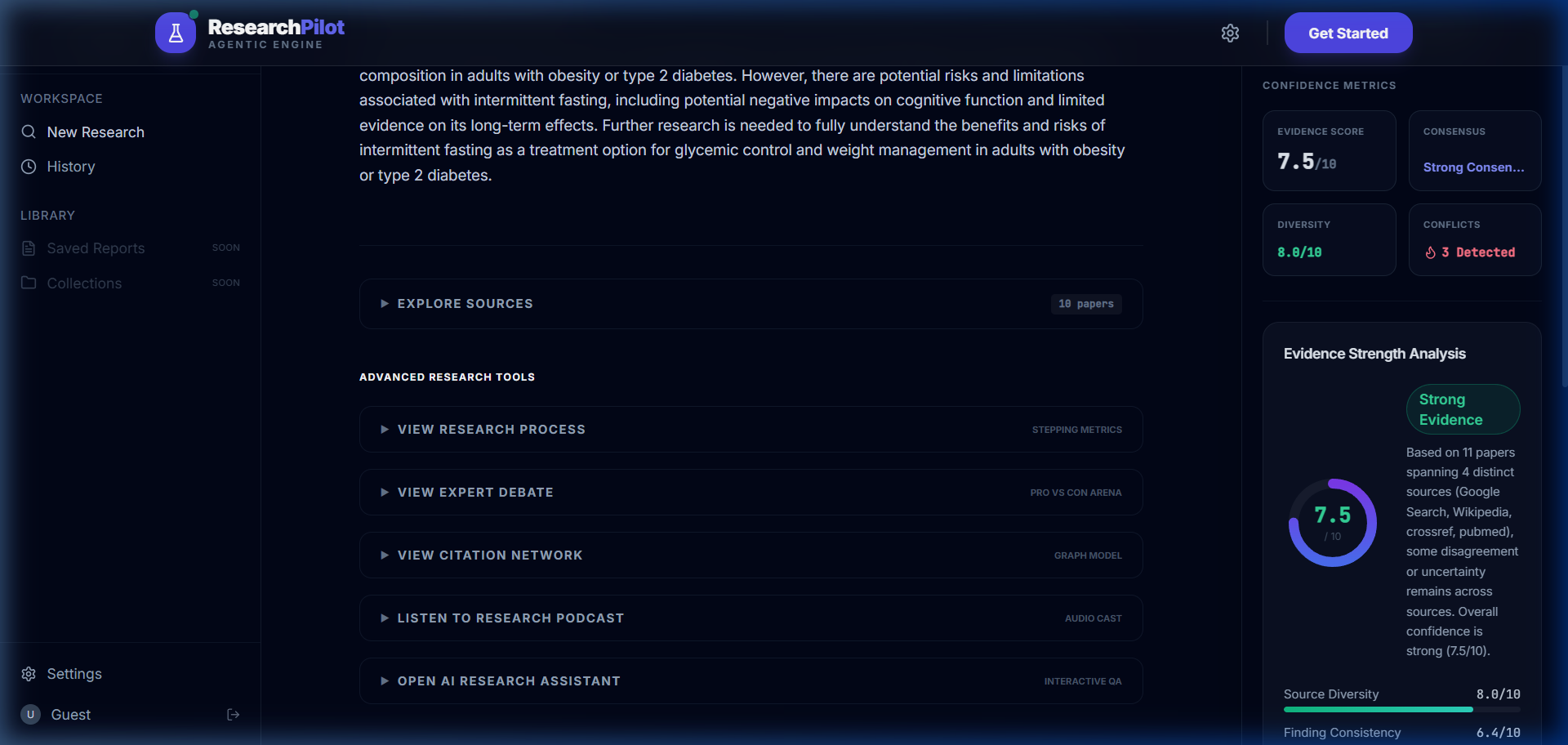
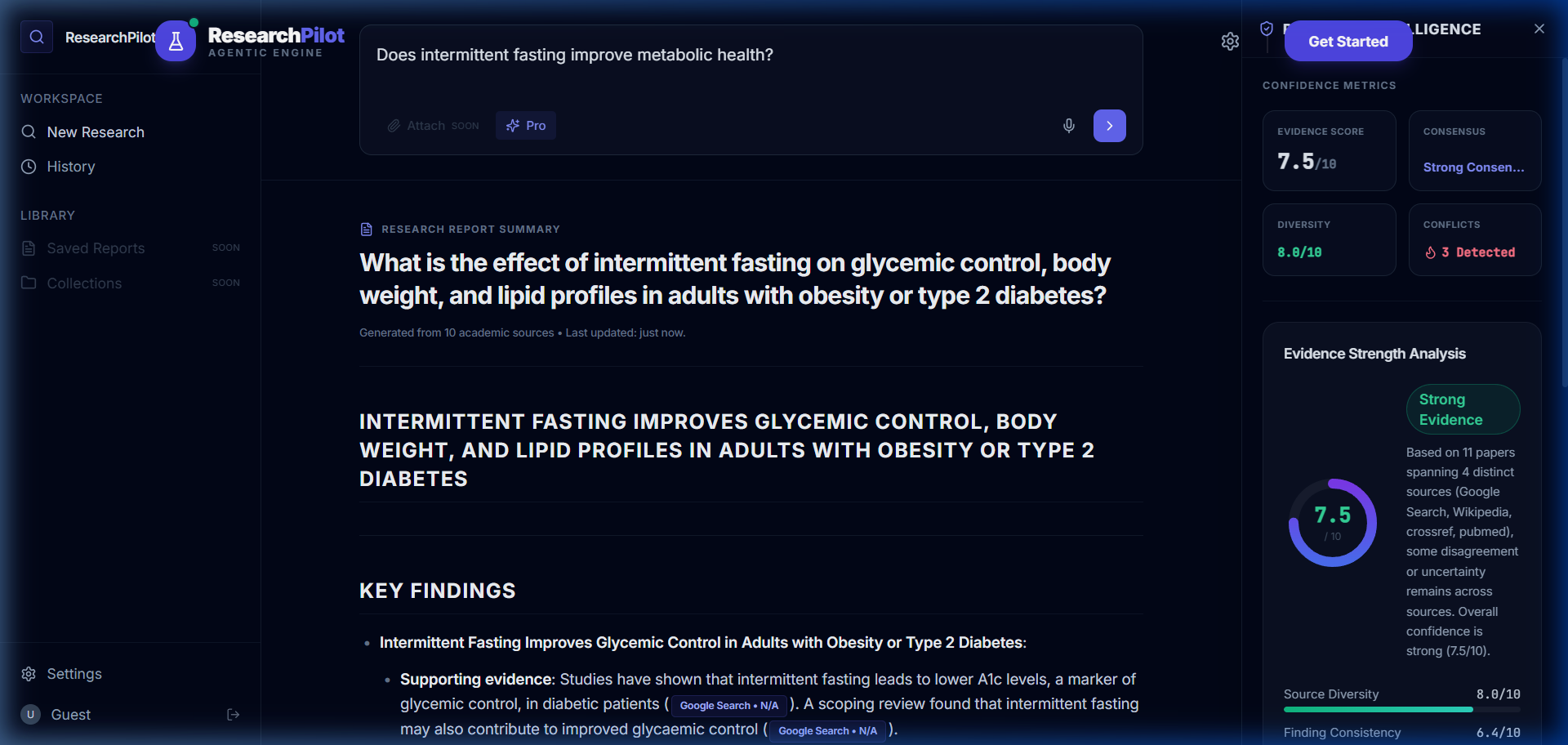
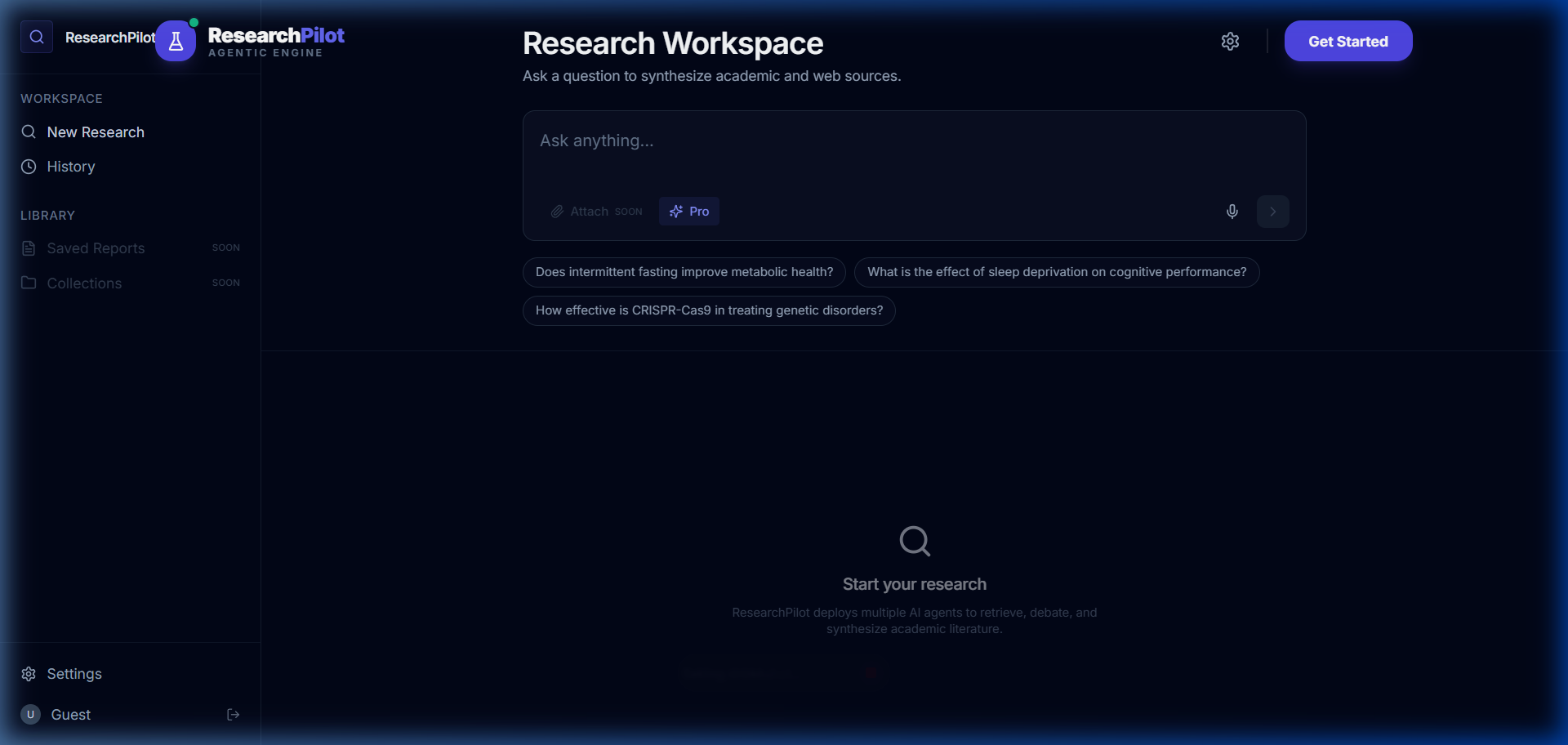
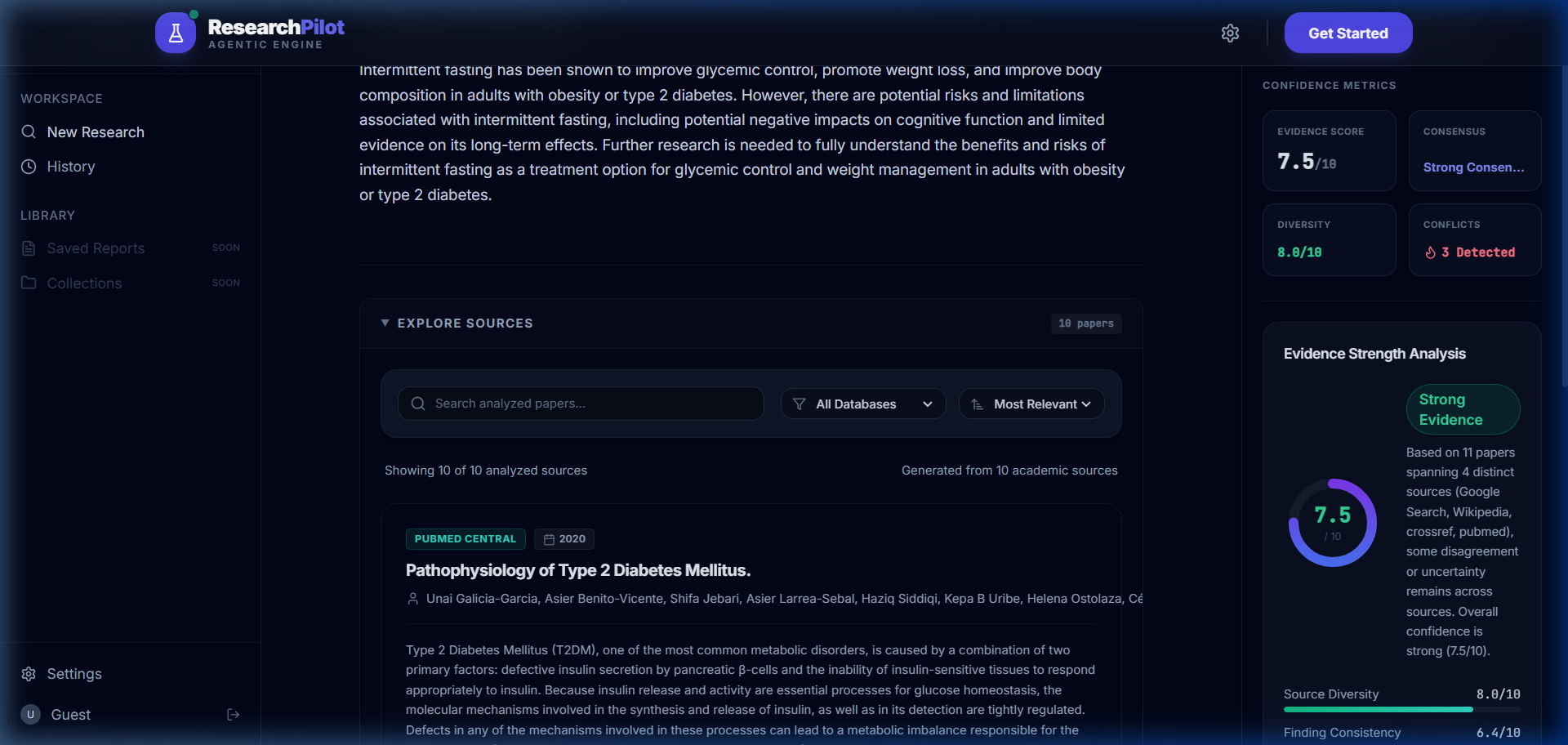
ResearchPilot is an AI-powered multi-agent research workspace that transforms raw questions into structured, evidence-based reports.
Users can:
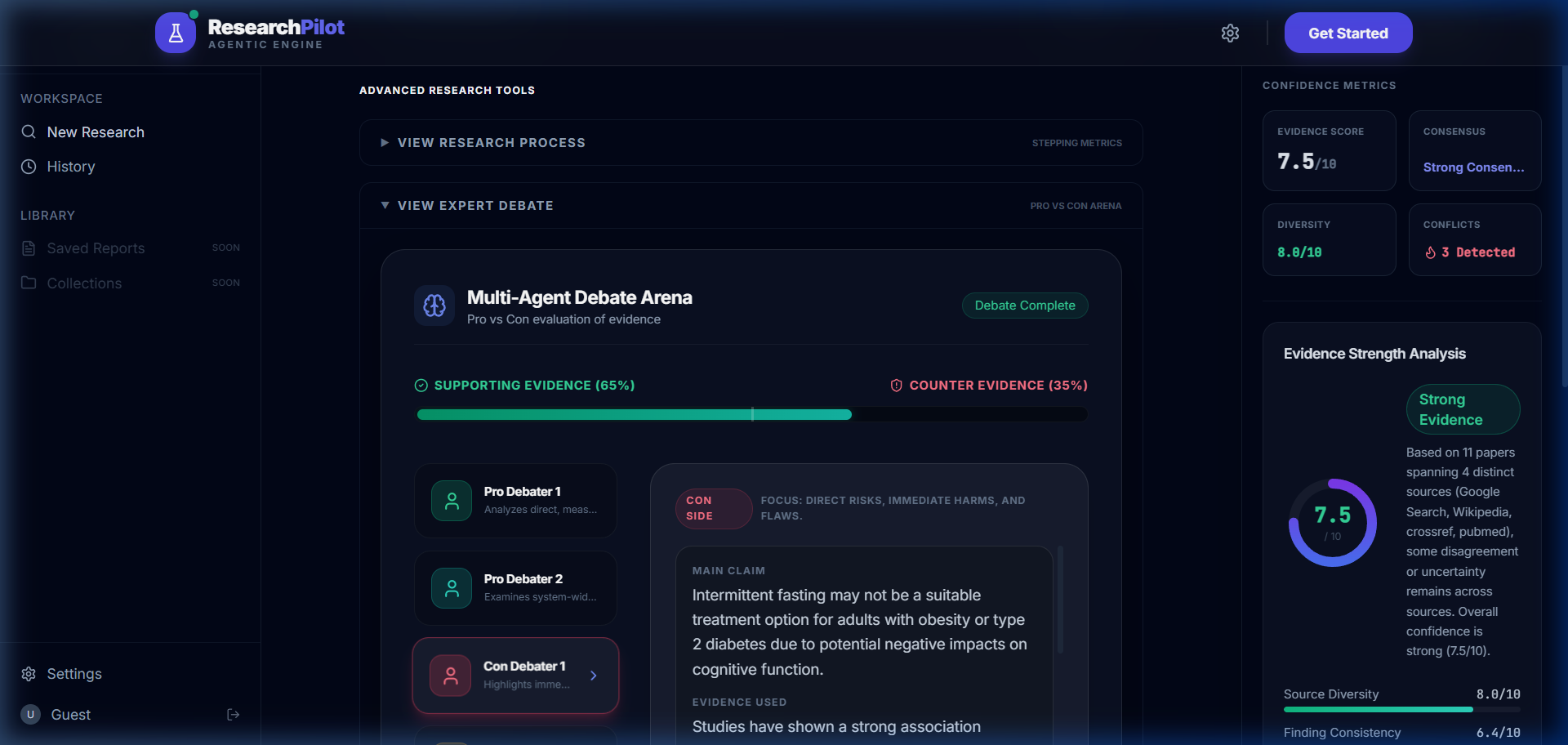
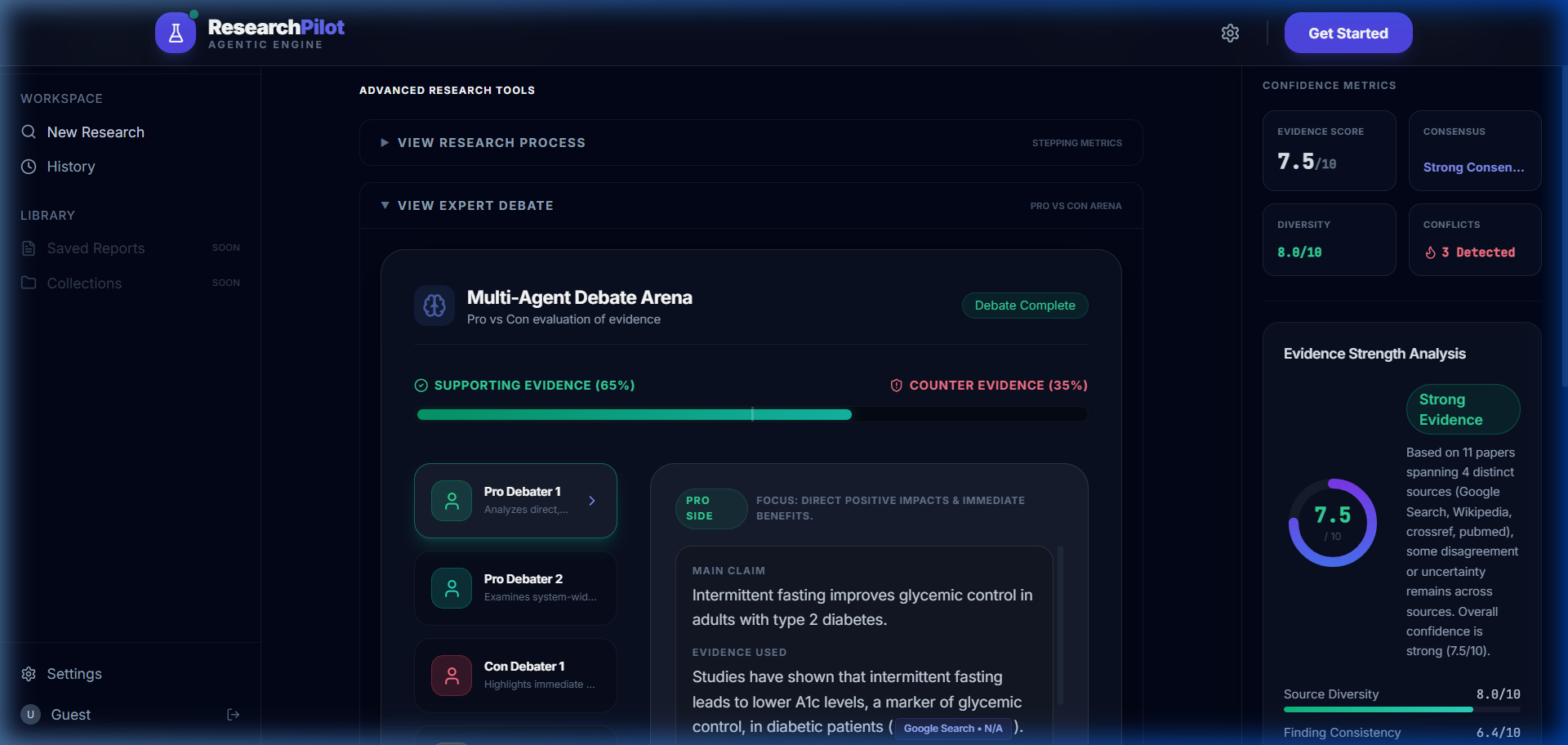
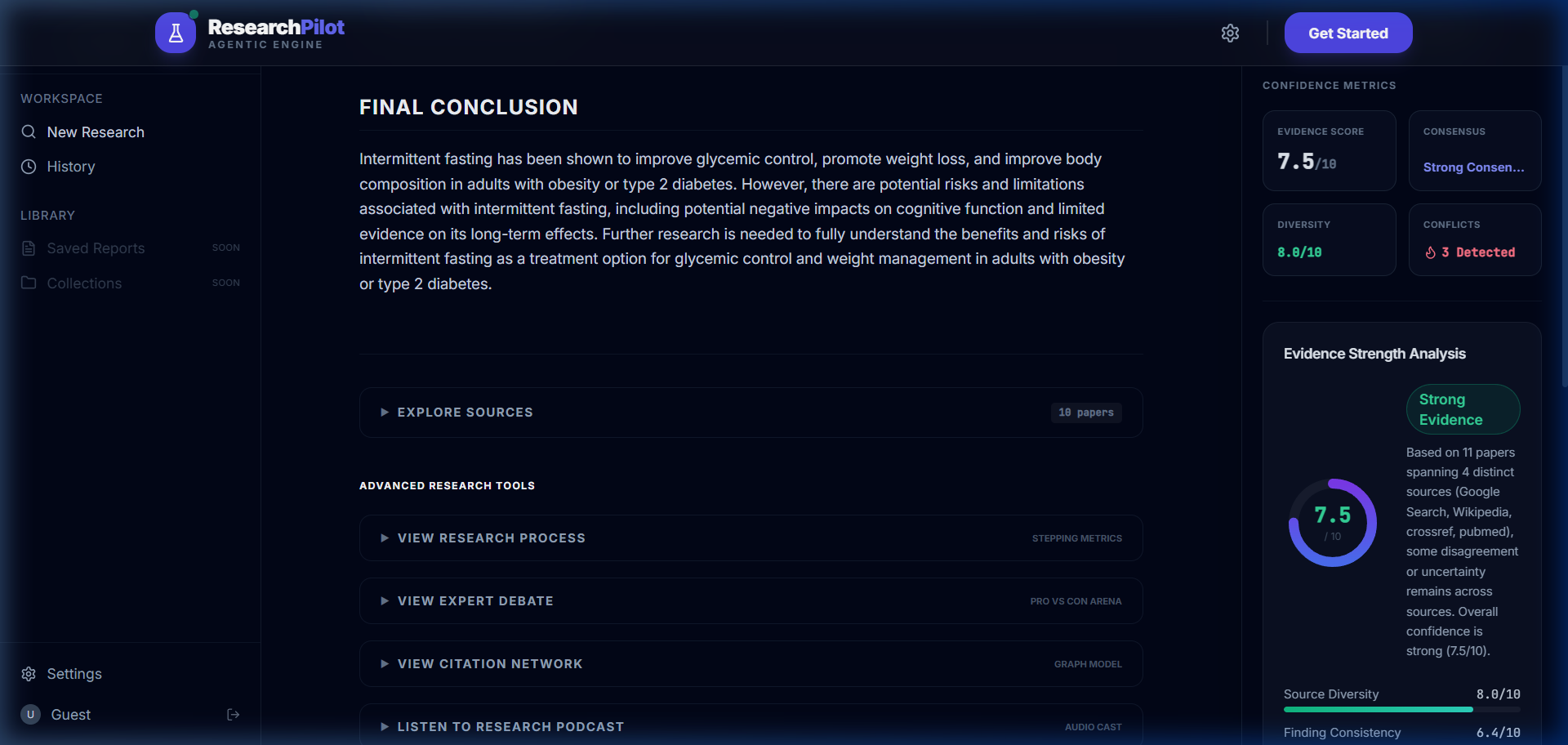
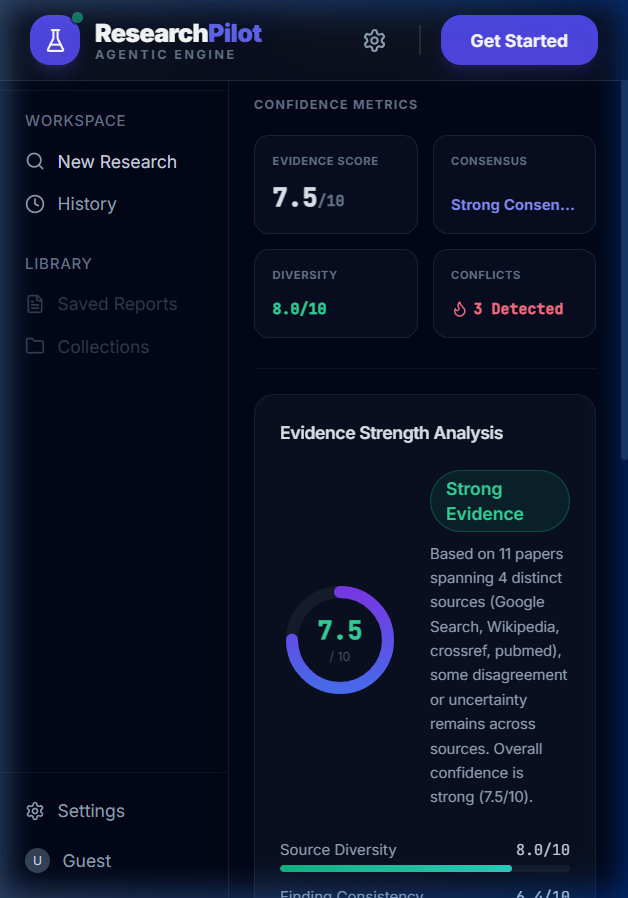
Ask complex research questions. Search across academic and web sources. Run multi-agent debates with opposing viewpoints. Generate executive summaries. Analyze evidence strength and confidence. Discover research gaps and limitations. Explore citations and source networks. Continue discussions using an AI research assistant.
Unlike traditional search engines, ResearchPilot focuses on reasoning, evidence, and synthesis rather than simple retrieval.
How we built it
We designed ResearchPilot using a modular multi-agent architecture.
Frontend React TypeScript Vite Tailwind CSS Framer Motion Backend FastAPI Python Async SSE streaming Pydantic AI & Research Stack Gemini API Multi-agent orchestration Debate agents Moderator and synthesizer agents Evidence scoring engine Retrieval pipelines Databases & Infrastructure Supabase PostgreSQL Vector storage Vercel Architecture
ResearchPilot works in multiple stages:
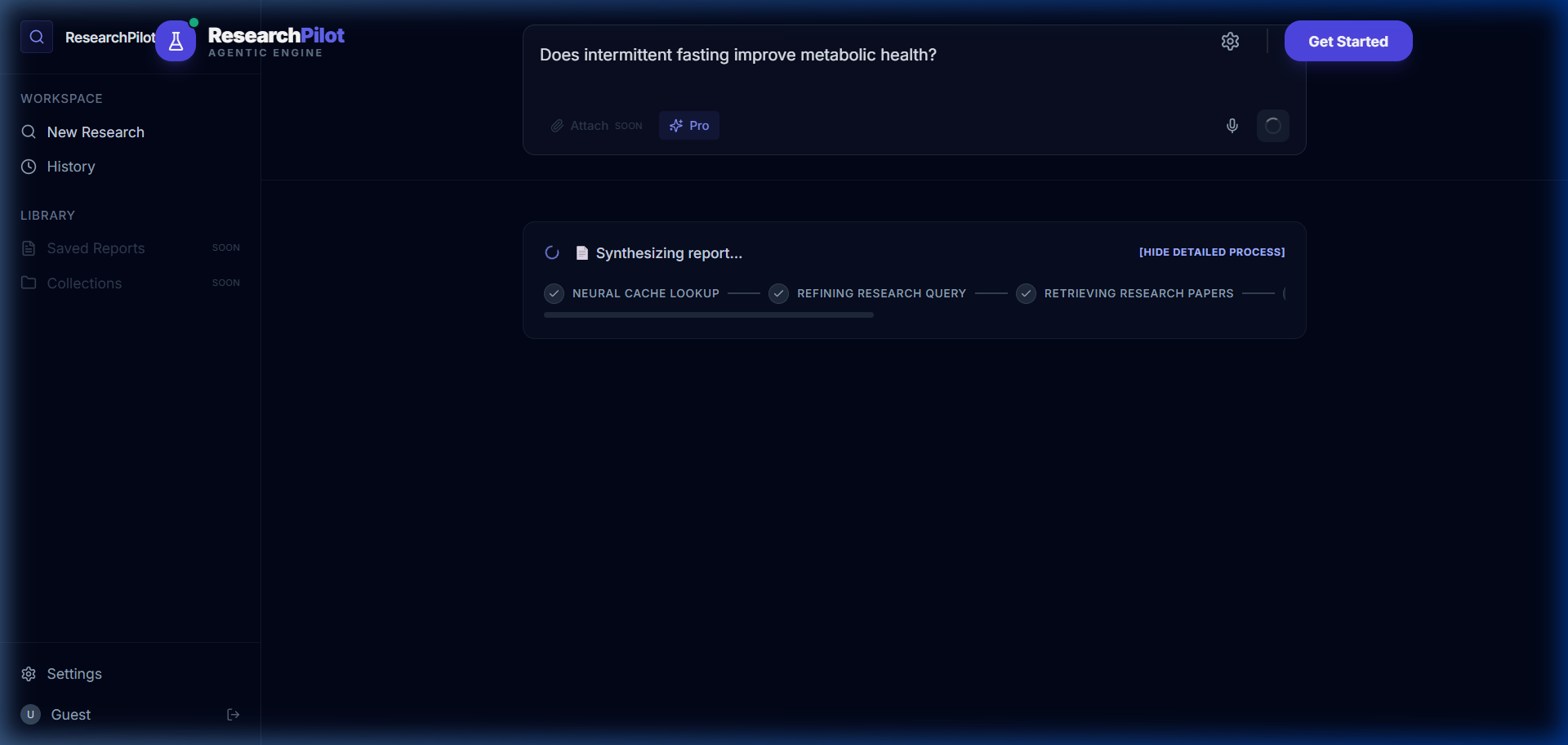
User submits a research question. Query refinement improves the search intent. Research sources are retrieved. Multiple AI agents analyze the evidence. Pro agents argue in favor. Con agents challenge assumptions. A moderator synthesizes the debate. Evidence strength is evaluated. Research gaps are identified. A final report is generated.
This pipeline transforms fragmented information into a coherent research document.
Challenges we ran into
Building ResearchPilot involved several difficult engineering problems:
Designing a reliable multi-agent workflow. Coordinating asynchronous AI pipelines. Streaming research progress in real time. Handling incomplete or conflicting evidence. Preventing hallucinations. Building a clean research-focused interface. Managing API failures and timeouts. Maintaining performance with multiple agents running simultaneously.
One of the biggest challenges was balancing research depth with response speed.
Accomplishments that we're proud of
✅ Built a complete multi-agent research system.
✅ Created structured debate between AI experts.
✅ Added evidence scoring and confidence analysis.
✅ Generated executive summaries with citations.
✅ Implemented real-time streaming research pipelines.
✅ Designed a document-first research workspace inspired by NotebookLM.
✅ Integrated academic and web research workflows into a single platform.
What we learned
Through this project, we learned:
Multi-agent systems are significantly more complex than single-model chatbots. Good UX is as important as good AI. Evidence quality matters more than model size. Real-time systems require careful backend orchestration. Research assistants should explain why an answer is trustworthy.
Most importantly, we learned that AI becomes far more useful when it collaborates, critiques itself, and exposes its reasoning process.
What's next for ResearchPilot
We plan to add:
RAG with uploaded PDFs and personal knowledge bases. Real citation graphs from research papers. Voice-based research podcasts. Collaborative workspaces. Better source verification. Mobile support. Export to PDF and academic formats. Persistent memory and research history. Deeper web search and fact-checking.
Our goal is simple:
Turn ResearchPilot into an AI-powered research partner that helps people understand information—not just find it.
Built With
- agents
- api
- built
- css
- fastapi
- github
- postgresql
- pydantic
- python
- rag
- react
- rest
- supabase
- tailwind
- typescript
- vector
- vercel
- vite
- with


Log in or sign up for Devpost to join the conversation.