-
-
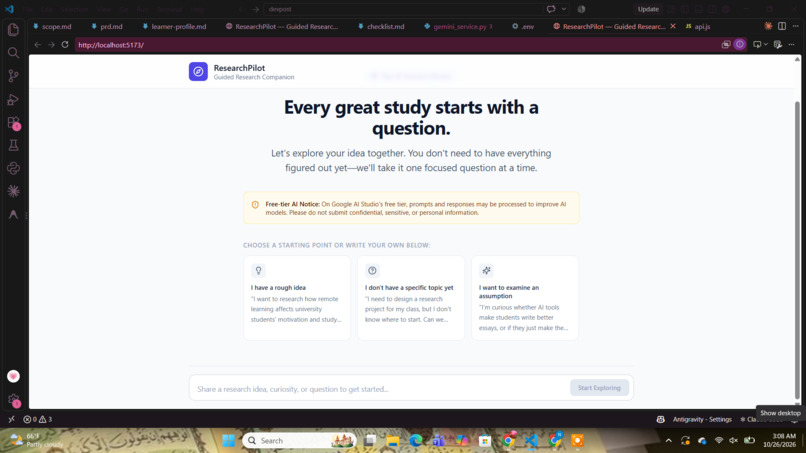
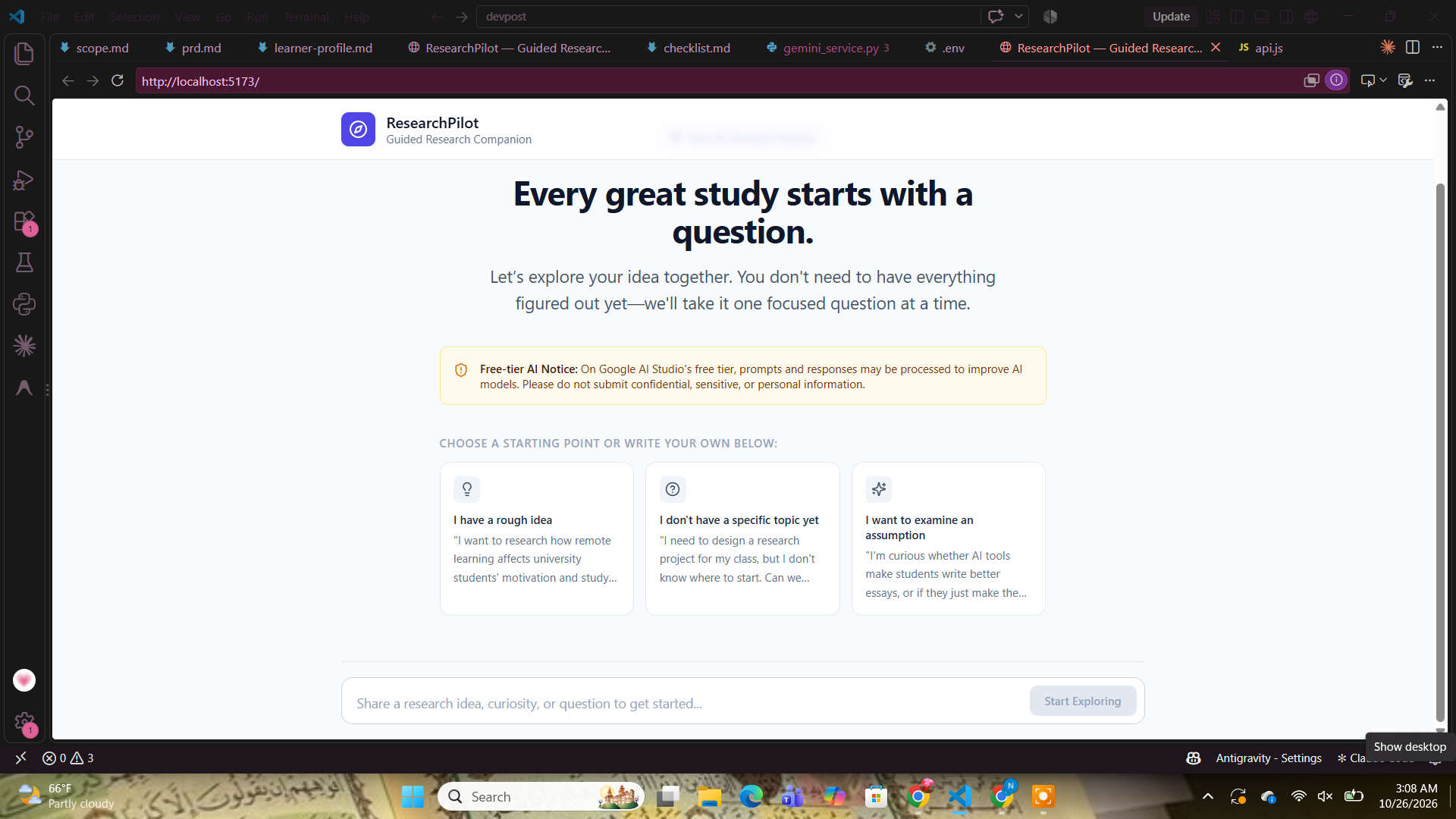
Start exploring research ideas with your AI mentor.
-
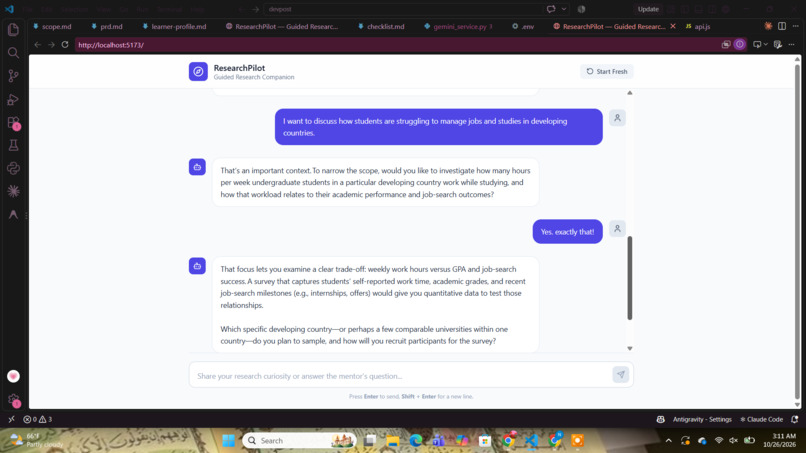
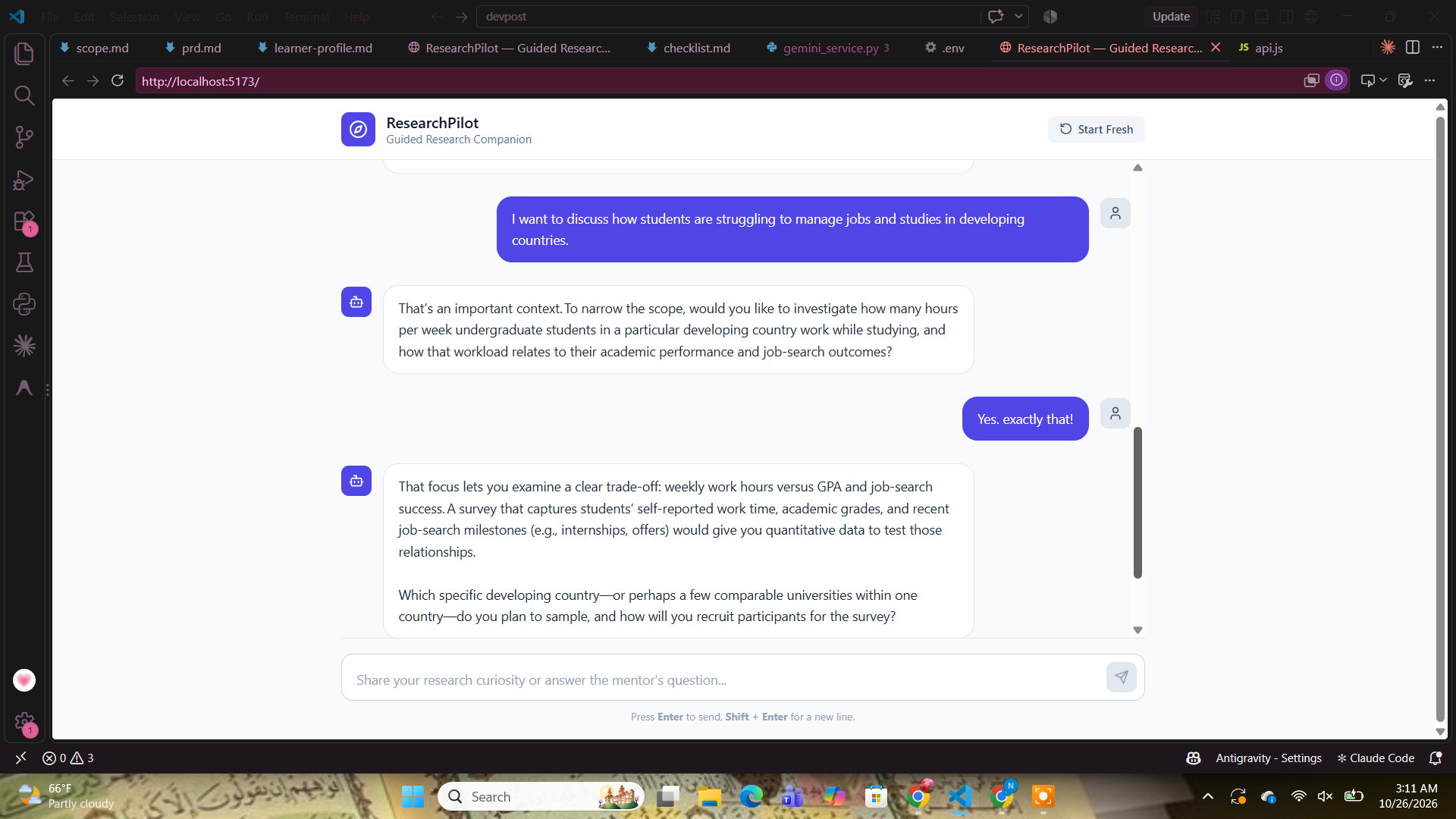
Refine research questions through interactive AI mentoring.
-
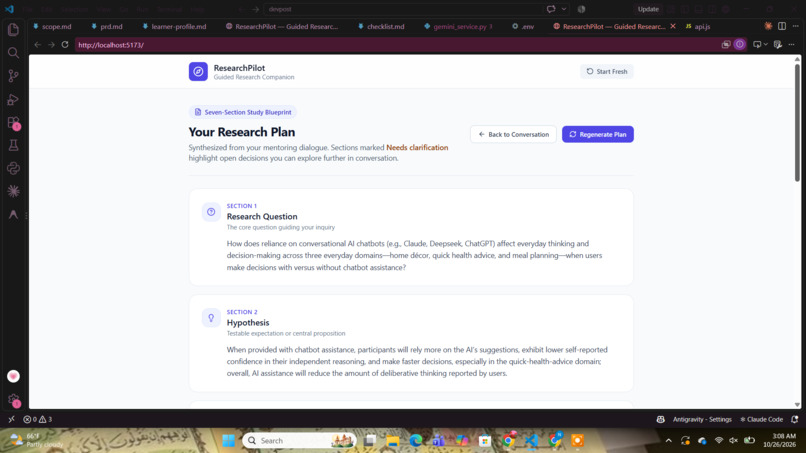
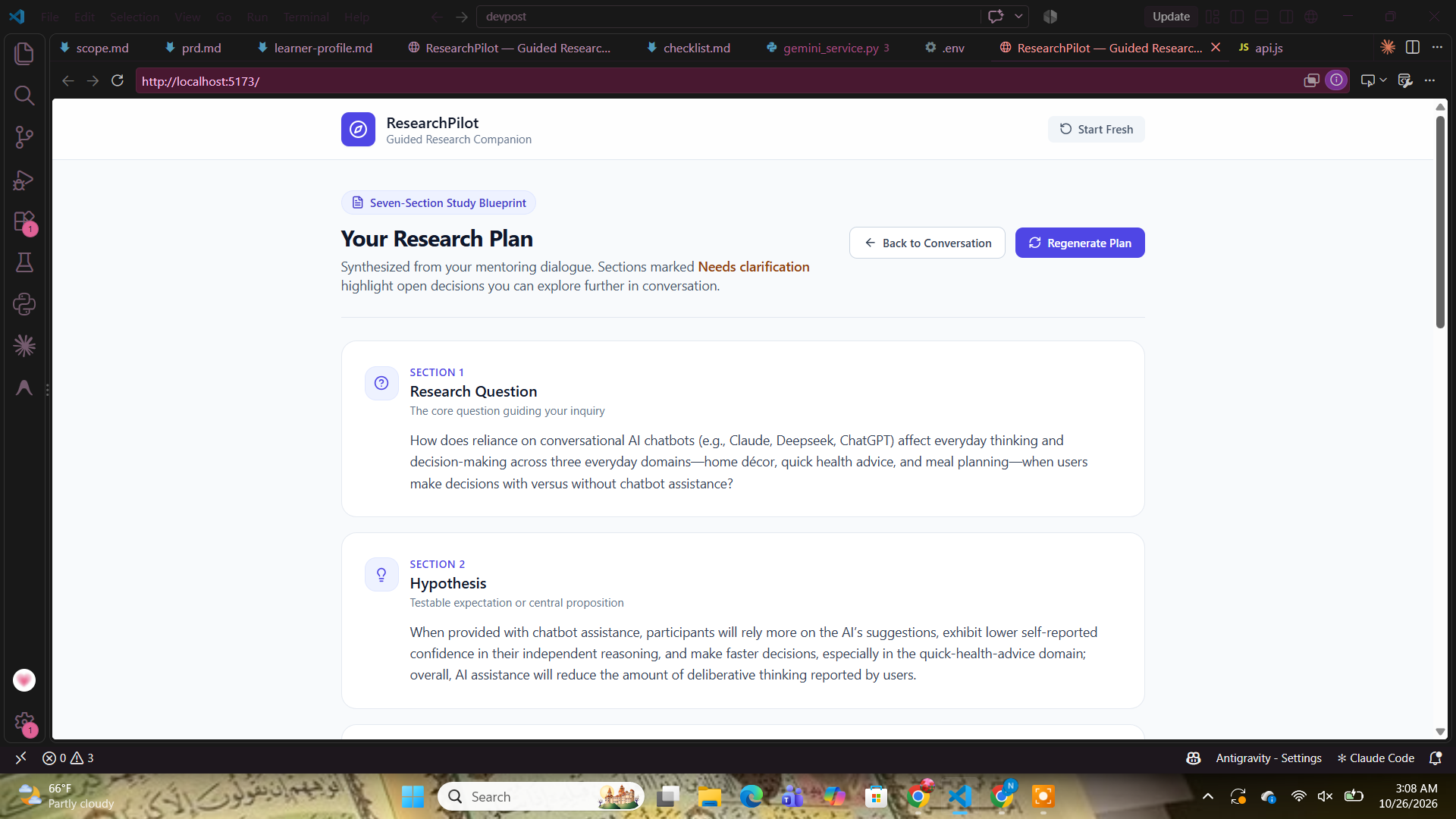
Turn research ideas into structured plans with ResearchPilot.
-
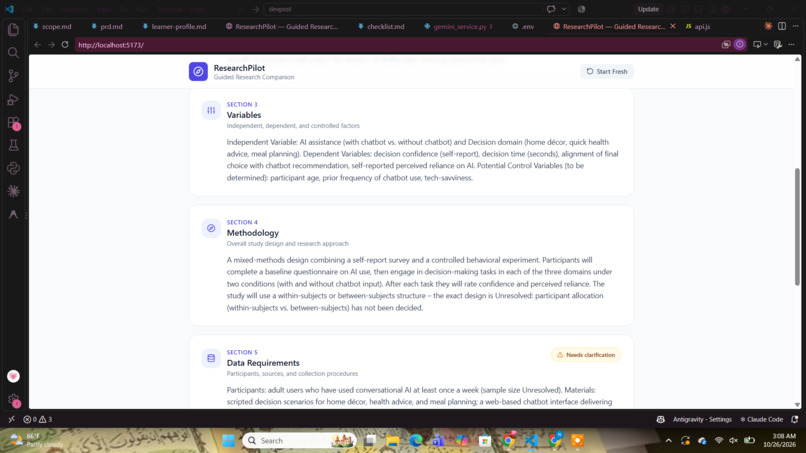
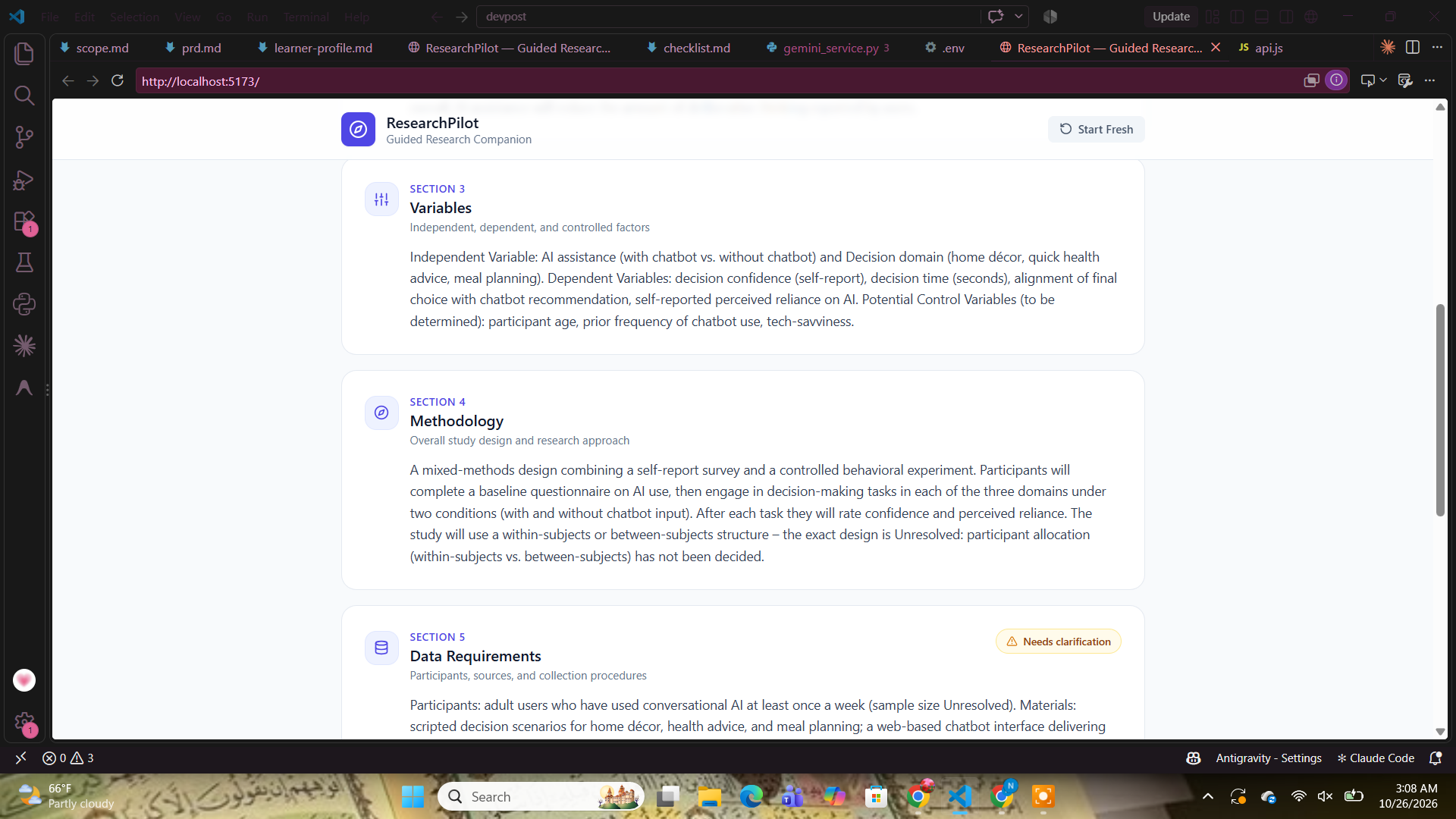
Explore research variables and methodology to shape a focused study.
-
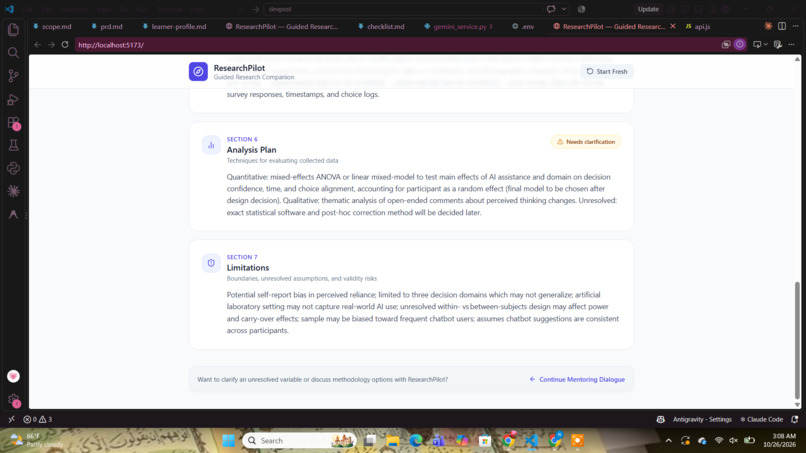
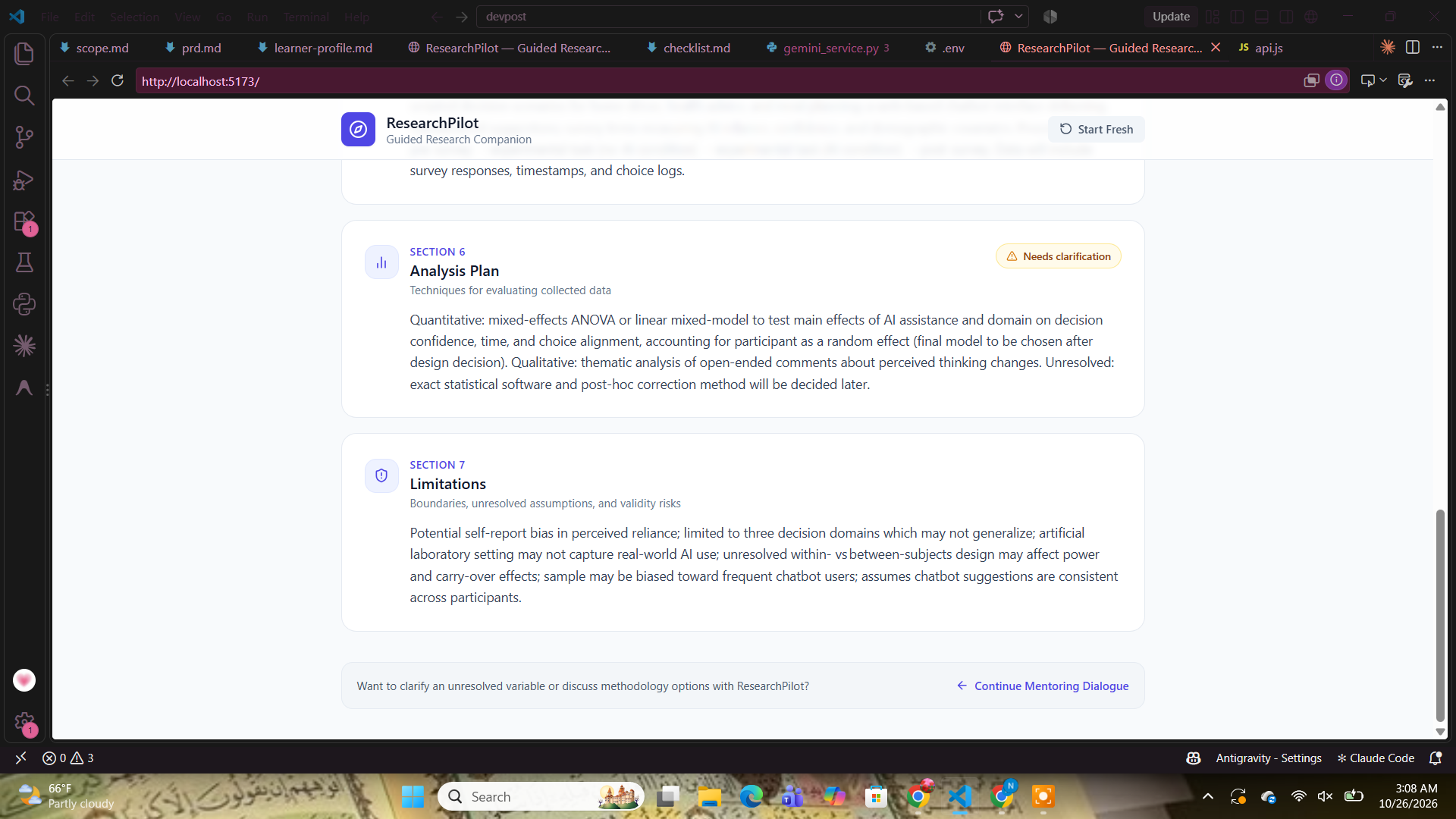
Plan data collection, analysis, and study limitations.
ResearchPilot: AI Research Planning Mentor
Inspiration
Starting a research project can feel overwhelming, especially for students who have an idea but are unsure how to turn it into a focused research question, formulate a hypothesis, choose a methodology, or plan their analysis. ResearchPilot was created to make this early stage of research more approachable through guided conversation rather than overwhelming students with information all at once.
What it does
ResearchPilot is an AI-powered research planning companion that helps students develop preliminary research ideas into structured research plans.
Students can discuss their interests with the AI mentor, clarify their research direction, and generate a plan organized into seven sections: Research Question, Hypothesis, Variables, Methodology, Data Requirements, Analysis Plan, and Limitations.
The application also highlights unresolved decisions through clarification indicators, reminding users that a generated plan is a starting point for critical thinking and refinement—not a substitute for independent research.
How we built it
ResearchPilot uses a React and Vite frontend connected to a Python FastAPI backend. The backend integrates with the Groq API using the openai/gpt-oss-120b model to support conversational guidance and structured research-plan generation.
The application includes dedicated API endpoints for chat, health checks, and plan generation. Pydantic schemas help structure the plan-generation request and response, while browser localStorage preserves conversation state across page refreshes.
The frontend and backend are deployed separately on Vercel, with environment variables used to configure the API connection.
Challenges we ran into
One of the main challenges was connecting the frontend and backend across local development and production environments. The local Vite proxy worked during development, but production deployment required configuring a separate backend URL.
We also needed to ensure that research plans followed a consistent seven-section structure rather than returning unstructured conversational responses. Handling API errors, timeouts, and unresolved research decisions was another important part of making the experience more reliable.
What we learned
This project helped us understand how to integrate a large language model into a full-stack application, design structured AI outputs, connect a React frontend with a FastAPI backend, and deploy application components independently.
We also learned that a useful AI research assistant should do more than generate text: it should help users recognize unanswered questions and make thoughtful decisions about their research.
What's next
Future improvements include stronger research-question validation, more interactive plan refinement, literature-search integration, and additional guidance for evaluating research methods and sources. The long-term goal is to help students move from an initial idea toward a more rigorous and clearly defined research project.

Log in or sign up for Devpost to join the conversation.