-
-
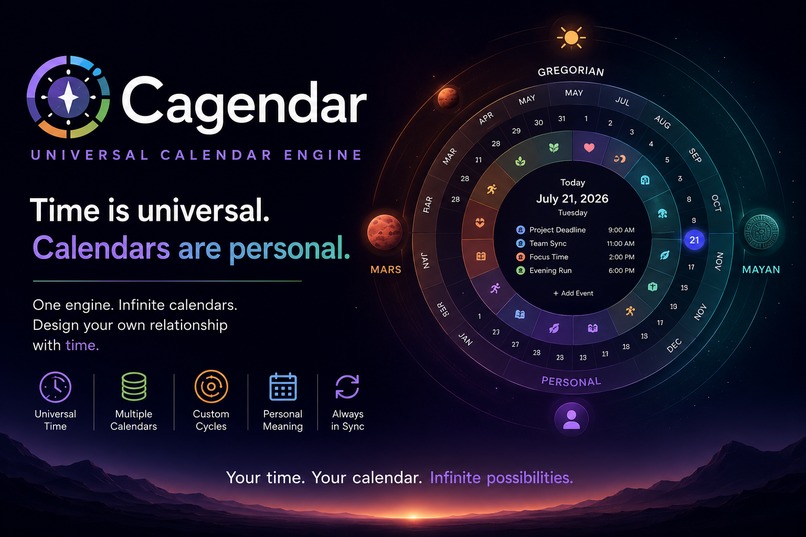
Universal Calendar Engine
-
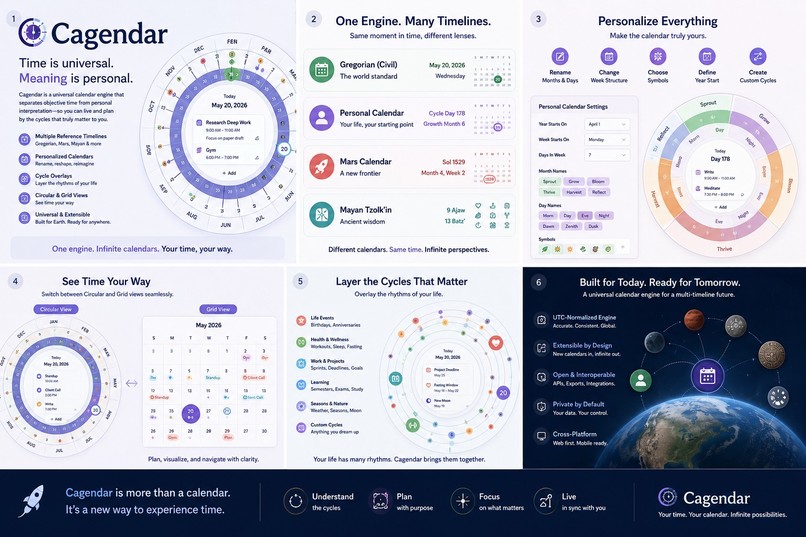
Infographic
-
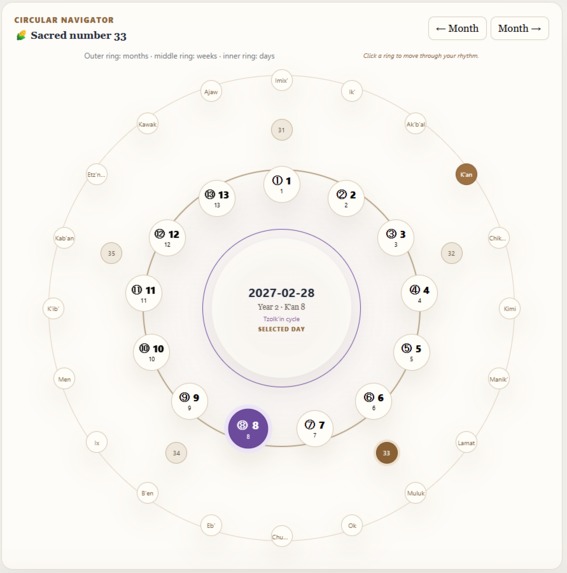
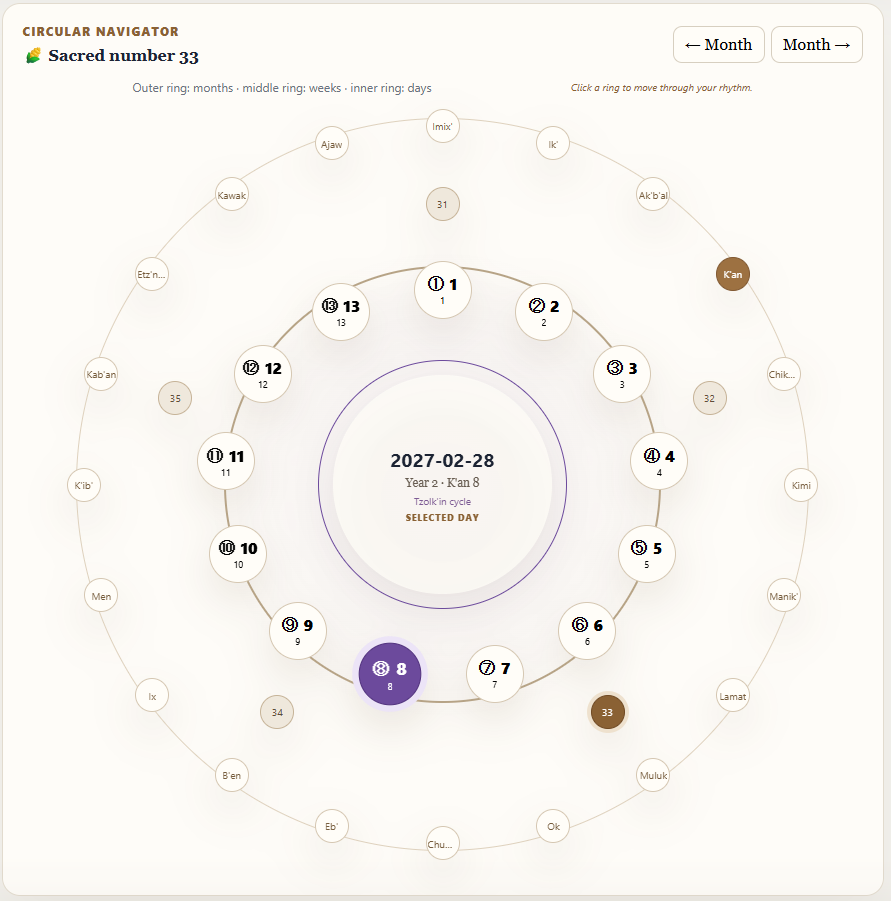
Circular View Mayan Calendar
-
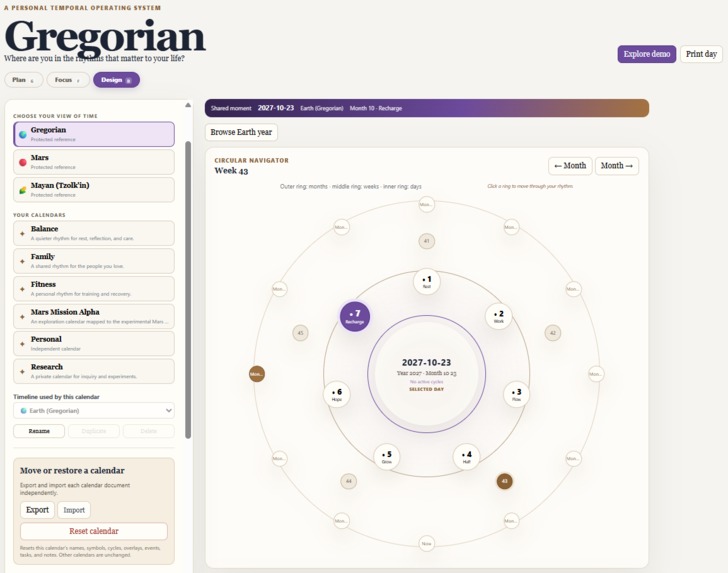
Gregorian calendar circular view
-
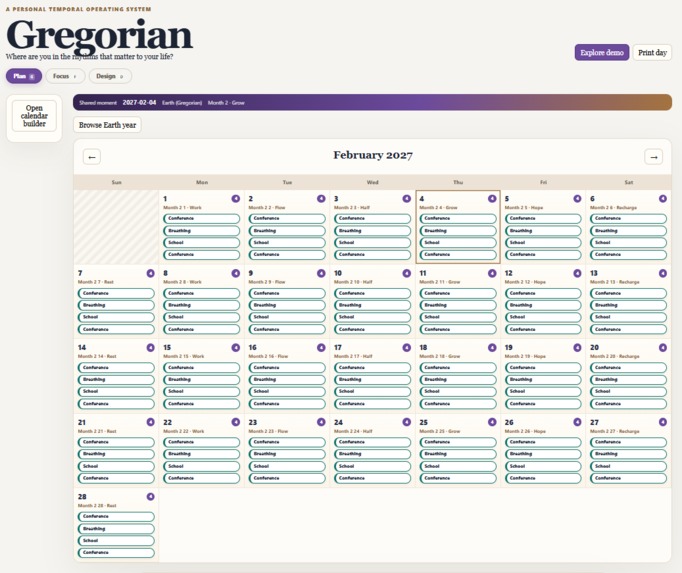
Gregorian grid view calendar
-
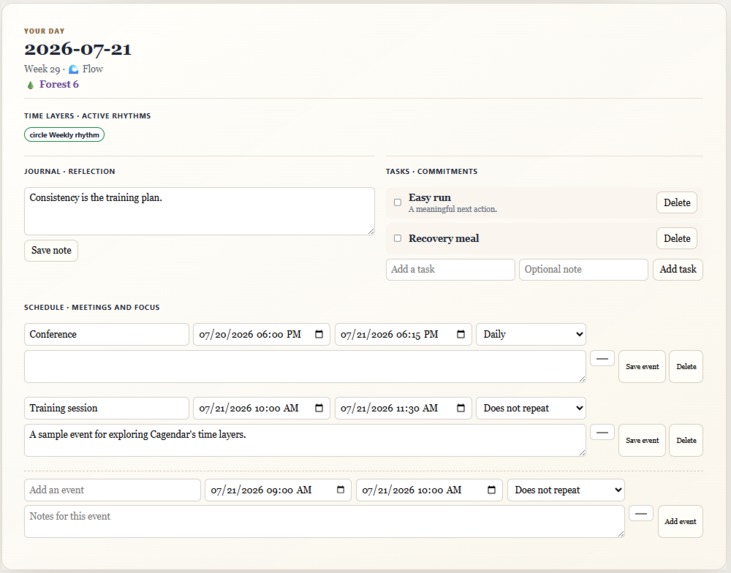
Event view
-
Mayan Calendar
-
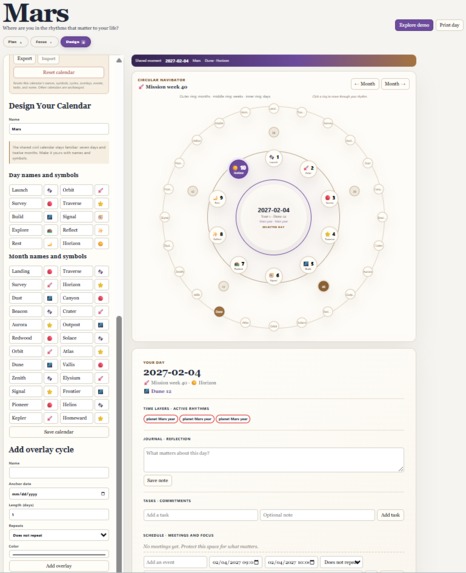
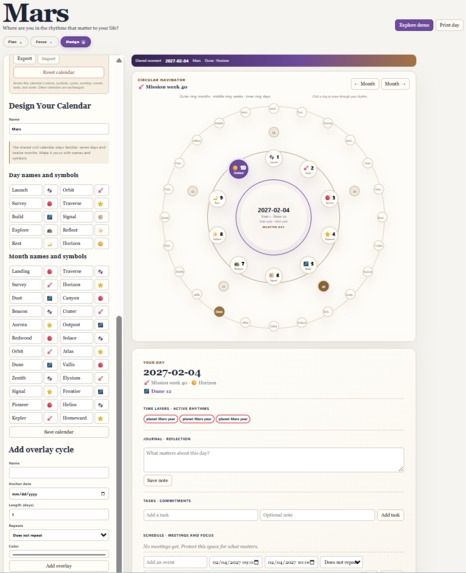
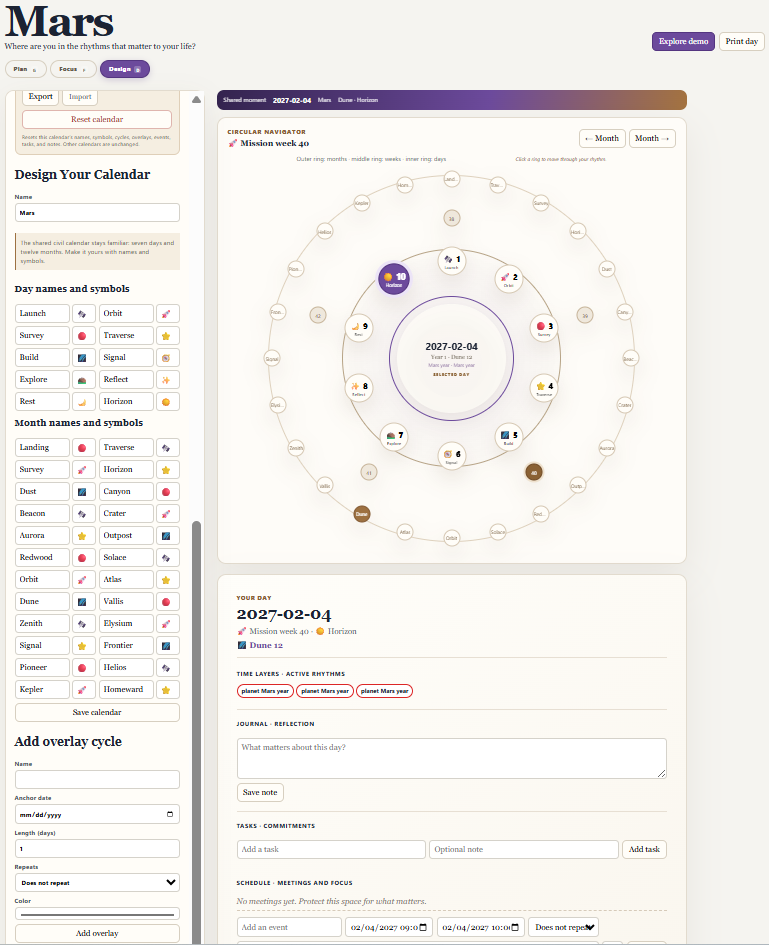
Mars Calendar
-
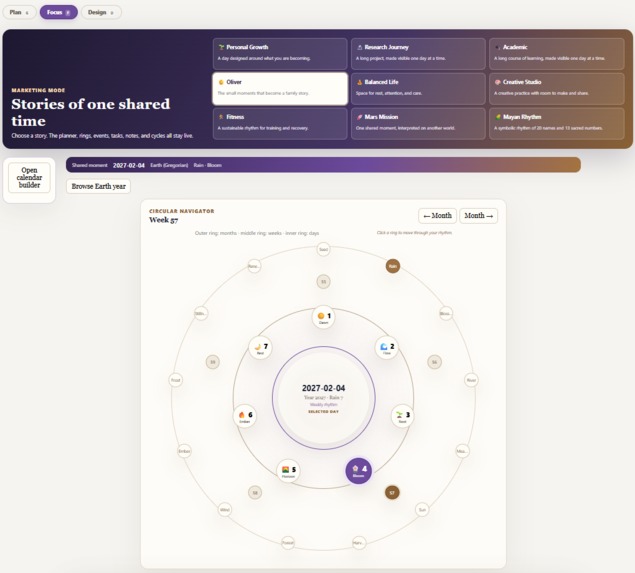
Demo view
Inspiration
Technology has transformed nearly every part of our lives, yet our calendars have remained largely unchanged for centuries. We still organize time using month names inherited from Julius Caesar, Augustus Caesar, and Roman mythology. Those conventions work well as a shared civil standard, but they are not necessarily the most meaningful way for every individual to experience time.
During this hackathon I asked a simple question: What if calendars were designed around people instead of people adapting to calendars?
The idea began with allowing users to rename months and days. As development progressed, it evolved into something much broader: giving people the freedom to define the cycles that matter most in their lives.
What it does
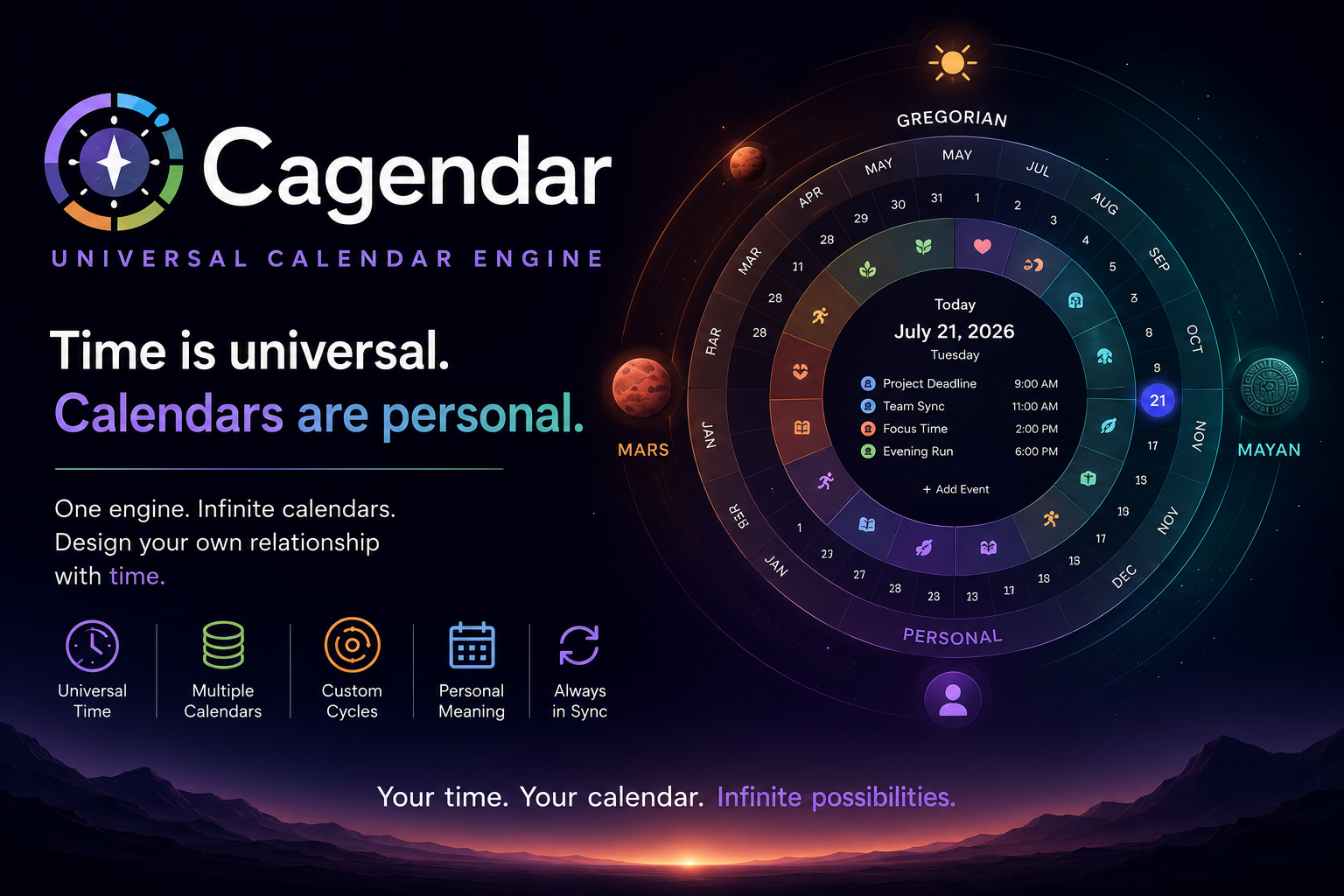
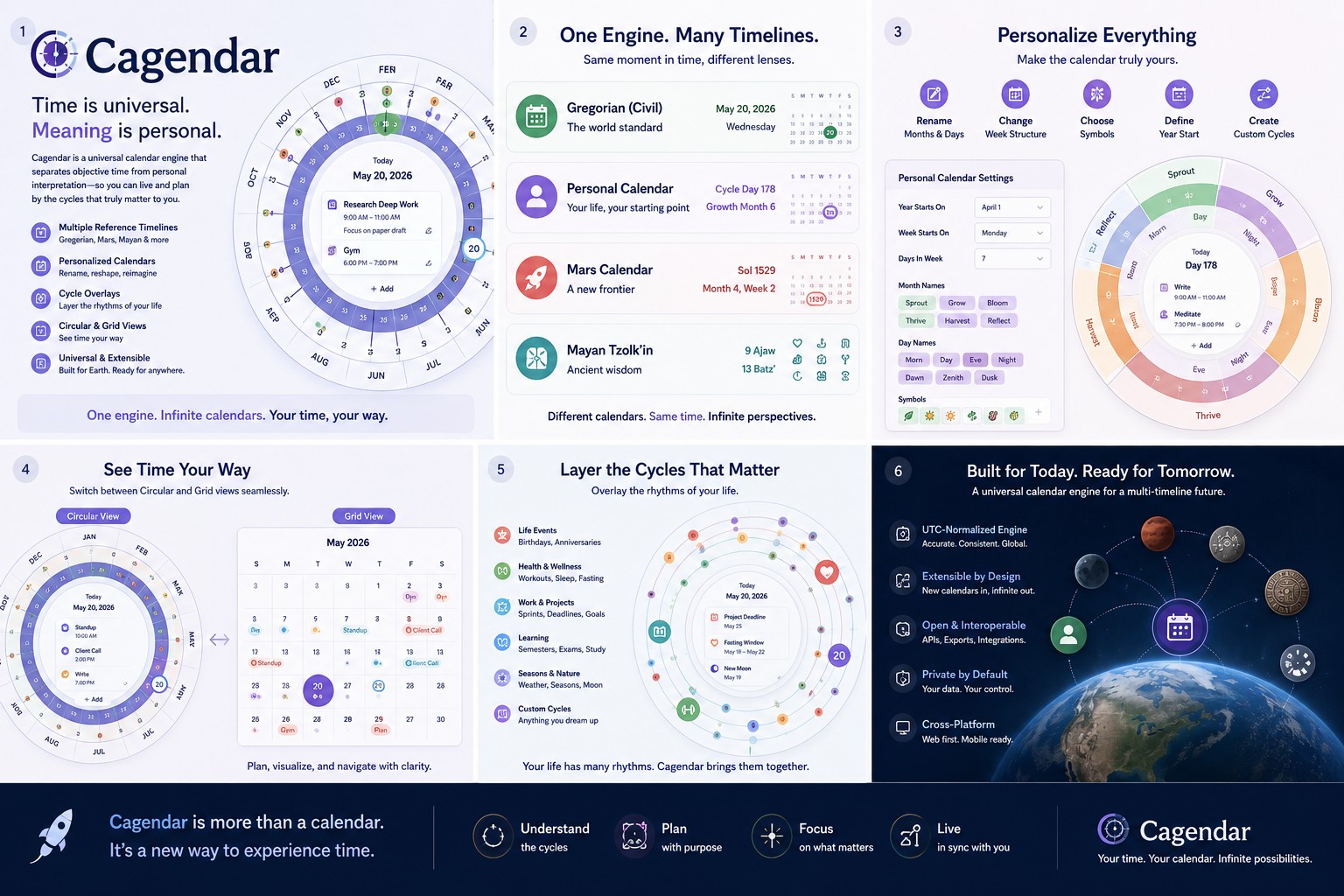
Cagendar is a personalized calendar engine that separates timekeeping from time interpretation.
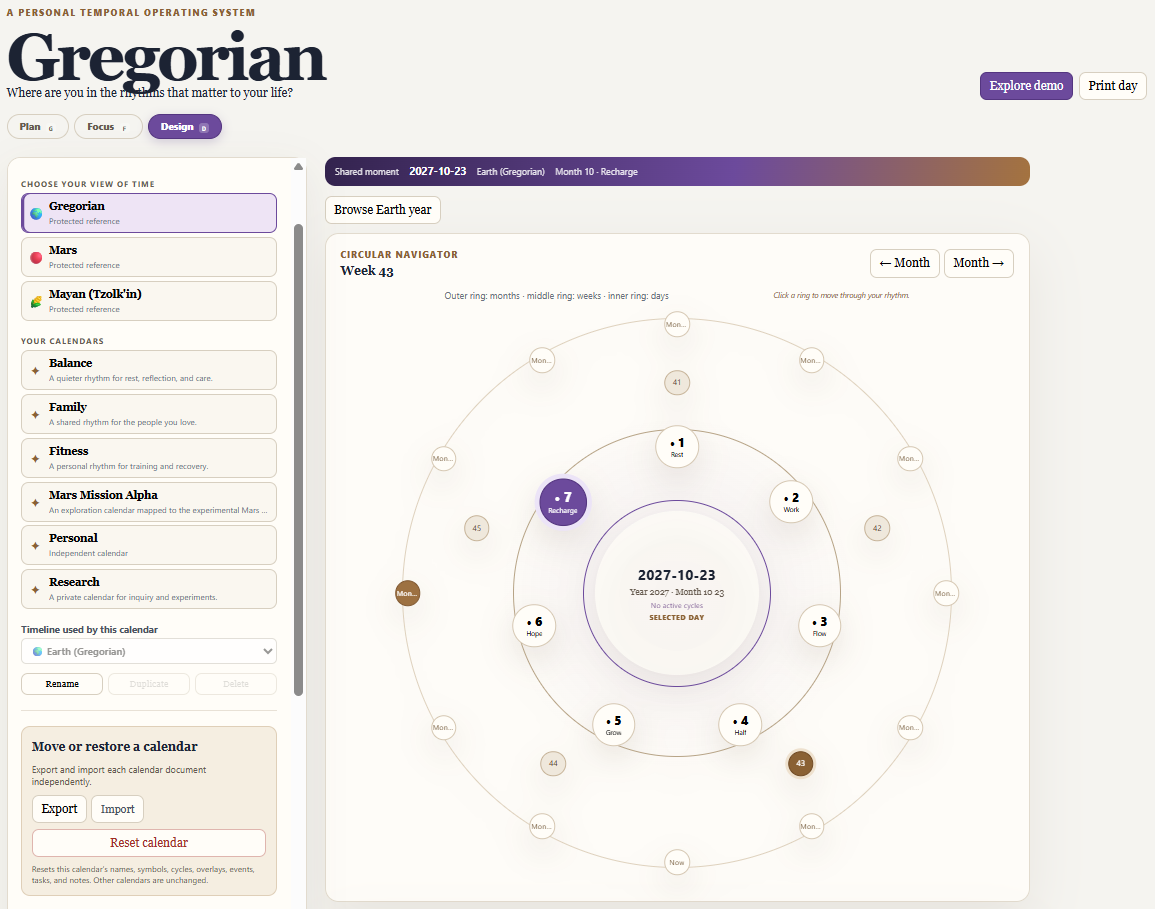
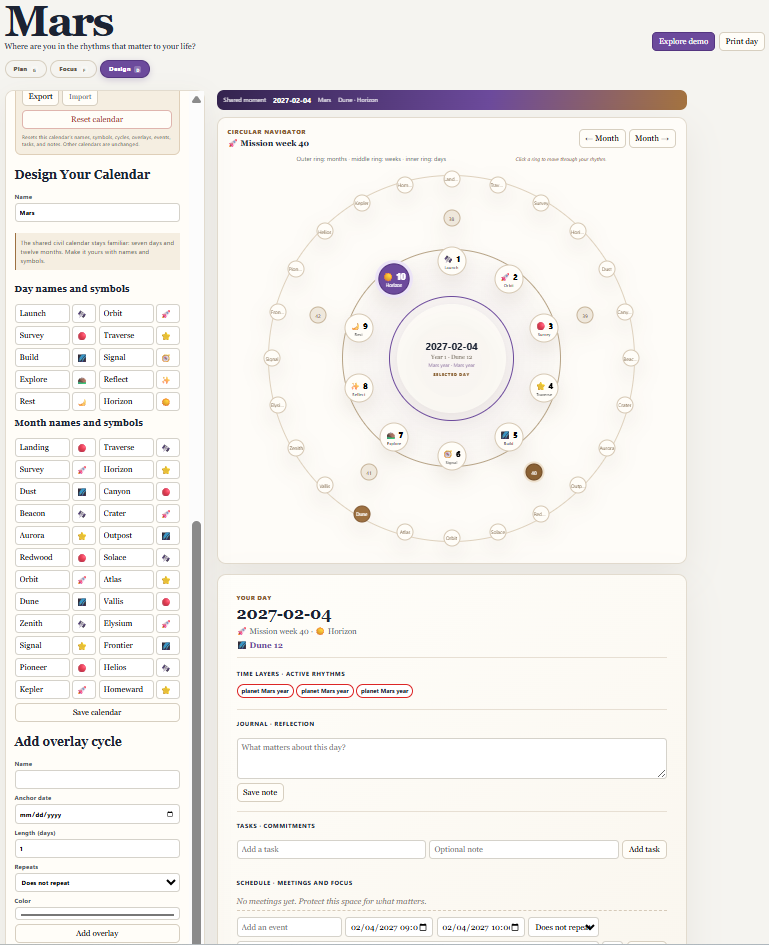
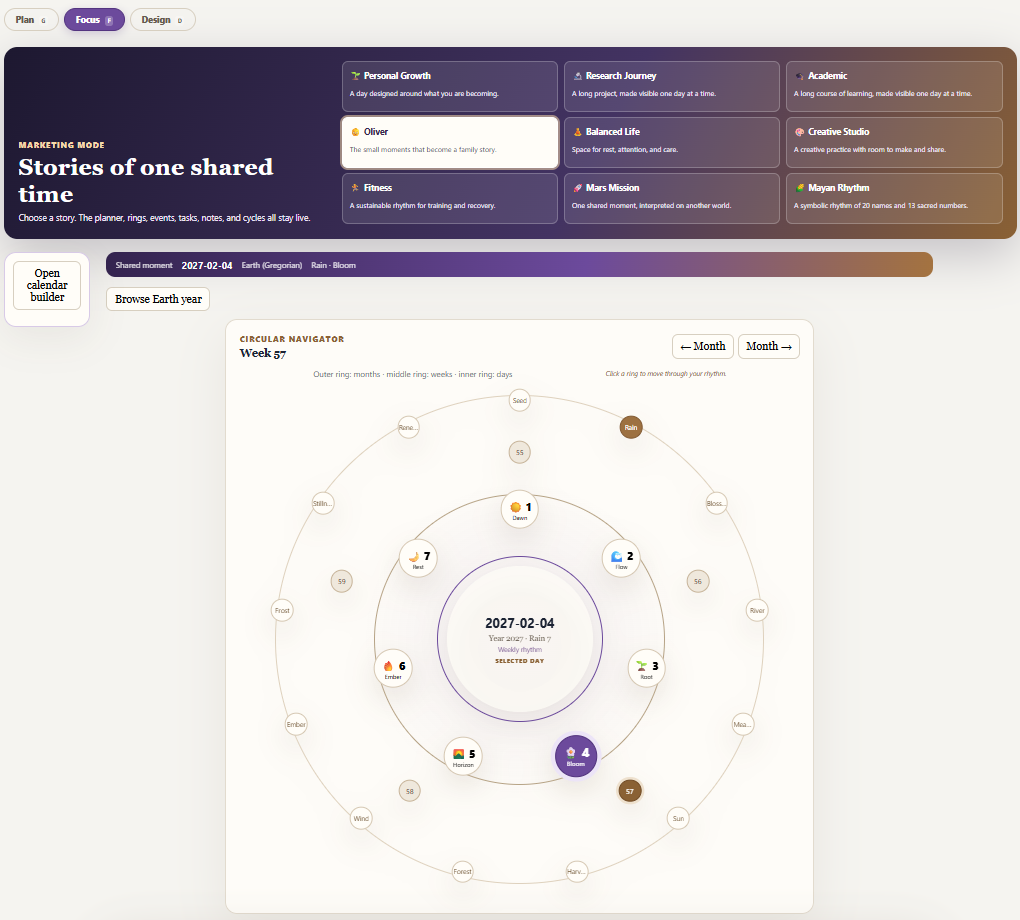
The Gregorian calendar remains a reliable reference timeline, while users can experience time through different calendar systems, including:
Gregorian Mars Mayan (Tzolk'in) Fully customizable personal calendars
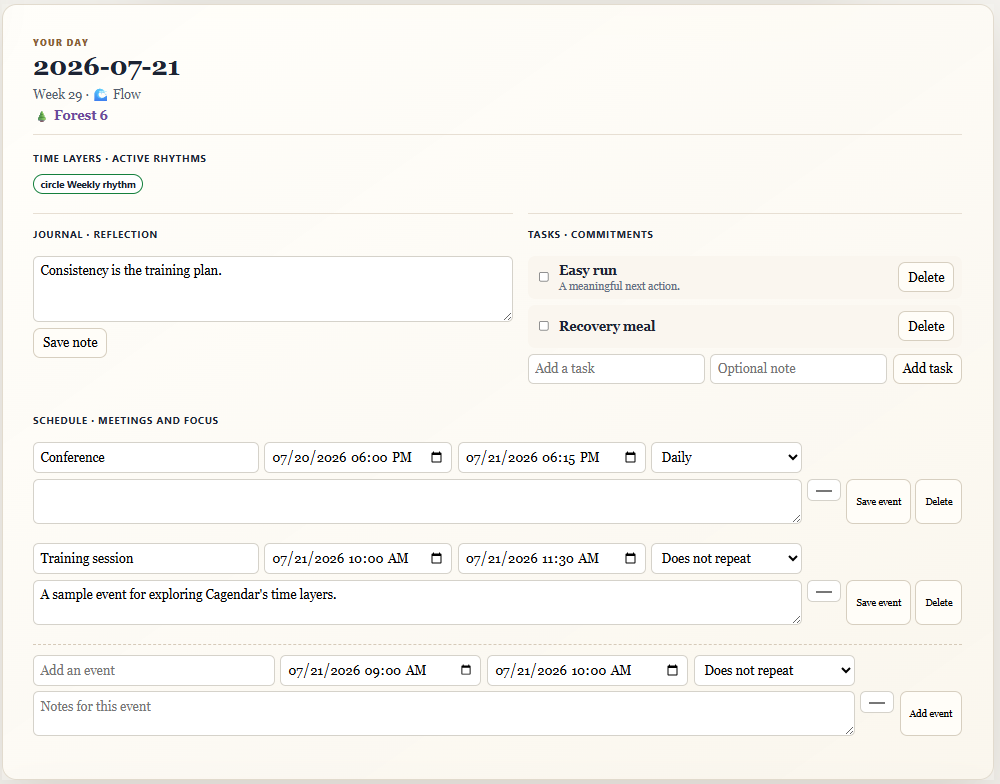
Users can define their own week lengths, month structures, names, symbols, recurring rhythms, and overlay cycles while maintaining synchronization with real-world dates.
The project also introduces a circular navigation experience inspired by historical calendars, emphasizing that time is fundamentally cyclical rather than purely tabular.
How we built it
The project was built with GPT-5.6 and Codex throughout the hackathon.
The implementation includes:
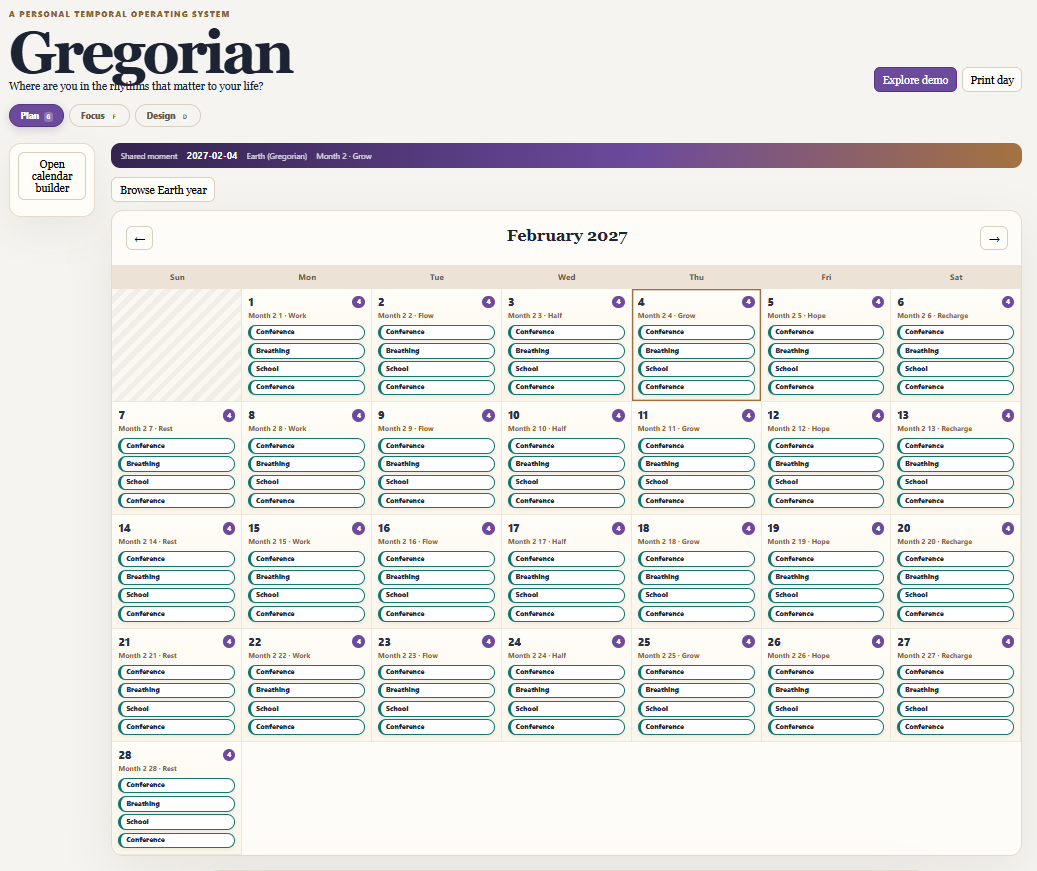
A reusable calendar interpretation engine Multiple calendar systems sharing a common architecture Circular and traditional grid views User-defined calendar structures Personal events, recurring rhythms, and overlay cycles FastAPI backend with a React frontend
Rather than building another scheduling application, the focus was on creating a flexible engine that can support many different ways of organizing time.
Challenges we ran into
The biggest challenge was shifting from the traditional assumption that calendars are fixed.
Most calendar software treats seven-day weeks, twelve months, and Gregorian rules as immutable. Designing an engine where calendars themselves become configurable required rethinking the data model from first principles.
Balancing flexibility with usability was equally challenging. The goal was to make customization powerful without overwhelming users.
Accomplishments that we're proud of
We're proud of challenging one of humanity's oldest conventions and demonstrating that calendars don't have to be fixed. Cagendar empowers people to define the rhythms that matter most to their lives while remaining connected to shared time. We're also proud of creating a functional circular and grid interface that begins to make personalized calendars feel intuitive and practical.
What we learned
This project reinforced how deeply assumptions are embedded in software. Many things we consider permanent are simply conventions that have persisted for centuries.
Building Cagendar showed that calendars can become personal, adaptable, and expressive while still remaining compatible with shared civil time.
What's next for Cagendar
This prototype is only the beginning.
Future work includes richer circular visualizations, additional historical and planetary calendars, AI-assisted creation of personal rhythms, collaborative calendars, and deeper personalization so each person's calendar reflects their own life, priorities, and natural cycles rather than a single inherited model.
Ultimately, Cagendar explores a simple idea:
Time is universal. Calendars are human. We should be free to design the ones that help us live our lives best.
Built With
- api
- calendar
- codex
- css3
- data
- fastapi
- git
- github
- gpt-5.6
- html5
- javascript
- json
- openai
- productivity
- pydantic
- python
- react
- rest
- sqlalchemy
- sqlite
- typescript
- ui/ux
- uvicorn
- vite

Log in or sign up for Devpost to join the conversation.