-
-
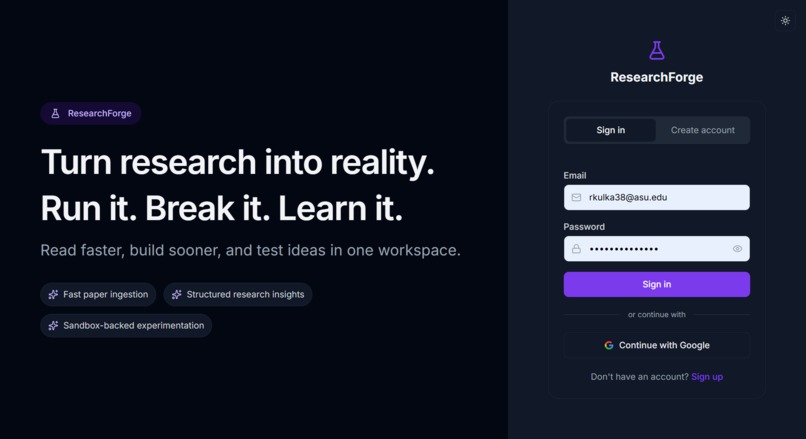
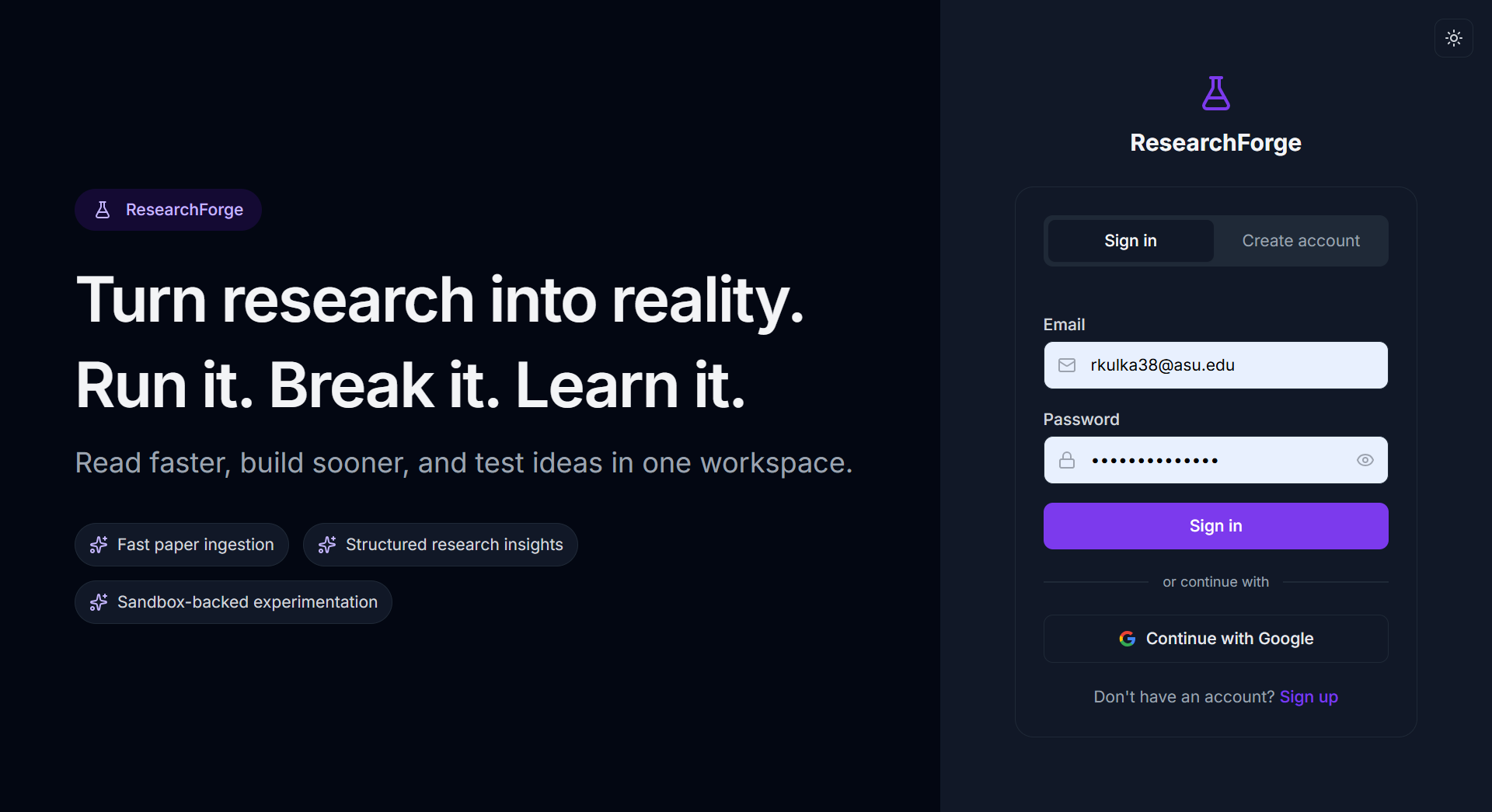
Landing Page
-
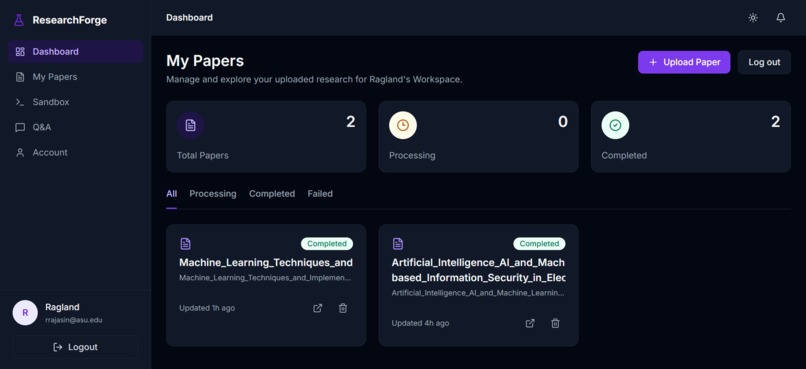
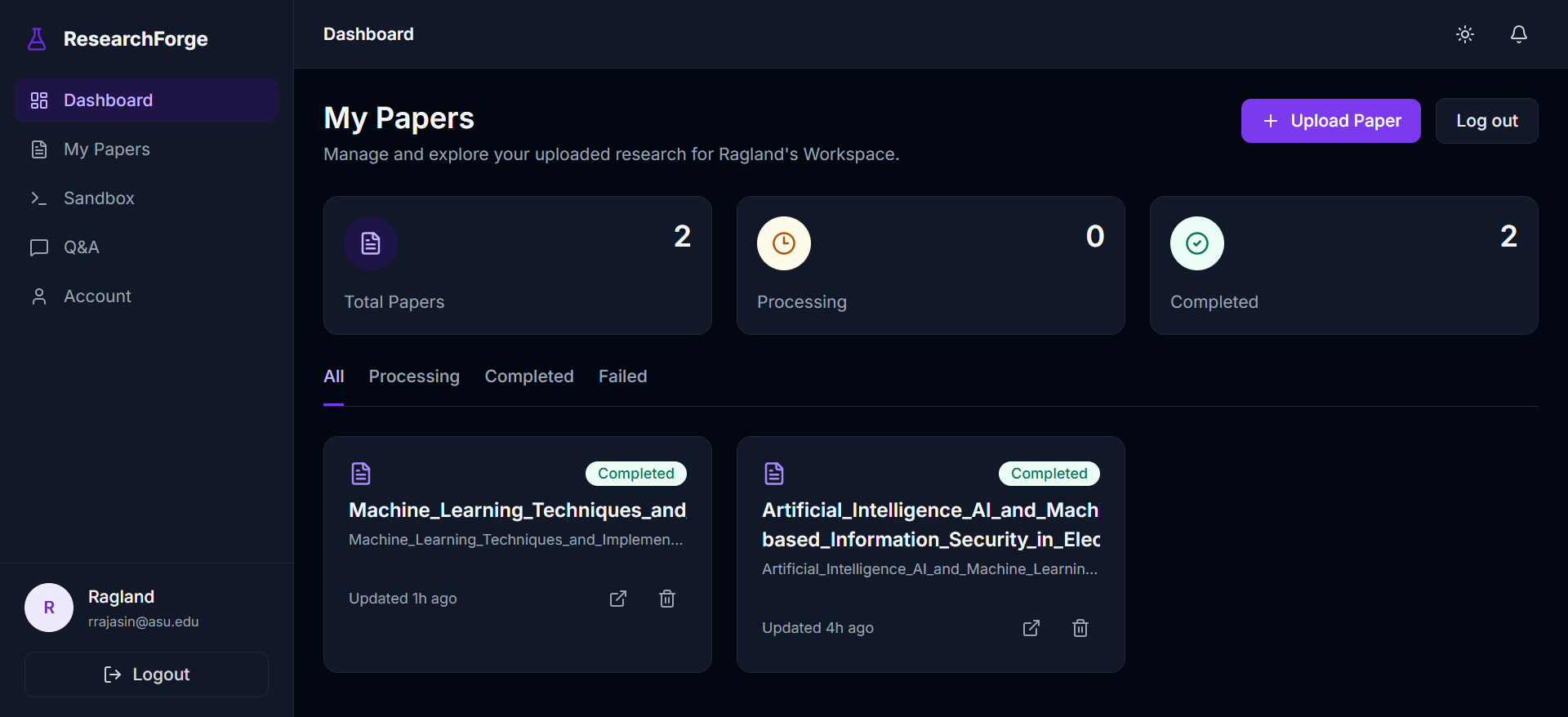
My Papers Dashboard
-
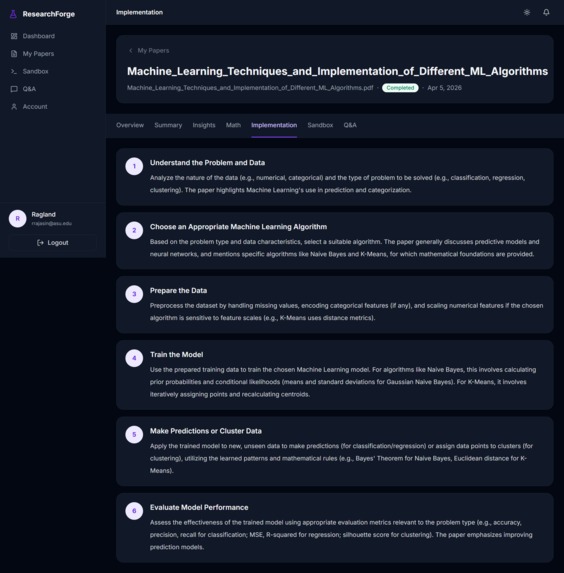
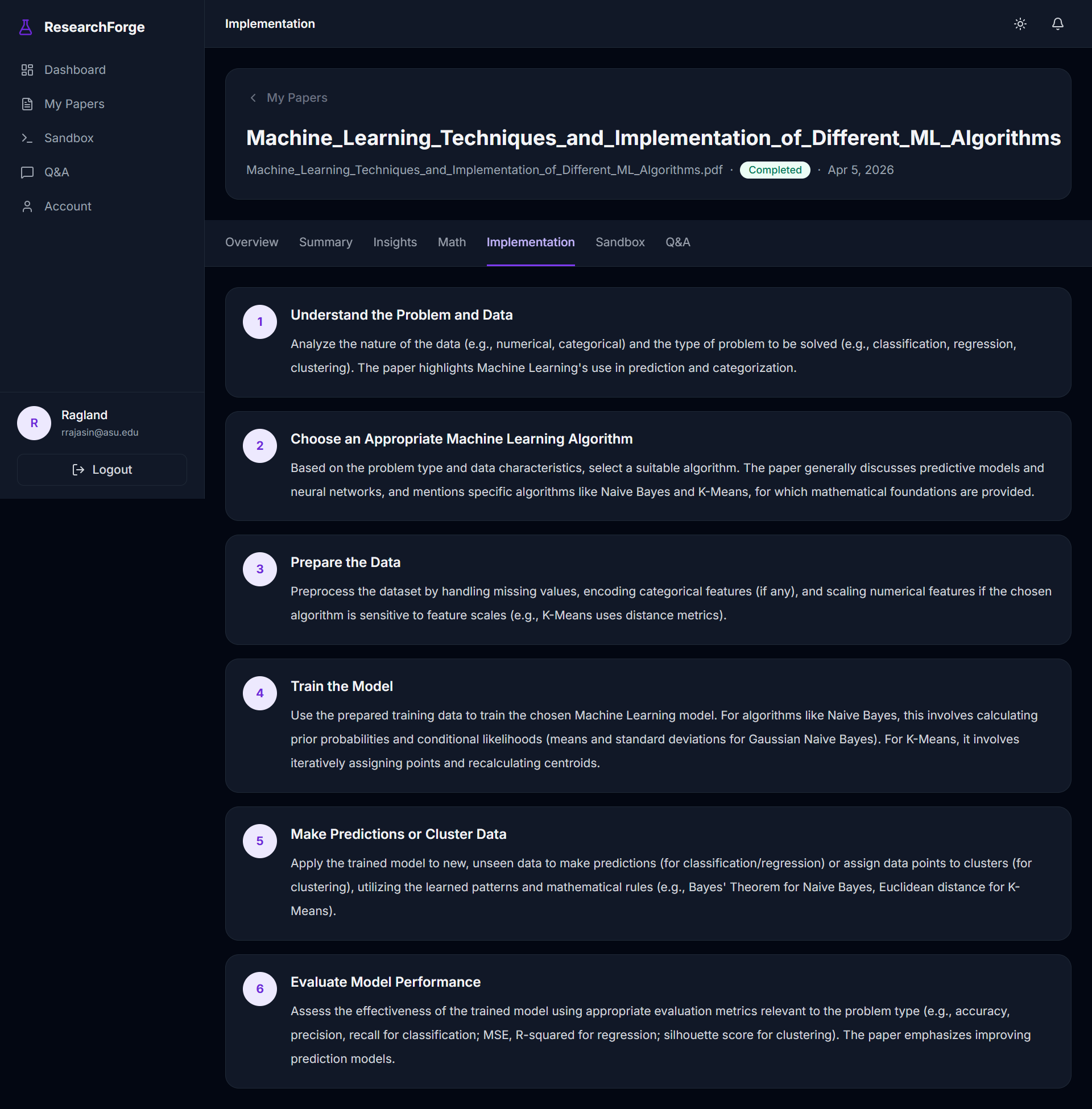
Implementation Page
-
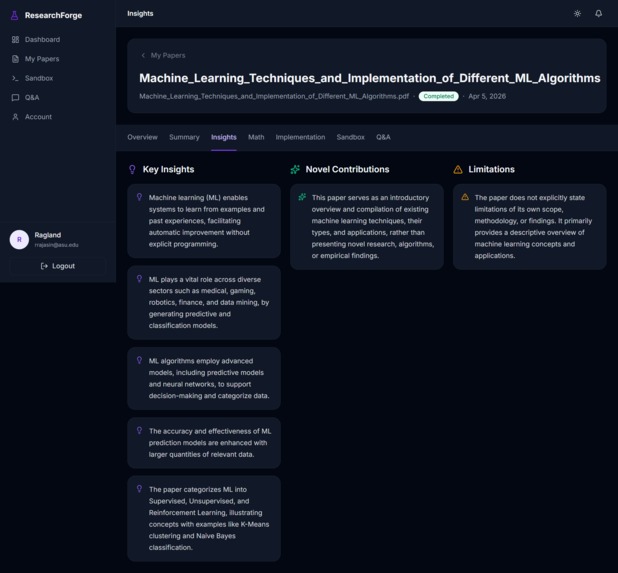
Insights Page
-
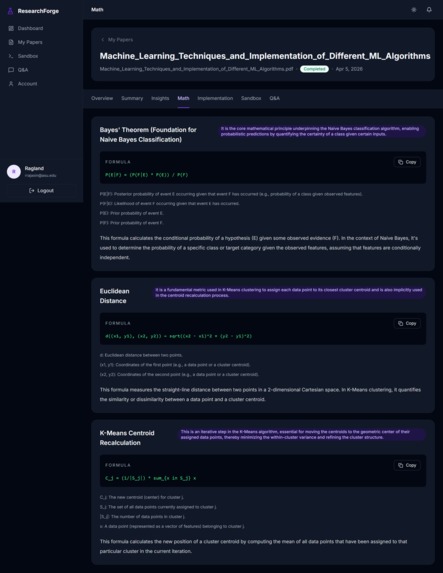
Math Equations Page
-
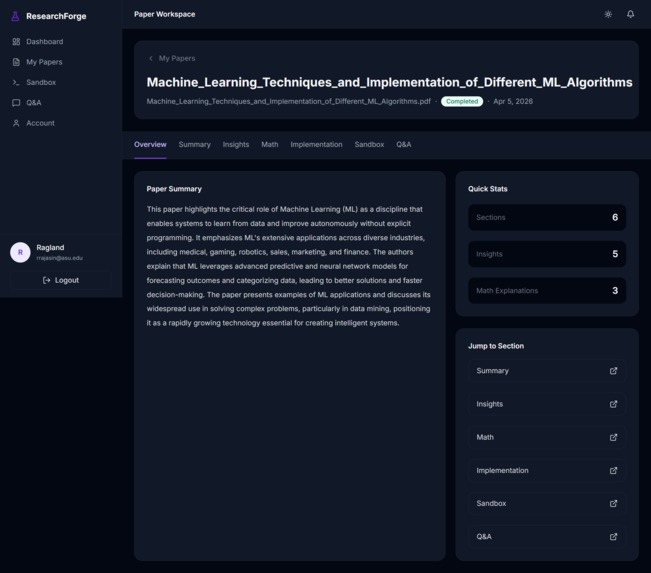
Dashboard/Paper Workspace
-
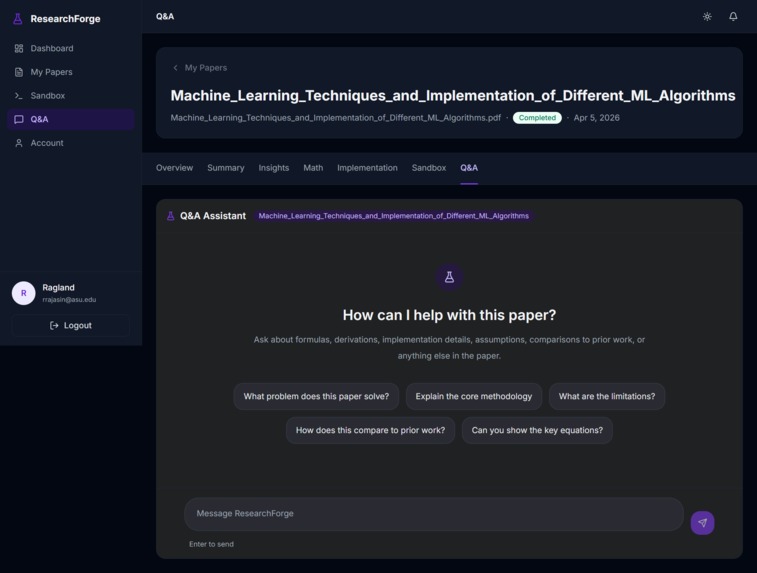
Q and A Chat
-
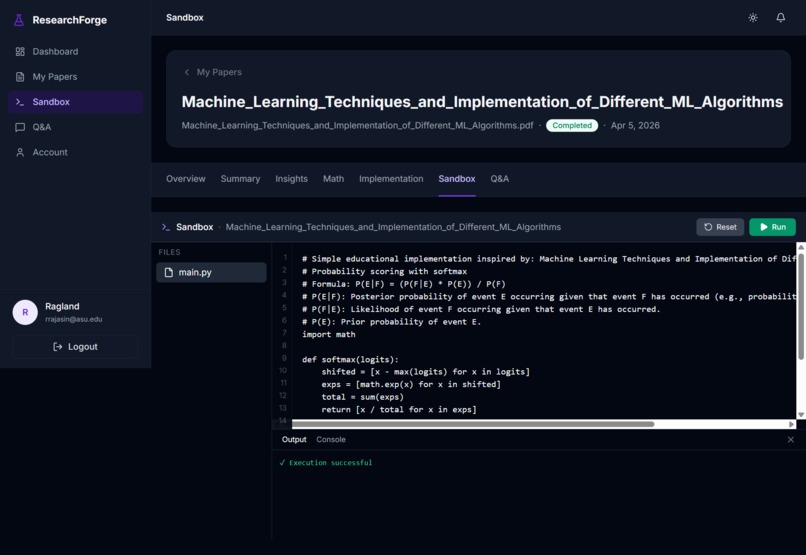
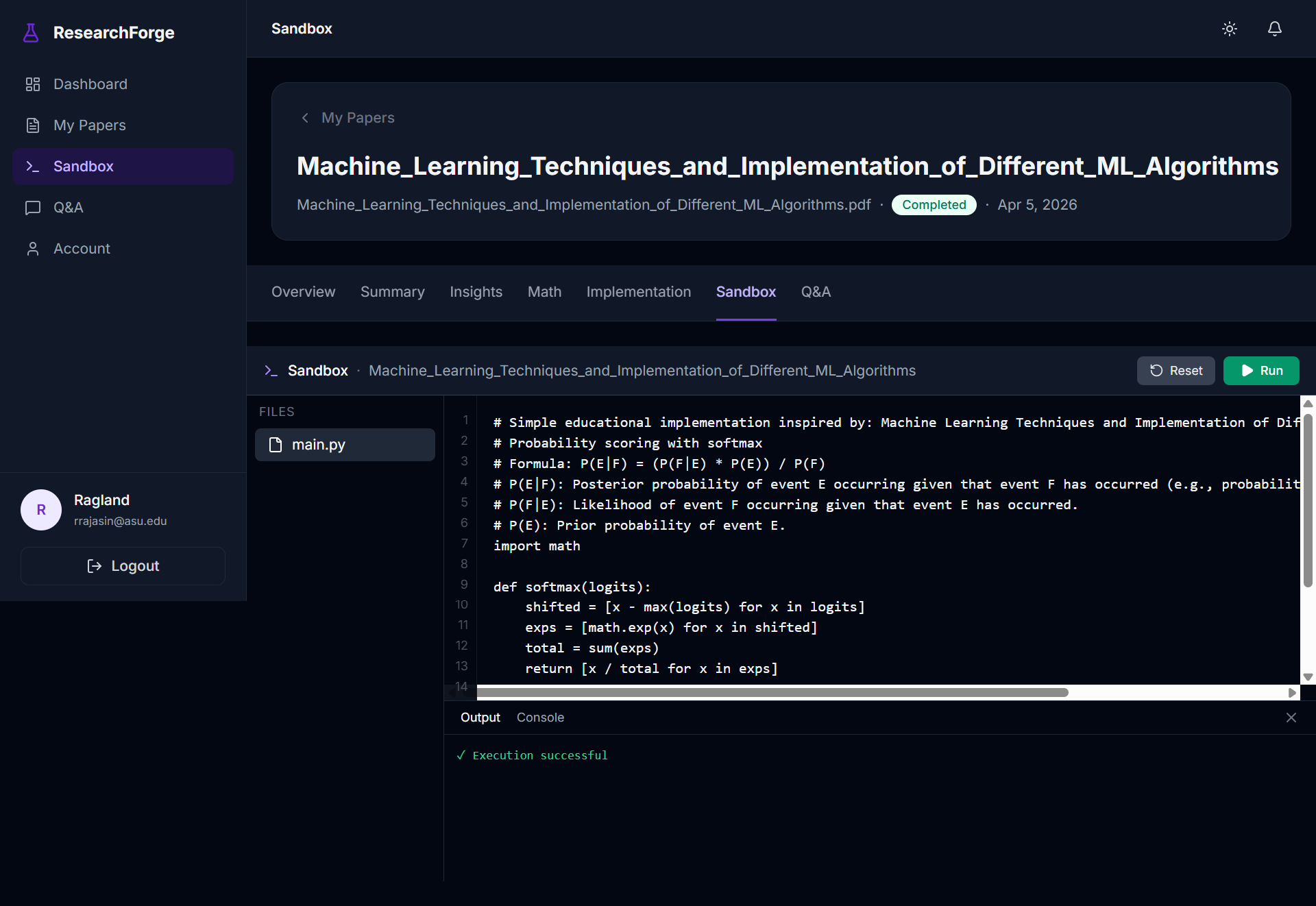
Sandbox Environment
-
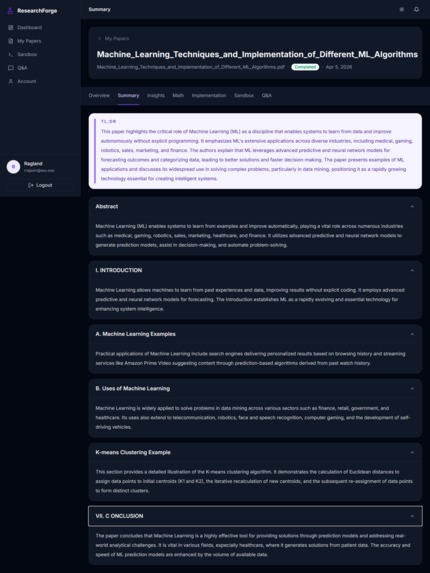
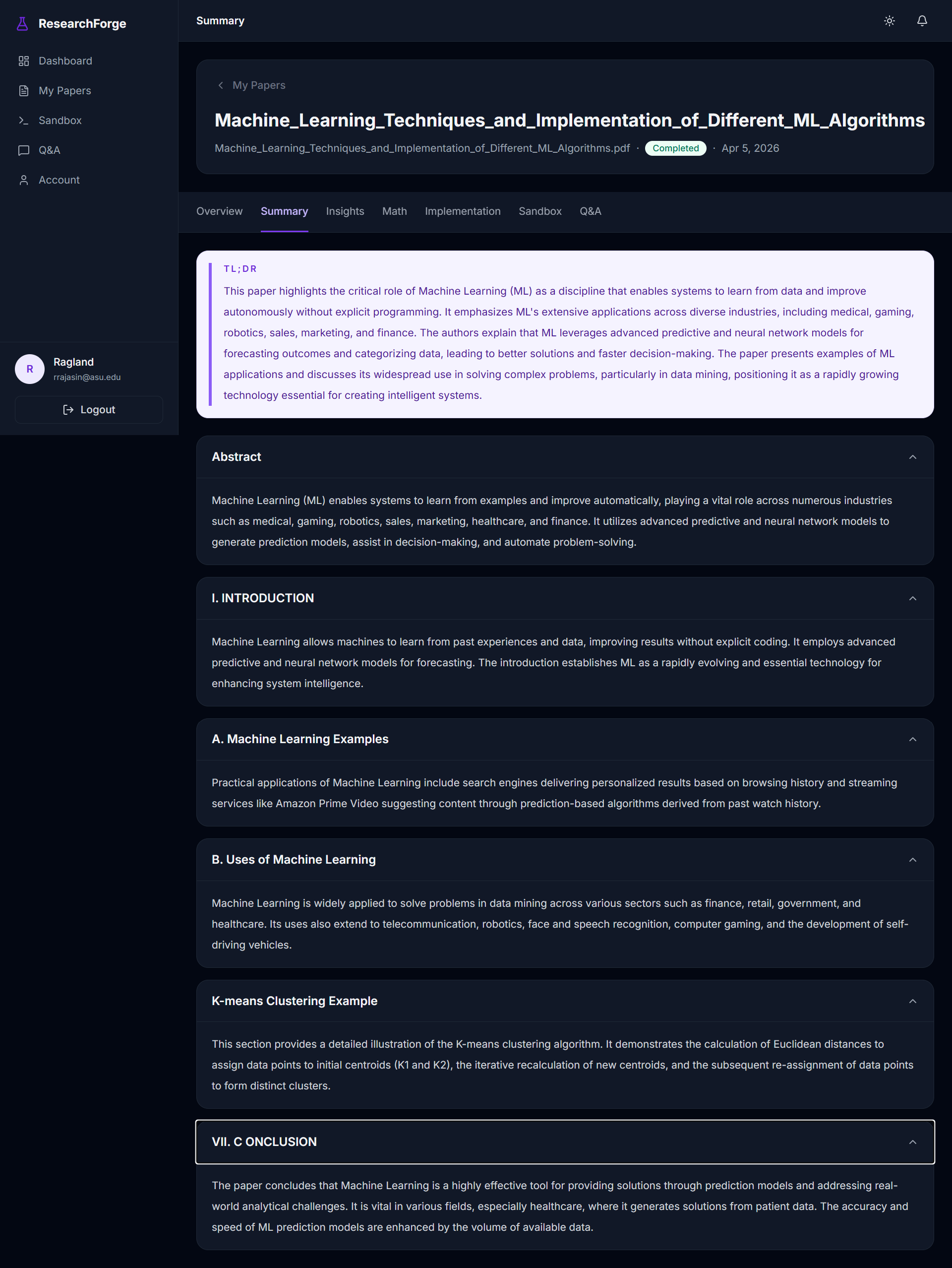
Summary Page
ResearchForge
Inspiration
Research papers are powerful but painful to work with. Even as CS students we'd spend hours decoding dense text, trying to understand equations and figuring out how to actually implement an idea. Most tools only solve one piece of this. Summaries, or chat, or notes, but never the full journey. We kept asking ourselves: what if a paper wasn't just something you read, but something you could actually explore and build from?
What it does
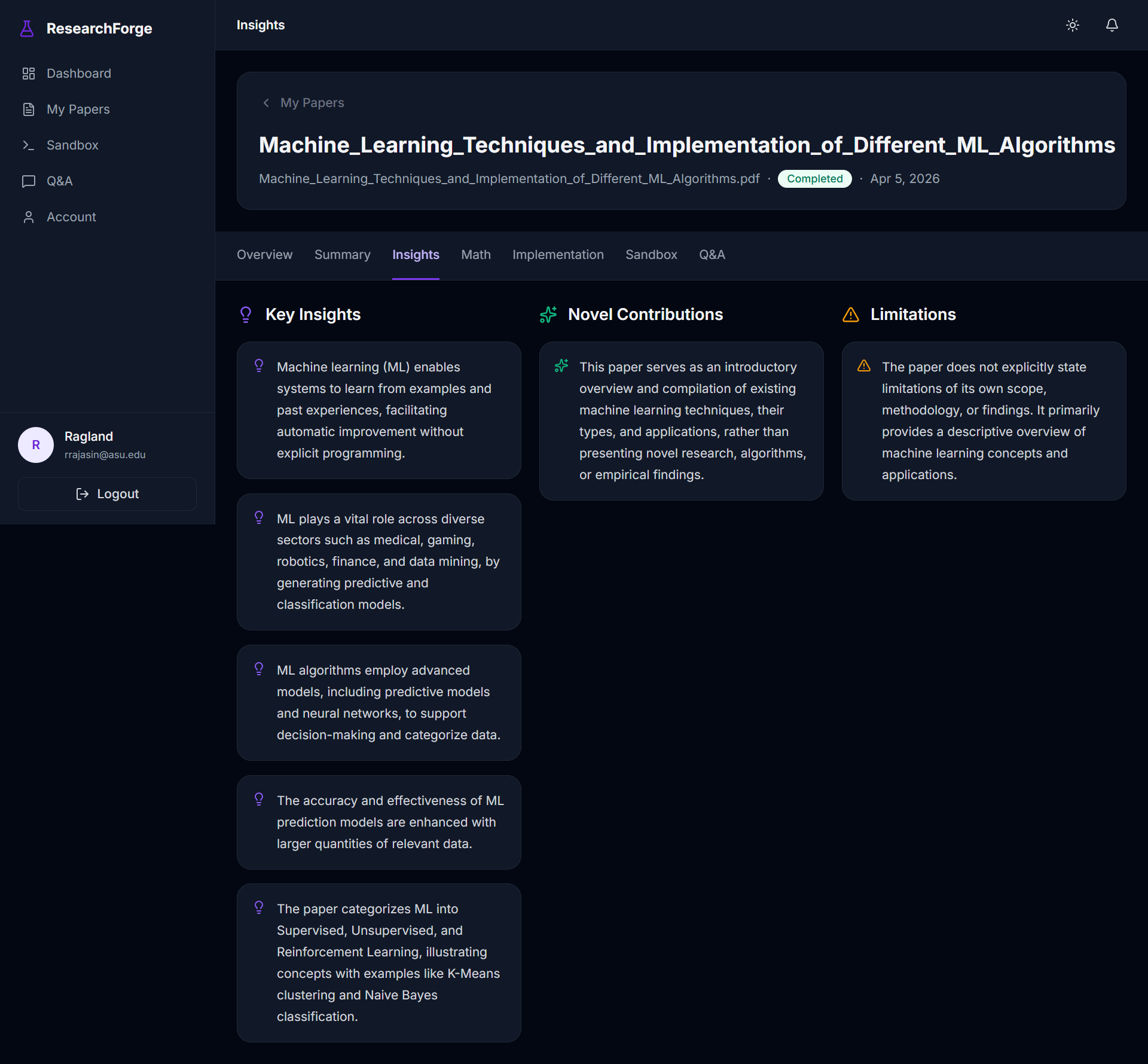
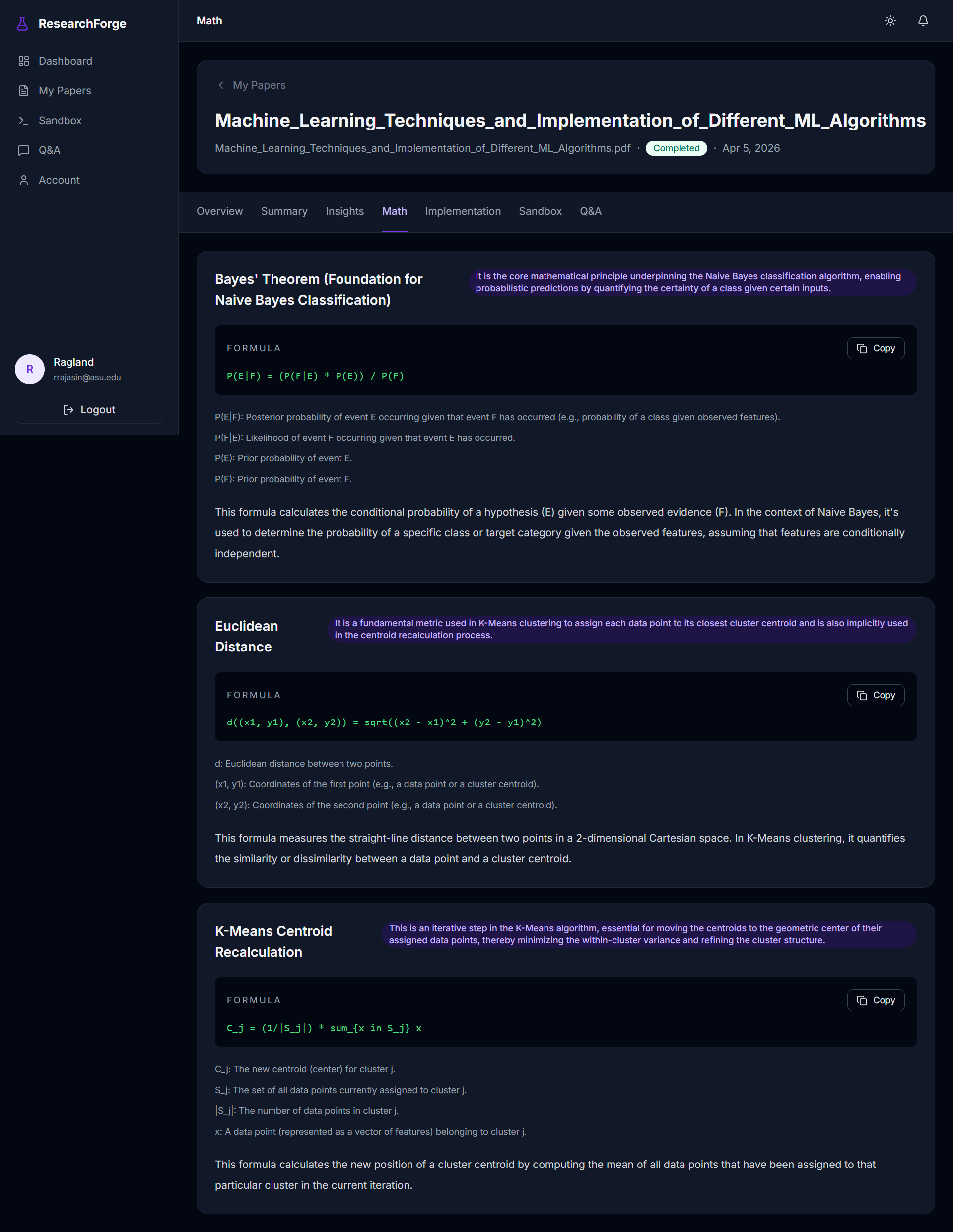
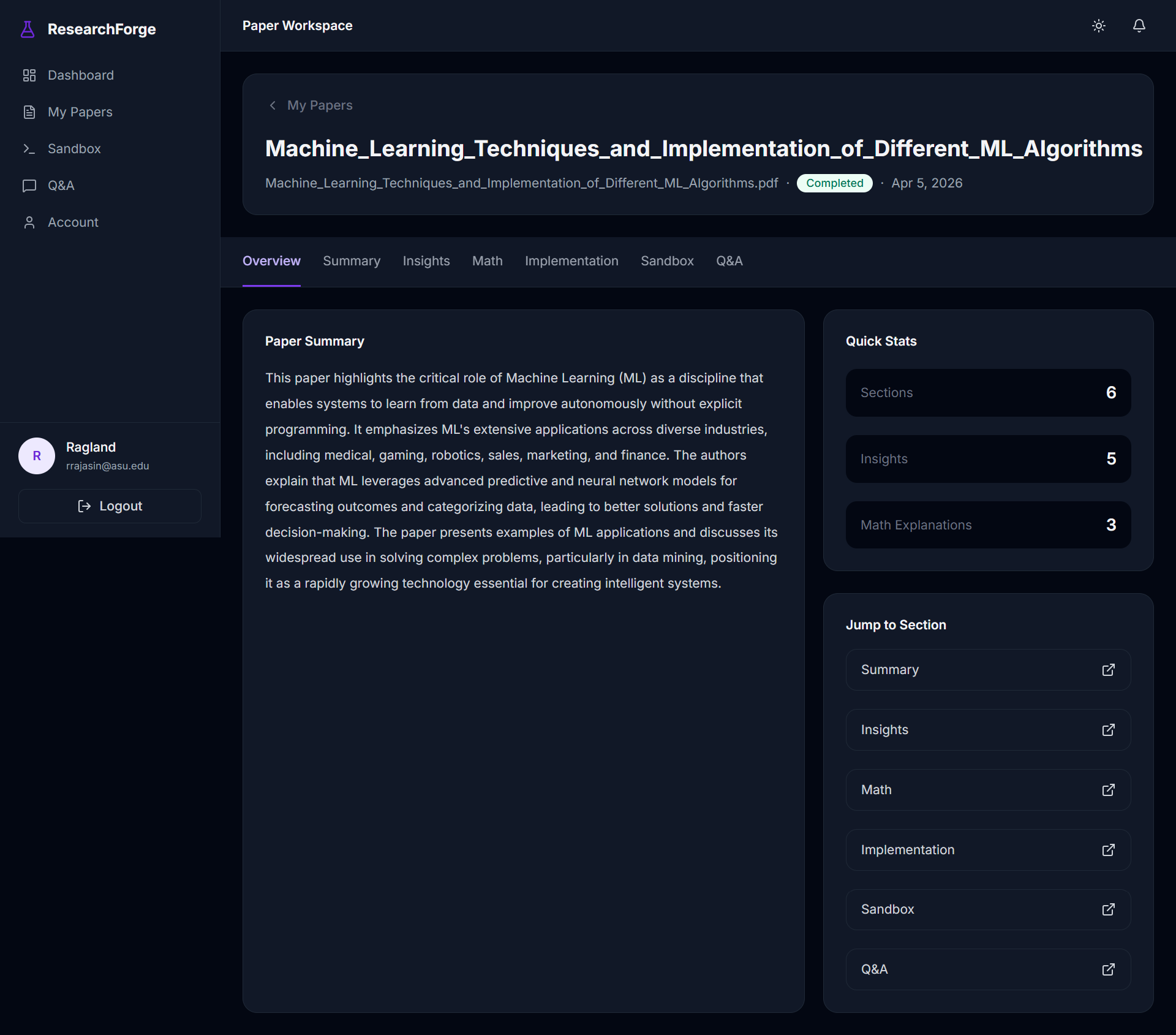
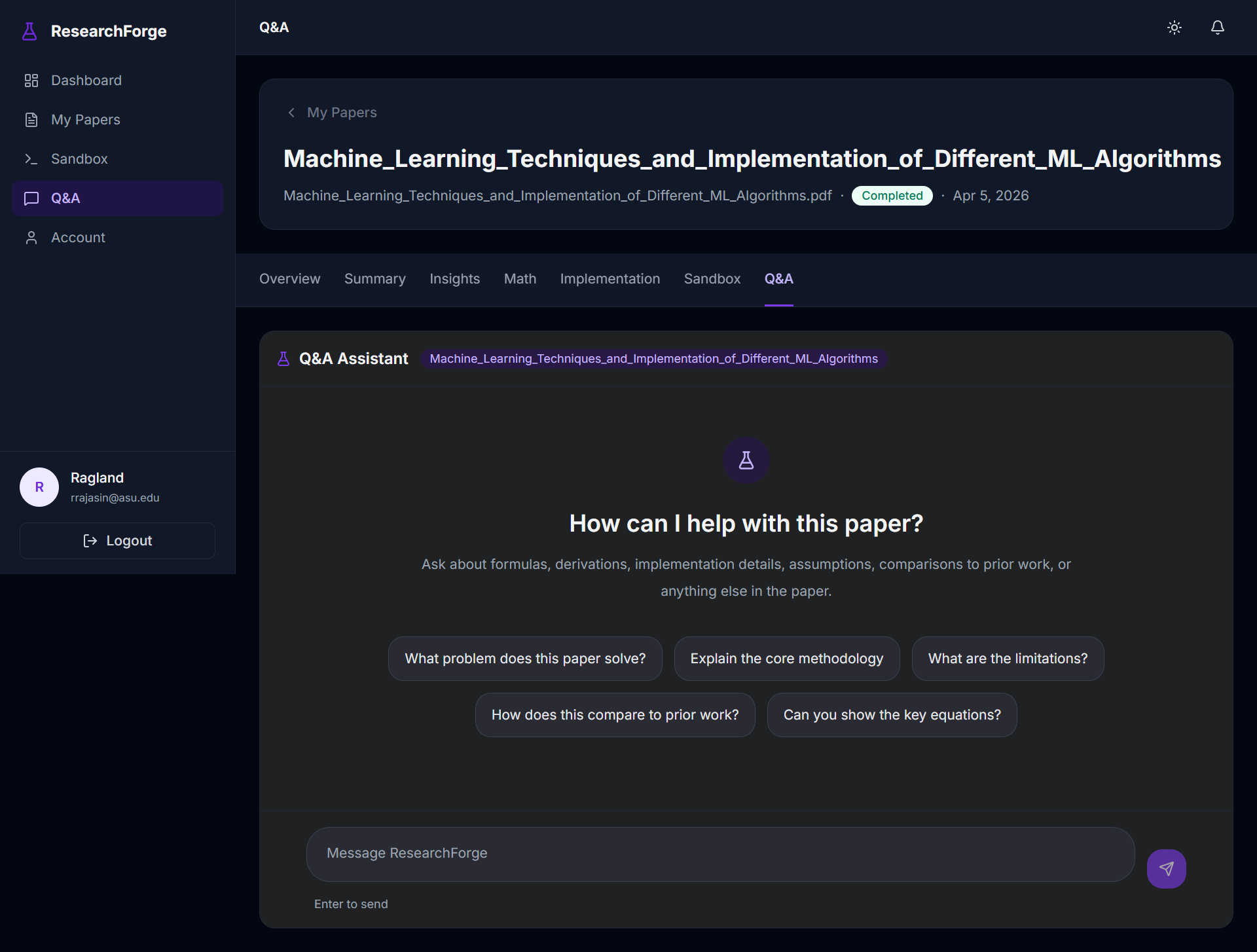
ResearchForge turns a research paper PDF into an interactive AI workspace. It generates structured summaries, extracts key insights and limitations, explains equations in plain English, answers questions with cited evidence and provides step-by-step implementation guidance. It also includes a live Python sandbox where you can run and modify generated code so a static paper becomes something you can actually act on.
How we built it
We built ResearchForge as a full-stack system using FastAPI, Next.js and a multi-agent AI pipeline. Specialized agents handle summarization, insights, math explanation and implementation, all tied together through a strict structured schema. We added PDF parsing, a retrieval-based Q&A system for grounded answers and a sandbox executor for running code live. The whole system is designed to work with both cloud services and local fallbacks so it stays reliable even under constraints.
Challenges we ran into
Messy PDF data was probably our biggest headache since extracting clean structure from research papers is just inherently unreliable. Preventing hallucinations meant we had to build a proper grounded Q&A system instead of a simple chatbot. Coordinating multiple agents while keeping outputs consistent required really tight schema design. And building a safe code sandbox with proper limits and controls, all within hackathon time, was genuinely tough.
Accomplishments we're proud of
We built a complete end-to-end product, not just a feature. ResearchForge brings together multi-agent AI, structured outputs, evidence-backed Q&A and a live coding sandbox into one continuous workflow. It doesn't just summarize papers. It helps you go from understanding to actually building something.
What we learned
Structured pipelines outperform raw prompting by a lot. Grounding responses in evidence is what makes an AI product trustworthy rather than just impressive. And honestly the biggest lesson was that great AI products need real engineering behind them, handling failures gracefully, thinking about system design and obsessing over user experience rather than just model output.
What's next for ResearchForge
We want to add vector search for deeper retrieval, enable multi-paper comparison and introduce collaborative workspaces. Better sandbox isolation and notebook or repo exports are on the roadmap too. The long-term goal is to turn research papers into executable knowledge and genuinely close the gap between learning and building.
Built With
- fastapi
- firebase-auth
- firestore
- github
- google-cloud
- google-vertex-ai-(gemini)
- javascript
- multi-agent-llm-pipeline
- next.js
- pdf-parsing-services
- pydantic
- python
- python-subprocess-sandbox-with-controlled-package-installation
- react
- rest-apis
- tailwind-css
- typescript

Log in or sign up for Devpost to join the conversation.