Inspiration
During my manufacturing internship, I worked with production data to understand equipment efficiency, downtime, and opportunities for process improvement. One thing I realized was that collecting data is only part of the challenge. Before meaningful conclusions can be drawn, the data needs to be checked, organized, and interpreted.
That experience inspired ResearchFlow, a tool designed to simplify one of the most time-consuming parts of experimental research: turning raw measurements into reliable, usable data.
Researchers shouldn't have to spend more time preparing their datasets than exploring the questions those datasets were collected to answer.
What it does
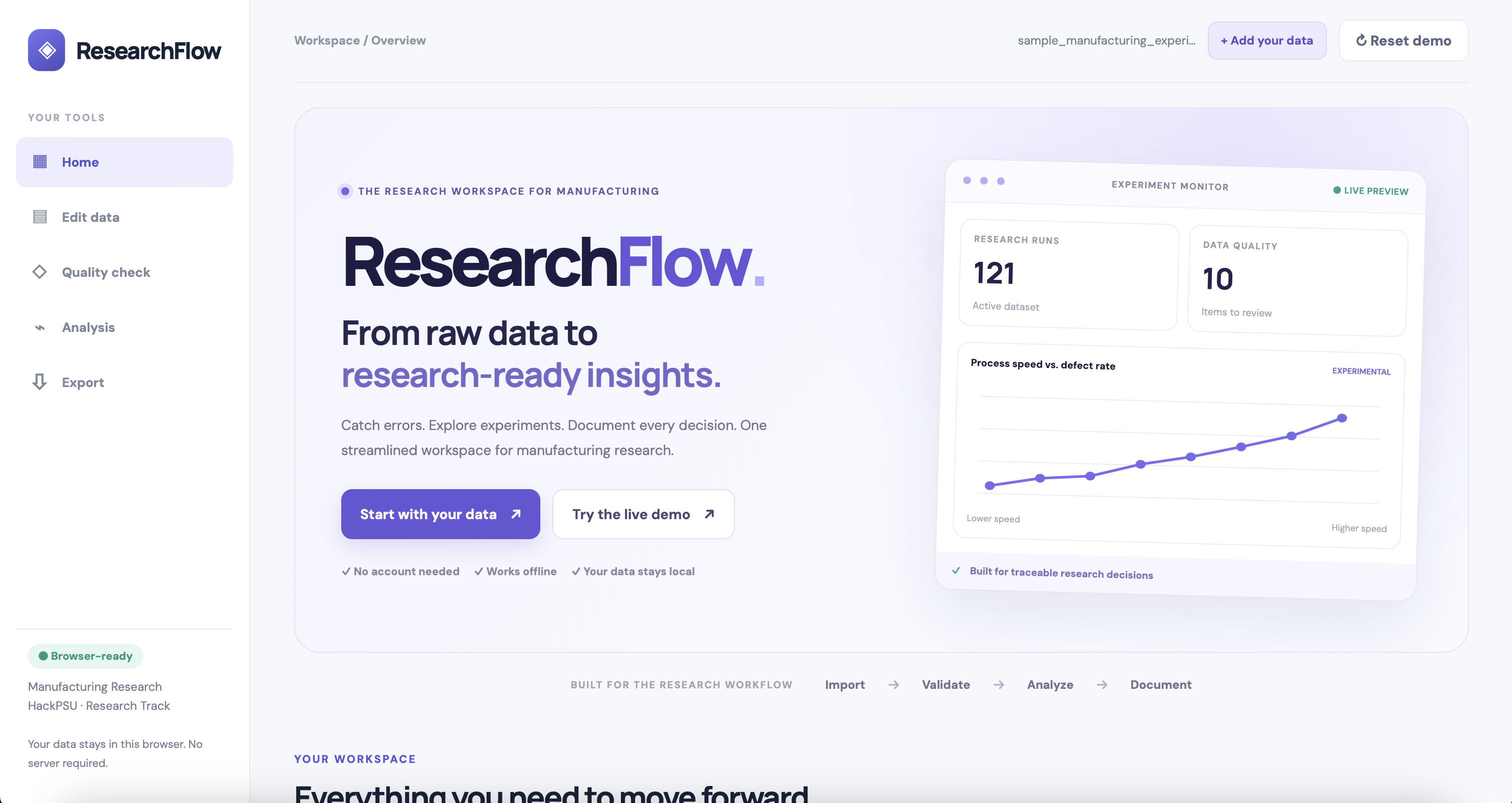
ResearchFlow is a browser-based platform that helps researchers transform raw experimental data into research-ready insights.
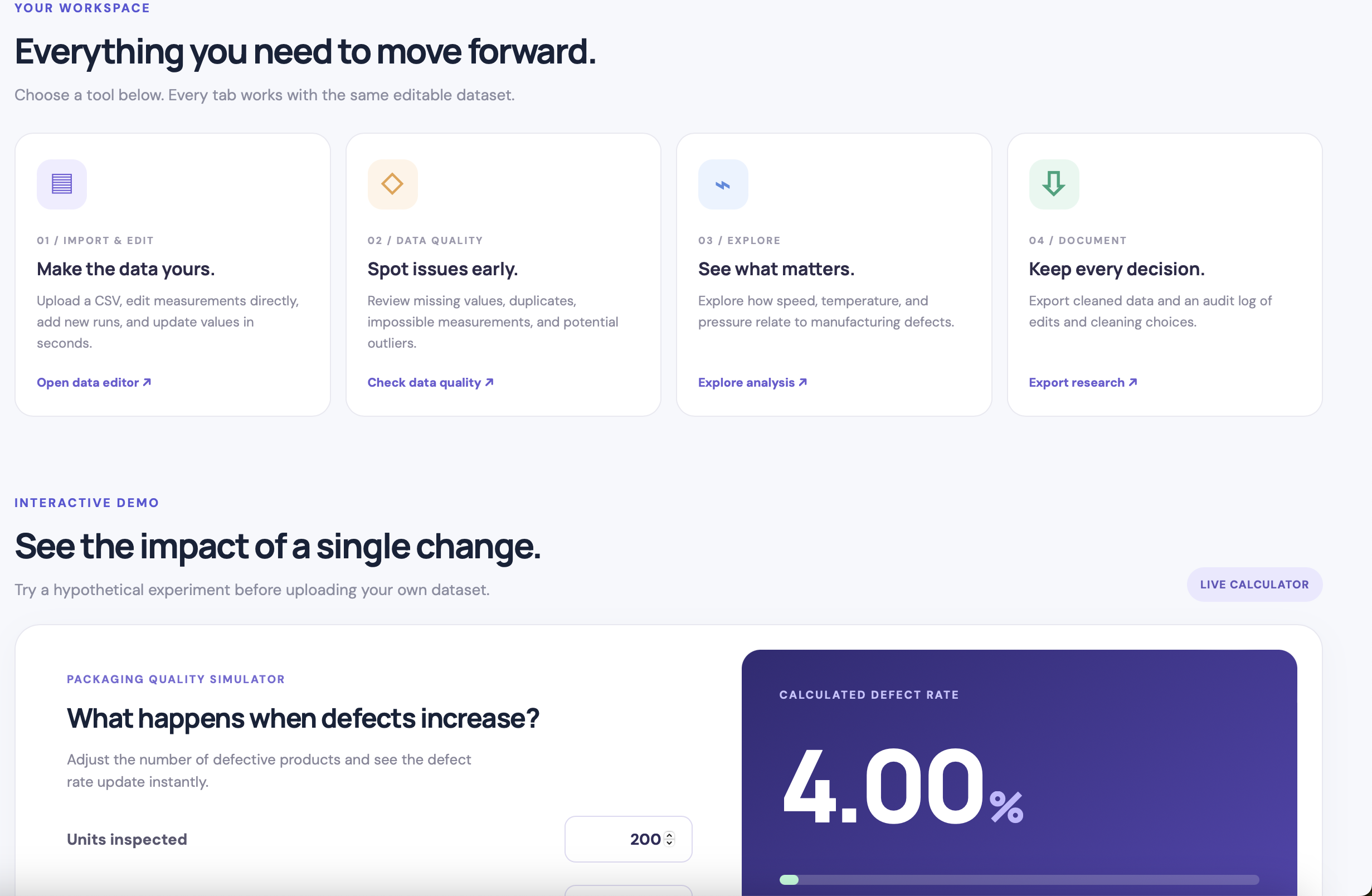
Using a manufacturing experiment as an example, ResearchFlow guides users through four steps:
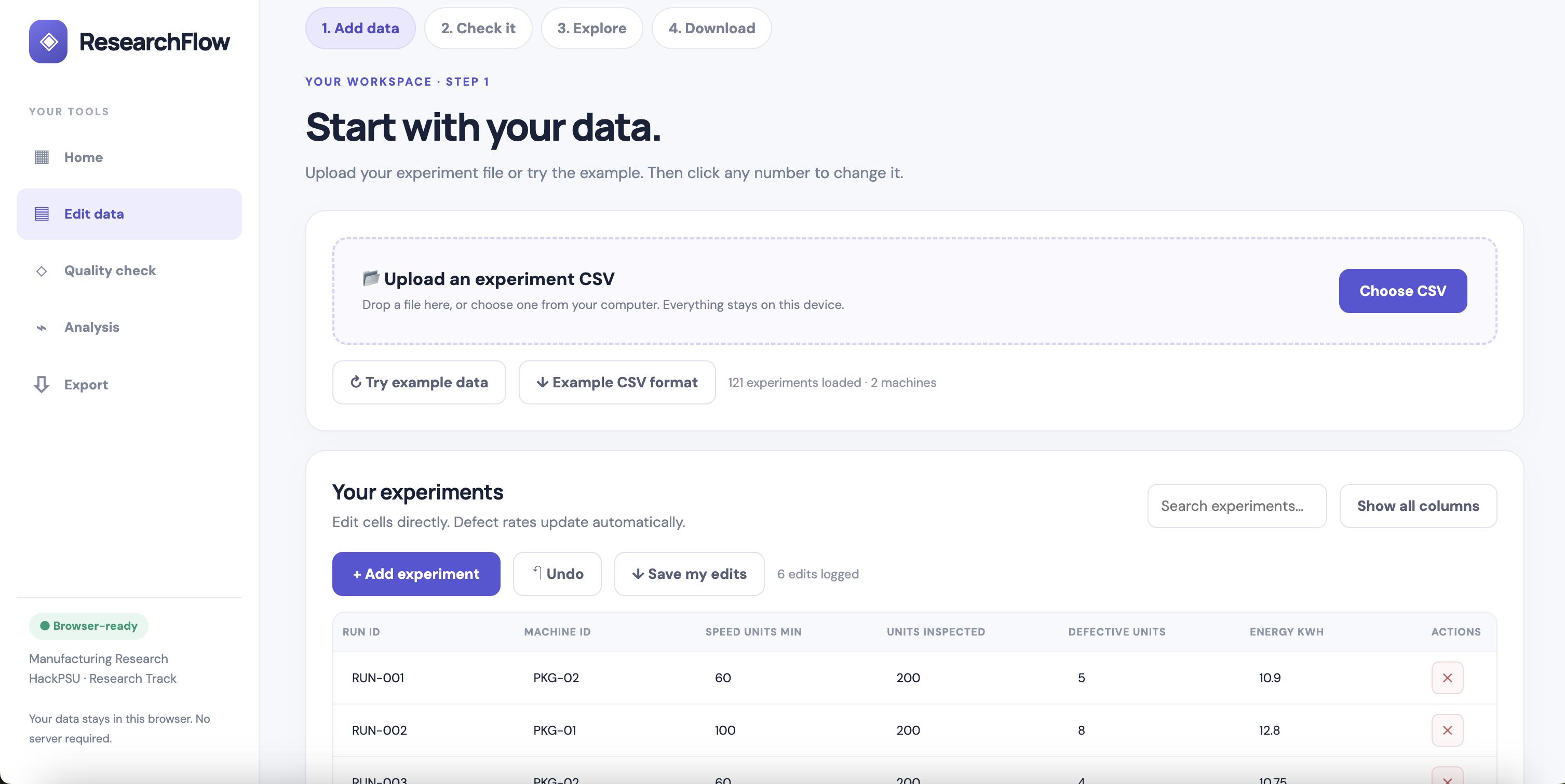
- Edit Data: Upload a CSV dataset, review experimental measurements, and directly edit, add, or remove records.
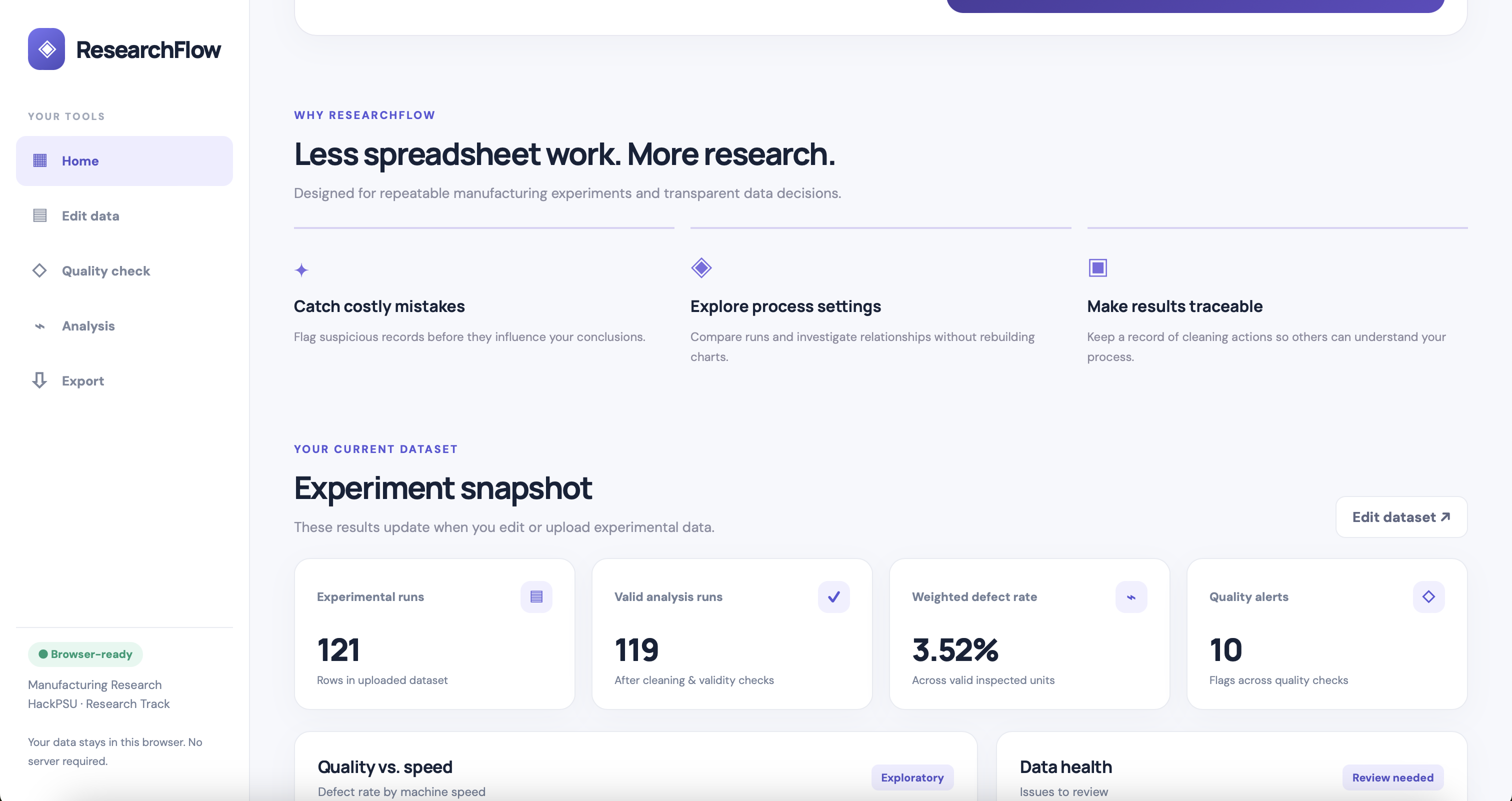
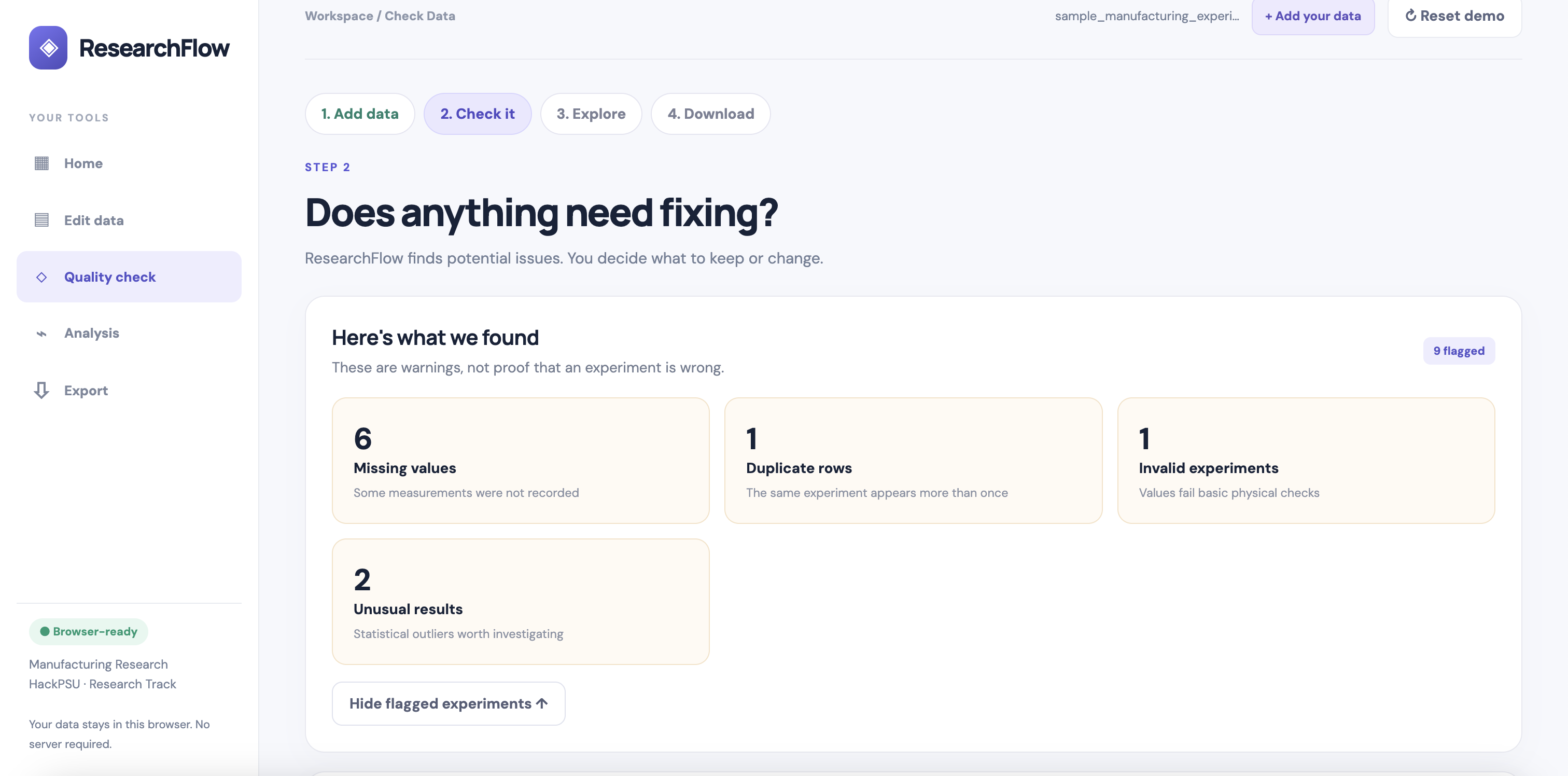
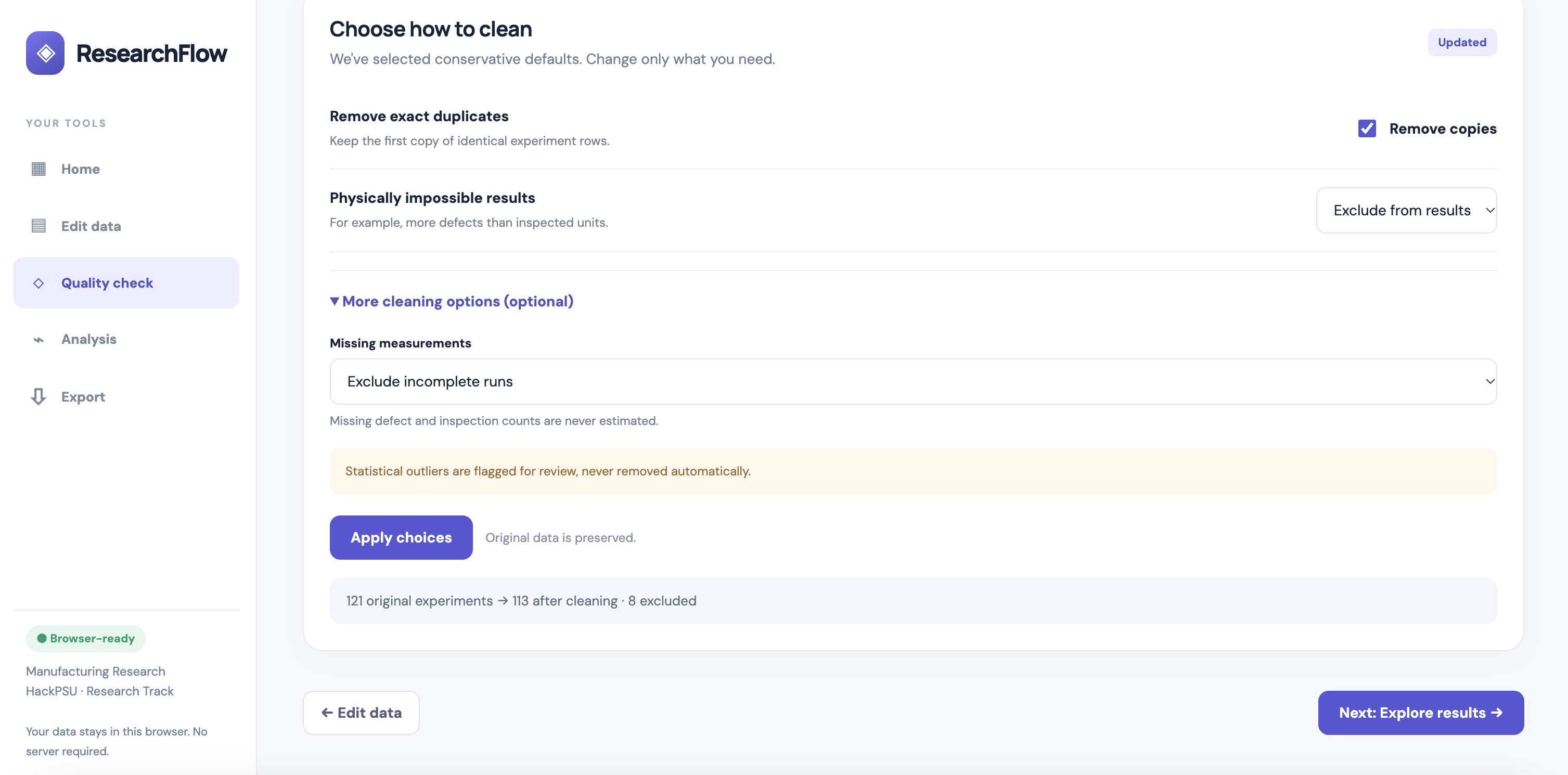
- Check Data: Automatically identify potential data-quality problems, including missing values, duplicate records, and suspicious measurements.
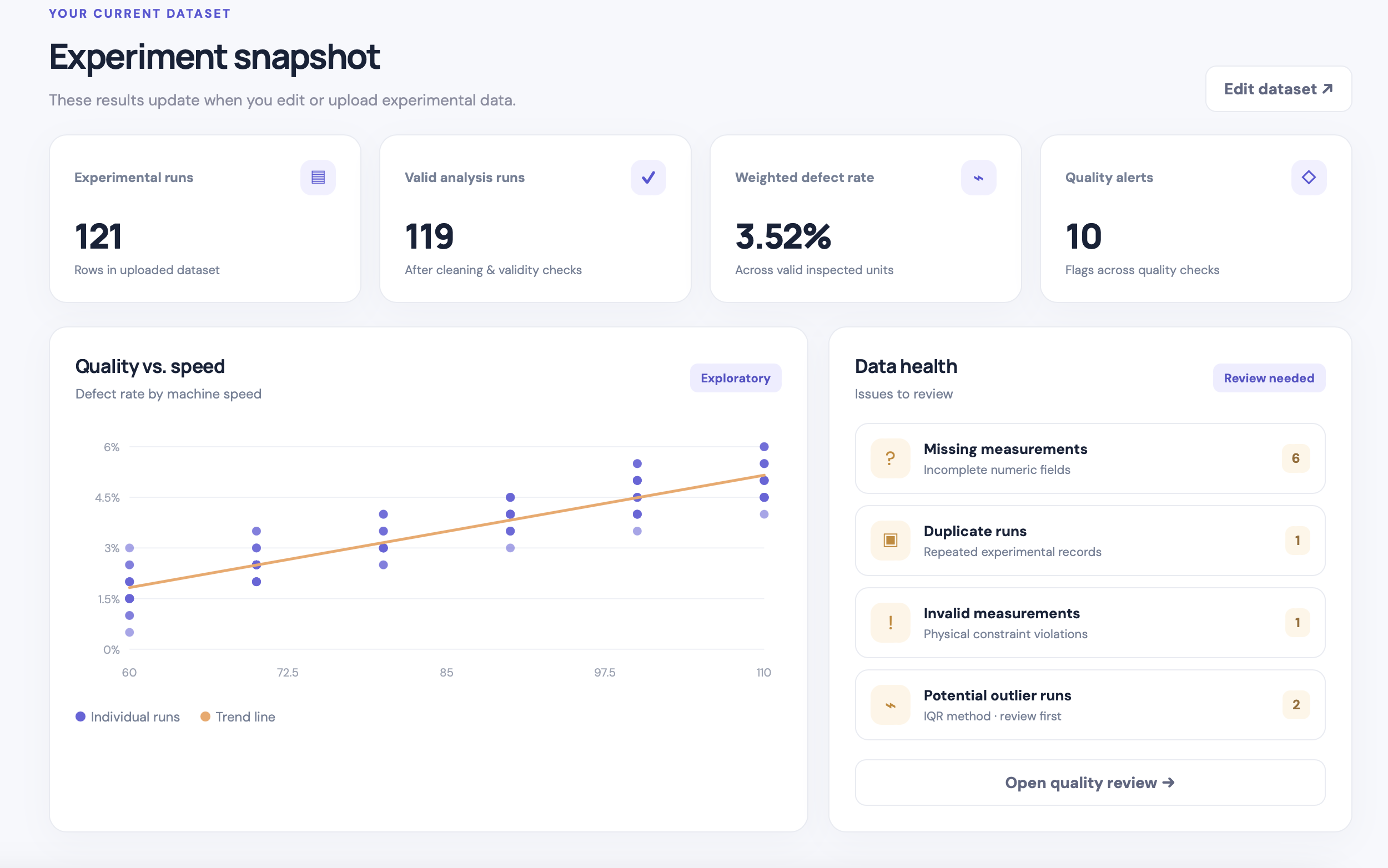
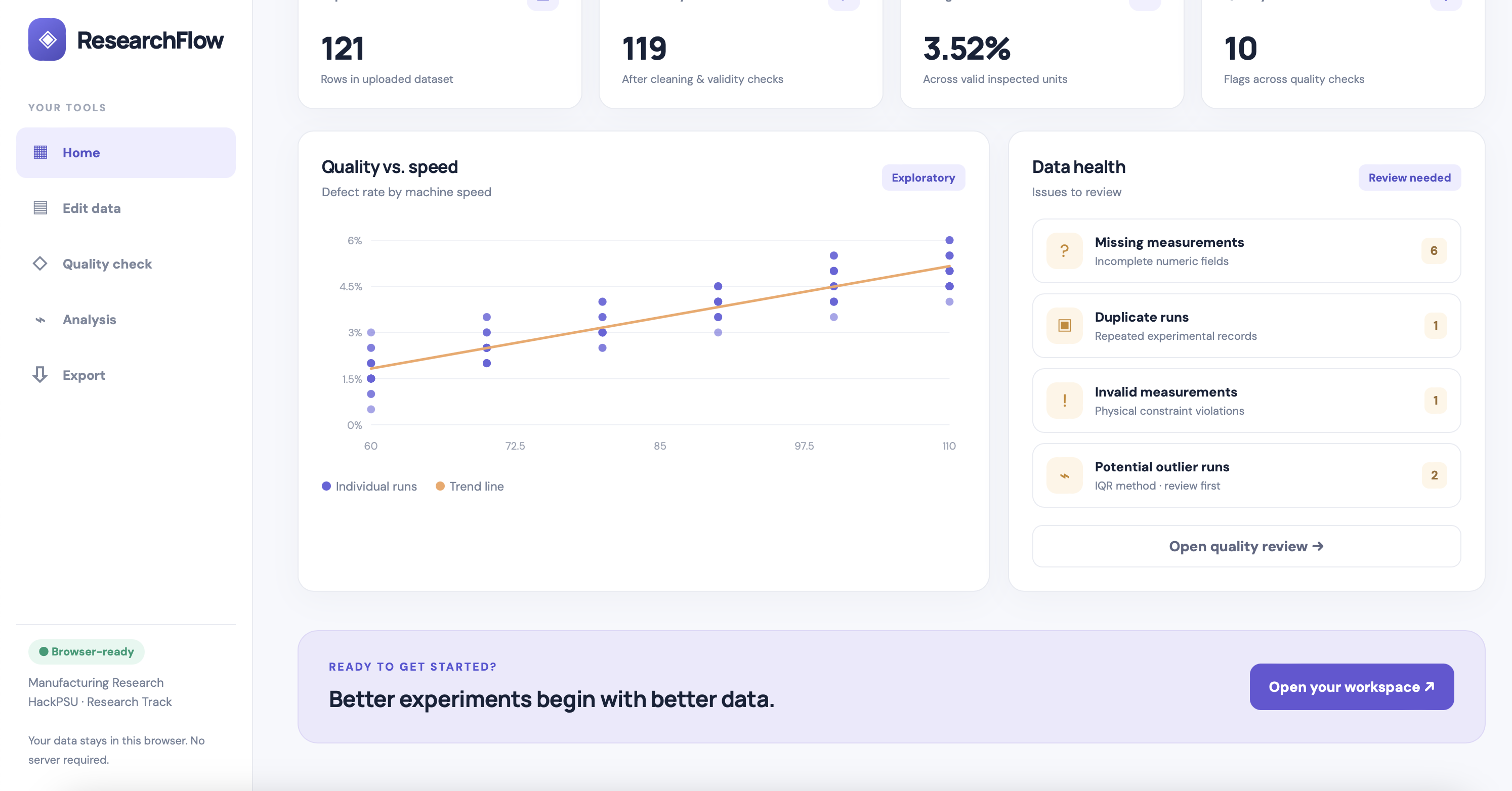
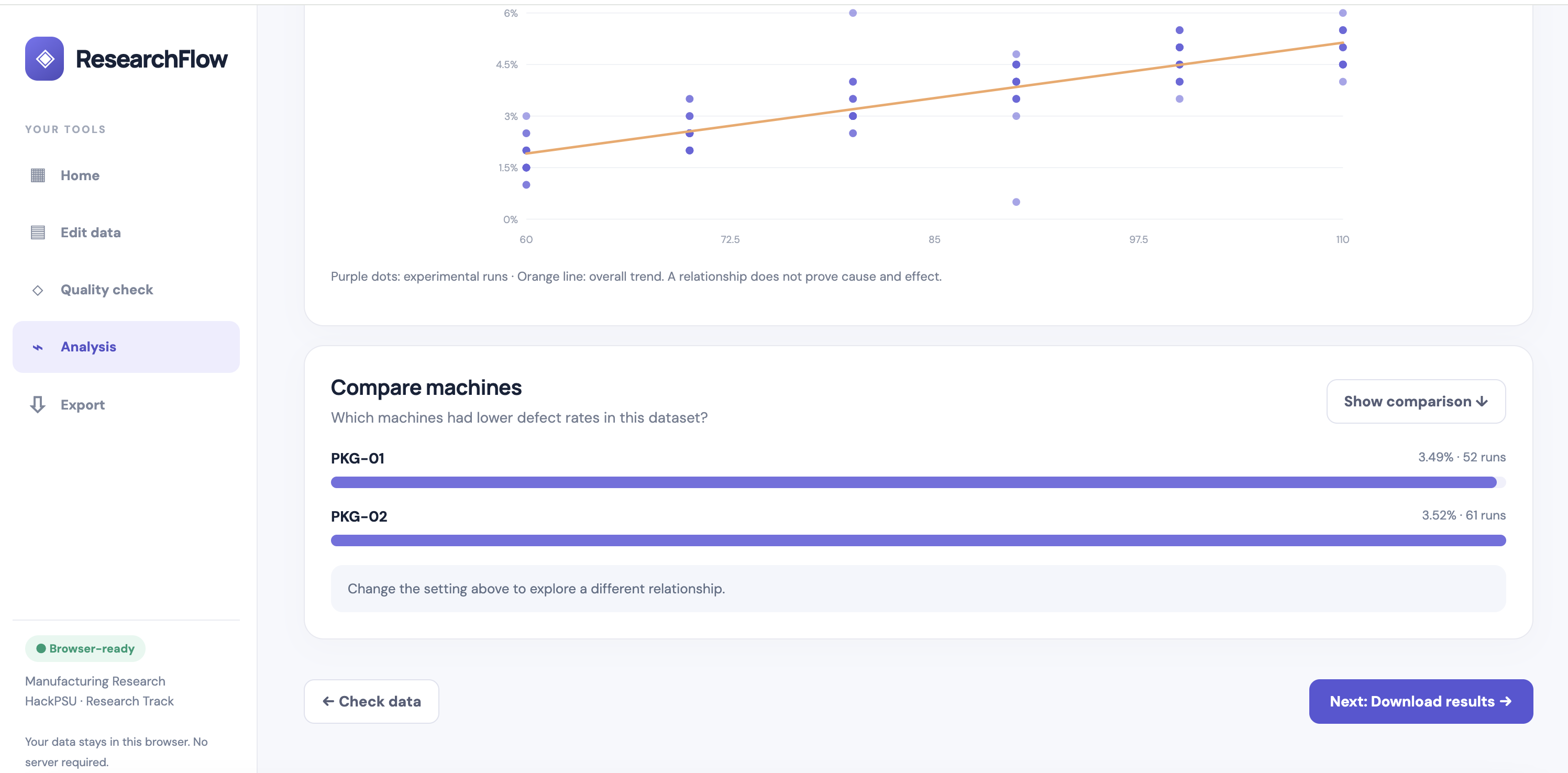
- Explore: Visualize relationships between experimental variables to better understand process performance and identify trends.
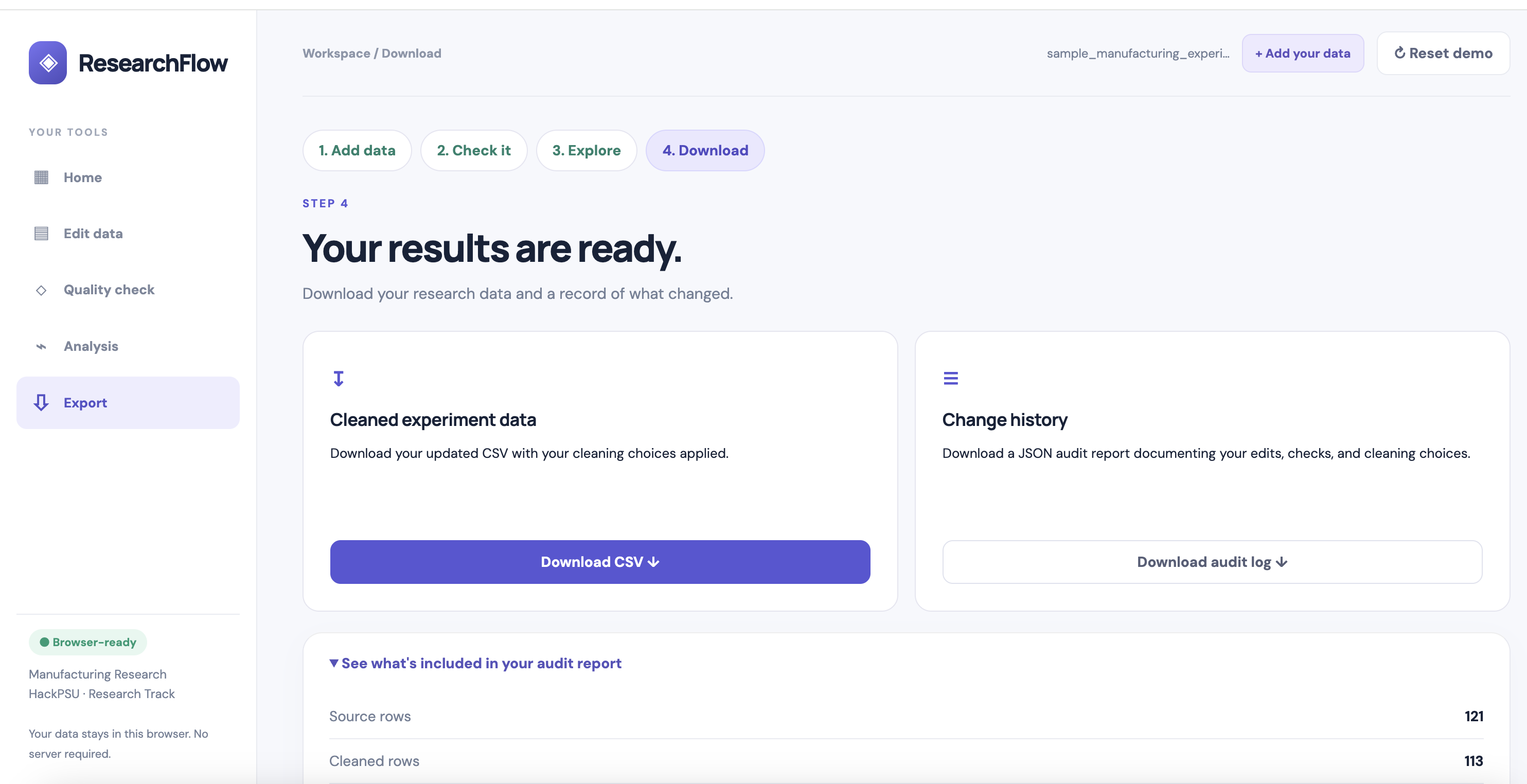
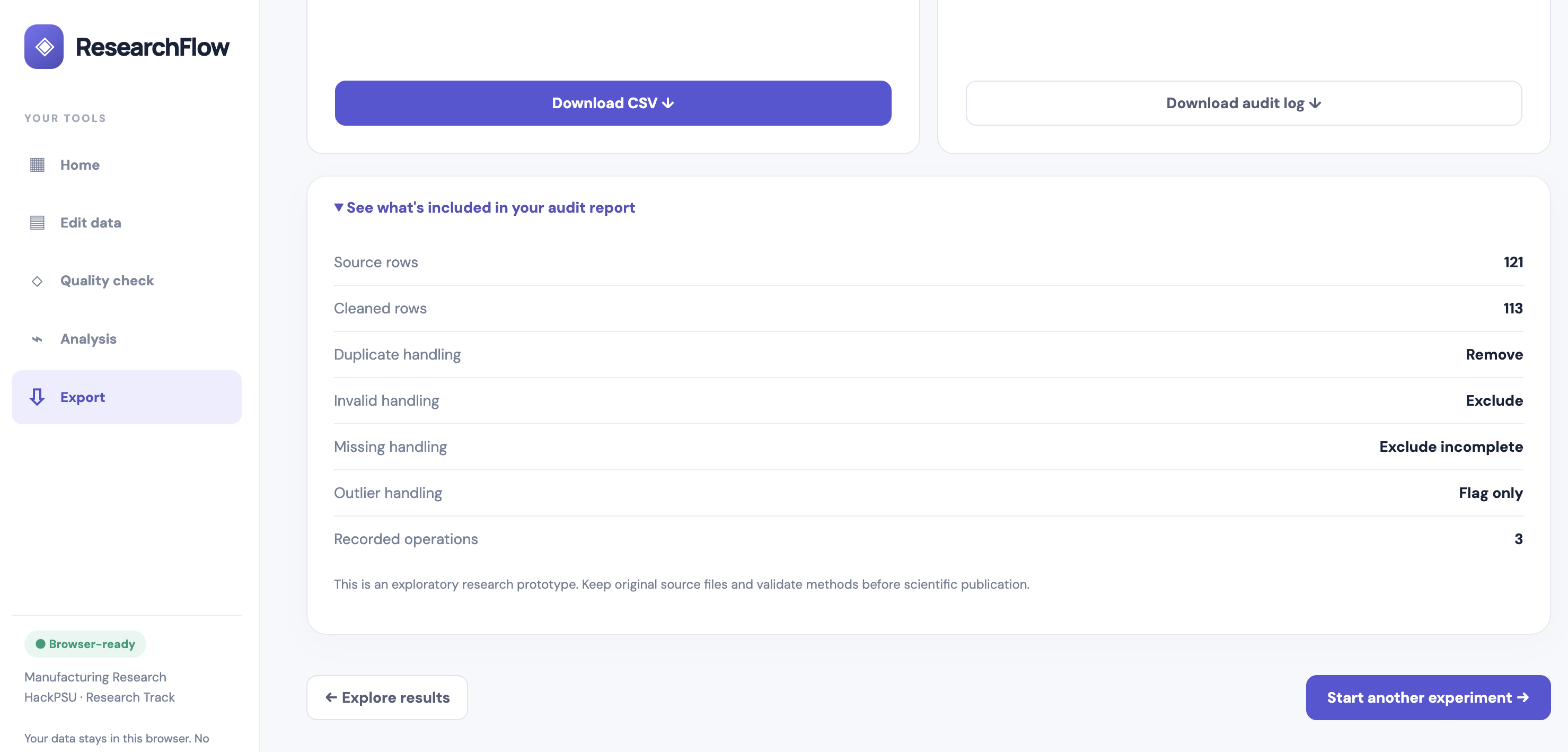
- Download: Export updated datasets and documentation of changes for further analysis.
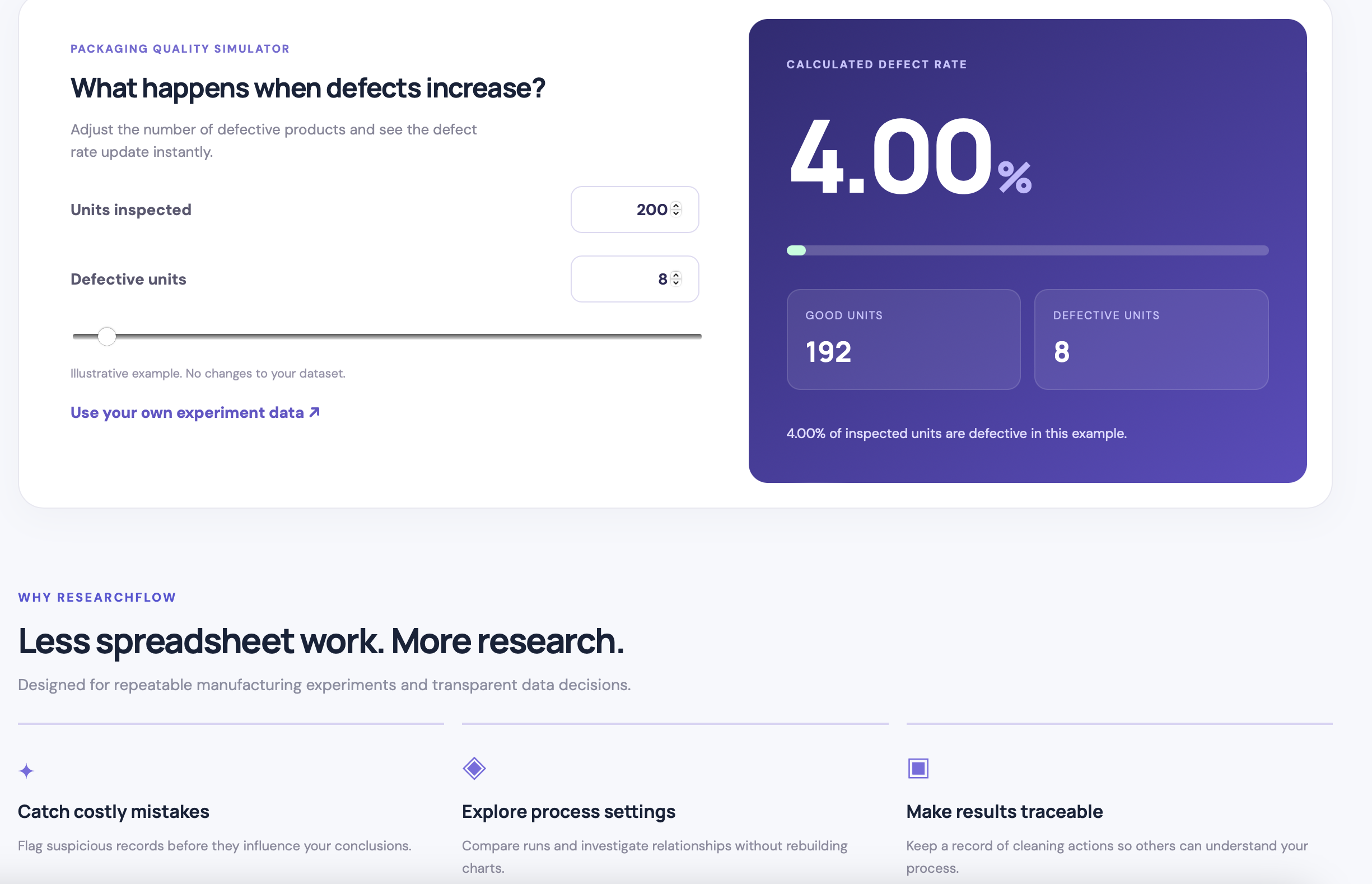
The demonstration focuses on manufacturing variables such as machine speed, temperature, pressure, and defect rates. However, the underlying workflow can be useful in other research environments where data quality and reproducibility matter.
Rather than automatically changing every questionable measurement, ResearchFlow emphasizes researcher control and transparency, allowing users to review their data and make informed decisions.
How I built it
I developed ResearchFlow using HTML, CSS, and JavaScript, creating a standalone web application that runs directly in a browser without requiring software installation or a separate backend.
The application combines CSV processing, editable data tables, automated validation rules, interactive data visualization, and downloadable research outputs.
I designed the interface around a straightforward workflow, separating data editing, quality checking, analysis, and exporting into dedicated sections. This approach keeps the application accessible to users who may not have programming experience.
Challenges I ran into
One of the biggest challenges was balancing functionality with simplicity. Experimental datasets contain many variables, and presenting too much information at once can make an application difficult to navigate.
I went through multiple interface iterations to simplify the data editor, organize the validation results, and make the overall workflow more intuitive.
Another challenge was designing data-quality checks that identify potentially problematic measurements without assuming every unusual value is incorrect. In research, an outlier may represent an important discovery rather than a mistake.
This reinforced the importance of allowing researchers to make the final decisions about their data.
Accomplishments that I'm proud of
I'm especially proud of turning an idea inspired by my manufacturing experience into an interactive application that supports an end-to-end research data workflow.
Instead of building a tool that only displays charts, I wanted ResearchFlow to address the steps that come before analysis: organizing measurements, detecting potential problems, and maintaining transparency when data changes.
I am also proud of designing an interface that makes these capabilities approachable without requiring users to write code.
What I learned
Building ResearchFlow helped me better understand how software development and Industrial Engineering can work together to solve practical problems.
I gained experience developing an interactive browser application, structuring data-validation logic, and designing a user interface around a specific research workflow.
Most importantly, I learned that improving research efficiency isn't always about introducing more complicated algorithms. Sometimes, the biggest improvement comes from making essential tasks simpler, faster, and easier to understand.
What's next for ResearchFlow
I would like to expand ResearchFlow with project saving, more advanced statistical analysis, and additional tools for comparing experimental results.
Longer term, I envision a platform that supports different research disciplines while maintaining its focus on accessible analysis, data quality, and reproducibility.
The goal is simple: spend less time preparing data and more time discovering what it means.

Log in or sign up for Devpost to join the conversation.