-
-
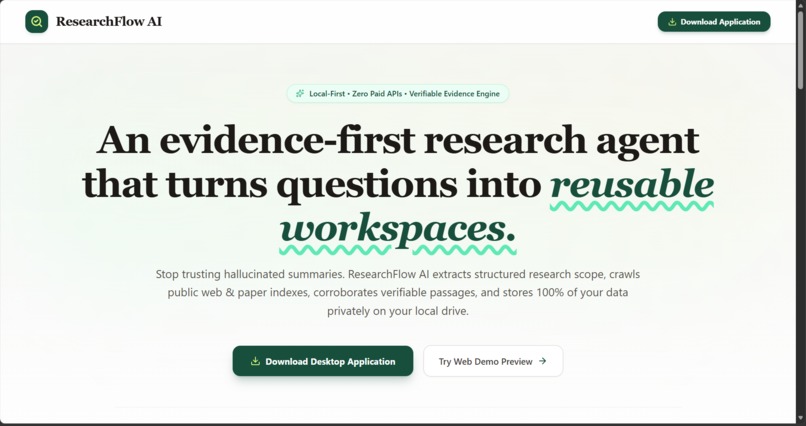
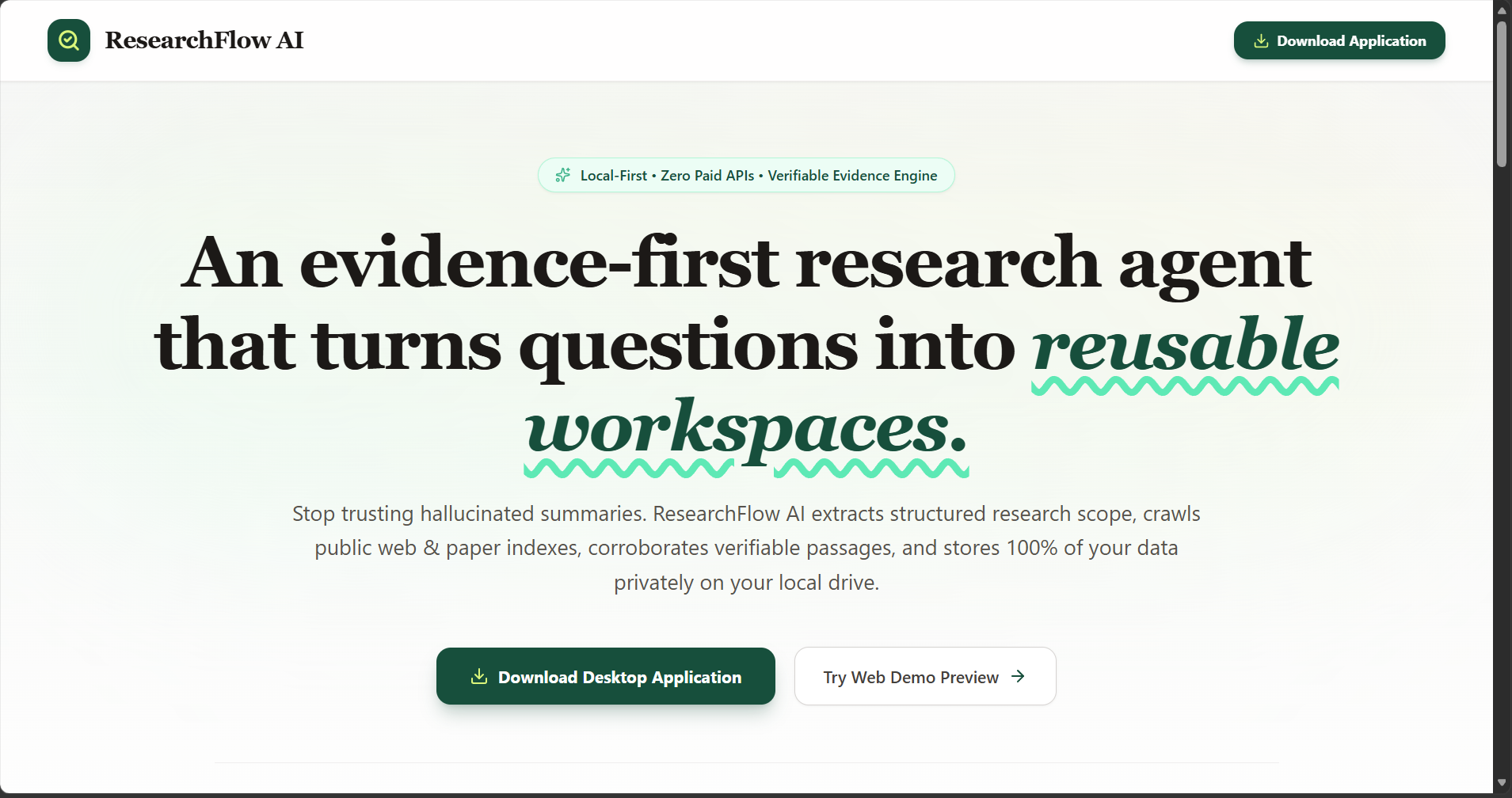
ResearchFlow AI — An evidence-first research workspace with local-first privacy and verifiable evidence.
-
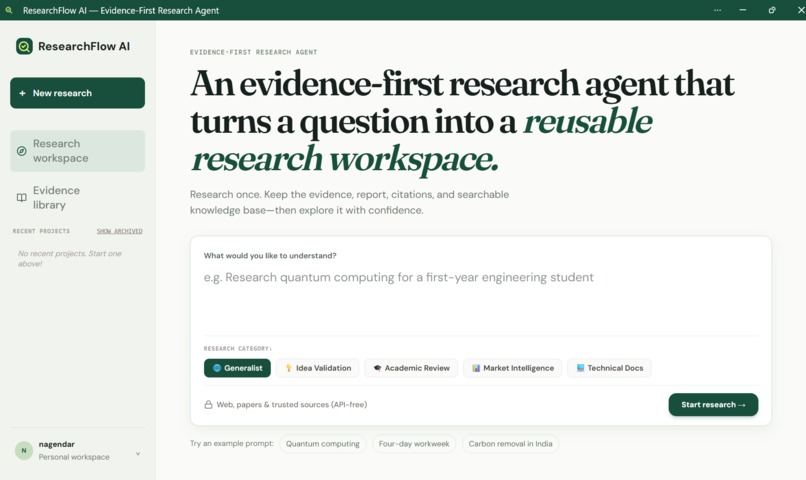
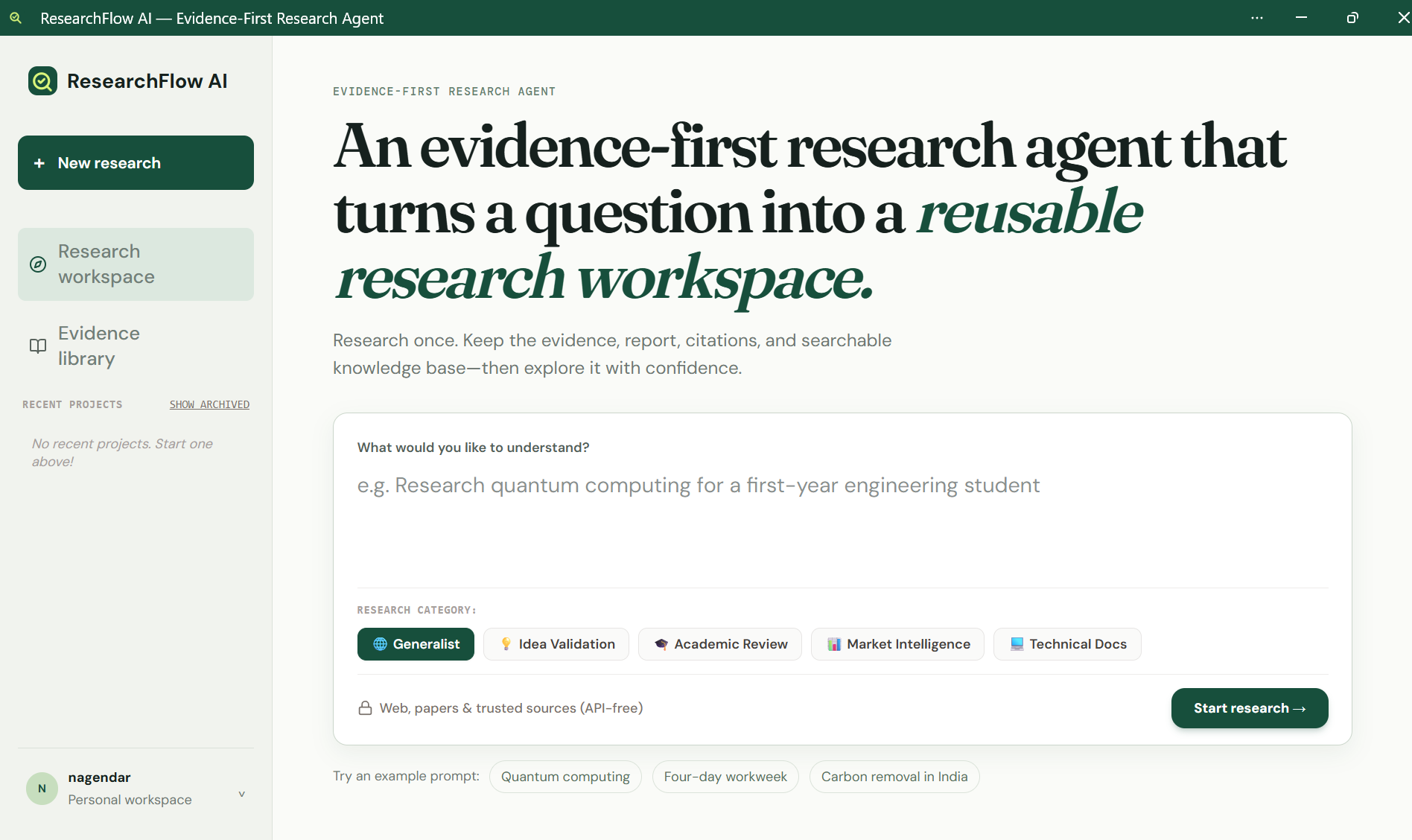
Start research by choosing an Academic Review engine
-
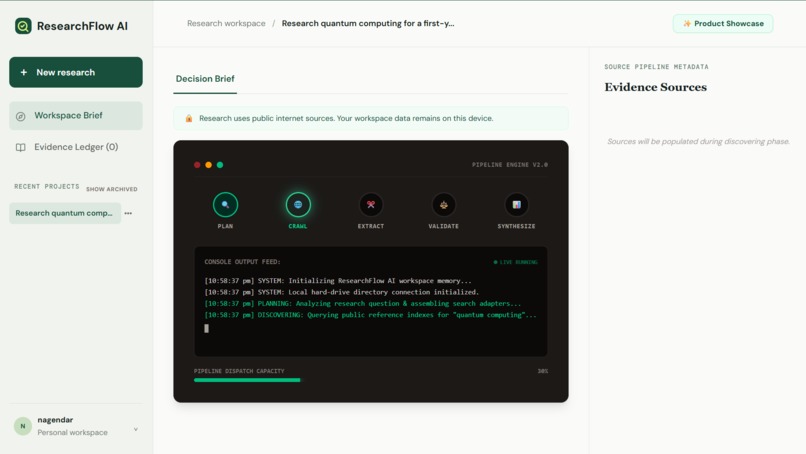
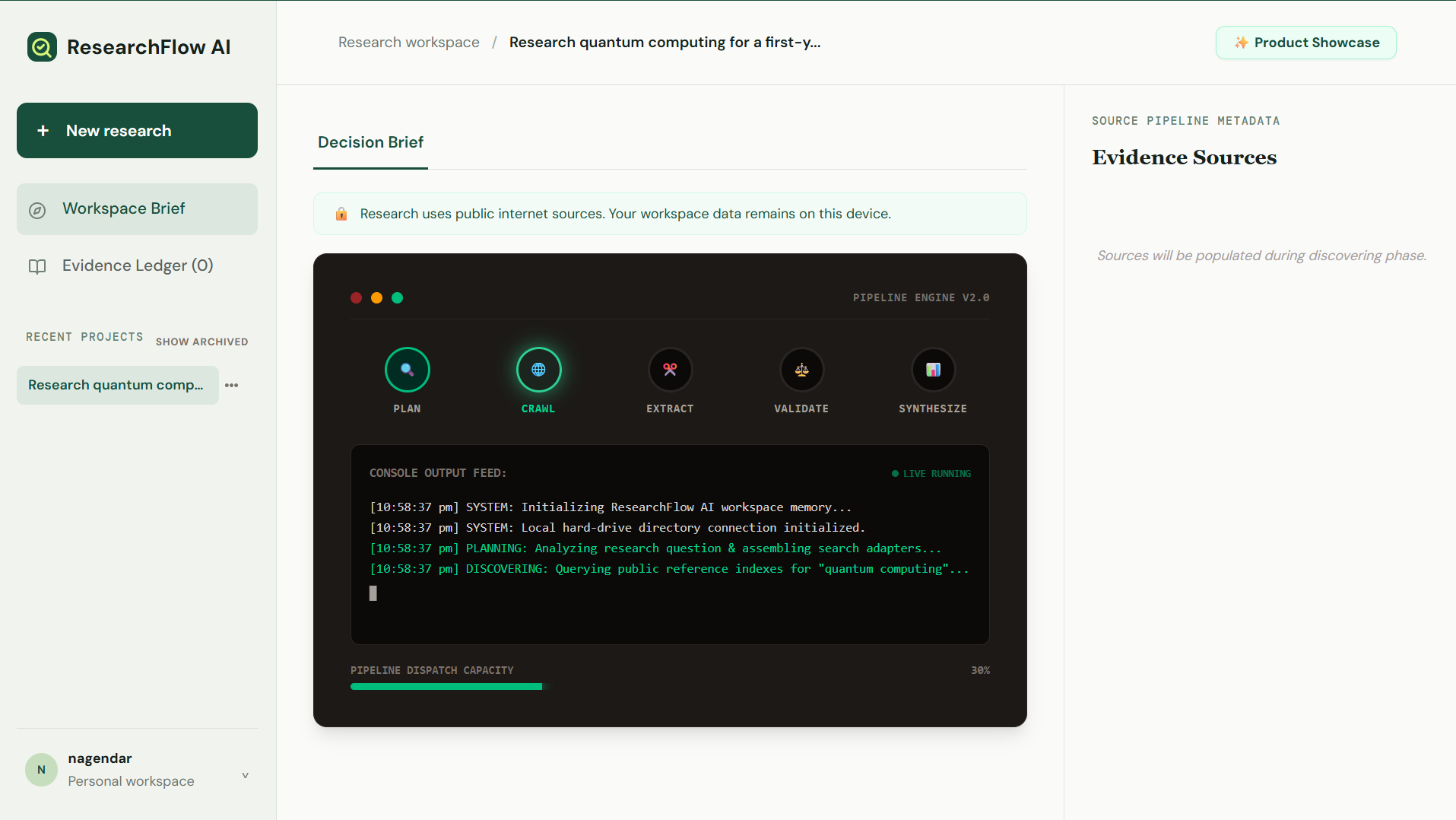
The AI research pipeline plans, crawls trusted sources, extracts evidence, validates quality, and synthesizes structured reports.
-
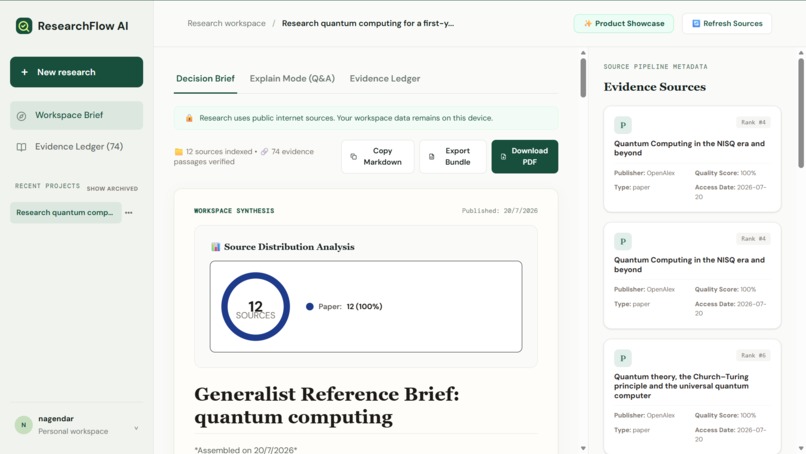
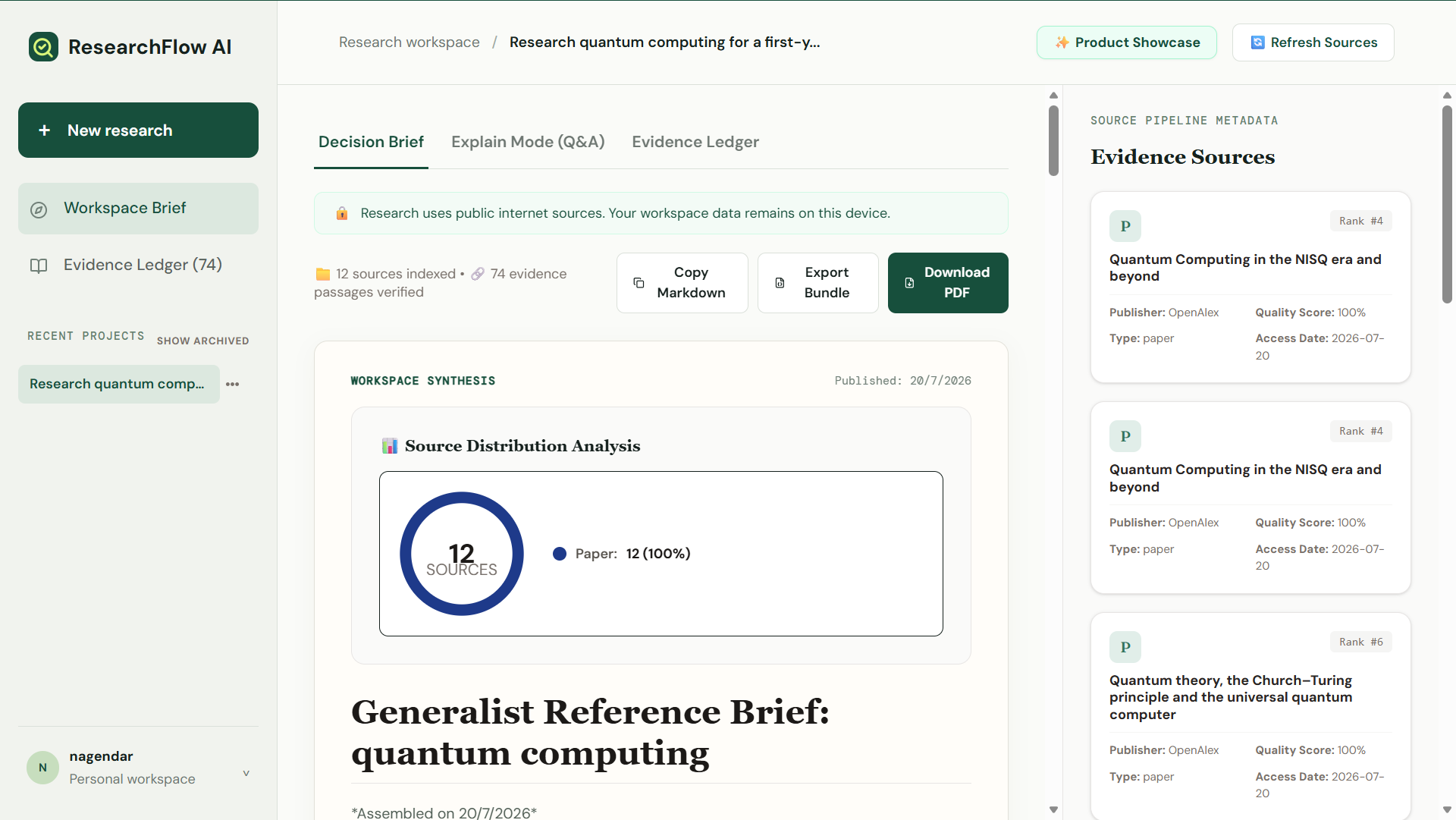
Generated Decision Brief containing verified citations, evidence distribution, source quality metrics, and downloadable reports.
-
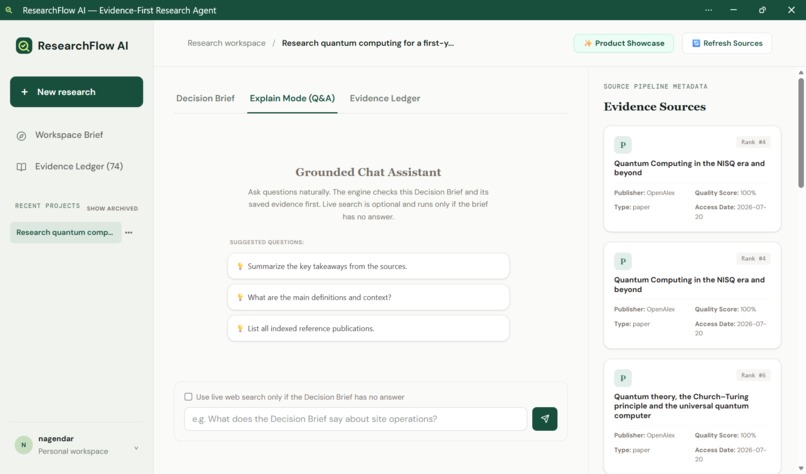
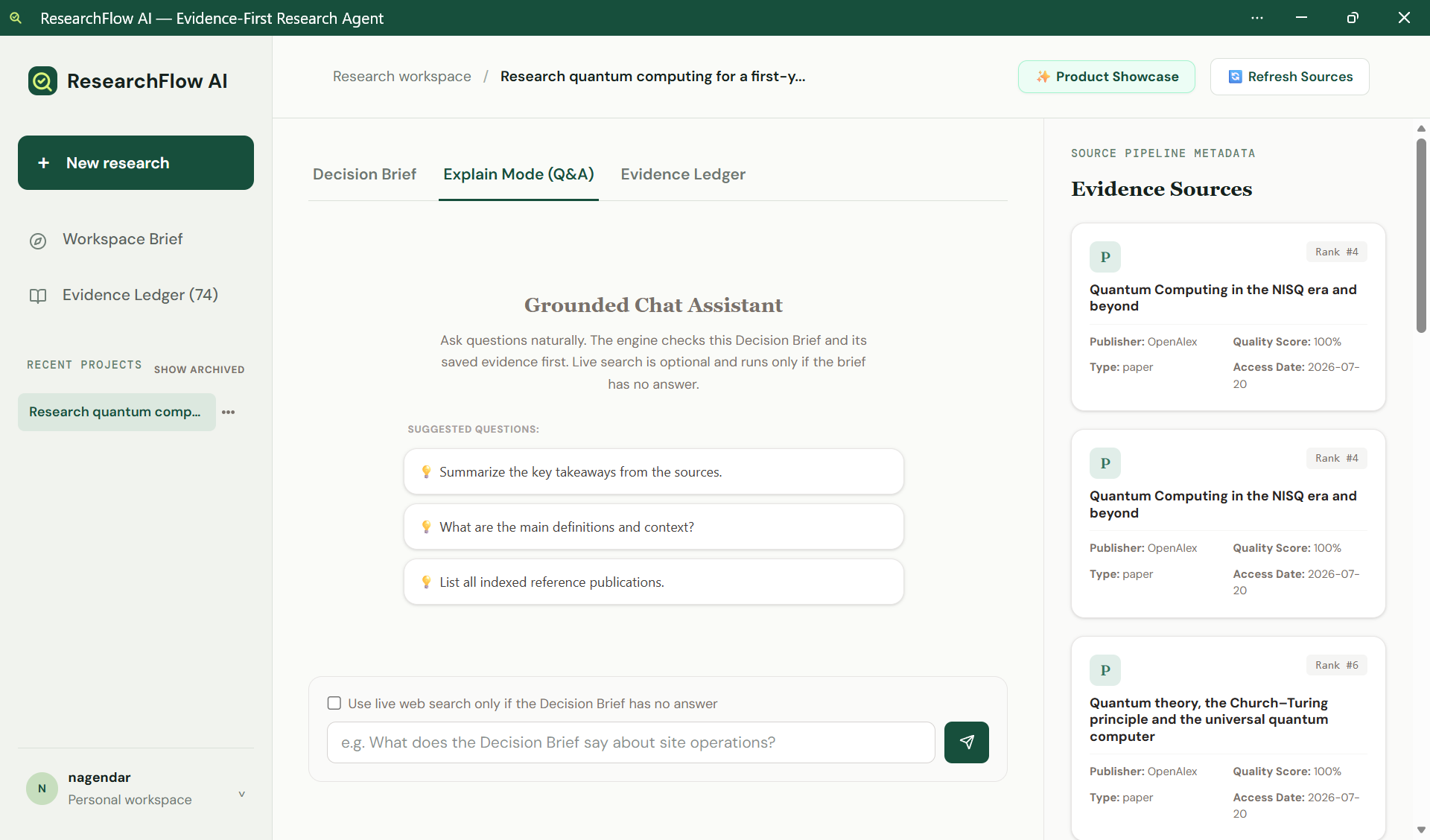
Grounded Explain Mode answers questions using indexed evidence first, reducing unnecessary web searches and improving reliability.
-
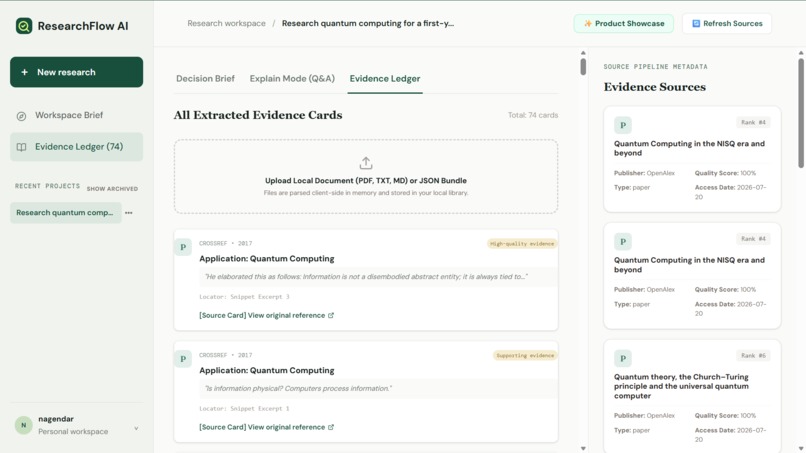
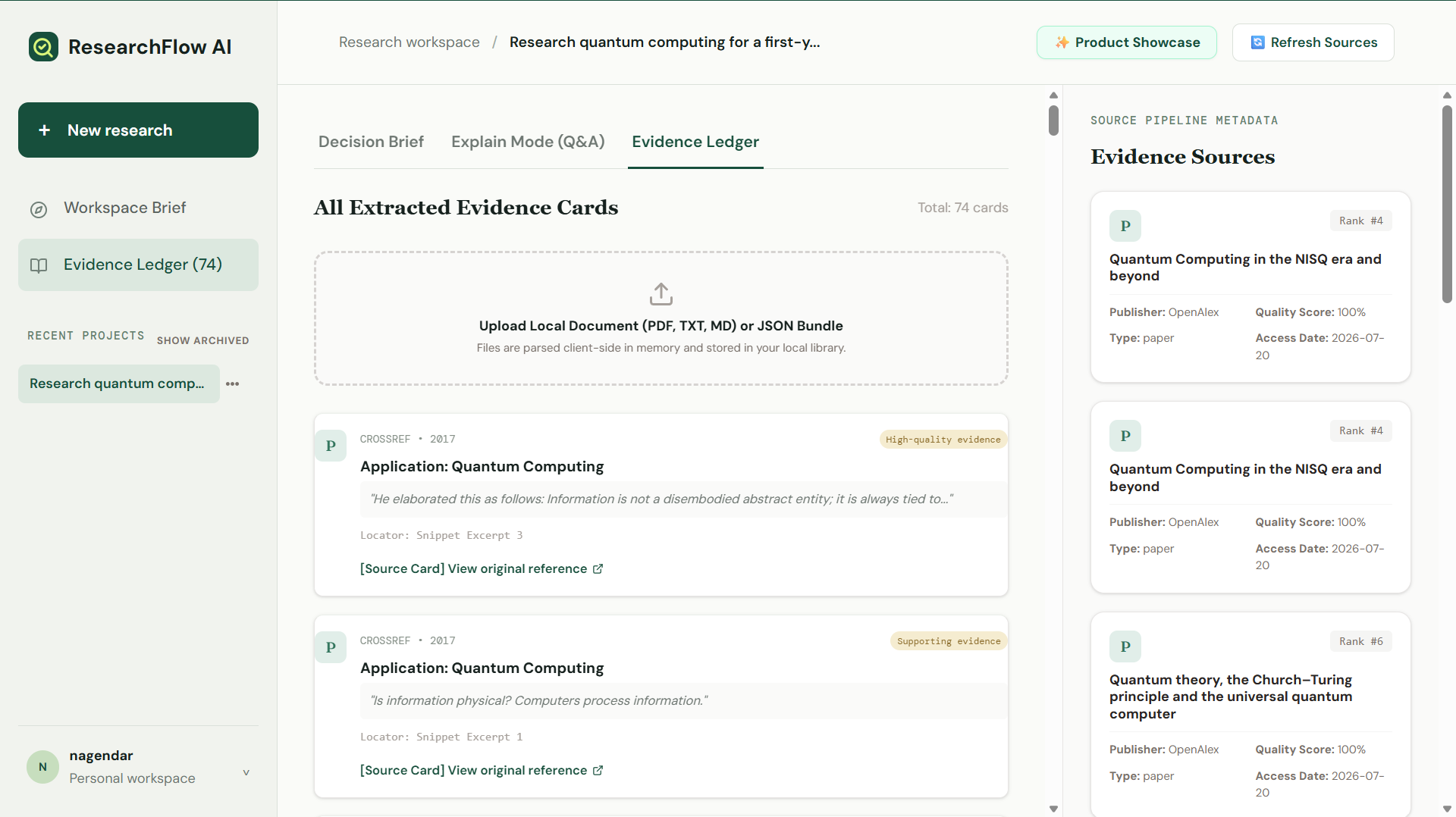
Evidence Ledger provides transparent access to every extracted passage, quality score, and original reference for full traceability.
🚀 ResearchFlow AI
Inspiration
Modern research is fragmented. Students, developers, startups, and researchers spend hours searching across websites, research papers, documentation, and AI tools before finding reliable information.
Many AI-powered research assistants also rely on cloud processing, which means research queries and uploaded documents may need to be sent to remote servers. For organizations working with confidential research, business plans, technical documentation, or proprietary information, privacy and data control are important considerations.
We built ResearchFlow AI to provide an intelligent research workspace that generates structured, evidence-backed reports while supporting a local-first workflow. Project workspaces and generated reports remain on the user's device, giving users greater control over their research data.
What it does
ResearchFlow AI transforms a single question into a structured research report.
Instead of generating a generic AI response, the system identifies the user's intent and produces reports tailored to different research needs.
Supported research categories include:
- 📚 General Research
- 🎓 Academic Literature Reviews
- 💻 Technical Documentation
- 📊 Market Intelligence
- 💡 Startup Idea Validation
Every report contains:
- Executive Summary
- Key Findings
- Evidence Coverage
- Confidence Analysis
- Verified References
- Grounding Limitations
This helps users make informed decisions based on organized evidence rather than unstructured AI responses.
Privacy First
ResearchFlow AI is designed with a local-first philosophy.
- Project workspaces remain on the user's device.
- Reports are stored locally.
- Users retain control over their research history.
- Public information is retrieved only when needed to answer the user's query.
- The platform is designed to minimize unnecessary exposure of project data.
This approach is especially valuable for students, startups, researchers, and organizations working with sensitive information.
How we built it
ResearchFlow AI combines several AI components into a single research pipeline.
- Query Analysis
- Intent Detection
- Research Category Classification
- Intelligent Evidence Retrieval
- Source Ranking
- Evidence Verification
- Structured Report Generation
The application generates reports using trusted public sources while organizing the information into an easy-to-read format.
Challenges we ran into
One of the biggest challenges was ensuring that every research category behaved differently.
Academic research requires peer-reviewed literature.
Technical documentation requires developer documentation.
Market intelligence requires commercial information.
Idea validation requires competitor analysis and market research.
Building a retrieval pipeline that selects the right evidence while reducing hallucinations and preserving the user's original topic was our biggest technical challenge.
Accomplishments that we're proud of
- Built a category-aware AI research engine
- Created structured evidence-based reports
- Improved topic preservation
- Reduced hallucinations through grounded evidence
- Designed a privacy-focused local-first workspace
- Successfully deployed the application
What we learned
We learned that trustworthy AI is not just about using a powerful language model. High-quality retrieval, evidence ranking, intent understanding, and structured report generation are equally important for producing reliable research.
What's next
Our roadmap includes:
- Multi-language research support
- PDF & DOCX export
- AI citation generation
- Collaborative research workspaces
- Enterprise knowledge base integration
- Personalized AI research assistants
- Additional research domains
- Offline/local model support for organizations requiring maximum privacy


Log in or sign up for Devpost to join the conversation.