-
-
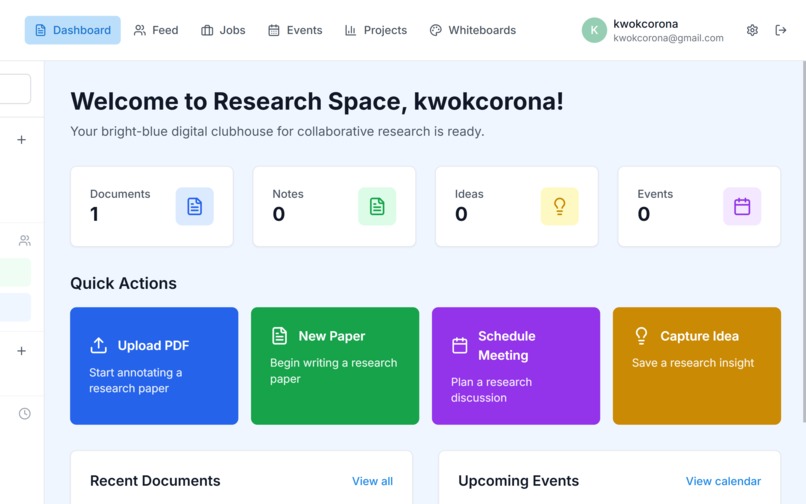
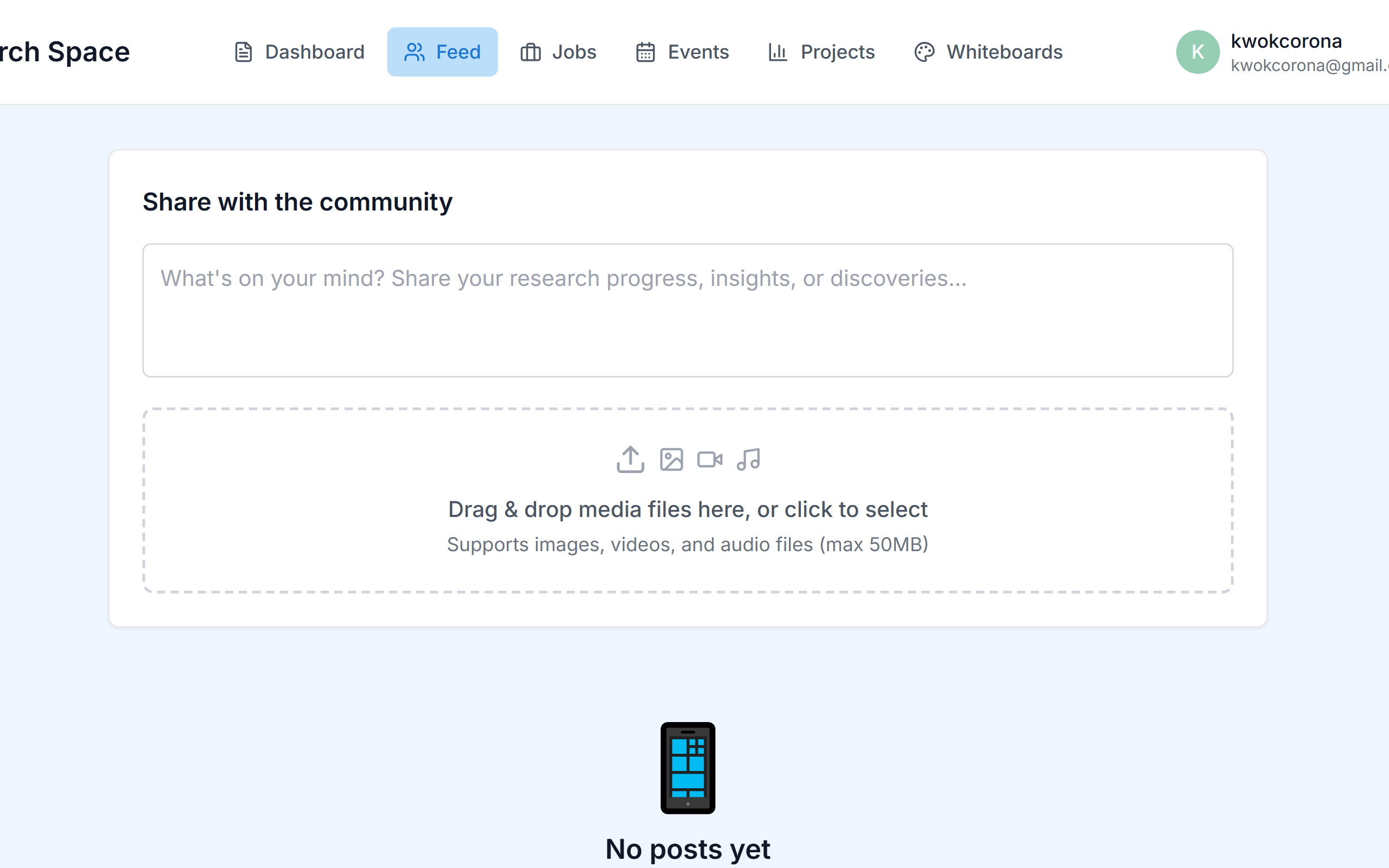
Displays your latest documents, upcoming events, and a summary of recent research activities.
-
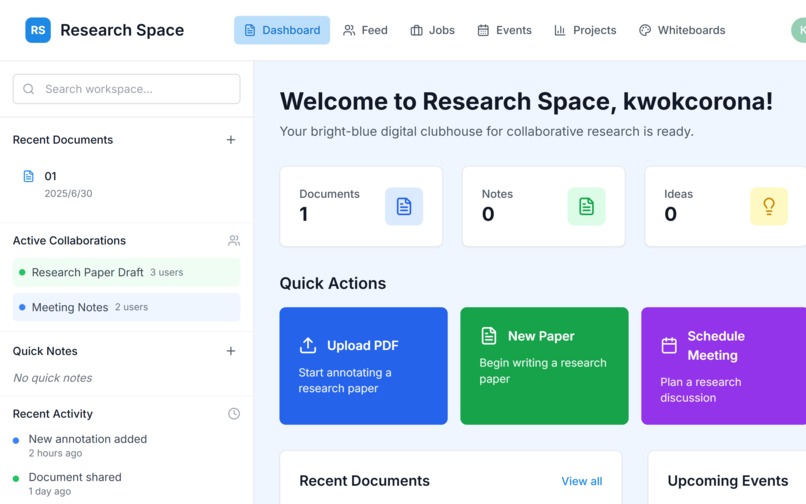
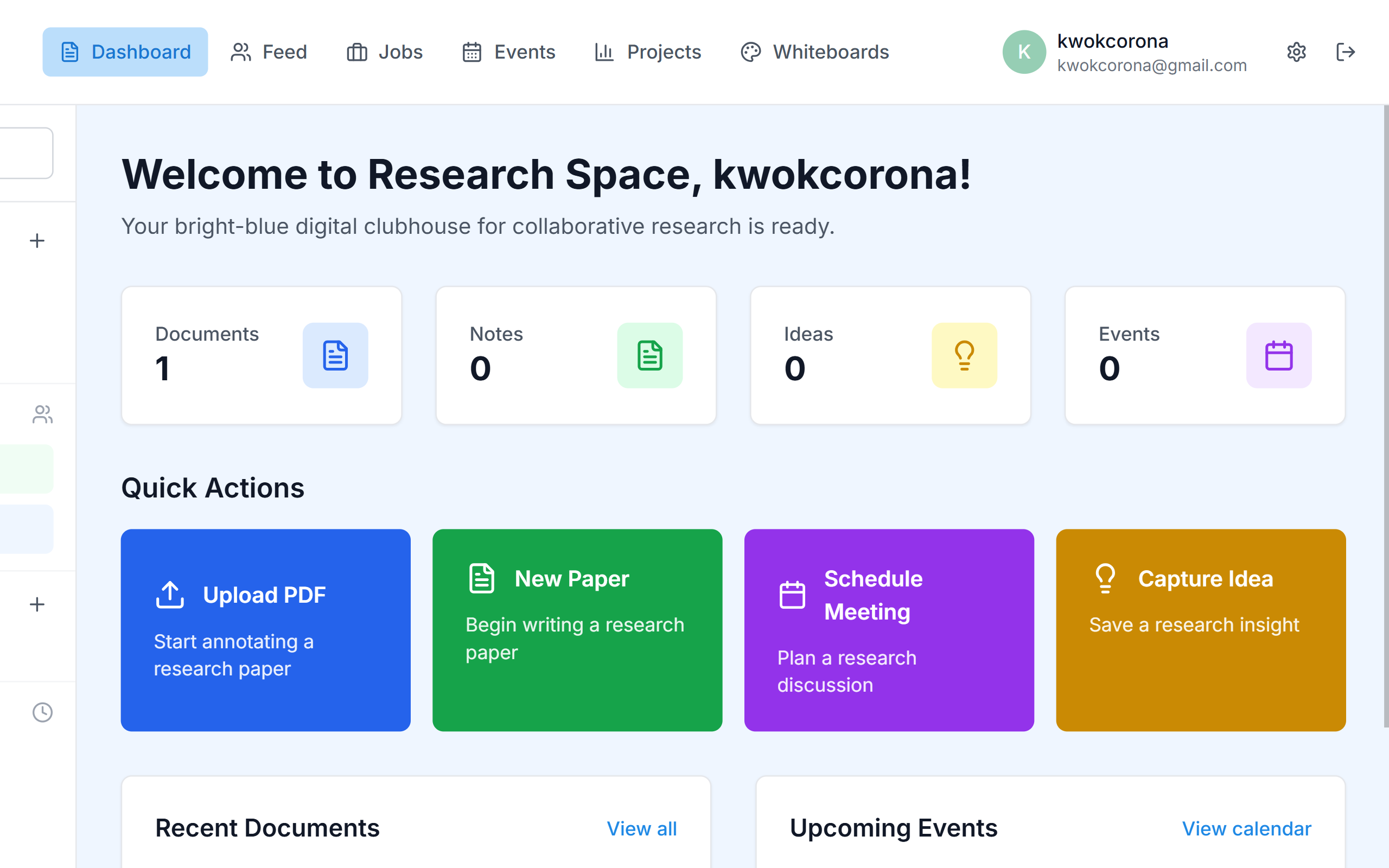
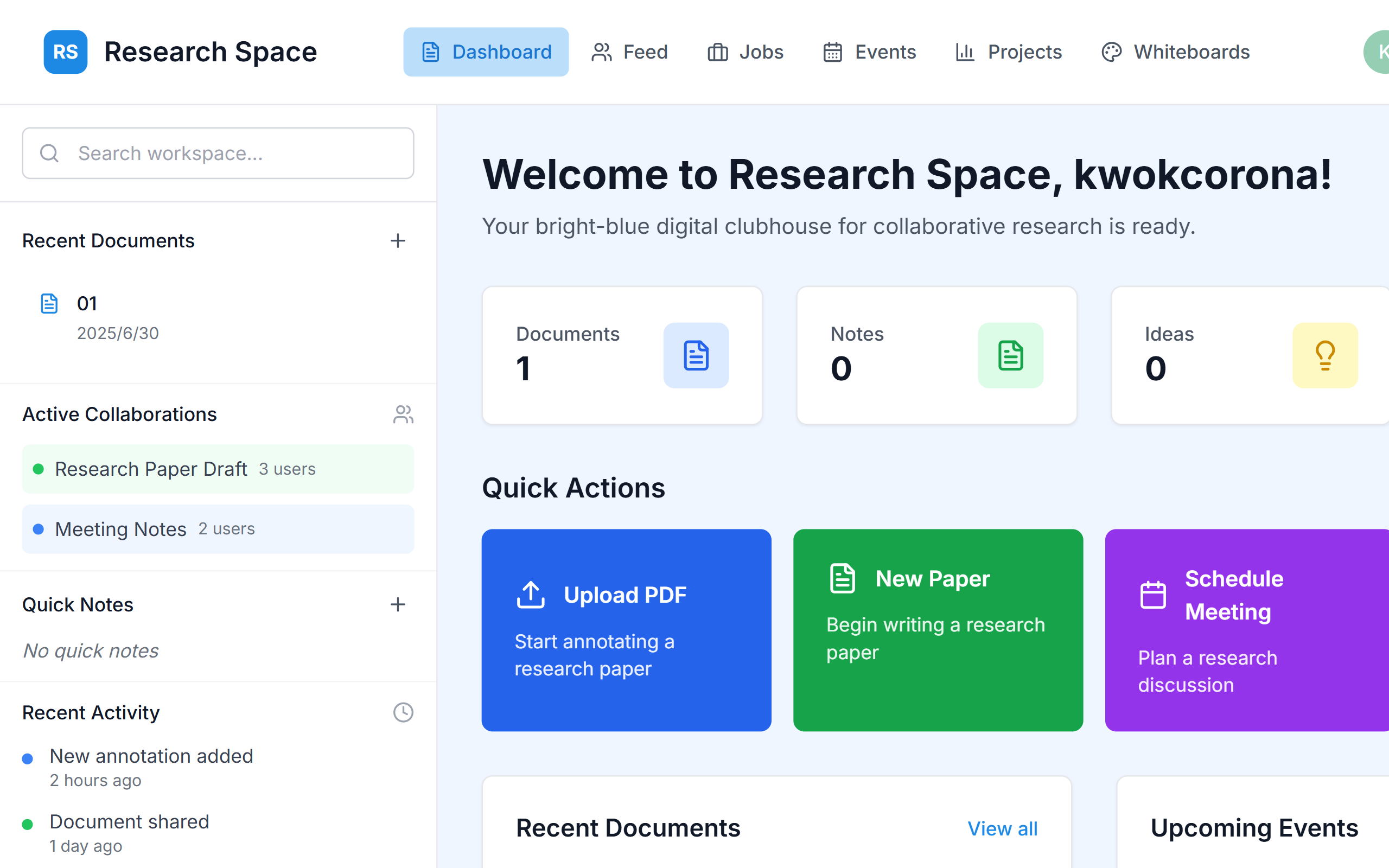
A central dashboard showing documents, notes, ideas, and quick actions for collaborative research.
-
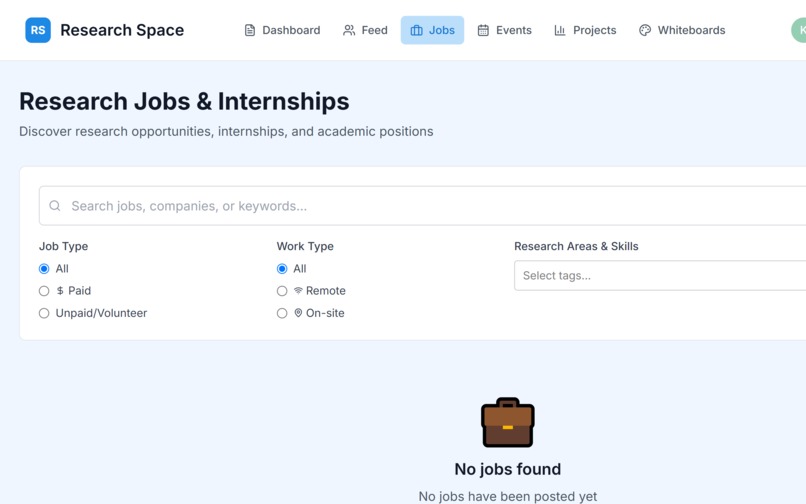
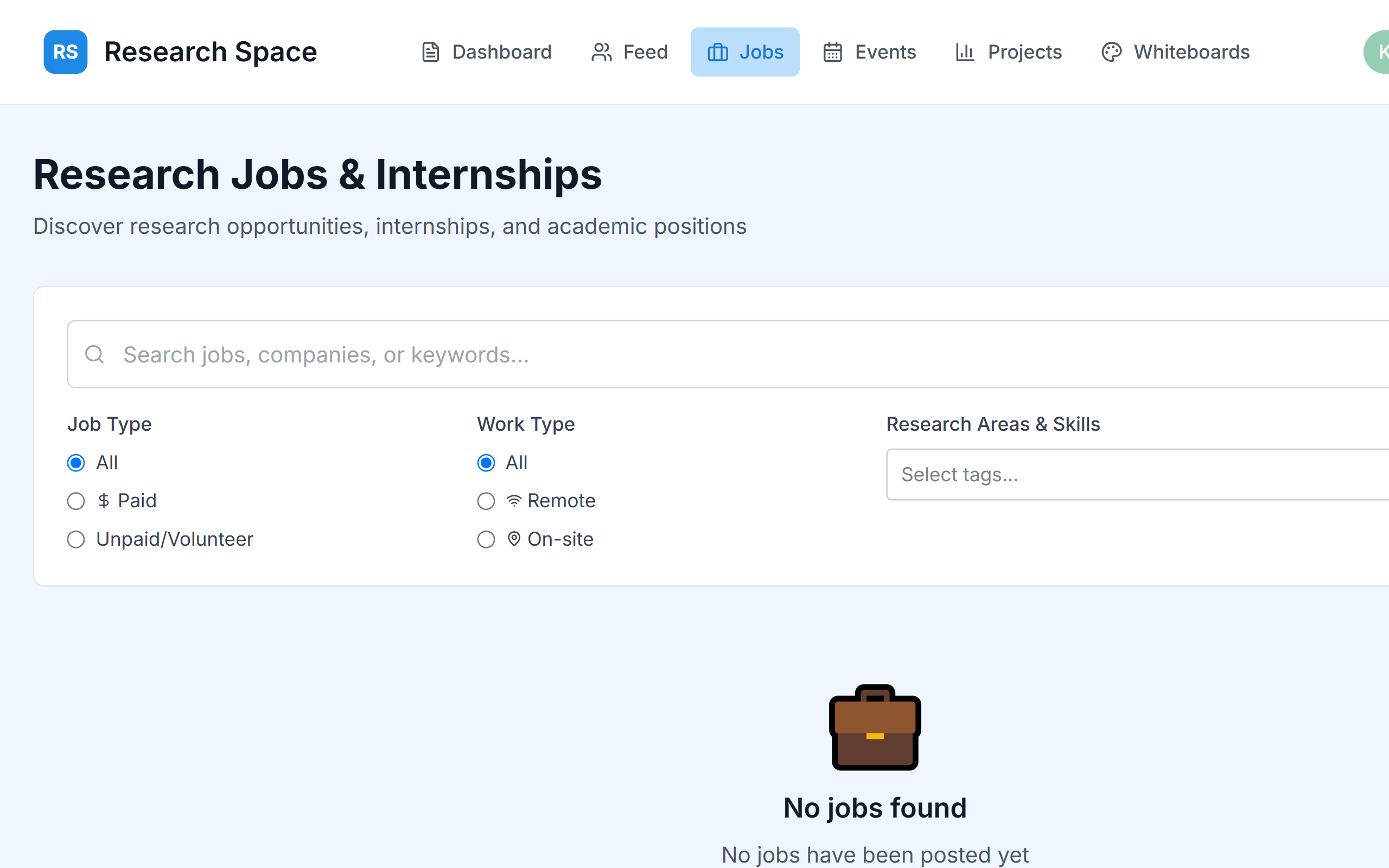
Search and filter academic and research-related job opportunities.
-
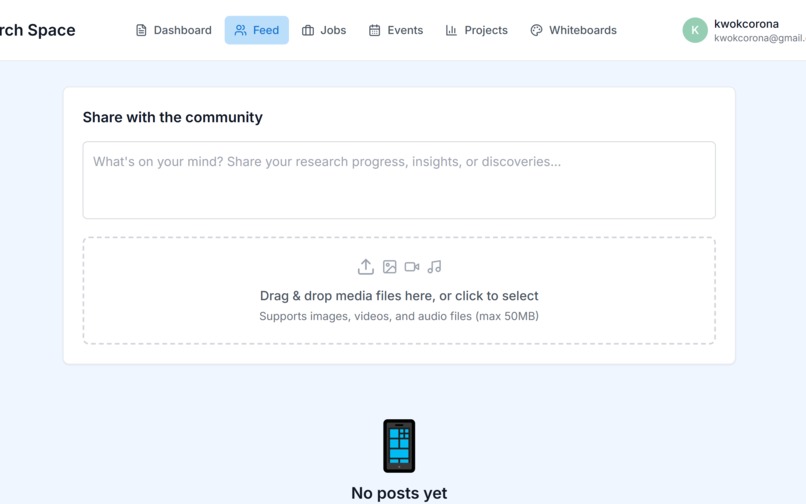
-
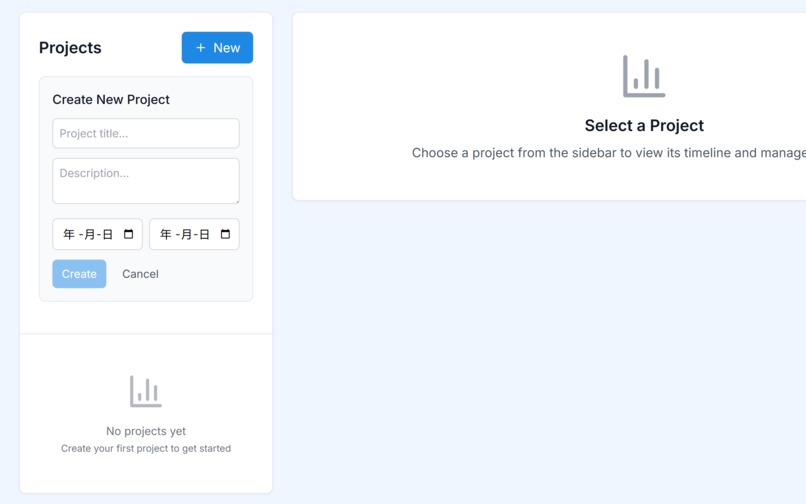
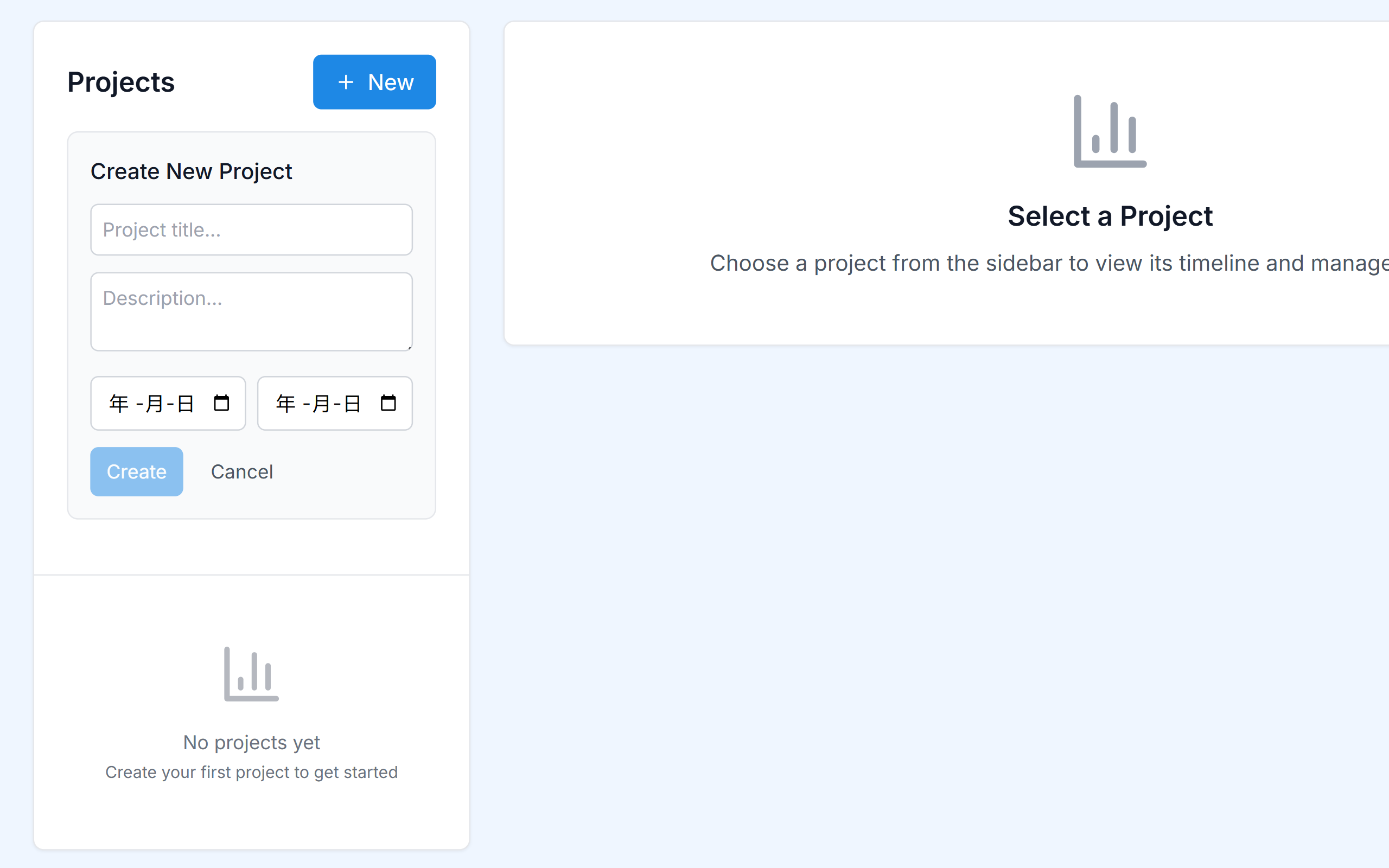
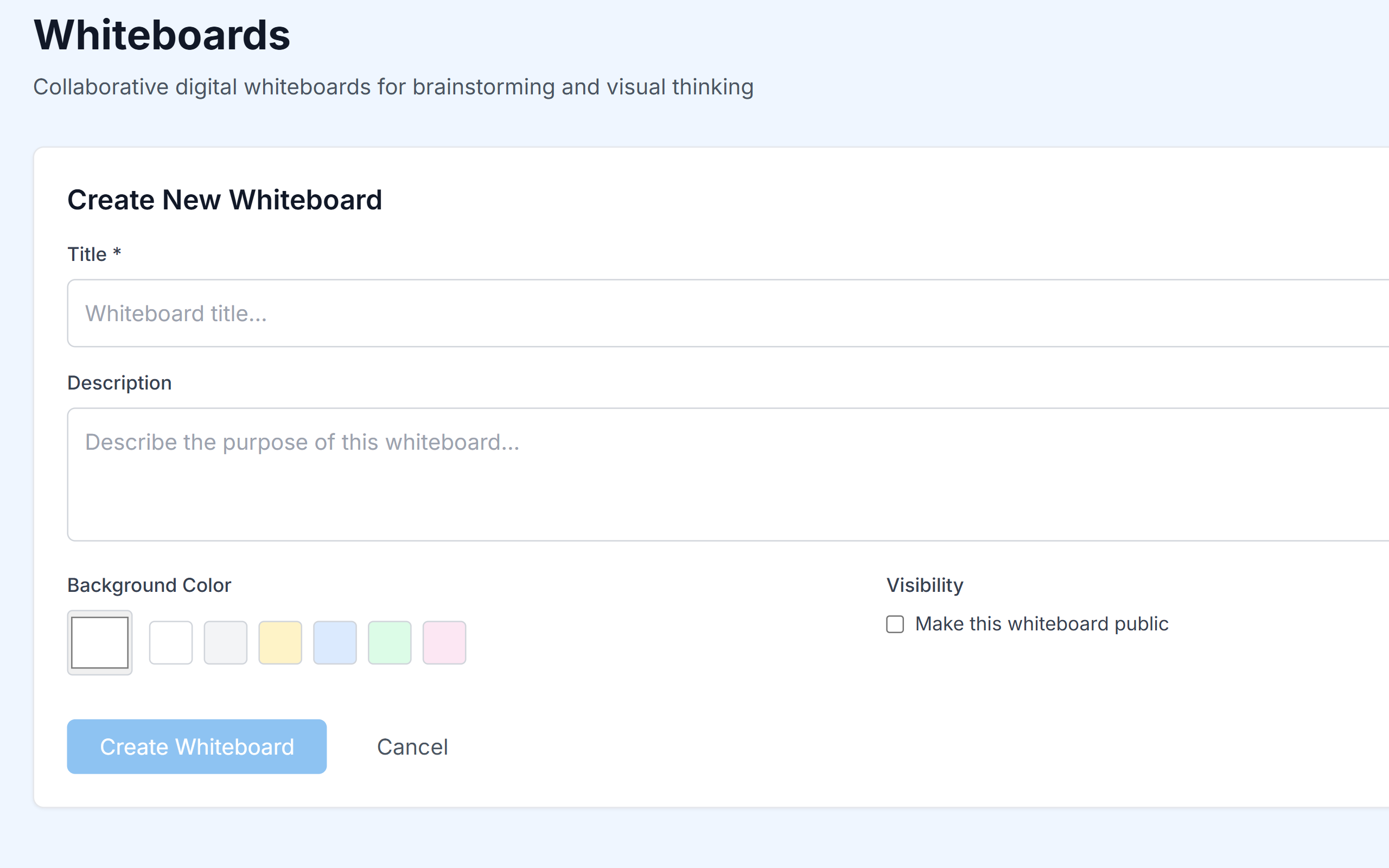
Start and manage research projects with descriptions and timeline settings.
-
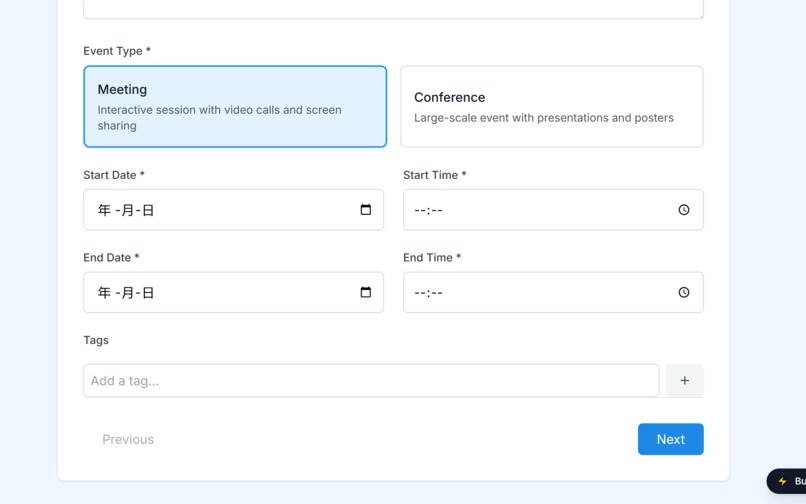
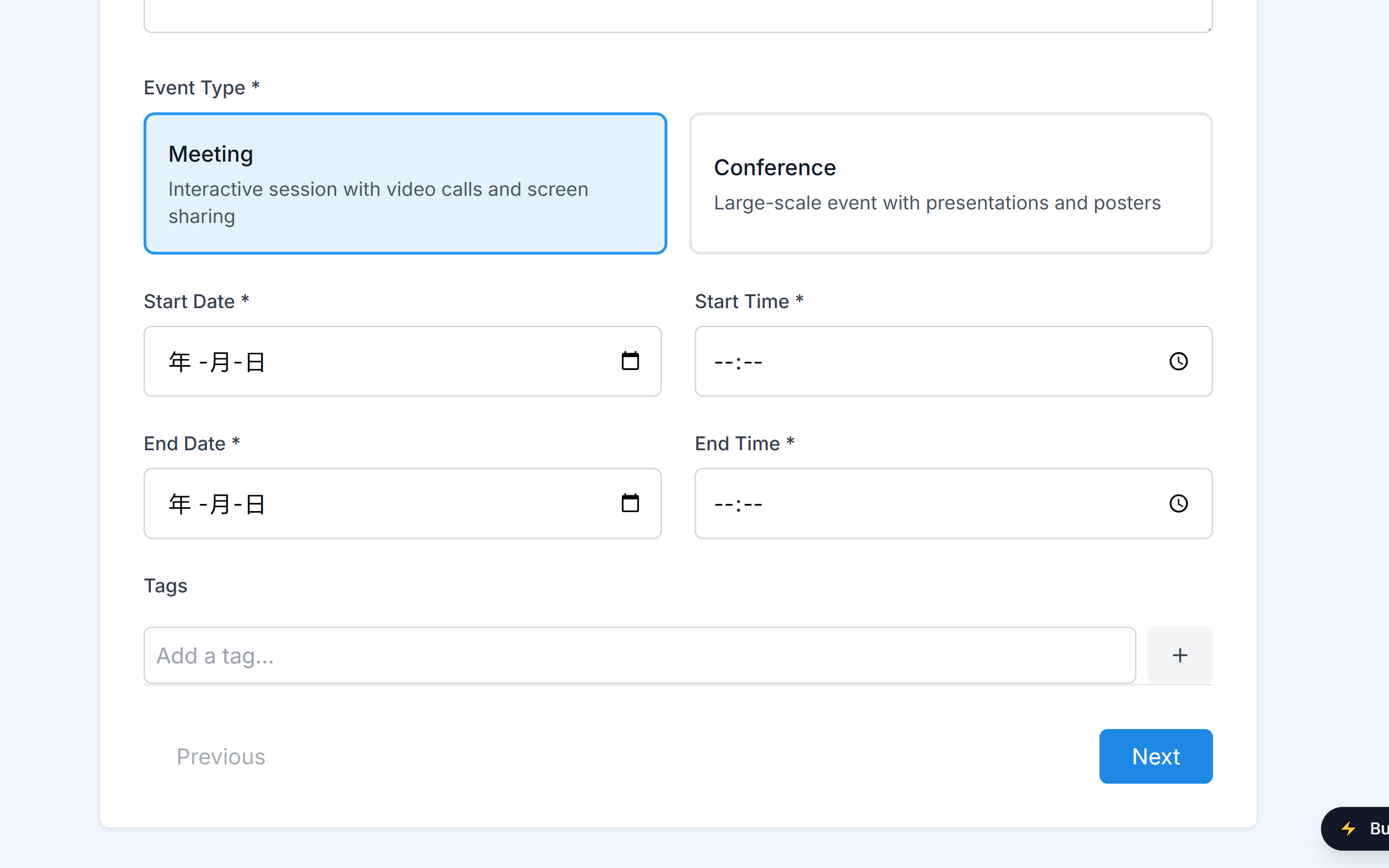
Plan meetings or conferences by setting dates, times, and event types.
-
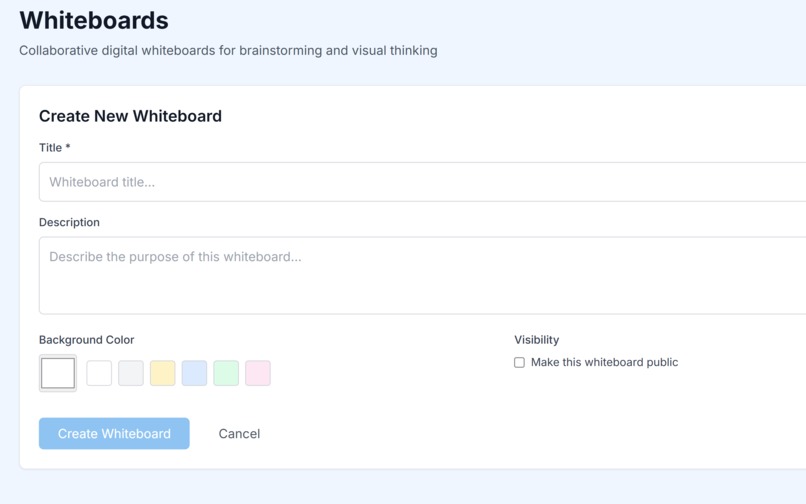
Inspiration
The modern research process is a paradox of collaborative goals and fragmented tools. Scientific progress depends on teamwork, yet our digital workflows force us into silos—juggling PDF readers, separate document editors, chat clients, and video conferencing apps. This constant context-switching fragments attention, stifles momentum, and creates unnecessary administrative overhead. We envisioned a platform built on a simple premise: what if the workspace itself was as integrated and intelligent as the research it's meant to support? This vision led to the creation of Research Space (RS), an all-in-one digital ecosystem designed to unify the research lifecycle and restore focus to what matters most: discovery.
What it does
Research Space (RS) is a comprehensive, browser-based platform that consolidates the essential tools for academic collaboration into a single, cohesive interface. Its functionality is built upon several core pillars:
Centralized Literature Hub: Users can upload PDFs into a shared workspace. The platform features a real-time, multi-user annotation engine, allowing team members to concurrently highlight text, add comments, and see each other's cursors. This transforms solitary reading into a dynamic, collaborative analysis session.
Integrated Authoring Environment: Directly within the workspace, teams can transition from analysis to creation. A collaborative rich-text editor supports co-authoring of manuscripts, notes, and proposals, complete with
LaTeXsupport for mathematical equations and easy embedding of images and figures.Seamless Communication Layer: Contextual communication is woven directly into the workspace. This includes persistent text chat rooms for projects, threaded discussions on specific ideas or PDF annotations, and one-click initiation of voice and video meetings with high-quality screen sharing.
Idea & Project Management: The platform includes an "Idea Board" where researchers can capture nascent thoughts privately. These ideas can be progressively shared with a team, or made public to recruit collaborators from the RS community. An integrated calendar and timeline helps manage project milestones, track deadlines, and schedule meetings.
Virtual Events and Networking: RS provides tools to host virtual academic events, from small lab meetings to larger online conferences. This includes a "Poster Gallery" feature for asynchronous presentations, as well as community rating and feedback mechanisms to foster engagement.
Professional Identity & Opportunities: Users can build detailed professional profiles, showcasing their research interests, publications, and work history. A dedicated job board allows institutions and labs to post opportunities (paid or unpaid), and for researchers to discover and apply for positions.
How we built it
The platform's architecture prioritizes real-time performance, security, and scalability. We leveraged a modern technology stack and an AI-assisted development workflow to achieve this.
Frontend: A highly responsive user interface built with React, Vite, and TypeScript. We used TailwindCSS for a utility-first, consistent design system and Zustand for efficient, minimalistic state management.
Backend & Database: We utilized Supabase as our integrated backend, leveraging its PostgreSQL database, user authentication, and file storage. A rigorous Row-Level Security (RLS) policy was designed and implemented to enforce our granular, role-based permissions model.
Real-time Collaboration Engine: The core of our real-time functionality is powered by Y.js, a Conflict-free Replicated Data Type (CRDT) library. This allows for robust, low-latency synchronization of document edits, annotations, and cursor positions directly between clients, minimizing server load and ensuring offline capability.
Video/Audio Infrastructure: Live meetings are powered by WebRTC. We used simple-peer for managing peer-to-peer connections and relied on Supabase's real-time channels for the initial signaling process to establish connections.
Development Workflow: A significant portion of the application's boilerplate and component structure was generated using Bolt.new. This AI-assisted scaffolding process allowed us to focus our efforts on architectural design, complex logic, and refining the user experience.
Challenges we ran into
Designing a Scalable Permissions Model: Creating an access control system that could elegantly handle various roles (owner, teammate, spectator) across different content types (PDFs, ideas, events) was a significant architectural challenge. This required meticulous planning of our database schema and complex RLS policies to ensure data was both secure and correctly shared.
Synchronizing Diverse Real-time States: While Y.js is powerful for text, synchronizing complex, non-text states—such as PDF highlight coordinates, annotation positions, and user cursors across different viewport sizes—required developing custom data structures and serialization protocols to ensure consistency.
UI/UX for Information Density: The primary design challenge was integrating multiple, high-density information sources (a PDF document, a live chat, an annotation sidebar) into a single screen without creating a cluttered or overwhelming user experience. This involved extensive prototyping and a ruthless focus on minimalism and contextual UI.
Accomplishments that we're proud of
A Truly Unified Workflow: We successfully integrated the functionality of at least five distinct applications into a single, seamless flow. A user can read a paper, discuss it with a colleague, draft a summary, and schedule a follow-up meeting without ever leaving the platform.
The Robust Collaborative Engine: Our real-time system is the technical heart of the project. It performs reliably under concurrent editing, providing an intuitive and responsive experience that feels like working in the same room.
An Extensible Research Ecosystem: We built more than just a tool; we built the foundation for a community. The integration of profiles, events, and job opportunities creates a network effect that adds value beyond any single feature.
What we learned
Cognitive Load is the Enemy: The primary value proposition for researchers is the reduction of friction and cognitive load. A fast, intuitive, and reliable user experience is more critical than an expansive but disjointed feature set.
Architecture Precedes Features: A flexible and well-designed architecture for data and permissions is essential. Investing time in this foundation early on enabled us to add complex features like public recruitment and event galleries much more rapidly later.
The Future of Prototyping is AI-Assisted: Tools like Bolt.new fundamentally change the development equation. They allow small, focused teams to move from high-level architectural concepts to functional, interactive prototypes at an unprecedented speed, shifting the primary work from coding to systems design.
What's next for Research Space (RS)
AI-Powered Intelligence Layer: Integrate LLMs for features like AI-driven summarization of highlighted text, transcription of meeting audio, and semantic search across a user's entire library of documents and notes.
Deeper Academic Integrations: Establish direct integrations with reference managers like Zotero and identity services like ORCID to further streamline the research workflow.
Enhanced Mobile Experience: Develop a full-featured Progressive Web App (PWA) to ensure a seamless and productive experience on tablets and other mobile devices.
Public API and Plugin Marketplace: Open up the platform via a public API to allow third-party developers and individual labs to build their own custom tools and integrations on top of Research Space.
Research Space: A more connected, efficient, and collaborative future for research. 🚀
Built With
- bolt.new

Log in or sign up for Devpost to join the conversation.