-
-
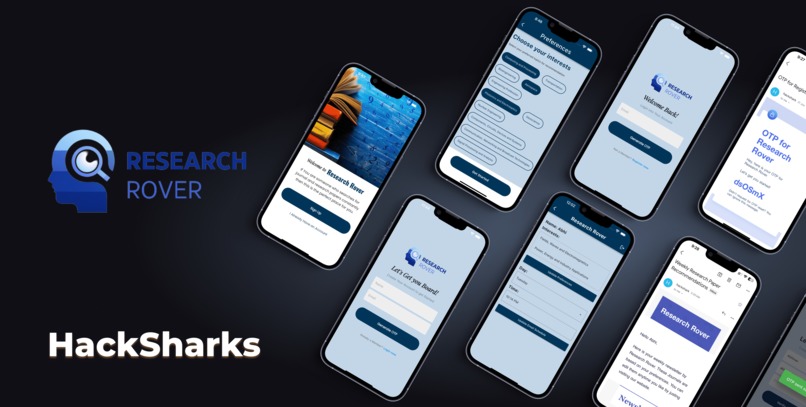
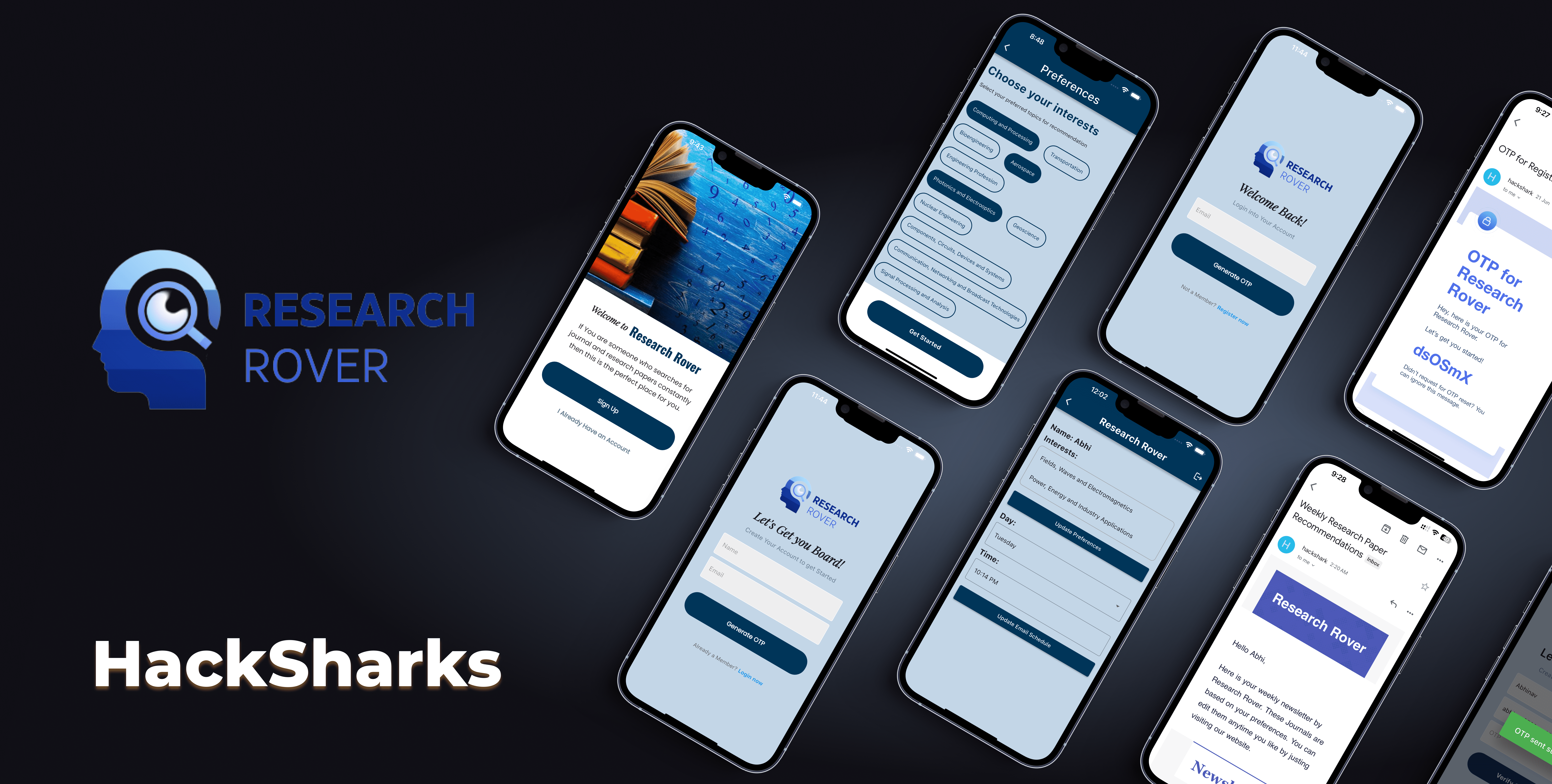
Research Rover Banner
-

Welcome Screen
-
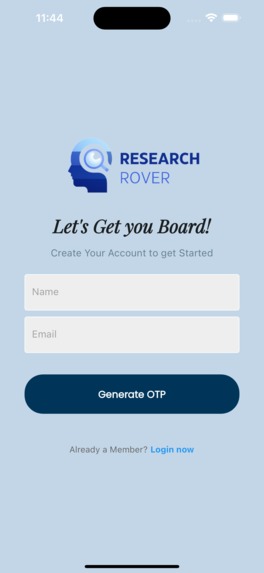
Register Screen
-
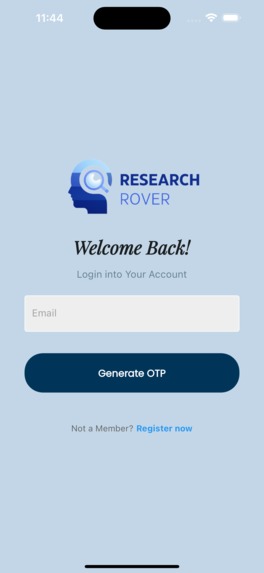
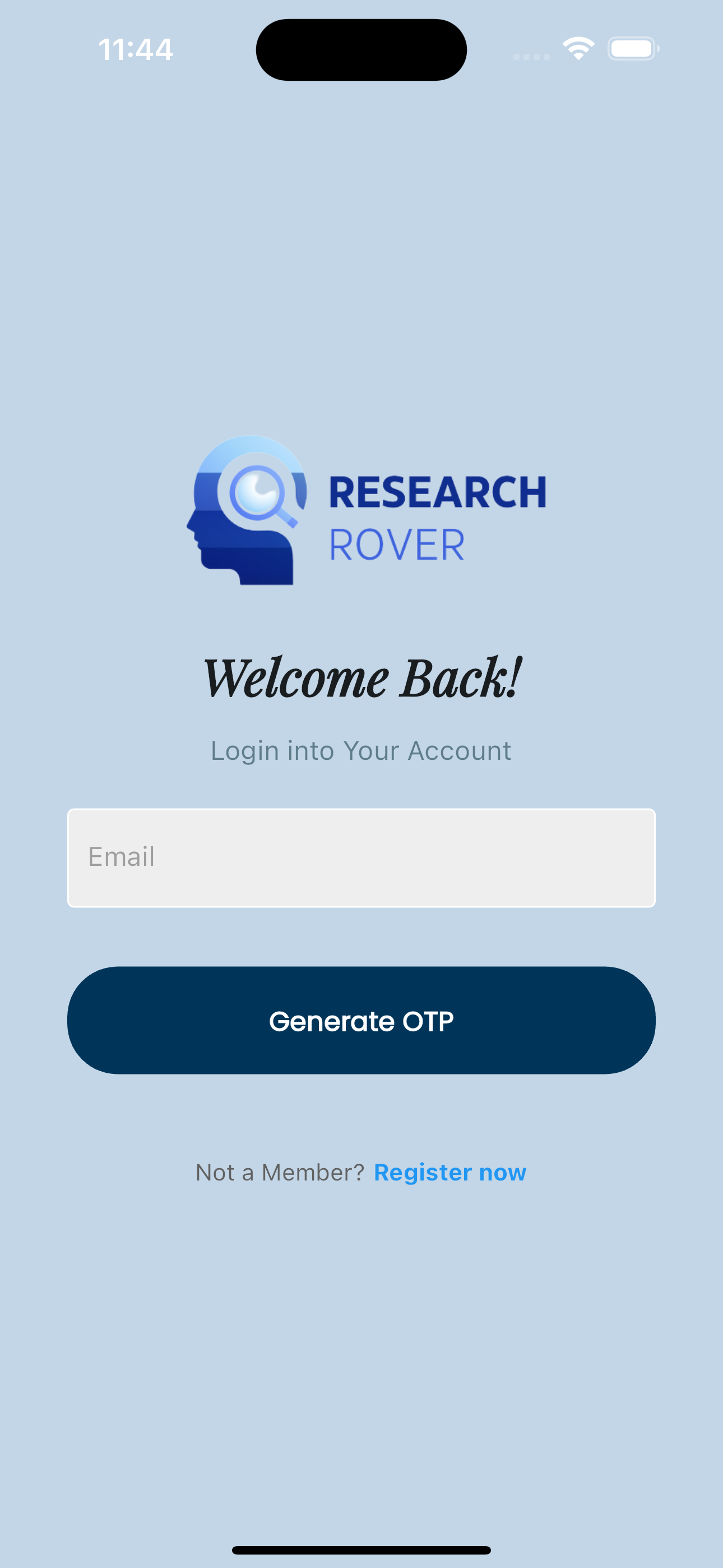
Login Screen
-
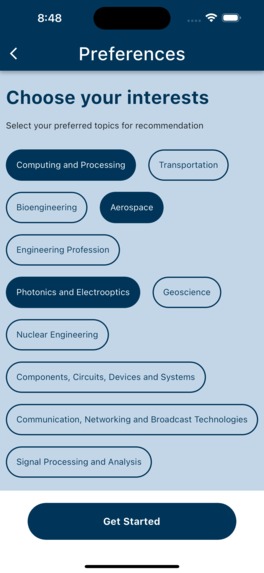
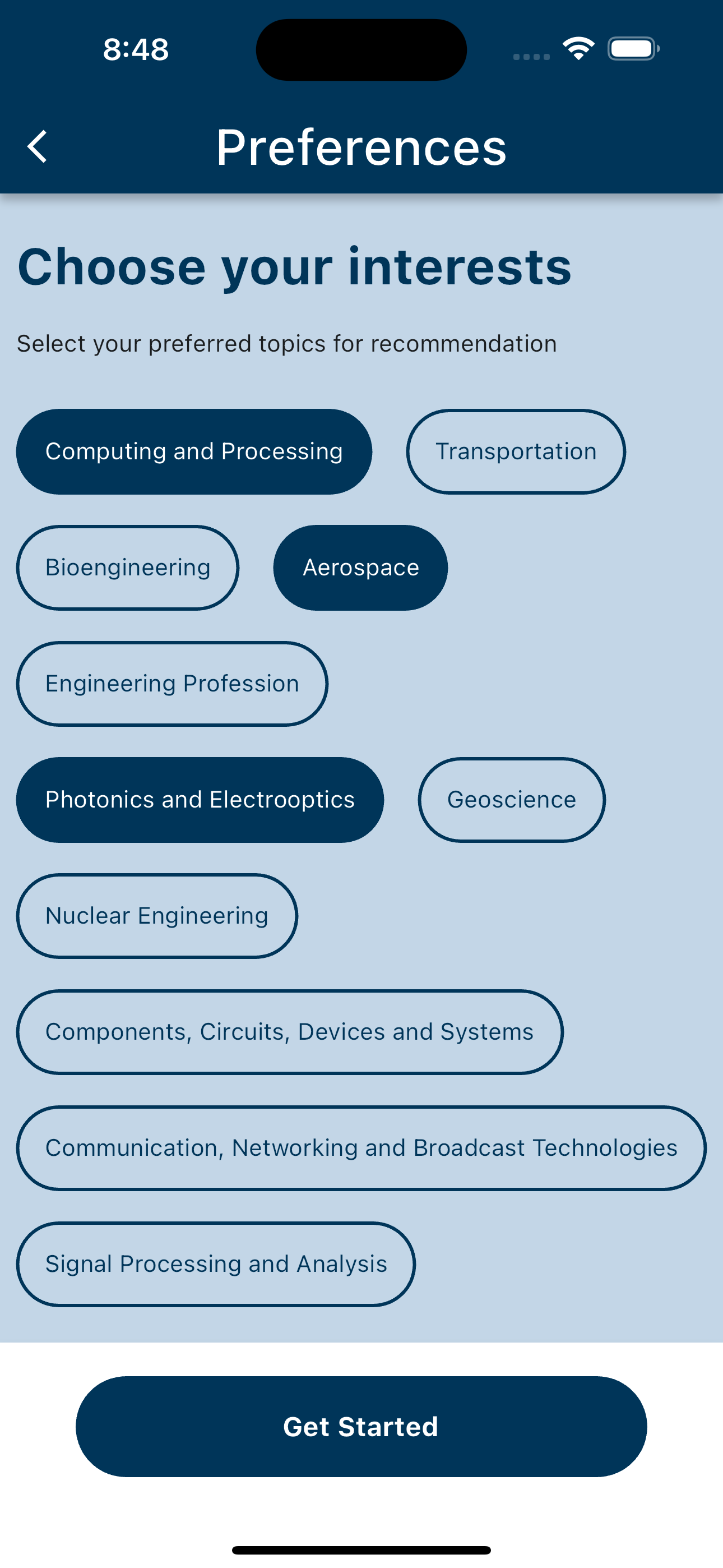
Preferences Screen
-
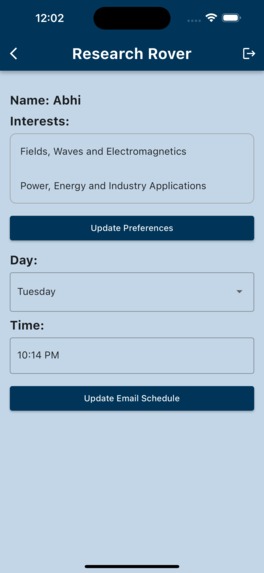
Profile Screen



Project Story
About the Project
Research Rover is a passion project born out of our love for research and the desire to make it more accessible to everyone. We were inspired by the vast amount of knowledge hidden in research papers and the challenges researchers face in keeping up with the latest developments in their fields. With Research Rover, we aimed to create a platform that would bridge the gap between researchers and valuable research papers.
Problem Statement
Keeping up with the vast amount of research papers and staying informed about the latest developments in various fields is a challenge for researchers. Accessing relevant research papers based on specific interests is time-consuming and cumbersome. We were asked to develop an automated system that sends recommendations email to users using SMTP and fetch research papers from sites like IEEE , Springler websites and send it to user, based on their interests.
Proposed Solution:
Research Rover provides a user-friendly platform for researchers to access research papers and stay updated. The application offers the following features:
- User Registration: Users can create an account and provide their name and email address to access the platform.
- Preference Selection: Users can select their desired research topics to receive curated emails with relevant research papers.
- Paper Gathering: Research Rover integrates with Sprinkler's open APIs to retrieve research papers based on user preferences and stores them in a MongoDB database.
- Email Notifications: Users receive weekly emails with research papers related to their chosen topics.
- Customized Email Timing: Users can choose the day and time to receive the weekly emails, allowing for personalized scheduling.
- Profile Management: Users can view and update their preferences, including interests and email delivery timing.
Research Rover aims to streamline the research paper discovery process and make it more efficient for researchers.
Features:
- User-friendly Interface: A seamless and responsive UI for an intuitive user experience.
- Preference-based Email Delivery: Curated research paper emails based on user-selected interests.
- Sprinkler Integration: Integration with Sprinkler's open APIs to gather research papers.
- MongoDB Database: Efficient storage and retrieval of research papers and user preferences.
- Customized Email Timing: Users can choose the day and time to receive the weekly emails.
- Profile Management: Users can view and update their preferences and interests.
- Persistent Login State: Users remain logged in even after refreshing the page.
- Logout Option: Users can log out of their accounts.
What inspired us
We were inspired by the immense potential of research papers to drive innovation and progress in various fields. However, we recognized the barriers that researchers often face in accessing and staying updated with relevant research. We wanted to create a solution that would simplify the process of finding and reading research papers, making it more convenient and efficient for researchers and anyone interested in expanding their knowledge.
What we learned
Throughout the development of Research Rover, we acquired valuable skills and knowledge in various areas. We gained expertise in building cross-platform applications using Flutter, which allowed us to deploy the application on multiple platforms with ease. We honed our backend development skills by working with Node.js and using it to handle the application logic and API integrations. Additionally, we developed proficiency in working with MongoDB for efficient data storage and retrieval.
We also learned about the importance of user experience and user interface design. We focused on creating an intuitive and visually appealing interface to enhance the user's journey through the application. By prioritizing user feedback and conducting usability testing, we gained insights into improving the overall user experience.
How we built our project
Research Rover was built using a combination of Flutter, Node.js, and MongoDB. The frontend was developed using Flutter, an open-source framework by Google that allowed us to create a beautiful and responsive user interface. With Flutter, we were able to write a single codebase that could be deployed on various platforms, including web, Android, iOS, macOS, Windows, and Linux.
For the backend, we utilized Node.js to handle the application's logic and provide the necessary endpoints for data retrieval and processing. Node.js proved to be an excellent choice for building a scalable and efficient server, enabling smooth communication between the frontend and the database.
MongoDB served as our database, allowing us to store and retrieve user information, research papers, and preferences efficiently. With MongoDB's flexibility and scalability, we could handle the growing data requirements of the application.
Challenges we faced
Throughout the development process, we encountered various challenges that tested our problem-solving skills and technical expertise. Integrating the Sprinkler open APIs and managing the data retrieval process proved to be a significant challenge. We had to ensure the smooth flow of data from the APIs to our database while handling potential errors and ensuring data consistency.
Implementing the scheduling feature was another challenge. We needed to develop a robust mechanism that would send weekly emails to users based on their preferred day and time. This required careful scheduling and syncing of time zones to ensure accurate delivery of emails.
Overall, the challenges we faced allowed us to grow as developers and learn valuable lessons in handling complex integrations, managing data, and designing scalable systems.
Impact and Future Plans
We believe that Research Rover has the potential to revolutionize how researchers access and engage with research papers. By automating the process of curating and delivering papers based on users' interests, we save researchers valuable time and ensure they stay up to date with the latest advancements in their fields.
In the future, we plan to enhance Research Rover by incorporating machine learning algorithms to personalize paper recommendations based on users' reading habits and preferences. We also aim to collaborate with publishers and institutions to expand our paper database and provide even more diverse and valuable research content.
Our ultimate goal is to empower researchers worldwide by making research papers easily accessible, eliminating information silos, and fostering collaboration and innovation in the research community. With Research Rover, we are excited to contribute to the advancement of knowledge and inspire new breakthroughs in various domains.

Log in or sign up for Devpost to join the conversation.